
Reviewed · NORMANDY D-DAY BEACHES TOURS
2- to 6-hour sidecar excursion on the D-Day Landing Beaches
Vintage sidecars make D-Day feel personal. On this 2 to 6 hour ride from Bayeux, you’re guided along the Normandy coast in a vintage rig, with helmets, gloves, and retro goggles taken care of before you roll. If you’re lucky enough to get guides like Rémi or Philippe, you’ll hear the story with the right mix of respect and practical detail.
I love the way the route pairs iconic beaches with specific, named military sites. You’ll stop at the Mulberry B harbor story in Arromanches, the Atlantic Wall guns at Longues-sur-Mer, the fuel pipeline hub at Port-en-Bessin, and then the most famous sand of all at Omaha. My one caution is simple: the ride is weather dependent, and coastal wind can be sharp, so plan for cold and have warm layers ready.
In This Review
- Key highlights worth centering your trip on
- Why a vintage sidecar is the smart way to tour the D-Day beaches
- Bayeux meet-up, helmets, gloves, and the pace that keeps it from feeling rushed
- Arromanches-les-Bains and Mulberry B, the harbor idea behind the landings
- Longues-sur-Mer artillery battery, Atlantic Wall guns with real surviving structure
- Port-en-Bessin-Huppain and Operation Overlord’s fuel pipeline, the unseen systems
- Omaha Beach and the American Cemetery, where timing can change what you see
- Pointe du Hoc in the 6-hour option, the strategic point between Utah and Omaha
- What you really get for the $169.31 price
- Practical tips so you’re comfortable, warm, and ready for photos
- Should you book this D-Day sidecar excursion?
- FAQ
- How long is the sidecar excursion?
- What does the tour include for passengers?
- Are admission tickets included?
- What stops are included on the 6-hour option?
- Can pickup be arranged from my hotel or nearby locations?
- Will we definitely visit the American Cemetery?
- Is this a private tour?
- What happens if weather is bad?
Key highlights worth centering your trip on
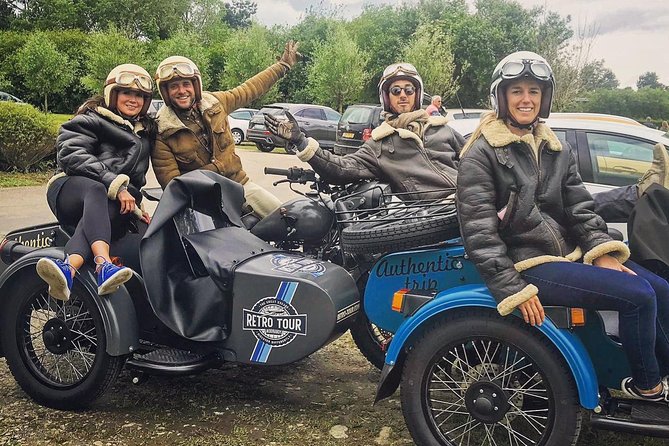
- Vintage gear that actually helps: helmets, gloves, vintage goggles, and rain gear included.
- Small, private group energy: only your group rides together, up to six per booking (up to twelve on request).
- A D-Day route with purpose: you don’t just see beaches, you visit supporting sites tied to how the invasion worked.
- Omaha Beach plus the American Cemetery, with timing limits: you may miss the cemetery if the visit hours don’t cooperate.
- Choose your intensity: 2-hour or half-day options focus on British or American sectors, while the full 6-hour adds Pointe du Hoc.
- Short photo and break stops: you’ll pause to capture views without feeling stuck in a long bus lineup.
Why a vintage sidecar is the smart way to tour the D-Day beaches
A sidecar ride changes the feel of Normandy fast. You get speed between stops, open-coast views, and that slightly cinematic sense that you are moving through the same region that thousands of soldiers pushed through in 1944.
This tour also respects your time. You’re not spending the day only parked at a single museum or walking one crowded path. Instead, you bounce between beaches and key locations, so the full picture of D-Day starts to click in a way that’s harder to get if you only drive yourself or take a standard bus.
The guide component is the other big reason this works. You’ll hear what happened, then you’ll see where it happened, and your Gentleman Sider (guide/driver) connects the dots along the road. People like Rémi and Philippe are singled out for clear storytelling and smart pacing, and that matters when you’re dealing with serious sites.
And yes, it’s fun. The ride itself is a perk, but the real value is that the route is built around places tied to the invasion’s mechanics, not just its headlines.
More D-Day beaches visits:
- Normandy American D-Day Beaches Full Day Tour from Bayeux
★ 5.0 · 2,103 reviews - Normandy American D-Day Experience – Group tour from Bayeux
★ 5.0 · 1,566 reviews - Omaha and Band Of Brothers Full Day Tour
★ 5.0 · 1,104 reviews
Bayeux meet-up, helmets, gloves, and the pace that keeps it from feeling rushed
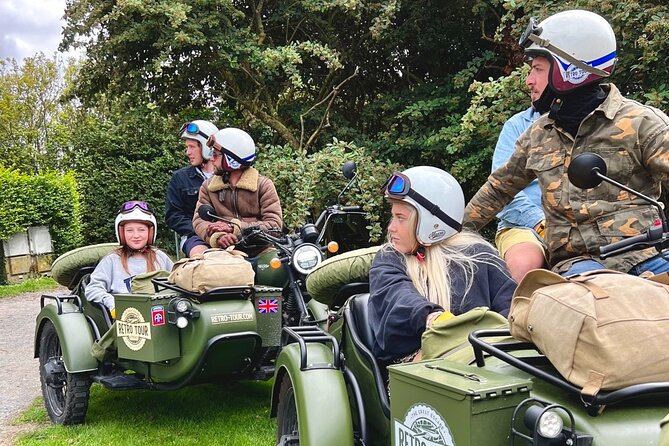
You start in Bayeux with a very straightforward plan. Your guide meets you at a pickup location you choose, or at the parking lot for the Bayeux Battle of Normandy Museum, or at the Bayeux bus station. Then you gear up right away with helmets, gloves, vintage goggles, plus rain gear if needed.
From there, you roll out with time built in for breaks and photos. There’s even a short stop window in Bayeux to set the scene, and after that you’re heading toward the Normandy coast.
This is also a private experience. Your group is the only group on the ride, and the cap is small, which means you can ask questions without the usual group-tangle. That helps with both emotional sites like Omaha Beach and technical ones like the long-range guns at Longues-sur-Mer.
One practical note: you’re on open-air motorcycle transport for parts of the trip. Even in decent weather, the coast can cut wind. I’d treat this like a day on a boat deck in terms of dressing, meaning warm layers and something to protect your neck and face.
Arromanches-les-Bains and Mulberry B, the harbor idea behind the landings
Arromanches-les-Bains is where the story shifts from landing tactics to logistics. This is the beach where, right after D-Day on June 6, 1944, the Allies created Mulberry B, a temporary artificial harbor meant to keep heavy equipment moving ashore without waiting for deep-water ports like Le Havre or Cherbourg.
What I like about stopping here is that you get a concrete explanation for why some places were spared more damage than others. Arromanches was close to the Gold Beach area, but it avoided the worst fighting on June 6, which helped the harbor survive long enough to be built and used.
Expect a focused visit, not a long wandering day. The stop is around an hour, and the framing matters: you’re learning how they protected routes for installation and how British troops came in and liberated the area on the evening of June 6. Then the harbor was put into service by June 14.
This is a great stop if you like your history in cause-and-effect form. It answers the question you might not know to ask: how did they keep supply lines working in a place where the normal ports weren’t available yet?
Longues-sur-Mer artillery battery, Atlantic Wall guns with real surviving structure
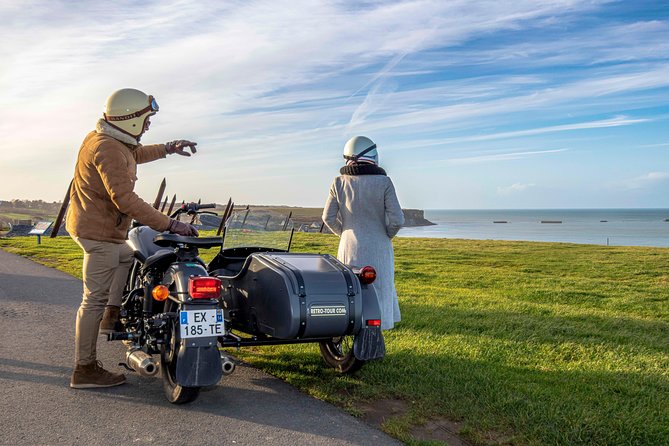
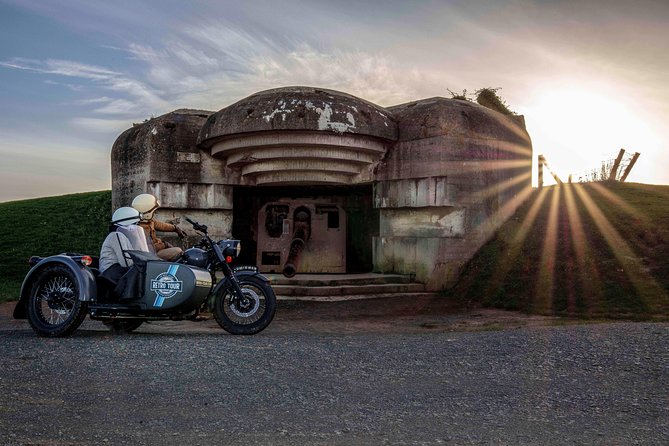
Longues-sur-Mer gives you the Atlantic Wall in a more tangible way than photos alone. Here you’ll visit an artillery battery with four long-range 150 mm naval guns, each protected by reinforced concrete casemates and the installations needed to operate and defend them.
The key detail is what happened on D-Day. Despite the battery’s power, intense aerial and naval bombardments prevented it from engaging fully on June 6. Then it was captured the following day by British troops.
I like that the site is described as remarkably well preserved and developed for visitors. That means you’re not just looking at a vague ruin, you’re seeing the structure that helped German defenders project force along the coast.
The stop is about an hour, and it’s one of the most rewarding places for anyone who wants strategy, not just emotion. You’ll walk through a defensive setting and hear how bombardment and timing shaped what the guns could do.
Other Bayeux bookings to consider
- Normandy Beaches Half-Day Afternoon Trip from Bayeux (A2)
★ 4.5 · 1,116 reviews - Omaha Beach D-Day Experience – Afternoon group tour from Bayeux
★ 5.0 · 1,088 reviews - Omaha and Utah beaches
★ 5.0 · 1,085 reviews - Normandy Battlefields Tour – American Sites (A3)
★ 5.0 · 876 reviews
Port-en-Bessin-Huppain and Operation Overlord’s fuel pipeline, the unseen systems
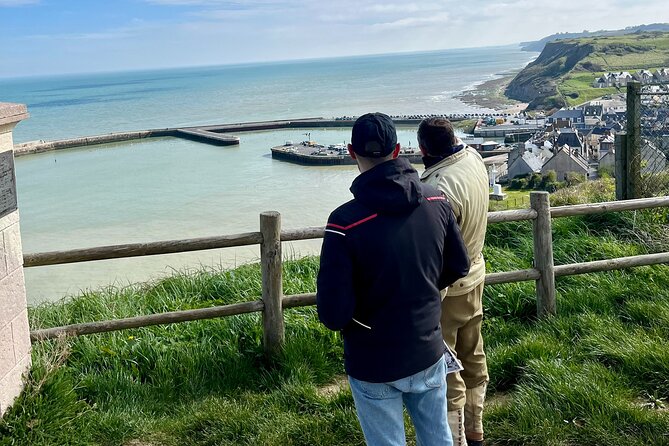
Port-en-Bessin-Huppain feels less famous than Omaha, but it’s a smart stop if you want the invasion to make logistical sense. This area was liberated by the 47th Royal Marines Commando during Operation Overlord, and by June 16 it became the central hub of a pipeline network about 120 km long to supply Allied armies with fuel.
Then comes the bigger expansion through Operation PLUTO, involving underwater pipelines between the Isle of Wight and near Querqueville close to Cherbourg. This is the kind of detail that makes D-Day feel less like a single day of fighting and more like a system that had to keep running.
Your visit is shorter, around 30 minutes. That can be a plus. It prevents you from burning time on one spot that might not be as visually dramatic as artillery or beach landings, and it keeps the day moving toward the places you’ll remember most.
The value here is context. After you hear how fuel got delivered, Omaha’s stakes feel sharper, and the later cemetery visit hits harder because you understand the scale of what they were trying to sustain.
Omaha Beach and the American Cemetery, where timing can change what you see
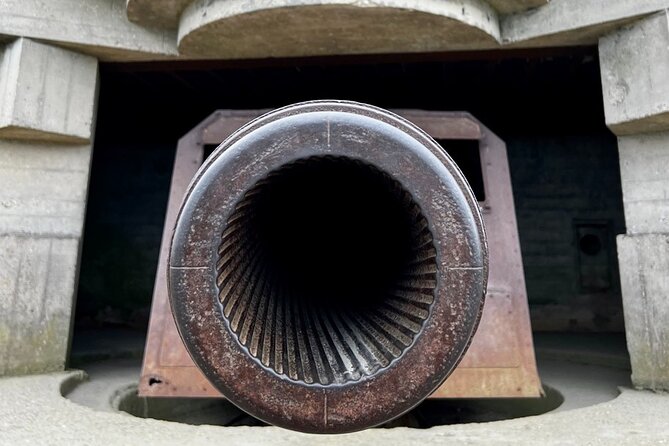
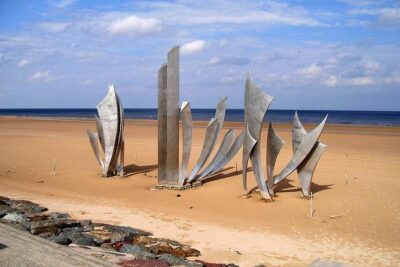
Omaha Beach is the centerpiece for a reason. You’ll stand on the sands where thousands of American soldiers landed amid intense gunfire and artillery bombardment, and your guide shares the challenges soldiers faced during the fight.
You’ll also have a chance to reflect at memorials along the way. That quiet moment matters here because you’re not only touring, you’re witnessing. Walking the beach with a guide’s framing can keep the experience respectful without turning it into a lecture.
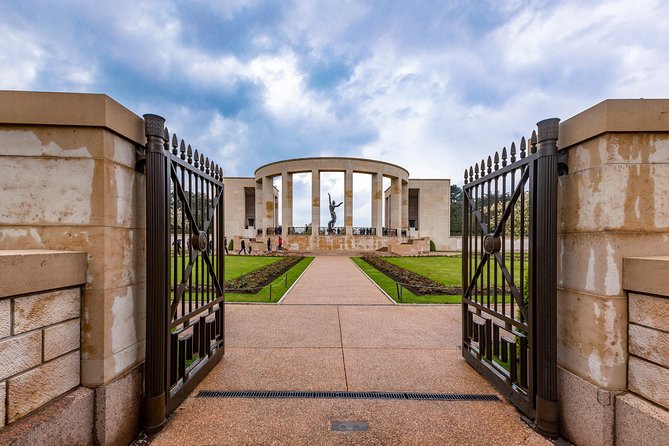
The tour then typically includes the Normandy American Cemetery and Memorial on a cliff above Omaha. This is where the white marble crosses and Stars of David create a strong, immediate sense of scale and loss. Your guide can share stories about individuals buried there, which helps the memorial move from names on stone to people with lives.
But do watch the timing details. The cemetery can close early in low season, and any tour starting at 4:00 PM won’t be able to include the cemetery visit. Also, starting in 2026, the cemetery visit cannot be guaranteed and will be replaced by a visit of WN60.
So my advice is to pick a tour time that gives you enough daylight. If you’re visiting in a season where hours tend to compress, plan as though the cemetery might be a limited window, not a sure thing.
Pointe du Hoc in the 6-hour option, the strategic point between Utah and Omaha
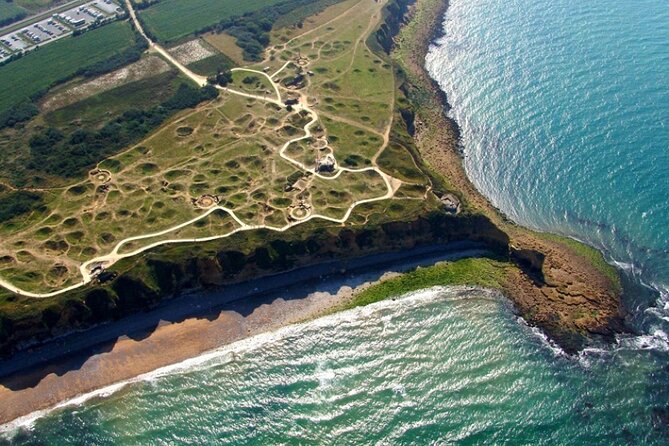
If you choose the 6-hour option, Pointe du Hoc becomes the major extra stop. This promontory sits between Utah Beach to the west and Omaha Beach to the east and was fortified by German forces, with long-range artillery posing a threat to neighboring landings.
Allied aerial reconnaissance identified those powerful guns, and neutralizing them quickly was essential to improving the chances of success for the landings nearby.
This is a more intense stop because it feels like it’s about strategy under pressure, not just the moment of landing. You’ll spend about an hour there, and the guide’s job is to connect terrain to outcomes, explaining why this point mattered so much.
If you’re only doing a short option, Pointe du Hoc is not included. If you’re the type who wants the extra layer, like how the invasion’s plan protected multiple beaches at once, the 6-hour route is the better fit.
What you really get for the $169.31 price
At $169.31 per person, the big question is whether this is just a fun ride or whether it’s meaningful learning for the time spent.
Here’s why it tends to feel worth it to many people:
- You get included gear that you don’t have to shop for: helmets, gloves, vintage goggles, plus rain gear.
- Your visit includes admission tickets at the stops listed as free.
- It’s a private tour with your group only, and the max size is small, which improves your chance for a real back-and-forth with the guide.
- You cover multiple major locations in a short day, which saves you the hassle of self-driving between scattered sites.
The trade-off is that you’re paying for a very specific format. If you don’t care about the guide or you hate motorcycle rides, you might prefer a standard car tour. And lunch is not included, so you’ll want to plan on a meal stop on your own or rely on restaurant recommendations from your driver.
If you’re deciding between 2 hours and a full day, I’d treat it like this: the shorter options are great if you want one focused sector. The 6-hour option is the one that rounds out the story with Pointe du Hoc.
Practical tips so you’re comfortable, warm, and ready for photos
This is a sidecar ride, so comfort is mostly about layers and small prep. Reviews and on-the-ground reality line up here: bring warm clothing, and consider a scarf for your neck and face because wind off the coast can be chilly.
Good news: you get rain gear, so you’re not stuck improvising if weather turns. Still, your enjoyment will depend on visibility and wind level, which is why this experience is described as requiring good weather.
The sidecar setup also matters. People have reported that the sidecar is roomy enough for taller riders to feel comfortable, and one guest noted they even rode on the back of the motorcycle for much of the day. If you’re tall or unsure about fit, ask the guide how they’ll seat you before you roll.
Finally, make it easy on yourself for photos. The day has stops for pictures and breaks, but the best photos usually happen when you’re ready at the right moment. Keep your phone accessible, and don’t wait until you’re half out of position.
Should you book this D-Day sidecar excursion?
Book it if you want D-Day history with motion. The sidecar format gives you a fun, memorable way to hit several key sites without spending your day wrestling with directions.
I’d also book if you like tours that connect places to the mechanics of what happened. Mulberry B at Arromanches, the Atlantic Wall battery at Longues-sur-Mer, the fuel pipeline hub at Port-en-Bessin, and then Omaha and the cemetery together make the whole invasion feel more coherent.
Skip it or switch plans if you know you’ll struggle with wind and cold, or if you absolutely need the American Cemetery no matter what. Cemetery timing can vary, and tours starting at 4:00 PM cannot include it. And from 2026, the cemetery visit can’t be guaranteed and may be replaced by WN60.
If you’re excited by a private small-group ride with a guide like Rémi or Philippe, this is a solid way to experience Normandy with both style and clarity.
FAQ
How long is the sidecar excursion?
The sidecar excursion runs about 2 to 6 hours, depending on which option you choose.
What does the tour include for passengers?
Helmets, gloves, vintage goggles, rain gear, and seating for 1 to 2 passengers per sidecar are included, plus an itinerary of the iconic sites with anecdotes.
Are admission tickets included?
Admission tickets are included for the stops listed as free, so you should not need to pay entry fees for those specific visits.
What stops are included on the 6-hour option?
The 6-hour option includes the additional stop at Pointe du Hoc, along with the other sites on the route.
Can pickup be arranged from my hotel or nearby locations?
Yes. Pickup is offered, and you can also meet at the Bayeux Battle of Normandy Museum parking lot or at the Bayeux bus station.
Will we definitely visit the American Cemetery?
Not always. The cemetery can close early in low season, and tours starting at 4:00 PM cannot include the cemetery visit. Starting in 2026, the cemetery visit cannot be guaranteed and will be replaced by a visit of WN60.
Is this a private tour?
Yes. It is private, and only your group participates.
What happens if weather is bad?
This experience requires good weather. If it is canceled due to poor weather, you will be offered a different date or a full refund. Free cancellation is available up to 24 hours in advance for a full refund.
Newly listed around Bayeux
- Le Havre Shore Excursion: Private Day Tour with Omaha Beach & American Cemetery★ 5.0 · 57 reviews
- “Pleasure” ride on an all-terrain electric scooter★ 4.5 · 21 reviews
- 2 Hours Tour in La Balaiterie Sweeper’s House★ 5.0 · 19 reviews
- Le Havre Shore Excursion: Private Day Tour to Juno Beach Sector & Ardenne Abbey★ 5.0 · 17 reviews
- Immersive tour DISTILLERIE PERE MAGLOIRE★ 5.0 · 314 reviews
- Small Group Guided D-Day Tour and Mémorial de Caen Museum★ 5.0 · 237 reviews
- Guided Tour in an Old Convertible Car on the Côte de Nacre★ 5.0 · 66 reviews
- Private Tour to Discover the Treasures of Caen★ 5.0 · 17 reviews
Normandy D-Day Beaches Tours, compared.

Normandy D-Day Sites & Cemetery Day Trip from Paris with Lunch
Read our review →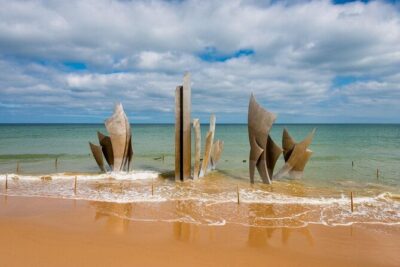
Normandy D-Day Small-Group Day Trip with Omaha Beach, Cemetery & Cider Tasting
Read our review →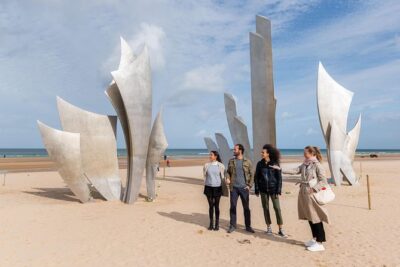
Normandy D-Day Beaches and American Cemetery Day Trip from Paris
Read our review →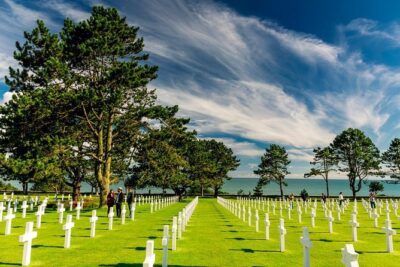
Normandy American D-Day Beaches Full Day Tour from Bayeux
Read our review →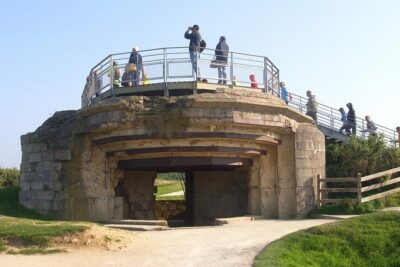
Normandy American D-Day Experience – Group tour from Bayeux
Read our review →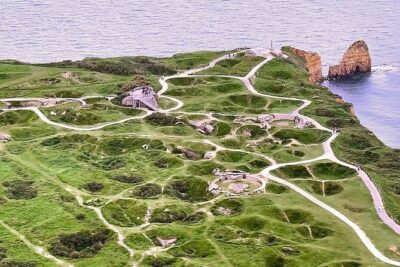
Omaha Beach D-Day Experience – Afternoon group tour from Bayeux
Read our review →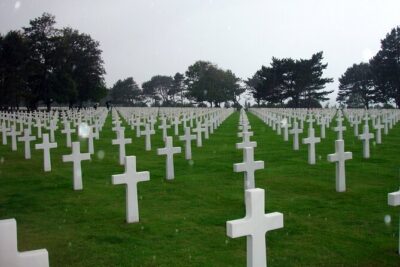
Browse the lists this tour appears in