
Reviewed · WINE TASTINGS & VINEYARD TOURS
Cellar visit and Alsace wine tasting with a feminine touch
One hour. Seven organic wines.
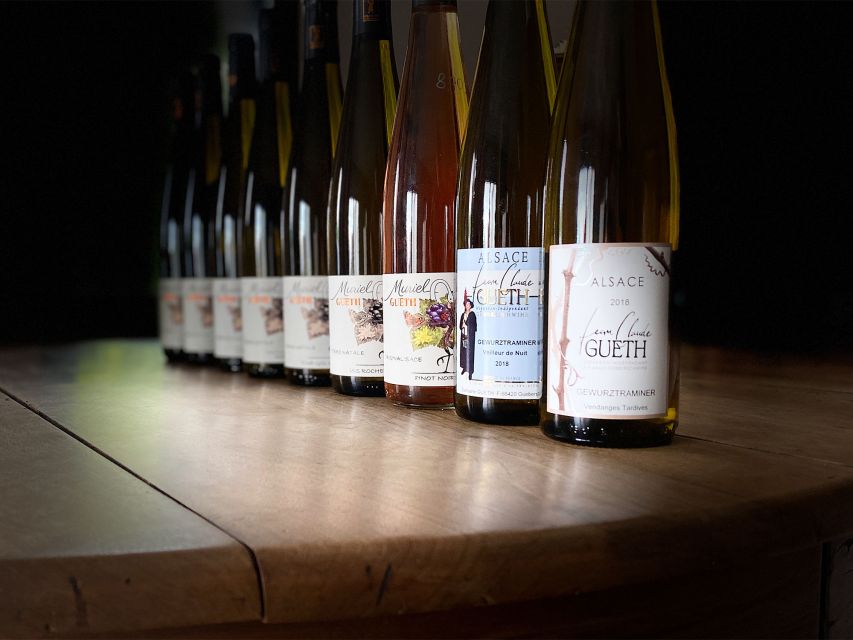
At Domaine Gueth, the Alsace wine tasting is built around the winery’s modern, feminine approach, plus a real look at how the estate works in the cellar and in the vineyard. You get a guided stop in the cellar installations, then a carefully explained tasting that connects the wine to terroir and the winemaking choices behind it.
I especially like that you do not just follow a fixed flight. You taste 7 organic wines (with input on what fits your taste), and the story is tied to organic farming and winemaking decisions like letting wines follow their own path via spontaneous fermentation. One thing to consider: if you came specifically hunting for a very literal, defined explanation of what feminine means in practice, you may find it less concrete than you expected.
In This Review
- Key points you should know before you book
- Where Domaine Gueth fits on the Alsace wine road
- The feminine touch: what they mean, and what you should listen for
- Inside the cellar: what you’re really seeing during the visit
- The tasting format: 7 organic wines, chosen to match your taste
- What makes Alsace wines feel so distinct here
- The food pairing: pretzel or kougelhopf, plus crackers
- Buying wine at the producer: what to look for
- Price and value: why $20 makes sense for this format
- Who this tasting fits best, and who may want a different tour
- A simple checklist before you go
- Should you book Domaine Gueth’s feminine Alsace tasting?
- FAQ
- How long is the Domaine Gueth cellar visit and tasting?
- What’s included in the tasting?
- Can I substitute the wines for something non-alcoholic?
- Is the tasting for adults only?
- What kind of wines are served?
- What does the tour focus on besides wine?
- Do they provide food during the tasting?
- Where do I meet the group?
- What languages are available for the live guide?
- Is the tour wheelchair accessible?
Key points you should know before you book
- A 1-hour, cellar-first experience at Domaine Gueth, not just a sit-and-smell session
- Tasting 7 organic wines selected to match your preferences among their vintages
- Spontaneous fermentation is part of the style, not just a buzzword on the label
- Organic Farming and High Environmental Value are central to their approach
- Snacks included with Alsatian staples like pretzel or kougelhopf
- You can swap wine for 100% organic grape juice if you want
Where Domaine Gueth fits on the Alsace wine road
Domaine Gueth sits in the Alsace region of France, in Grand Est, in the general orbit of the wine road. This kind of stop works best when you want something smaller and more intimate than the big, high-traffic producers. The format is built for a quick but meaningful visit, with just enough time to understand how the estate thinks and then taste what that thinking creates.
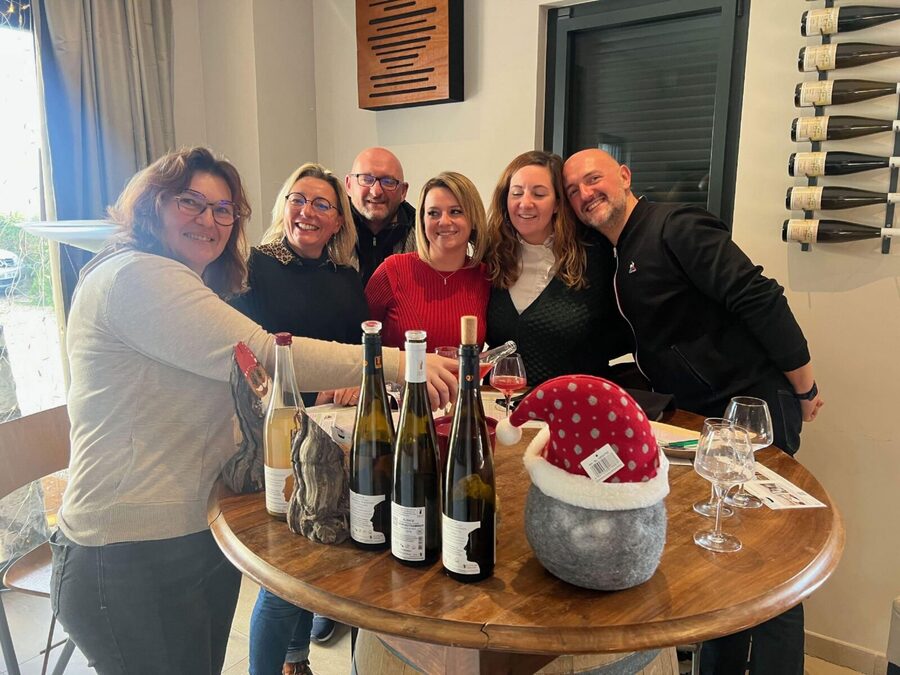
The group size is capped at 10 places available, and that matters. In a small group, you can ask questions, and the guide can adjust the tasting to what you like. It also makes the experience feel less scripted, which you’ll appreciate if you prefer conversation over a lecture.
The meeting point is simply Domaine Gueth, and parking is available inside the domain for free. For practical planning, that means less stress about finding your way on busy wine-road days.
More vineyard visits in France:
- Bordeaux: Cité du Vin Entry Ticket and Wine Tasting
★ 4.6 · 3,885 reviews - Montmartre Hill French Gourmet Food and Wine Tasting Walking Tour
★ 5.0 · 2,588 reviews - From Paris: Loire Valley Castles Day Trip With Wine Tasting
★ 4.6 · 1,727 reviews
The feminine touch: what they mean, and what you should listen for
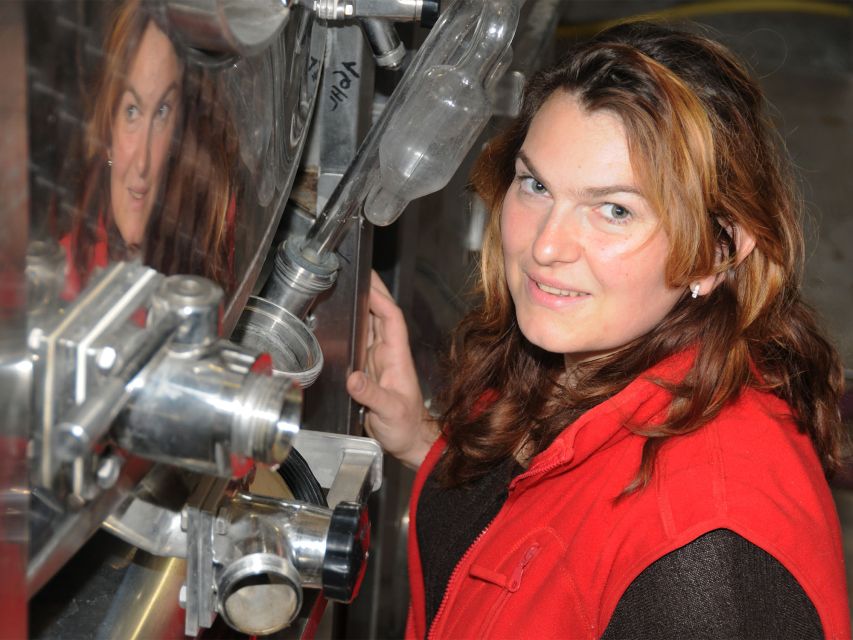
The experience is marketed as a cellar visit and Alsace wine tasting with a feminine touch, and they frame it as more than a slogan. The core message is about a different relationship with the wine, a modern vision, and an attitude tied to respect for the environment. They describe it as coming from their philosophy after seven generations of winemakers, with a focus on fruity, elegant wines close to nature.
Here is the useful expectation to carry in your head: they will not only talk about what they pour, they’ll connect the style to how they raise grapes and how they make wine. They emphasize letting vines and grapes follow their own path from vine to wine, with minimal constraint, and they link that to organic practices and environmental care.
One caution based on real feedback: some people want a more explicit explanation of how feminine shows up in specific decisions, like vineyard practice versus cellar technique. If that’s your priority, ask directly during the visit. For example, you can politely ask where the approach shows up most, in the vineyard, during vinification, or in the final style they aim for.
Inside the cellar: what you’re really seeing during the visit
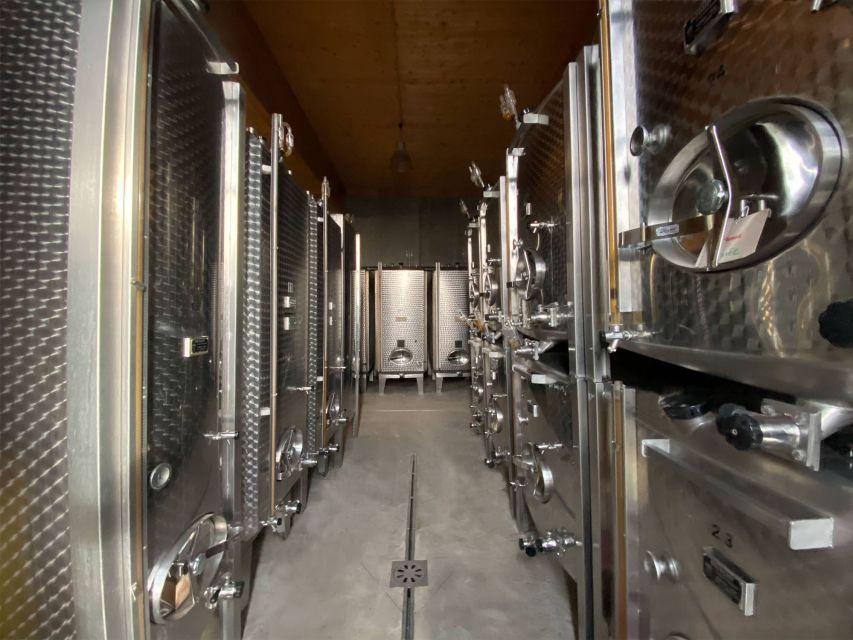
You’ll start with a visit of the cellar and the winery installations. The point is not to show you flashy equipment, it’s to connect those installations to the way they farm and ferment. This is where the tasting becomes more believable, because you can see the physical context behind the philosophy.
In a small estate setting, you often learn faster. The cellar visit gives you a map for the tasting, so when the guide talks about fermentation choices or how they handle wines, you can picture what that likely means in practice. Even if you are not a technical wine person, this structure helps you understand what changes the taste, not just what to name the aromas.
If you like a relaxed, almost homey feel, this tour can hit the right note. One review described a more casalinga atmosphere and time spent with the owner’s family as part of the experience. Another pointed out that the tour can start a bit formal and then opens up once the group shows interest. So bring some curiosity and you’ll likely get more back.
The tasting format: 7 organic wines, chosen to match your taste
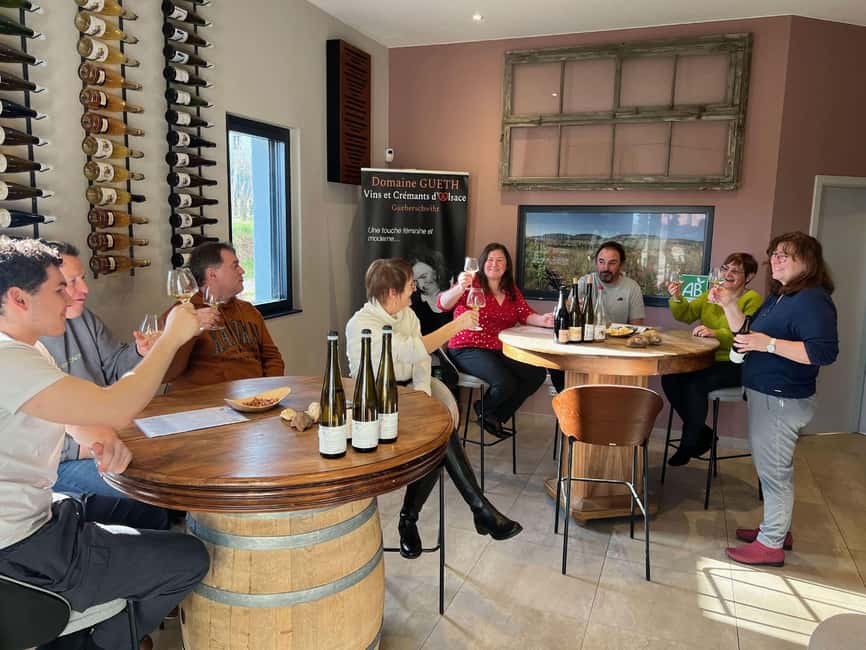
The heart of the experience is a tasting of 7 organic wines. They tell you that you can select and taste wines among all their vintages, choosing the ones that best suit you. In other words, it’s not always one standard lineup for everyone. That’s a big deal if you have preferences, like wanting something fruity, aromatic, or more elegant.
Their style is connected to selected vineyards, organic farming, and spontaneous fermentation. Spontaneous fermentation, in plain terms, means they rely on natural yeasts to start fermentation instead of using added commercial yeast. In the glass, that can translate into more character and a sense of place, though it is still driven by the winemaking choices around it.
The tasting is richly commented, with clear explanations about terroir and vinification. One review specifically praised how much time the guide took to explain the main points. That’s exactly what you want in a 1-hour tasting: enough guidance to connect the wine to the vineyard and the cellar, without feeling rushed.
Practical tip: don’t just taste for sweetness or acidity. Ask yourself after each pour, does it feel more about fruit, texture, or freshness? Then tell the guide, so they can shape what you taste next.
Other France bookings to consider
- Paris: Seine Cruise & Crepe Tasting near the Eiffel Tower
★ 4.4 · 11,231 reviews - Authentic Parisian Gourmet Food Tour with 10 Local Dishes & Wines
★ 5.0 · 4,754 reviews - Normandy D-Day Small-Group Day Trip with Omaha Beach, Cemetery & Cider Tasting
★ 5.0 · 2,786 reviews - Paris: Illuminated Evening River Cruise & Waffle Tasting
★ 4.1 · 2,697 reviews
What makes Alsace wines feel so distinct here
This visit is not only about tasting their wines, it’s also about understanding the typicities of Alsace wines. Alsace is known for aromatic potential, a focus on character, and wines that often feel crisp and expressive. Domaine Gueth frames this in their way, through organic farming, their respect-for-nature philosophy, and the idea of wines that keep their personality.
A good tasting in Alsace should teach you what to look for beyond the basic category. Here, that means learning how the winemaking approach and vineyard choices can lead to wines that feel fruity, aromatic, and elegant. If you’re comparing with other regions, you’ll notice how much the tasting is oriented toward aromatic expression and the influence of how they handled fermentation.
Also, the estate offers more than the 7 wines you taste in the session. Their menu includes over 20 wines, including traditional bottles, old vine selections, atypical wines, and local wines. You may taste only a slice of their total range, but you’ll leave with clearer ideas about what you like so you can shop intelligently.
The food pairing: pretzel or kougelhopf, plus crackers
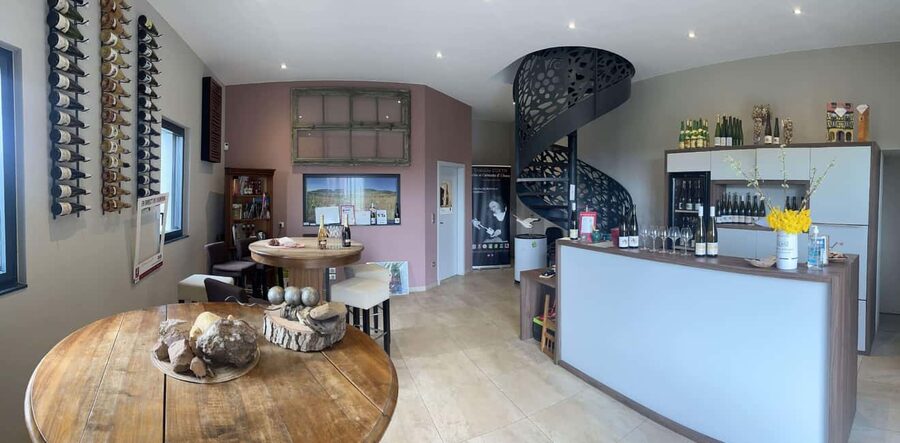
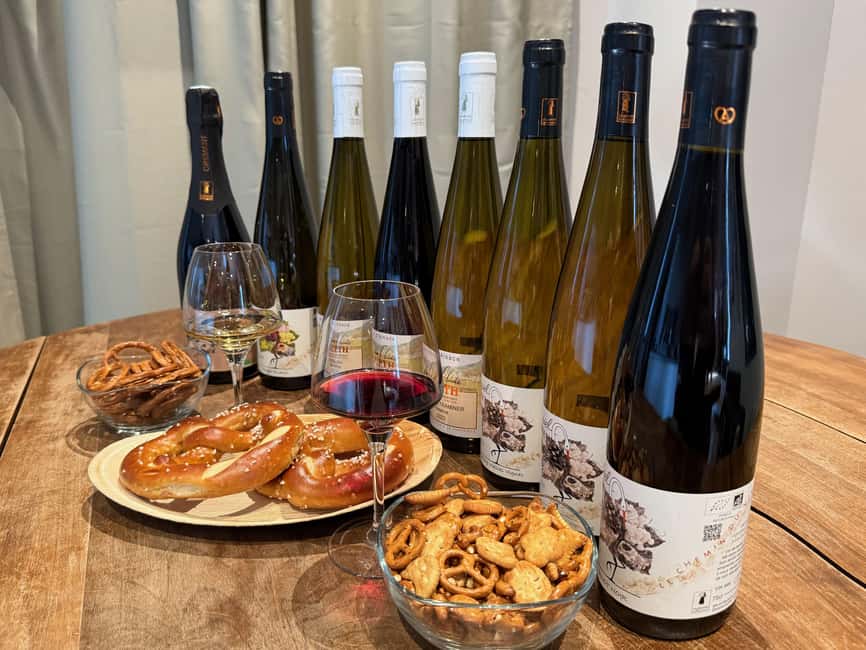
The snack part is simple, but it matters because it keeps the tasting comfortable. You’ll have an Alsatian pretzel or a slice of kougelhopf, plus crackers to nibble. This gives you something salty and familiar that can reset your palate between pours.
Why it helps: sweet or starchy snacks can muddy subtle aromatics, but a pretzel or a cracker tends to work as a neutral companion. You can focus on the wine, then cleanse your palate without turning the meal into a separate experience.
If you’re picky about pacing, this also helps. With 7 pours, you want a light, easy rhythm. The food keeps you from getting that dry, over-tasted feeling that can show up in longer tastings.
Buying wine at the producer: what to look for
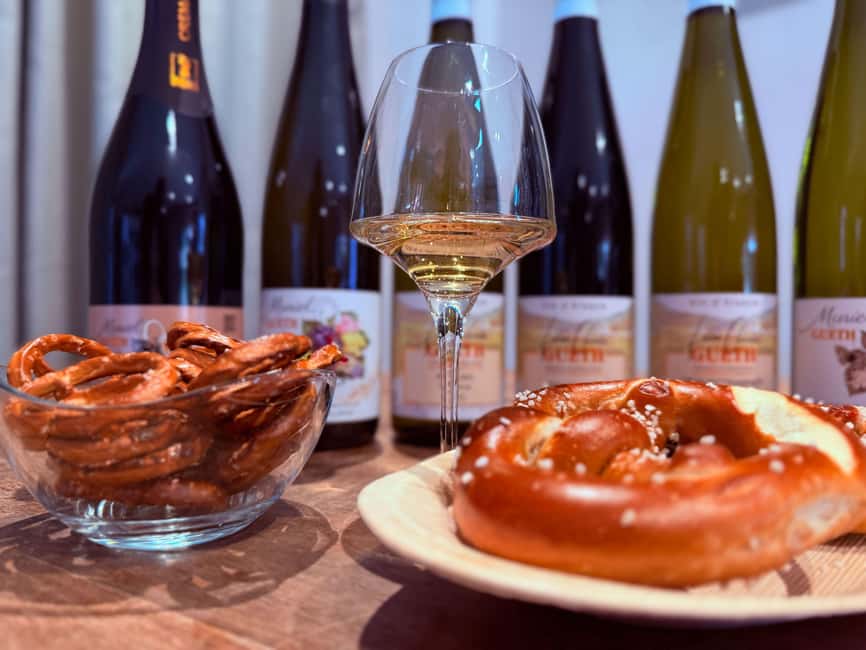
A nice advantage is that you can buy the wines you taste direct from the producer. For many people, that’s the main reason to do the tasting in the first place. Instead of buying blindly, you leave knowing which wines fit your taste and why.
The best approach is to buy based on the two questions the tasting should answer for you:
- What style did you enjoy most, fruity and elegant, or something more focused and structured?
- Which aromas felt most clear and enjoyable after you ate the pretzel or kougelhopf slice?
If you’re buying for friends, take a moment during the tasting to think about how your friends drink wine. Do they like aromatic whites, or are they more into fuller, spicier profiles? Then choose bottles that match those habits, not bottles that just sound interesting.
Remember, the estate has a wide menu, including atypical and local wines beyond the classic options. So the tasting can be a starting point for exploration, not a one-and-done purchase.
Price and value: why $20 makes sense for this format
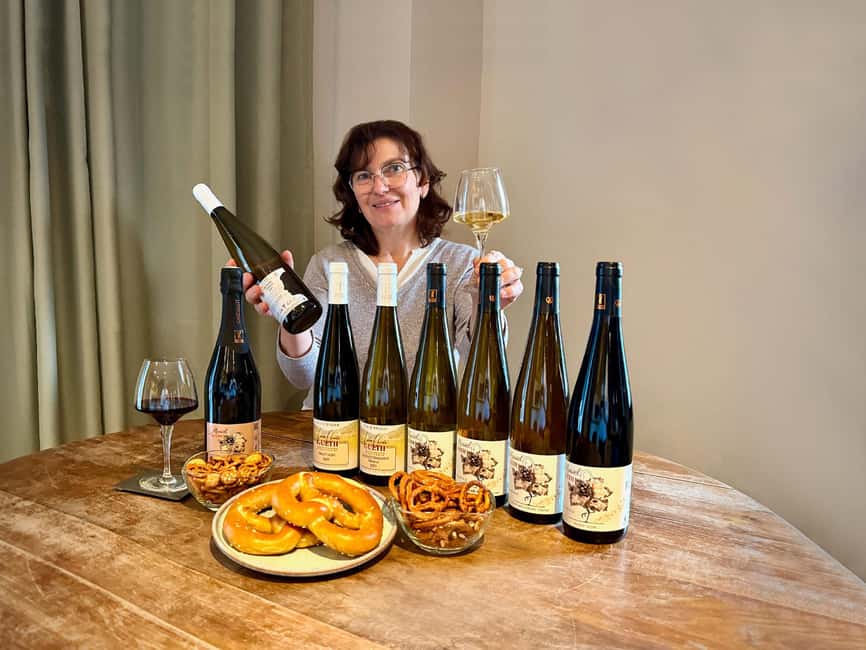
At $20 per person for a 1-hour visit, the value is mostly in what you get: a cellar look, a guided explanation, and 7 organic wines. That’s a good ratio of tastings to time, and you are also getting a chance to learn how the winemaking choices connect to flavor.
In wine country, $20 can sometimes buy you a glass or two. Here, it’s closer to a structured mini-lesson with enough pours to understand a style range. Add the included Alsatian snack, and you’re not paying extra for basic pairing while you taste.
If you’re the type of traveler who likes planning around high-value experiences, this one fits. It’s short, it’s guided, and it helps you decide what to buy instead of guessing later.
Who this tasting fits best, and who may want a different tour
This works best for you if you want:
- A compact, guided Alsace wine tasting that includes a cellar visit
- Organic-focused wines tied to High Environmental Value and farming choices
- A more modern narrative, described as feminine, with a philosophy that connects vineyard, cellar, and final style
- A tasting that can be adjusted to what you like, not a rigid lineup
It might be less ideal if you want a heavy, explicitly detailed story built around the feminine concept as a specific, point-by-point practice. One reviewer felt the tasting label promised more direct explanation of where feminine shows up. That does not mean there is no story, but it is worth knowing that the “feminine touch” could feel more like an overall philosophy than a checklist.
Also, it is adults only, so plan accordingly if you’re traveling with kids.
A simple checklist before you go
If you want to get the most out of this Domaine Gueth visit, come ready to talk. Ask one or two questions early so the guide can steer the tasting toward what you care about.
Good questions to bring:
- Which parts of the approach most influence the final style, vineyard practices or cellar decisions?
- How does spontaneous fermentation show up in what I taste?
- Which wines from your lineup match what we like today, so we can buy well?
And arrive hungry-ish, but not full. The pretzel or kougelhopf plus crackers are there to support your palate, but you should still expect wine to be the main event.
Should you book Domaine Gueth’s feminine Alsace tasting?
I’d book this if you want a small-group, guided Alsace stop that combines a quick cellar visit with 7 organic tastings and a clear philosophy about farming and winemaking. The short length makes it easy to fit into a wine-road day, and the chance to buy what you taste direct from the producer turns the visit into a practical win.
I would think twice only if you need an extremely explicit, step-by-step explanation of what the feminine concept means in concrete, labeled practices. If you’re curious but flexible, you’ll likely enjoy the modern approach and the chance to taste aromatic, elegant wines shaped by organic farming and spontaneous fermentation.
FAQ
How long is the Domaine Gueth cellar visit and tasting?
It lasts 1 hour.
What’s included in the tasting?
You get a cellar visit, a presentation of the winery’s philosophy, and a tasting of 7 organic wines. You also get an Alsatian pretzel or kougelhopf slice and some crackers.
Can I substitute the wines for something non-alcoholic?
Yes. You can replace the wines with 100% organic grape juice from their vineyards.
Is the tasting for adults only?
Yes. The wine tasting is adults only.
What kind of wines are served?
The tasting includes organic wines from selected vineyards, and the wines are made with spontaneous fermentation.
What does the tour focus on besides wine?
You’ll hear about their approach to wine described as feminine, their philosophy, and their relationship to respect for the environment.
Do they provide food during the tasting?
Yes. It’s served with an Alsatian pretzel or a slice of kougelhopf and some crackers.
Where do I meet the group?
Meet at Domaine Gueth. You can also park inside the domain, with free parking.
What languages are available for the live guide?
The live guide offers French, English, and German.
Is the tour wheelchair accessible?
Yes, it is wheelchair accessible.
More Wine Tours in France
- Paris: Moulin Rouge Cabaret Show Ticket with Champagne
★ 4.7 · 16,088 reviews - Loire Valley Castles Day Trip from Paris with Complementary Wine
★ 4.5 · 3,907 reviews - Bordeaux: River Garonne Cruise with Glass of Wine and Canelé
★ 4.5 · 3,630 reviews - Paris: Montmartre Cheese, Wine & Pastry Guided Walking Tour
★ 4.8 · 2,255 reviews
Newly listed around France
- Visit the lavender fields, the Gorges du Verdon and Moustiers.★ 5.0 · 17 reviews
- Provence small group half-day wine tour from Aix★ 4.5 · 18 reviews
- Monaco & the French Riviera – From AIX★ 4.5 · 20 reviews
- Picturesque Luberon – From AIX-EN-PROVENCE★ 5.0 · 55 reviews
- 5-Hours Lavender Fields Tour in Valensole from Aix-en-Provence★ 5.0 · 42 reviews
- Luberon Market & Villages Day Trip from Aix-en-Provence★ 5.0 · 250 reviews
- Lunch in Provence: Discovering Local Flavors in Aix-en-Provence★ 5.0 · 38 reviews
- Half day Wine Tour in Côtes de Provence Sainte-Victoire from Aix en Provence★ 5.0 · 27 reviews
Wine Tastings & Vineyard Tours, compared.

Montmartre Hill French Gourmet Food and Wine Tasting Walking Tour
Read our review →
Loire Valley Castles Day Trip With Wine Tasting
Read our review →
Afternoon Saint-Emilion Wine Tasting & snack
Read our review →
Medoc or Saint Emilion Wine Tasting and Chateau from Bordeaux
Read our review →
Saint Emilion Day Trip with Sightseeing Tour & Wine Tastings from Bordeaux
Read our review →
Saint-Émilion: Grand Cru Classé Winery Visit and Tasting
Read our review →
Saint Emilion Half-Day Trip with Wine Tasting & Winery Visit from Bordeaux
Read our review →Browse the lists this tour appears in