Reviewed · TICKETS
Cité Internationale de la Langue Française Entrance Ticket
Francis I still leaves fingerprints here. In Villers-Cotterêts, you can walk through a royal castle tied to the rise of the Valois kings, then spend time in the on-site permanent French language experience. What makes it especially interesting is how this place blends big Renaissance ambition with a site history that stretches back to medieval hunting, all wrapped into a visit that is mostly self-guided.
I love two things most. First, the Renaissance chapel breaks with the Gothic tradition in a way you can actually see, not just read about. Second, the permanent tour includes interactive games, which makes the language theme feel less like a lecture and more like something you do with your hands and attention.
One drawback to plan around: this is a museum-style experience focused on the French language, so if you want pure architecture only, you might find the tone a little cool or overly modern in spots. Also, there is no live guide included, so you’ll be reading your way through more than asking questions.
In This Review
- Key things to notice before you go
- Why Villers-Cotterêts matters: Valois, Retz Forest, and Francis I
- Entering the castle on your own: what the ticket really covers
- The chapel that breaks with Gothic: salamanders, fleur-de-lis, and crowned initials
- The castle’s survival story: a building that outlasted war
- Architects and gardens: Delorme, Le Nôtre, and the look of court life
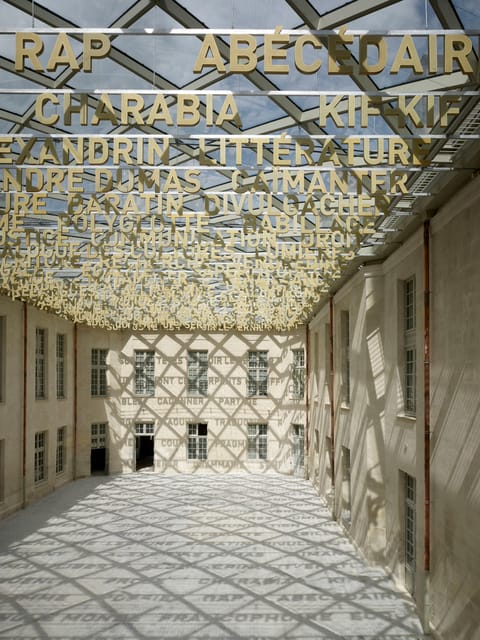
- How the French language exhibit fits the palace
- Price and value: does $10 make sense for a one-day stop?
- Timing, closing days, and last entry: how to avoid the stress
- Is it worth it for you? Who this self-guided ticket suits best
- Should you book? My take
- FAQ
- How long is the ticket valid?
- What does the ticket include?
- Are other parts of the Cité included with the ticket?
- Is there a live guide included?
- What are the free entry rules?
- When can I enter, and when does the monument close?
Key things to notice before you go
- Self-guided permanent tour means you set the pace, with no live guide in the ticket
- Renaissance chapel with royal emblems like the salamander and fleur-de-lis replaces Christian symbols
- Francis I origin story begins with a child king receiving Valois and the castle from Louis XII
- Retz forest hunting legacy stretches back to Dagobert I, with later kings building in the area
- Online ticket value tends to mean faster entry and less waiting at the gate
- One-day visit window with last access 60 minutes before closing
Why Villers-Cotterêts matters: Valois, Retz Forest, and Francis I
Villers-Cotterêts is not just a dot on the Hauts-de-France map. It is tied to the political center of the Valois dynasty, and that matters because the castle you’ll visit sits in the heart of that story. The surrounding Retz forest, in the Aisne, has a reputation for royal hunting going back a long way. In 632, Dagobert I was already hunting there, and the kings who came after him valued the area enough to build a residence that did not need to be flashy to be important.
The castle’s big turning point is Francis I. He receives the duchy of Valois and the castle when he is only three years old, from his cousin King Louis XII. Think about what that means for the site. Even before Francis I can personally enjoy it, the property becomes part of a royal plan, not just a countryside stop.
After Francis I’s defeat at Pavia in Italy, he launches major construction projects in the late 1520s, and the pattern shows up here too. He enlarges the Louvre and builds Fontainebleau, and for his favorite pastime, hunting, he creates a royal palace in the middle of the Retz forest. The castle at Villers-Cotterêts sits in this same mindset: power, ritual, and leisure, all wrapped in architecture.
You’ll feel this as you move around the buildings. The visit is short on paper, one day, but it connects eras fast. Medieval hunting turns into Renaissance court life, then into a modern destination for learning and preserving.
Other France bookings to consider
- Disneyland® Paris 1-Day Ticket
★ 4.6 · 49,412 reviews - Paris: Versailles Palace and Gardens Full Access Ticket
★ 4.6 · 41,579 reviews - Paris: Arc de Triomphe Rooftop Tickets
★ 4.6 · 34,264 reviews
Entering the castle on your own: what the ticket really covers
Your ticket is for the self-guided tour and includes admission. That means you should expect to rely on signage, displays, and the permanent exhibit itself rather than a docent-led route. Since there is no live guide included, come with a simple strategy: pick a couple of must-see spots, then let the rest of the time be flexible.
Here is a key detail that can change how you plan your visit. The ticket grants access to the permanent tour. Other areas of the Cité remain freely accessible to the public. So, even if you spend extra time in the permanent spaces, you can still roam outside them without buying more tickets. That is good value because it reduces the risk of feeling like you only got what the ticket directly paid for.
Also, the ticket is valid for 1 day, with starting times depending on availability. So it pays to choose a time when you are not rushing. If you arrive late, you may end up cutting your most important areas.
Finally, the site is wheelchair accessible. That is a practical plus if you are traveling with mobility needs, or simply if you prefer to avoid stairs and long detours.
The chapel that breaks with Gothic: salamanders, fleur-de-lis, and crowned initials
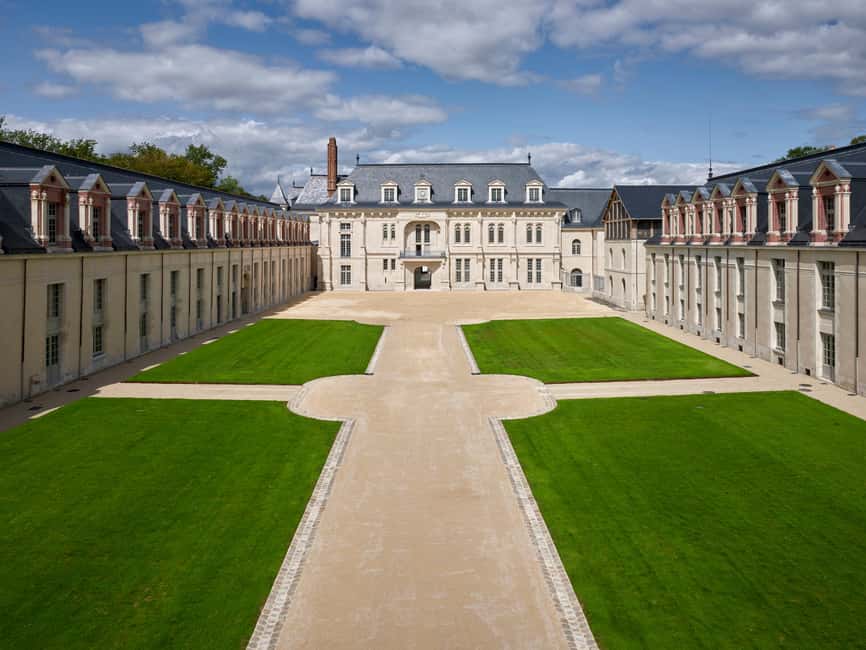
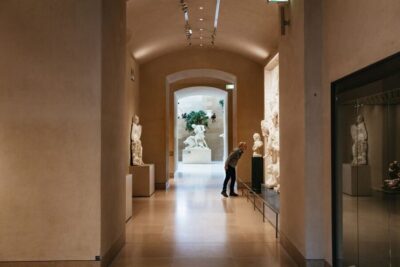
If you only remember one highlight, make it the chapel. The chapel is described as the first in France to break with the Gothic tradition, and that is exactly the kind of change you notice with your eyes. You are not only looking at decoration. You are looking at a shift in style, and the way power gets displayed in stone.
What I find clever, and worth your attention, is how the chapel uses symbolism as a royal statement. The king’s emblems replace Christian symbols in this place of prayer. You’ll see the salamander, the fleur-de-lis, and crowned initials tied to the monarchy. For a lot of places, you have to infer what the symbols mean. Here, the site is built to make that connection feel direct.
This is also a strong reason to go even if you are not a language-focused visitor. The chapel is an architecture stop first, and the museum theme comes as part of the same building complex. In other words, your visit doesn’t rise and fall based on whether you enjoy the French language exhibit.
If you have limited time, do not skip the chapel. It is the clearest “why Renaissance here” moment. And if you have more time, it’s a great anchor point, because you can come back to it mentally as you move through the rest of your visit.
The castle’s survival story: a building that outlasted war
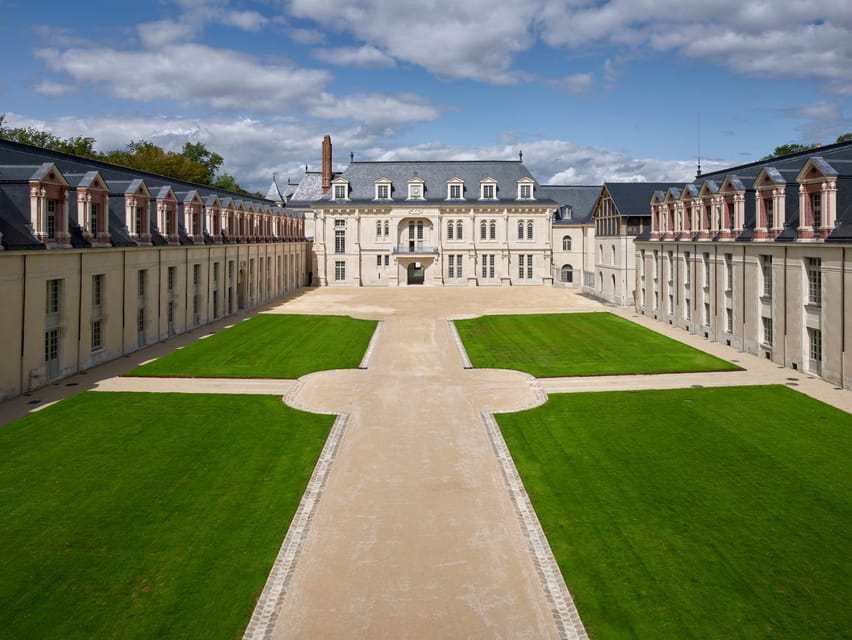
One of the highlights is that the castle was miraculously saved from the Great War. That is not just a dramatic line for marketing. It changes how you experience the place. When a structure survives a modern conflict, it becomes a physical link to both what was built and what could have been lost.
In a visit like this, you are often surrounded by layers of meaning. Here, that survival layer adds a kind of gravity. The building is not only about Francis I and Renaissance design. It also represents endurance through the 20th century, and that makes the experience feel more than just historical scenery.
It also helps explain why the site matters for public education today. A surviving castle gives you something rare: the chance to see how Renaissance court ambition actually looked in real space, then pair that with a modern mission to keep the French language and culture active.
Within easy reach:
- Paris: 1-Hour Seine Cruise departing from the Eiffel Tower
★ 4.4 · 77,472 reviews - Paris: Orsay Museum Entry Ticket
★ 4.7 · 25,647 reviews - Paris: Evening River Cruise with Music
★ 4.4 · 22,721 reviews - Paris: Eiffel Tower Entry Ticket with Optional Summit Access
★ 4.4 · 20,035 reviews
Architects and gardens: Delorme, Le Nôtre, and the look of court life
A castle is not just walls and roofs. It is also the design decisions that shape how people move, see, and gather. That is where names like Philibert Delorme and André Le Nôtre come in.
Philibert Delorme is connected to the work of Henry II, and he is described as the first architect of the king who participated in building the Louvre. That connection matters because it places Villers-Cotterêts inside a bigger network of French royal architecture. You are not only seeing one isolated building. You are seeing a piece of the same Renaissance machine.
And then there is André Le Nôtre, the famous gardener of Versailles. Le Nôtre transformed the park at the request of Philippe d’Orléans, brother of Louis XIV. That tells you something useful for your expectations. Even if you focus mostly on indoor spaces, the site’s outdoor design philosophy is part of the story. Gardens and parks are how French royalty staged power without saying a word, by controlling sightlines and space.
So when you are walking around, think in terms of views and transitions. Where does the eye go? Where might a procession or a pause in conversation have happened? That kind of thinking makes a self-guided visit more satisfying, because you start reading the building like a map of court behavior.
How the French language exhibit fits the palace
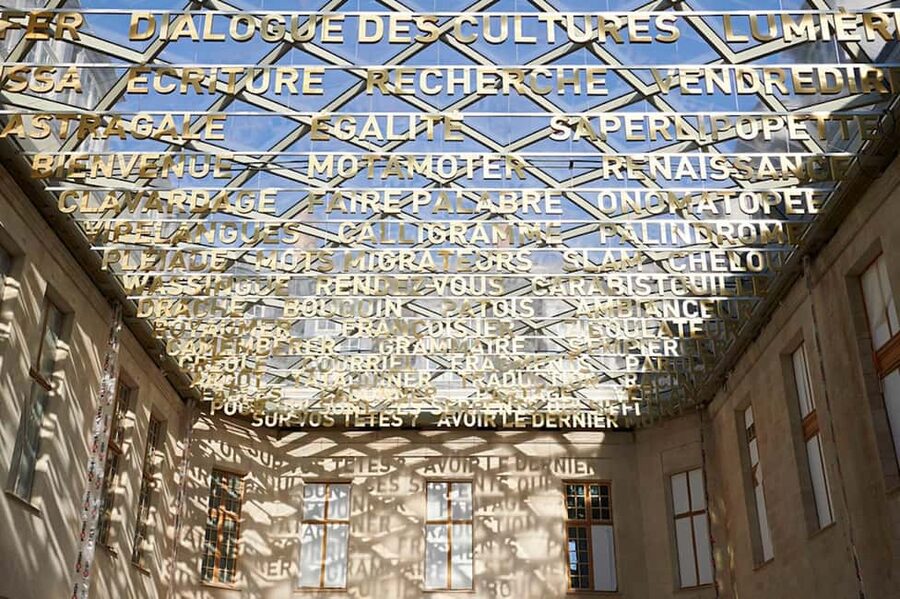
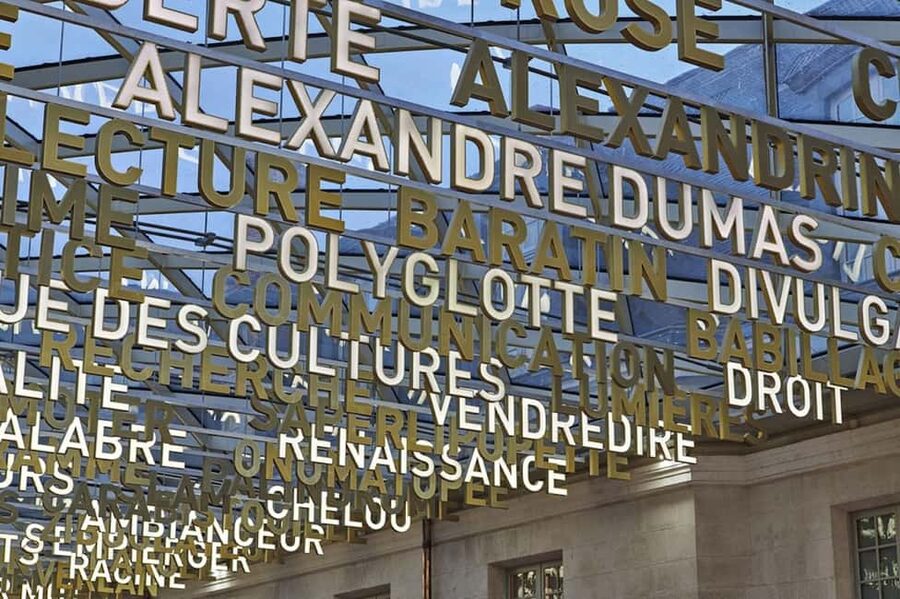
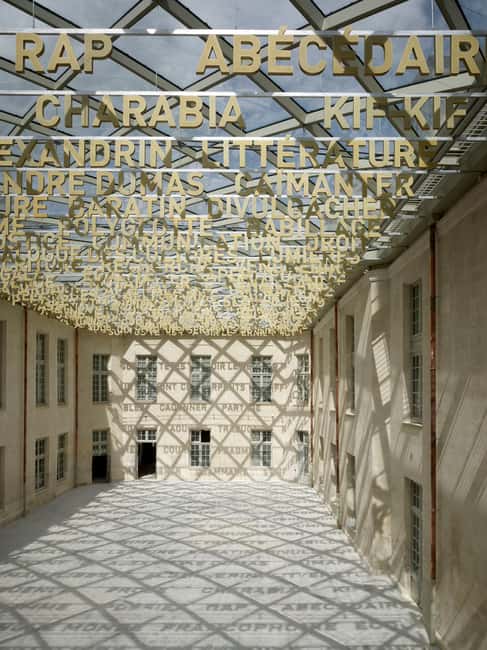
This is where the experience may swing for you. The permanent tour is centered on the French language, and at least part of it is interactive, including excellent interactive games. That is a strong design choice if you are bringing kids, teens, or anyone who learns better by doing. It also explains why the experience can feel more like a hands-on visit rather than a quiet gallery.
Still, there is a note of caution. One of the sharpest criticisms is about how the castle has been turned into a museum that feels cold or visually disappointing to some people, especially because the theme is described as emphasizing multiculturalism. Whether that interpretation works for you depends on what you want from the building.
Here is my practical advice: set your expectations before you go. If your goal is “Francis I and Renaissance architecture,” you will have plenty to keep you interested. If your goal is “a traditional restoration that feels like a palace tour,” you might be less happy with a museum tone that competes with the architecture.
The upside is that the building is doing two jobs at once, and that can be a good thing. You get architecture, then language education. You also get a setting that makes language feel historical, because the castle story is so rooted in power and culture.
Price and value: does $10 make sense for a one-day stop?
At about $10 per person, this ticket is relatively accessible for a palace-like experience that includes the permanent tour. The best value comes from two factors. One, your admission is tied to the permanent exhibit, and the rest of the Cité has free access. Two, if you choose a time when you can enjoy both the chapel and the language spaces, you are paying for more than a photo stop.
If you are traveling as a young adult, check the free admission rules. Visitors under 18 enter free, and EU citizens under 26 also have free entry, but you must show photo ID with a picture at the ticketing station first. That can make the whole outing feel like a bargain if you qualify.
There are also free admission windows on specific days, including the first Sunday of January, February, March, November, and December, plus European Heritage Days in September. If your schedule lines up, you could turn this into a low-cost day that still includes the permanent tour access.
So the $10 price tag is fair when you plan to actually use it. If you only want an outside stroll or a quick glance at the chapel, you might feel like you paid for indoor content you did not fully use.
Timing, closing days, and last entry: how to avoid the stress
Plan this like a real appointment, not a casual wander. The last access to the monument is 60 minutes before closing time. That means you should arrive with enough cushion to actually experience the permanent tour and not feel chased.
The site also closes every Monday, except Easter Monday and Pentecost Monday. It additionally has set closure dates on January 1st, May 1st, and December 25. So if you are building an itinerary around it, pick a day that is not one of those.
One practical trick: aim to start earlier in the day. Even without exact hours listed here, starting earlier helps you avoid the “rush to finish” feeling that self-guided visits can create.
Is it worth it for you? Who this self-guided ticket suits best
You should strongly consider this ticket if you want a day that combines architecture with a cultural education theme. The chapel alone gives you a Renaissance story you can see clearly, and the rest of the visit supports that with a French language permanent experience.
I also think it works well for families, because the language content includes interactive games. If you have kids who do better with activities than reading, the games are likely to earn their attention.
If you are the kind of visitor who gets frustrated when a historic building is used for a modern exhibit, then you might find the museum presentation less to your taste. In that case, you can still enjoy the core architectural spaces, but go in with realistic expectations.
If you want a live guide to answer questions, note that this ticket does not include one. You’ll be on your own with signage and the permanent tour materials.
Should you book? My take
Book it if you want a meaningful one-day stop in Villers-Cotterêts that connects Francis I, Renaissance design, and the French language into a visit you can shape yourself. The chapel is the standout, and the interactive parts help keep the language theme from feeling like pure coursework.
Skip it or rethink it if your main goal is a quiet, palace-only tour with minimal modern museum framing, or if you strongly prefer guided interpretation. Also, be careful with timing because last access is 60 minutes before closing, and the site is closed on most Mondays.
If you match the vibe, this is a solid value for the money, and it is a great way to spend time away from the usual Paris-only route while still touching real royal history.
FAQ
How long is the ticket valid?
The ticket is valid for 1 day. You should check availability to see the starting times.
What does the ticket include?
Your ticket includes admission and a self-guided tour of the permanent tour.
Are other parts of the Cité included with the ticket?
The ticket grants access to the permanent tour. All other areas of the Cité remain freely accessible to the public.
Is there a live guide included?
No. This experience is self-guided, and a live guide is not included.
What are the free entry rules?
Visitors under 18 have free entrance. EU citizens under 26 also have free entrance, but you must show photo ID with a picture at the ticketing station before going to the monument entrance. Free entrance is also offered on the first Sunday of January, February, March, November, and December, and during European Heritage Days (the third weekend of September).
When can I enter, and when does the monument close?
Last access is 60 minutes before closing time. The monument is closed every Monday, except Easter Monday and Pentecost Monday, and it is also closed on January 1st, May 1st, and December 25.
Newly listed around France
- Visit the lavender fields, the Gorges du Verdon and Moustiers.★ 5.0 · 17 reviews
- Provence small group half-day wine tour from Aix★ 4.5 · 18 reviews
- Monaco & the French Riviera – From AIX★ 4.5 · 20 reviews
- Picturesque Luberon – From AIX-EN-PROVENCE★ 5.0 · 55 reviews
- 5-Hours Lavender Fields Tour in Valensole from Aix-en-Provence★ 5.0 · 42 reviews
- Luberon Market & Villages Day Trip from Aix-en-Provence★ 5.0 · 250 reviews
- Lunch in Provence: Discovering Local Flavors in Aix-en-Provence★ 5.0 · 38 reviews
- Half day Wine Tour in Côtes de Provence Sainte-Victoire from Aix en Provence★ 5.0 · 27 reviews
Tickets, compared.

Versailles Palace and Gardens Full Access Ticket
Read our review →

Eiffel Tower Entry Ticket with Optional Summit Access
Read our review →
Moulin Rouge Cabaret Show Ticket with Champagne
Read our review →
Montparnasse Tower Observation Deck Entry Ticket
Read our review →