
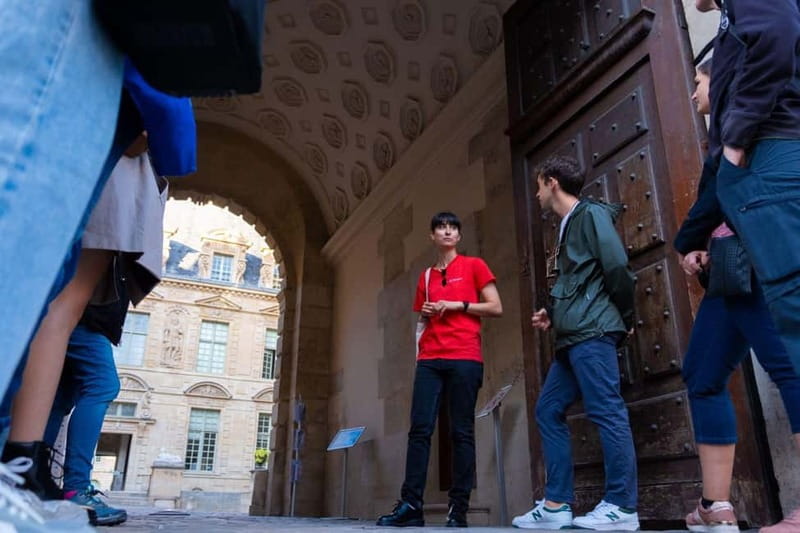
Reviewed · MARAIS DISTRICT WALKS
Explore the Marais: History, Art & Local Culture
Paris history is best when you walk it. This Marais tour mixes medieval lanes with modern life, from Jewish Quarter streets to street art and LGBTQIA landmarks. You’ll also hear how Victor Hugo and the French Revolution show up in everyday scenery.
I love how the tour keeps moving at a smart pace, with stops that make big themes feel close and human. Two standouts for me are the small-group feel (max 12) and the merveilleux pastry tasting, which is exactly the kind of local break that makes the walk memorable.
One thing to consider is the format: it’s 2 km of walking in about 2 hours, so wear shoes that won’t punish you.
In This Review
- Key highlights you will actually feel
- Why the Marais walk feels like reading a city
- From the Pompidou area to Hotel de Ville: the warm-up that matters
- Saint-Gervais and medieval streets: where the details do the talking
- Street art, LGBTQIA landmarks, and local life in plain sight
- The merveilleux stop: the break that earns its spot
- Rue des Rosiers: Jewish Quarter flavor and culture in walking form
- Place des Vosges and Victor Hugo: big ideas in an easy square
- Place de la Bastille: French Revolution in street-level scenery
- Small group pacing: why max 12 people is a real advantage
- Price and value: what $49 buys you in two hours
- What to bring and how to get the most from the walk
- Who should book this Marais experience
- Should you book Explore the Marais, History, Art, and Local Culture?
- FAQ
- How long is the tour, and how much walking is involved?
- What group size is this tour?
- What language is the tour guide?
- Where do we meet the guide?
- What is included in the price?
- Is the tour vegetarian-friendly or suitable for vegan and gluten-free diets?
- What should I bring?
- Should you book Explore the Marais, History, Art, and Local Culture?
Key highlights you will actually feel
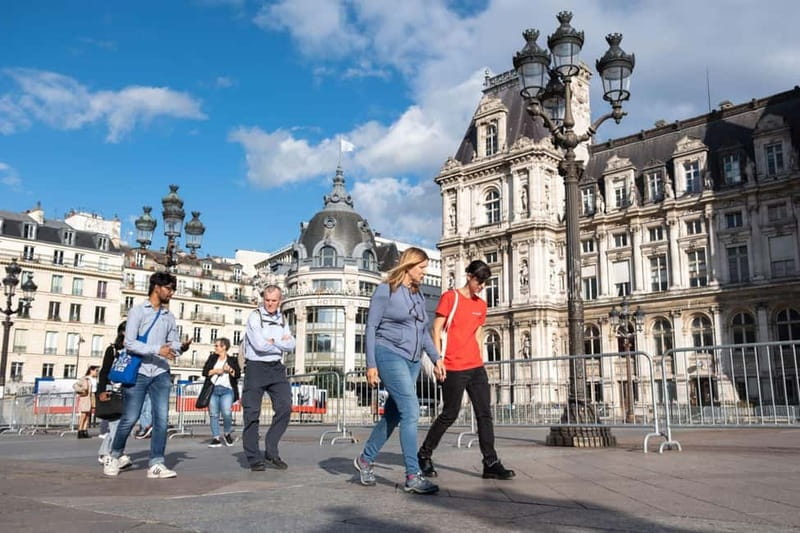
- A Marais route that connects old Paris to modern neighborhoods
- Hidden medieval street scenes, including corbelled-house details and tucked-away corners
- Jewish Quarter time on Rue des Rosiers, with food culture at the center
- Street art and LGBTQIA landmarks woven into the story, not just pointed at
- A merveilleux meringue tasting, timed as a real break, not a random stop
- Experienced English-speaking guides, with guides like Sarah, Maxi, Cecelia, Camila, Paula, and Paloma repeatedly praised for pacing and storytelling
Why the Marais walk feels like reading a city
The Marais can look like a postcard, but it’s also a neighborhood where daily life is the plot. This tour is designed for that. You start near modern landmarks, then slide into medieval streets, then swing back to major squares where big ideas from French history are still visible.
What makes it work for you is the variety packed into a short walk. You get architecture and street atmosphere, plus culture stops that help you understand why this area has so many identities living side by side.
And because it’s a max 12 group, you are not stuck watching the back of someone’s phone. You can ask questions, and your guide can steer the pace to what your group needs.
More Marais wanders:
- Award-Winning Paris French Bakery Experience — Le Marais, 4th Arr
★ 4.5 · 1,186 reviews - Paris Le Marais Food Tour With 10+ Tastings, Cheese, Wine & More
★ 5.0 · 985 reviews - Paris Le Marais District Original Food and Wine Tasting Tour
★ 4.5 · 880 reviews
From the Pompidou area to Hotel de Ville: the warm-up that matters
You meet near the Pompidou area, with your guide holding a Paris Urban Adventures sign. From there, you begin with a quick orientation step by the Centre Pompidou area, about ten minutes, before the route turns fully into the Marais.
That early setup helps, because the Marais can feel like a maze when you arrive on your own. You will understand where you are, what you are about to see, and why the guide keeps pointing to tiny architectural details.
Next comes Hôtel de Ville. This is one of those stops that sets the tone: Paris administrative grandeur mixed with art and street-level energy. If you notice the Stravinsky Fountain vibe along the way, that’s the idea in miniature. This tour treats art as part of the street, not just a museum subject.
Saint-Gervais and medieval streets: where the details do the talking
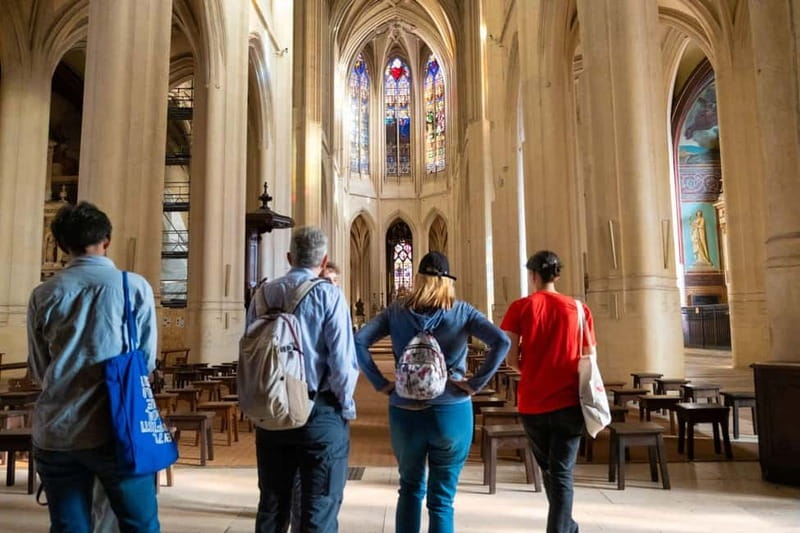
Once you’re into the Marais lanes, you shift from big landmarks to close-up Paris. You step into Saint Gervais church, a stop that gives the neighborhood more texture than a quick glance ever would. Then you move through smaller medieval-looking streets where you start seeing the kind of building forms people miss when they hurry.
One of the most practical parts here is how the guide frames what you’re looking at. You’re not just hearing names. You’re learning how the area’s layout and design make history feel physical, especially with corbelled houses and those quirky building silhouettes that look like they are leaning in to tell secrets.
Also, your guide builds in humor and momentum. Several guides are praised for pacing and for making the walk feel like a conversation, not a lecture. That matters when you have about two hours and don’t want your energy spent translating facts you could read later.
Street art, LGBTQIA landmarks, and local life in plain sight
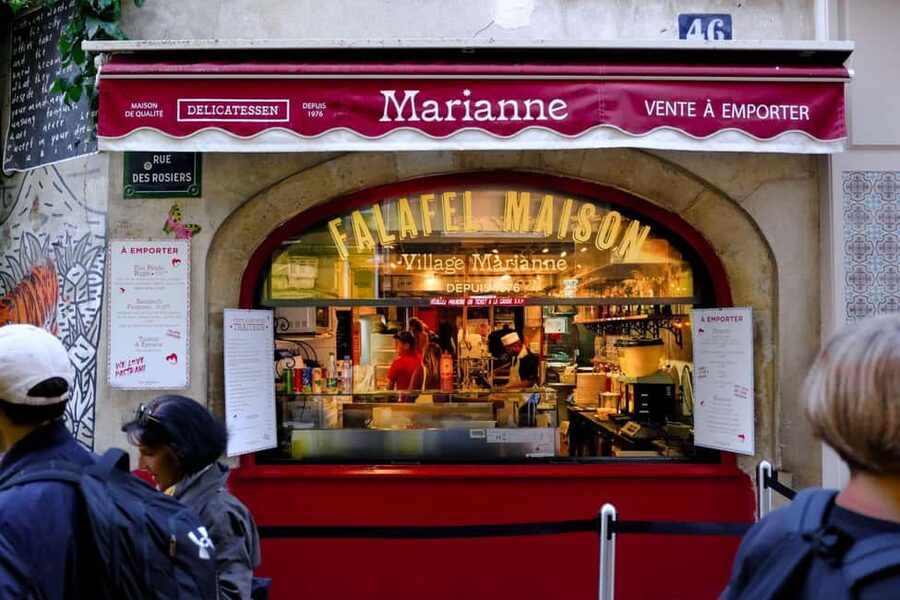
The Marais is not frozen in time. Your route includes LGBTQIA+ landmarks and street art highlights, with the neighborhood’s modern community treated as part of the story, not an afterthought.
If you like art you can find with your eyes, this is where the tour scores. Guides such as Camila are repeatedly mentioned for pointing out street art in a way that feels like a hunt, with lots of small discoveries along the way. You’ll walk past things you might have ignored on your own, then suddenly understand what you’re seeing.
This also helps you read the neighborhood better when you break off after the tour. You will know what to look for. You’ll also have an easier time choosing where to linger, because the guide has already taught you how the area “speaks.”
Other Paris bookings to consider
- Paris: Dark History and Ghostly Guided Walking Tour
★ 4.7 · 1,000 reviews - Paris: Le Marais & Montmartre Jewish History Walking Tour
★ 4.8 · 170 reviews - Historic Paris Walking Tour in English
★ 4.9 · 78 reviews - The historic district of Montmartre
★ 4.9 · 66 reviews
The merveilleux stop: the break that earns its spot
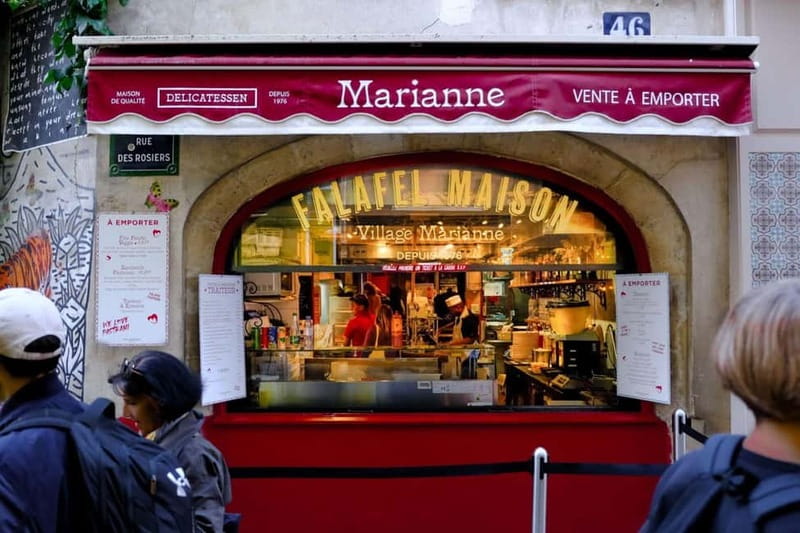
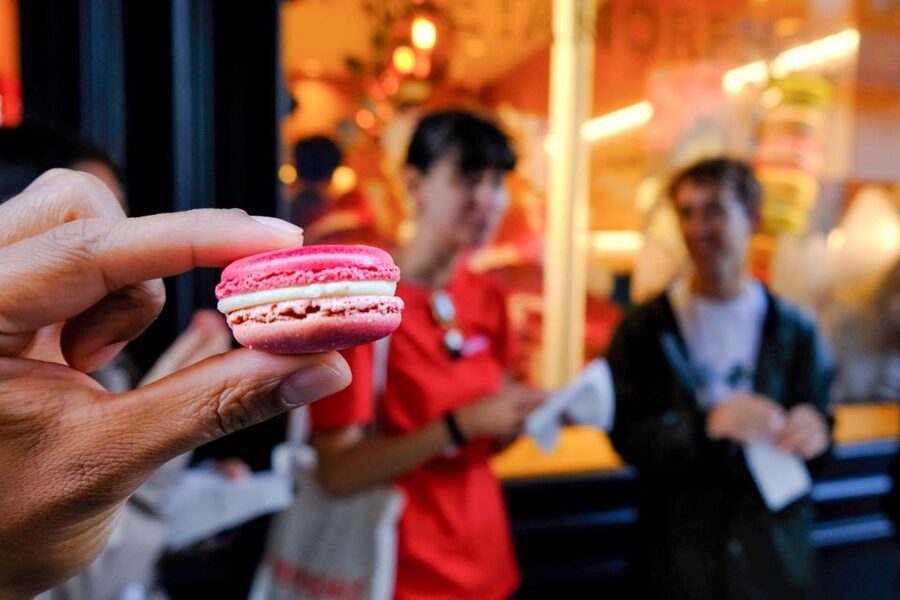
This tour includes a pastry tasting of a merveilleux, described as a mind-blowing meringue style treat. It’s not just a sugar stop. It’s a reset.
In a two-hour walk, that matters. You need one planned moment to sit, taste, and catch your breath, so the second half of the route lands while you still have energy. It also gives you a very Paris moment. You get to experience something local and specific, instead of grabbing whatever is closest.
A practical note for you: drinks and additional food are not included. So if you want water, coffee, or anything extra, budget for it or plan to buy on your own nearby.
Rue des Rosiers: Jewish Quarter flavor and culture in walking form
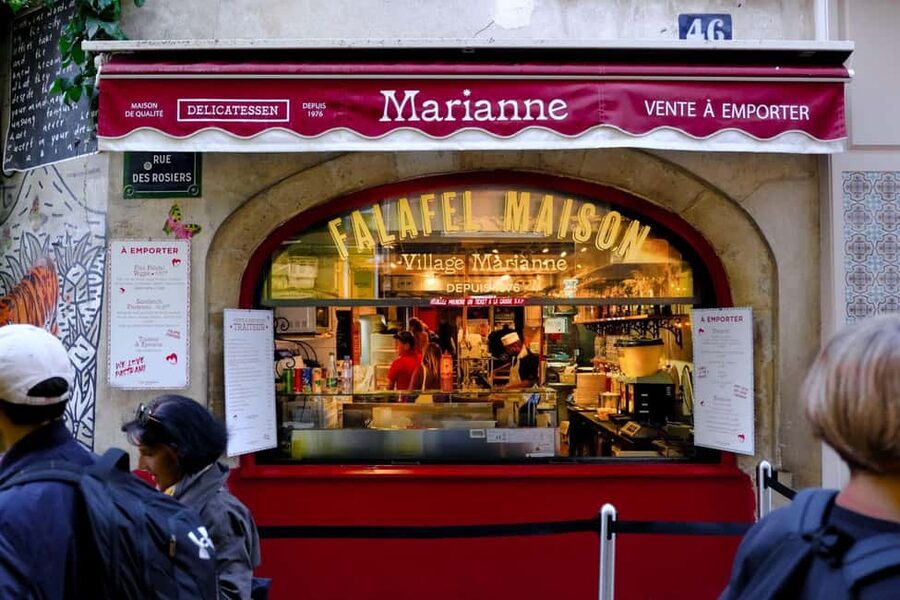
Next you head to Rue des Rosiers, often described as the heart of Paris’s Jewish community. This is where the Marais feels most alive as a cultural corridor, not just a scenic one.
What I like about this stop is that it connects culture with movement. You’re walking a street that has momentum. You can feel how food culture belongs here, and your guide brings context so it’s not just a shopping strip in your head.
Your tour also works well if you are a vegetarian. You are not locked into one meat-heavy tasting format. Still, the tour is not listed as suitable for lactose free, gluten free, or vegan needs, so if that matters a lot, plan carefully. You might need to choose only certain items on your own nearby rather than relying on the tasting alone.
If you love asking questions, this is also a good moment. Guides like Paloma are praised for being personable and taking time to answer inquiries. That makes a big difference in cultural stops, because you get better understanding without awkwardness or guessing.
Place des Vosges and Victor Hugo: big ideas in an easy square
After Rue des Rosiers, you arrive at Place des Vosges, a gorgeous square closely tied to Victor Hugo. This is a change in tempo. Instead of squeezing through lanes, you get open space and time to look around.
What you’ll appreciate here is how the square works as a frame. Your guide connects what you see in the architecture and the square’s role in the neighborhood to the person you’re learning about. If you care about literature, this is one of the more satisfying “history meets scenery” stops in the route.
Place des Vosges is also a practical staging point. It’s an easy area to use as your mental anchor for the rest of the afternoon. After the tour, you can decide to keep exploring nearby streets with more confidence because you have a central reference.
Place de la Bastille: French Revolution in street-level scenery

The tour then moves toward Place de la Bastille, where the French Revolution is said to have started. This stop turns the volume up from neighborhood flavor to national significance.
Even if you are not a hardcore history person, Bastille is worth the walk because it ties a major event to a place you can locate fast on a map. That reduces the mental work later when you try to connect other sites in Paris.
It’s also a smart finish from a practical standpoint. The route is built so you end in an area where you can easily continue. Your guide highlights the convenience of grabbing a drink at local bars around the square, and the tour’s final point is set around Place des Vosges so you aren’t stranded somewhere inconvenient.
Small group pacing: why max 12 people is a real advantage
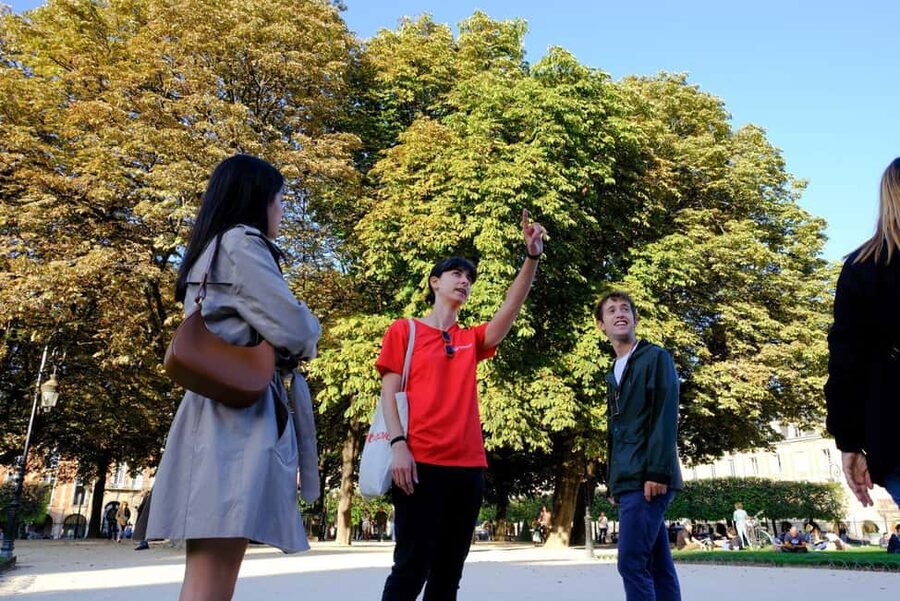
The biggest “value” detail here is the group size. Max 12 changes the whole experience.
With a smaller group, your guide can slow down for questions, adjust the pace when people need a breather, and explain what you’re looking at without rushing to keep everyone together. Reviews repeatedly praise guides for pacing, including one mention of Paloma being great with children aged 10 and 12, with enough time for answers.
This is also child-friendly. If you are traveling with kids, that matters, because a lot of walking tours either become too long or too adult-focused. Here, the route is short enough and structured enough that families can manage it.
Price and value: what $49 buys you in two hours
At $49 per person for about 2 hours, you are paying for more than a walk.
You are paying for:
- An expert English-speaking local guide who connects sites into a coherent route
- Focused time in Rue des Rosiers and Place des Vosges
- A planned merveilleux tasting
- A small-group structure with a maximum of 12
If you tried to do this alone, you could still walk the streets. But you would miss the “why” that makes the Marais click. For example, you would likely notice churches and squares, but you might not catch the specific links the guide makes between architecture, community identity, and major historical themes.
And since the tour is listed as carbon neutral and run by a B Corp-certified company using travel as a force for good, you are also making a choice that matches your values without sacrificing the experience.
What to bring and how to get the most from the walk
This is a simple tour to prep for, but a few choices will make it easier.
Bring:
- Comfortable shoes for uneven old-street paving
- An umbrella, since Paris weather can shift fast
Plan your expectations around the walking distance. You cover about 2 km in the two hours. That is not extreme, but it is enough that flip-flops or brand-new sneakers can turn your trip into a foot problem.
Also, consider your food needs. The tour is suitable for vegetarians, but it is not designed for lactose free, gluten free, or vegan requirements. If that applies to you, I’d treat the pastry tasting as the guaranteed item, then plan a backup option for yourself nearby after the tour.
Who should book this Marais experience
Book it if you want:
- A fast way to orient yourself in the Marais
- A mix of medieval streets, street art, and community culture
- A guide who helps you connect what you see to bigger stories like Victor Hugo and the French Revolution
- A break built in, via the merveilleux tasting
You might skip it if you want a longer, museum-heavy day, or if your schedule needs strict minimal walking. This is a focused neighborhood walk, not a multi-site tour across Paris’s far reaches.
Should you book Explore the Marais, History, Art, and Local Culture?
Yes, if you have about two hours and you want the Marais explained in a way that helps you keep enjoying it after the tour ends. The route hits strong anchors, Rue des Rosiers and Place des Vosges, plus the payoff of Place de la Bastille, and it stays paced for real people, not marathon walkers.
I’d book with confidence if you like street-level Paris, appreciate guided storytelling, and you’re okay with the food format being centered on a pastry tasting rather than a full meal. If dietary restrictions are a big deal for you, message ahead and plan your backup snacks.
FAQ
How long is the tour, and how much walking is involved?
The tour lasts about 2 hours and covers around 2 km (1.2 mile) of walking.
What group size is this tour?
It runs as a small-group experience with a maximum of 12 guests, and private group options are available.
What language is the tour guide?
The tour is guided in English.
Where do we meet the guide?
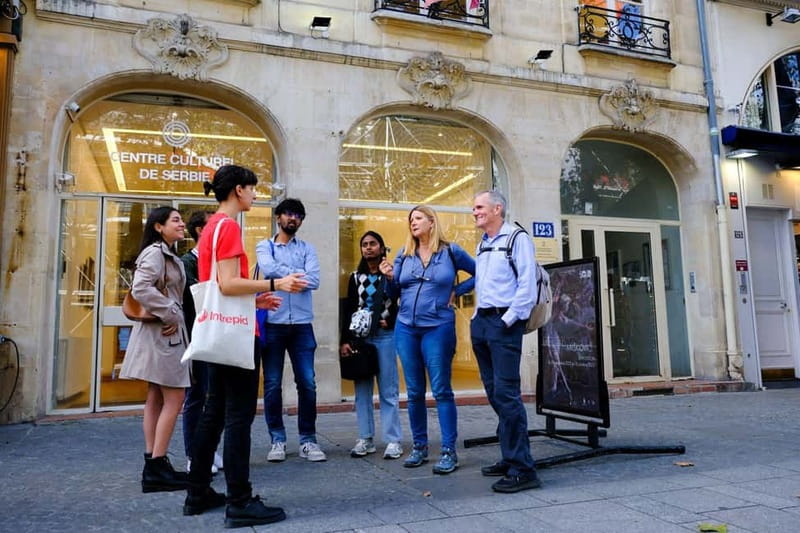
You meet at 123 Rue Saint-Martin, 75004 Paris, opposite the Pompidou center by the Centre Culturel de Serbie. Your guide will be holding a Paris Urban Adventures sign.
What is included in the price?
The price includes a guided walking tour of the Marais district, an expert English-speaking local guide, exploration in the Jewish Quarter area (Rue des Rosiers), LGBTQIA+ landmarks and street art highlights, and a local pastry tasting (merveilleux).
Is the tour vegetarian-friendly or suitable for vegan and gluten-free diets?
It is suitable for vegetarians, but it is not suitable for lactose free, gluten free, or vegan customers.
What should I bring?
Bring comfortable shoes and an umbrella.
Should you book Explore the Marais, History, Art, and Local Culture?
If you want the Marais in a short, well-paced format with real local flavor and strong storytelling, this is a solid pick. The combination of medieval street scenes, Rue des Rosiers, LGBTQIA+ and street art highlights, plus the merveilleux tasting makes it good value for a first or second day in Paris.
Newly listed around Paris
- The voice of Montmartre is a must-see in Paris★ 3.8 · 19 reviews
- Top Private Cruises in Paris with Champagne + more surprises★ 5.0 · 309 reviews
- The Official Emily in Paris Montmartre Walking Tour★ 4.7 · 40 reviews
- The Paris Pass® Plus: 90+ Attractions including The Louvre★ 3.4 · 386 reviews
- The Official Emily in Paris Locations Walking Tour★ 4.9 · 383 reviews
- The Official Emily in Paris Macaron-Making Workshop★ 4.9 · 68 reviews
- The Official Emily in Paris Wine & Cheese with Butter Making★ 4.9 · 20 reviews
- The Official Emily in Paris Croissant-Making Workshop★ 4.9 · 85 reviews
Marais District Walks, compared.

Award-Winning Paris French Bakery Experience — Le Marais, 4th Arr
Read our review →
Paris Le Marais Food Tour With 10+ Tastings, Cheese, Wine & More
Read our review →
Paris Le Marais District Original Food and Wine Tasting Tour
Read our review →
Paris Bike Tour Hidden Secrets in the Latin Quarter & Le Marais neighborhoods
Read our review →
Paris Culinary Tour: 11 Tastings & 2 Wines in Le Marais
Read our review →

Le Marais District Food Tour with 10+ Tastings & Wine
Read our review →
Browse the lists this tour appears in