
Reviewed · WINE TASTINGS & VINEYARD TOURS
From Avignon: Wine Tour with Visit to Châteauneuf du Pape
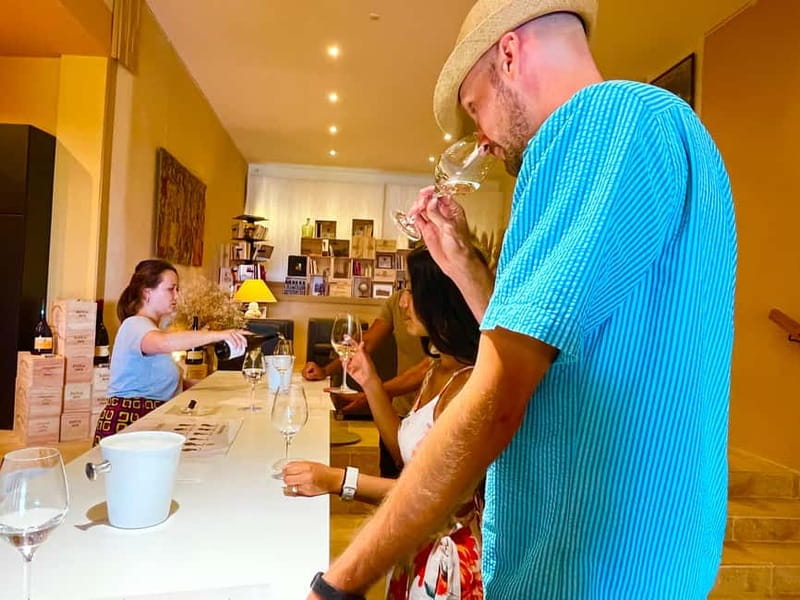
Nine wines, three appellations, one big day. This is a cozy Rhône Valley wine road trip run by Ventourisme guide Arnaud, with tastings at three estates and plenty of time to compare styles. I love how the day mixes cellar time with real countryside context, and I especially like the Châteauneuf-du-Pape stop. One thing to plan around: the included picnic is only for morning tours (April to October), and the afternoons run without food.
You start right at Hôtel Le Bristol in Avignon, then head into the Southern Rhône for a route shaped by geology. You’ll taste more than one type of wine, too, from Beaumes de Venise Muscat to the reds of Gigondas and Châteauneuf-du-Pape that can age for decades. The drive is part of the fun, but you should expect a small car setup, since it’s limited to a tight group size.
In This Review
- Key highlights to know before you go
- Starting at Hôtel Le Bristol, then turning wine geek
- How the route works in different seasons
- Beaumes de Venise: Muscat, warmth, and the Dentelles windbreak
- Gigondas: the Mistral, the altitude, and why the reds hit
- The picnic stop: local farm foods and an easy, real break
- Châteauneuf-du-Pape: river stones, iconic reds, and cellaring potential
- Price and value: what you’re really paying for
- What I’d pack and how to make it better
- Who this tour is for (and who should skip it)
- Should you book the Ventourisme Rhône wine tour from Avignon?
- FAQ
- How many wines will I taste?
- Which wine areas are included?
- Is a picnic included?
- How long is the tour?
- When do morning tours run?
- Where do I meet the guide?
- Do you pick up only in Avignon?
- What group size is it?
- What languages are offered?
- Is the tour ever canceled?
Key highlights to know before you go
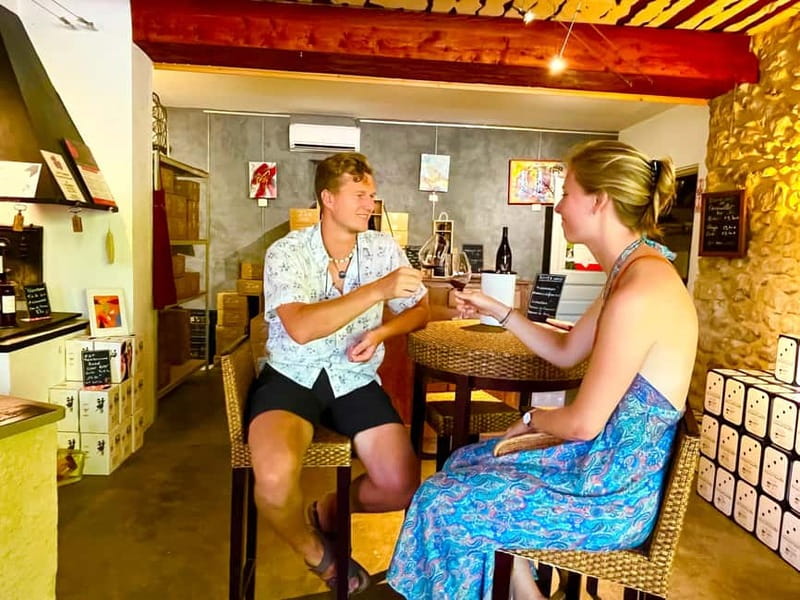
- Small-group format (max 6) with Arnaud driving and guiding the pace
- Minimum 9 wines across 3 different wineries, including Châteauneuf-du-Pape
- Beaumes de Venise Muscat tied to the Dentelles de Montmirail mountains and a protected, warmer microclimate
- Gigondas under the Mistral with sandy marls and classic red terroir
- Optional April to October morning picnic, built from local farm foods
- Scenery breaks built in, so you can actually stop and take photos in the vines
Starting at Hôtel Le Bristol, then turning wine geek
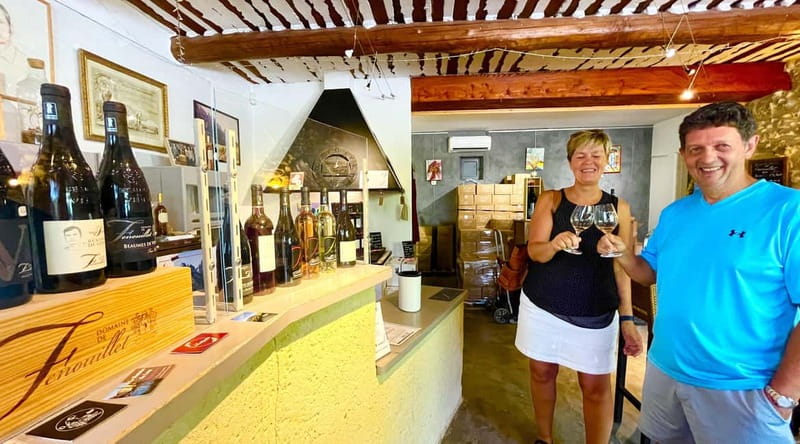
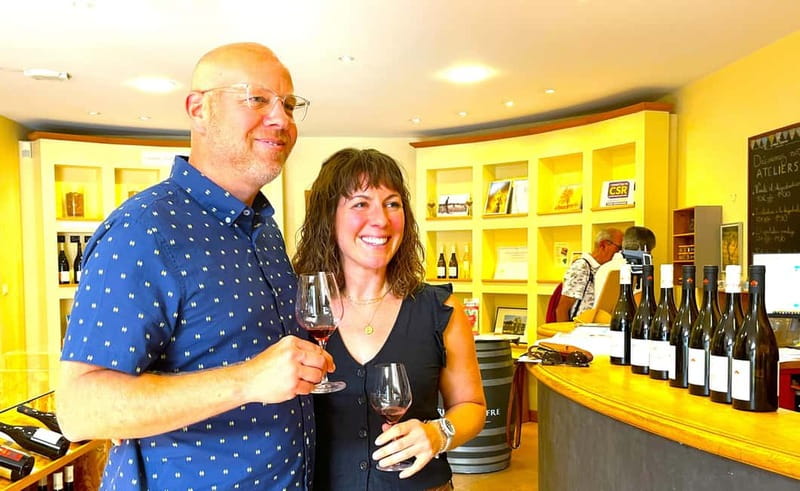
The meeting point is hard to miss: Arnaud meets you in front of Hôtel Le Bristol Avignon, next to his black car with Ventourisme on the sides. You then do the kind of country driving that feels practical, not rushed, which matters when you’re spending the day tasting and chatting.
The group stays small, capped at 6 people, and that changes the vibe fast. You’re not just hearing standard facts, you can ask questions, slow down, and compare notes without feeling like you’re in a conveyor belt. If you like a back-and-forth conversation, this setup helps.
One practical note: it’s not the best choice if you use a walking frame or need help with mobility gear, since those aren’t allowed in the car. The day is designed around short walks inside wineries and time to taste, not long outdoor trekking.
More Wine Tastings in Avignon
- Chateauneuf du Pape wine tour
★ 5.0 · 484 reviews - From Avignon: Châteauneuf du Pape Half-Day Wine Tour
★ 4.7 · 365 reviews - Afternoon Wine Tour to Chateauneuf du Pape from Avignon
★ 4.5 · 176 reviews
How the route works in different seasons
This tour runs in a few seasonal formats, so check the time slot you’re choosing.
- April to October morning (9:30 am to around 3:30 pm): three wineries, a minimum of 9 wine tastings, and an included picnic. The order is Beaumes de Venise, then Gigondas, then Châteauneuf-du-Pape.
- All year afternoon (2:00 to around 6:30 pm): same core tastings and same three areas, but in reverse order (Châteauneuf, Gigondas, Beaumes) and no meals.
- November to March morning (9:30 am to around 12:30 pm): fewer stops, typically 2 estates in Gigondas or Beaumes, then Châteauneuf, again without meals.
Why this matters for you: the morning format is the one that turns the trip into a full countryside experience, not just a tasting tour. If you want to picnic with local farm foods while looking at vines, plan around April through October.
The duration also varies. You’ll see it listed around 3 hours, with some schedules extending up to 330 minutes. That extra time usually comes from tasting pace and the way the guide adjusts to your questions.
Beaumes de Venise: Muscat, warmth, and the Dentelles windbreak
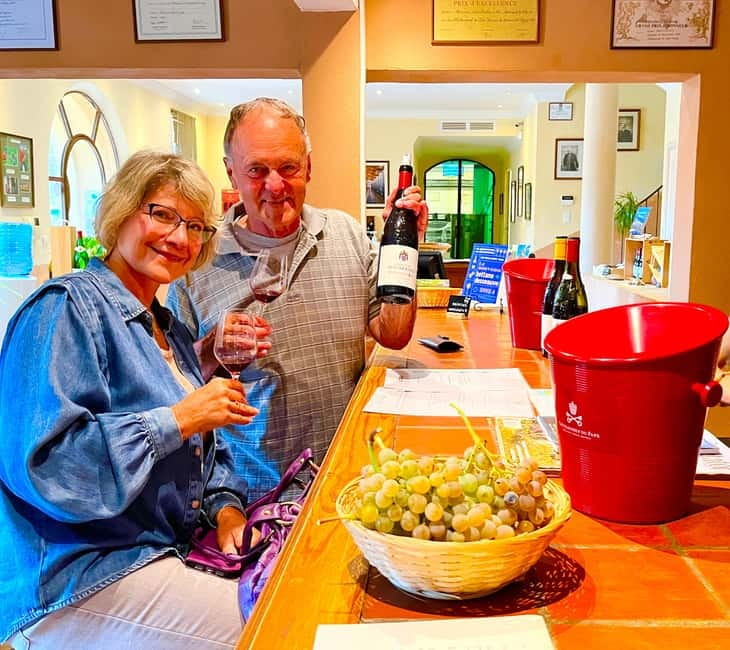
Your first tasting stop often lands in Beaumes de Venise, about an hour of the day that can change how you think about the Rhône. This area sits on the southern face of the Dentelles de Montmirail mountain ranges, and that geography is the reason the wines taste the way they do.
Here’s the practical science version: Beaumes de Venise is less windy and warmer because the mountains protect it. That protection helps the area lean into Muscat, including a natural sweet wine that has been an AOC since 1943. In plain terms, you’re tasting a style shaped by climate as much as by winemaking choices.
You’ll also learn that there’s a red AOC in play too, but it’s newer, approved only since 2005. There’s even a blending rule that allows winemakers to use up to 10% of white grapes in the red blend. That’s the kind of detail you can taste if you pay attention, because the sweet-fruit logic of Muscat is part of the region’s DNA.
Terroir matters here: the soils are mostly limestone or sandstone, plus sandy and clay components. Translation: you’re not just sampling wine, you’re sampling different textures of soil energy, which shows up in aroma and balance when you’re tasting multiple wines in one region.
If you like photo breaks, Beaumes is a good place for them. The mountains and vineyard slopes make it easy to get shots that look like you drove right into a wine postcard, without the day feeling staged.
Gigondas: the Mistral, the altitude, and why the reds hit
Next up is Gigondas, and the mood changes. Gigondas sits on the northern face of the same Dentelles de Montmirail ridges, but it’s much windier. The Mistral can blow around 150 days per year, pushing clouds away and helping vineyards stay healthier by drying out conditions.
If you’re wondering why that matters for your glass, think of it this way: less disease pressure can help vines stay balanced, which often leads to grapes with clearer ripening and more defined flavors. It’s not magic, it’s weather management at the vineyard scale.
Gigondas also has altitude, typically 100 to 600 meters. Higher elevations can bring subtle shifts in freshness and ripeness, even when the region is still firmly Southern Rhône in style.
Terroir signature here is sandy marls, which are described as specific to Gigondas, though you can also find clay, sandy soil, limestone, and sandstones. That mix is part of the reason Gigondas is famous for its reds, with red AOC status dating to 1971, and rosé also starting in 1971. White wine is newer here, joining the AOC in 2023.
When you taste, you’ll likely notice that Gigondas reds tend to show a strong sense of structure. You don’t have to be a critic to feel it. Even if you’re new to Rhône tasting, the guide’s comparisons will help you map what you like.
More vineyard visits in Avignon:
- Half-Day Provence Pont du Gard and Wine Tasting Tour from Avignon
★ 4.5 · 143 reviews - Avignon: Full-Day Wine Tour around Châteauneuf-du-Pape
★ 4.9 · 83 reviews - Bordeaux: Cité du Vin Entry Ticket and Wine Tasting
★ 4.6 · 3,885 reviews - Montmartre Hill French Gourmet Food and Wine Tasting Walking Tour
★ 5.0 · 2,588 reviews
The picnic stop: local farm foods and an easy, real break
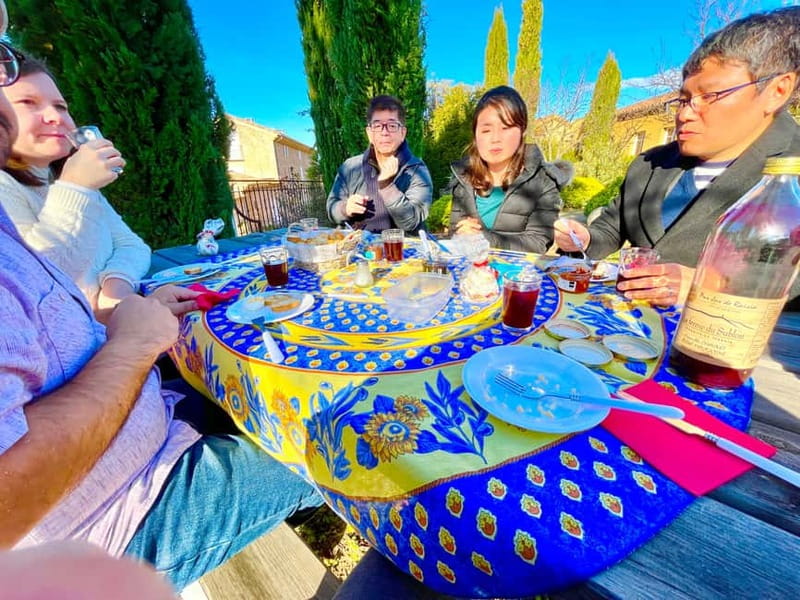
If your tour starts in the morning between April and October, the day includes a picnic stop in the Gigondas stretch. Expect local snacks and regional foods served as a relaxed picnic rather than a heavy restaurant-style lunch.
The day’s value jumps here, because you’re eating what belongs in the area. Food described for the picnic includes things like eggs, black olives tapenade, sweet pepper tapenade, fresh goat cheese, seasonal fruits, and fruit juice. Muscat grapes also show up in some picnic elements, which ties the meal back to the wine regions you’re tasting.
This is also where the countryside pacing works in your favor. You get a full hour to slow down, eat, and look at vines without feeling like you’re wasting tasting time. If you’ve ever done a wine tour where it’s all standing, little sitting, this one gives you an actual reset.
One small caution: afternoon tours do not include the picnic. If meals are important to you, choose the morning slot.
Châteauneuf-du-Pape: river stones, iconic reds, and cellaring potential
Finally, you arrive at Châteauneuf-du-Pape, the name that most people associate with the Southern Rhône. This is a region famous for red wines, where 92% of production is red, and 8% is white.
Châteauneuf also has a big official legacy: it was the first AOC in France in 1936. That matters because it’s a place where tradition and regulation shaped the region’s identity early, and it still shows up in how wines are described and marketed.
The terroir detail that really sticks is the river stones. Those stones are specific to Châteauneuf-du-Pape, and they contribute to wines that are often described as rich and long-lived. You’ll also hear about clay soil, sandy soil, sandstones, and limestone, but the stones are the star in how the area is explained.
Why should you care as a visitor? Because this region is also tied to long-term aging. Wines there can be kept in a cellar for about 20 to 30 years. You don’t need to plan a cellar to enjoy the tastings today, but it does help you understand why some bottles taste bigger, deeper, and built for time.
This tasting is usually about an hour, and it’s the point where your earlier comparisons make sense. If Beaumes leaned sweet and Gigondas leaned structured, Châteauneuf often acts like the final chapter. Even if you end up buying nothing, you’ll leave with a stronger sense of how terroir and style connect.
There’s also a chance your guide may add an extra taste-related or viewpoint stop if the group is interested, such as time near the Châteauneuf-du-Pape castle. Don’t count on it every day, but it’s the kind of thoughtful bonus that can happen with a guide who knows the area.
Price and value: what you’re really paying for
At $93 per person, this tour sits in a reasonable band for a guided half-day wine experience that includes multiple tastings and, in season, a picnic. The value isn’t just the price tag. It’s how the day is structured.
Here’s what you get that you can’t easily replicate on your own:
- At least 9 wines across 3 different wineries, including Châteauneuf-du-Pape
- A guide who connects the dots between terrain, climate, and flavor
- A small-group day capped at 6 people, which helps you talk to staff and ask questions without feeling rushed
- In the morning format (April to October), a picnic with local farm foods, not a generic boxed lunch
Could the value feel less perfect? Yes, if you’re the type who expects all tastings to be equal in style and quality. One person noted disappointment in a Châteauneuf tasting tied to sample choices, and that’s a fair reminder: wine tasting experiences can vary depending on the wines poured that day.
Still, the overall pattern of the day is consistent: multiple estates, multiple appellations, and enough time to learn from differences rather than just collecting sips.
What I’d pack and how to make it better
This is an easy day, but you’ll enjoy it more if you plan for comfort.
- Wear comfy shoes for short winery walks. There’s no mention of long hikes, but there is walking.
- Bring sunglasses and sun protection. You’ll be outside in vineyard areas and on open viewpoints.
- Expect no oversize luggage and no large bags in the car. Pack light.
- If you’re sensitive to cold, bring a layer for driving, since the itinerary spans parts of the day and the Mistral can make things feel chilly.
Since the tour can be canceled because of weather conditions, I’d also plan a flexible mindset. If your schedule is tight, consider having a Plan B for Avignon and the surrounding areas.
Who this tour is for (and who should skip it)
This tour fits well if you:
- Want a focused Rhône introduction without spending a full day in transit
- Like small groups, conversation, and comparing wines side by side
- Enjoy learning how terroir and microclimates connect to flavor
- Want a countryside picnic when weather and season allow it (April to October morning)
It’s less ideal if:
- You’re pregnant or have heart problems, since the tour isn’t suitable for those conditions
- You need a walking frame or rely on mobility gear, since those aren’t allowed in the car
Should you book the Ventourisme Rhône wine tour from Avignon?
If you’re trying to pick one “first Rhône tasting” day, I’d lean yes. The combination of three appellations (Beaumes de Venise, Gigondas, Châteauneuf-du-Pape), multiple tastings at each stop, and a small group makes it a strong value. Add the morning picnic option in April to October, and it turns into an experience that feels like part of the region, not just a tasting circuit.
Book it if your travel style includes learning while you sip, and if you’re happy to let the guide’s local connections set the pace. I’d only hesitate if you’re mainly chasing one specific wine and you need every pour to be your personal dream bottle. Otherwise, this is exactly the kind of half-day wine adventure that helps you understand what people mean when they say Southern Rhône tastes different for a reason.
FAQ
How many wines will I taste?
You’ll taste a minimum of 9 wines across 3 different wineries.
Which wine areas are included?
The tour includes Beaumes de Venise, Gigondas, and Châteauneuf-du-Pape.
Is a picnic included?
It’s included only on morning tours from April to October. Afternoon and winter tours do not include meals.
How long is the tour?
It’s listed as about 3 hours, and it can run up to 330 minutes depending on the departure time and schedule.
When do morning tours run?
Morning tours run from 9:30 am to around 3:30 pm (April to October), and from 9:30 am to around 12:30 pm (November to March).
Where do I meet the guide?
Meet in front of Hôtel Le Bristol Avignon. The guide’s car is black with Ventourisme on the sides.
Do you pick up only in Avignon?
Pickup and drop-off are in Avignon, and you may need to contact the provider if you do not stay within Avignon itself to arrange a better pickup place.
What group size is it?
It’s a small group limited to 6 participants.
What languages are offered?
The live guide offers French and English.
Is the tour ever canceled?
Yes, the tour can be canceled due to weather conditions.
More Wine Tours in Avignon
- Avignon: Historic District Guided Food & Wine Walking Tour
★ 4.8 · 84 reviews - Avignon: Full-Day Châteauneuf du Pape Wines & Luberon Tour
★ 4.8 · 42 reviews - Paris: Moulin Rouge Cabaret Show Ticket with Champagne
★ 4.7 · 16,088 reviews - Authentic Parisian Gourmet Food Tour with 10 Local Dishes & Wines
★ 5.0 · 4,754 reviews
Newly listed around Avignon
- From Avignon: Half-Day Van Gogh & Carrières de Lumières Tour★ 4.7 · 36 reviews
- Pont du Gard, Uzès & Nîmes: Half-Day Tour with Entry Fees★ 4.6 · 103 reviews
- Avignon: Full-Day Wine Tour around Châteauneuf-du-Pape★ 4.9 · 83 reviews
- From Avignon: Half-Day Lavender Tour of Luberon★ 4.8 · 232 reviews
- From Avignon: Luberon Villages Day Tour★ 5.0 · 79 reviews
- From Avignon: Villages in Luberon Half-Day Tour★ 4.7 · 104 reviews
- From Avignon: Roman Tour to Pont du Gard, Nîmes & Orange★ 4.9 · 44 reviews
- From Avignon: Provence Highlights Full-Day Tour★ 4.8 · 31 reviews
Wine Tastings & Vineyard Tours, compared.

Montmartre Hill French Gourmet Food and Wine Tasting Walking Tour
Read our review →
Loire Valley Castles Day Trip With Wine Tasting
Read our review →
Afternoon Saint-Emilion Wine Tasting & snack
Read our review →
Medoc or Saint Emilion Wine Tasting and Chateau from Bordeaux
Read our review →
Saint Emilion Day Trip with Sightseeing Tour & Wine Tastings from Bordeaux
Read our review →
Saint-Émilion: Grand Cru Classé Winery Visit and Tasting
Read our review →
Saint Emilion Half-Day Trip with Wine Tasting & Winery Visit from Bordeaux
Read our review →Browse the lists this tour appears in