Reviewed · FULL-DAY
Full day Australian Battlefields Tour
Pozières and friends, in one full day. This is a private, English-led circuit that ties together major Australian-led WW1 sites, starting with Amiens Cathedral and ending in the wider Somme battlefield country. You also get a standout stop at the Sir John Monash Centre, where letters and stories bring the Western Front down to real people.
I love how the day is guided with purpose, not just a drive-by checklist. With Brigitte De Cuyper leading, the explanations focus on the Australian sections of the Western Front and the bigger context you need to understand why these places matter. I also really like the way the Monash Centre uses interactive, multimedia storytelling, so it does not feel like you are only looking at stone and grass.
One drawback to think about first is that lunch is on you. The tour includes stops all day, but the Le Hygge Restaurant Brasserie meal is not included, so budget extra for food and drinks.
In This Review
- Key Things You Should Know Before You Go
- Pricing and What Makes This Tour Feel Like Value
- Meeting Up: How You’ll Find Your Guide and Start Strong
- Amiens Cathedral: More Than a Pretty Stop
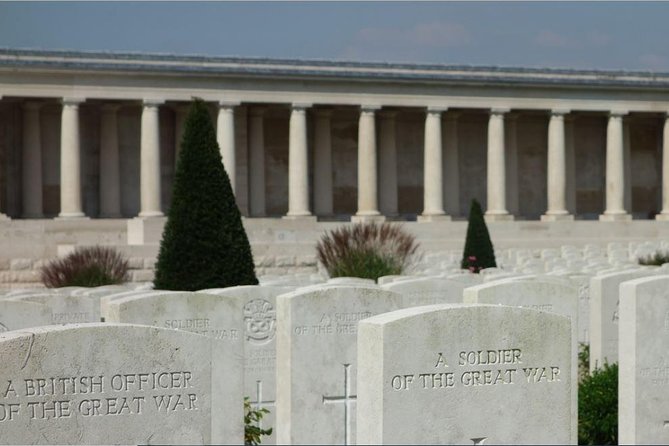
- Villers-Bretonneux Military Cemetery: Where Australia’s WW1 Story Locks In
- Sir John Monash Centre: Interactive Storytelling That Makes Names Human
- Australian Corps Memorial: The Weight of Exact Numbers
- Somme Valley to Chipilly: Panoramas Plus the Battle’s Big Picture
- Brebières Basilica: Neo-Byzantine Style and a WW1 Story on the Dome
- Lunch at Le Hygge Restaurant Brasserie: Plan for the Extra Cost
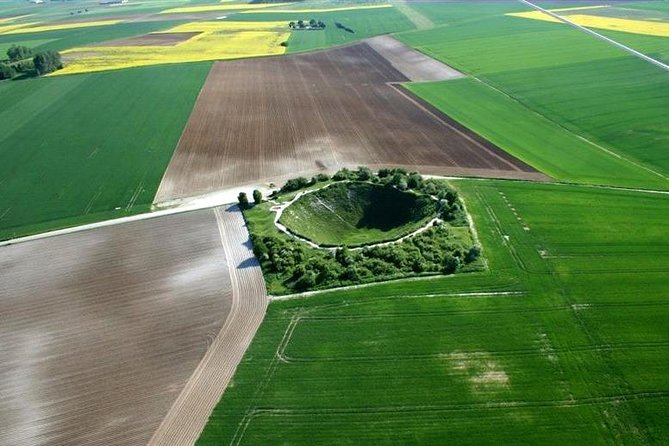
- Lochnagar Crater: A Battlefield Feature With Measurable Scale
- Pozières: 1st Australian Division Memorial and the Windmill Site
- Thiepval Memorial to the Missing: When You Have Names Without Closure
- Ulster Tower and Beaumont-Hamel: Different Commonwealth Stories, One Somme Field
- Pacing, Timing, and How to Prep for a Real Full Day
- Should You Book This Australian Battlefields Tour?
Key Things You Should Know Before You Go
- Private tour pace. Only your group, so questions and short side interests can fit into the day.
- Sir John Monash Centre is built into the plan. You get 1 hour, and entry is included.
- Many major sites have free admission. Villers-Bretonneux cemetery areas, memorials, and battlefield stops are listed as free in the schedule.
- Real numbers make the memorials hit harder. Expect names carved for 10,729 Australians at Villers-Bretonneux and over 72,000 missing at Thiepval.
- Lochnagar Crater is worth the stop. It is described as 70 feet deep and 330 feet wide, tied to the mine attack on the first day of the Battle of the Somme.
- You can bring personal context. If you have family connections, you should share them in advance so the guide can prepare relevant details.
Pricing and What Makes This Tour Feel Like Value
At $253.97 per person for about 8 hours, this is not a cheap “see-and-go” excursion. But you are paying for a full day built around the most important Australian memorials in the Somme region, plus a guided flow that helps you understand what you are seeing.
It is also structured in a way that reduces extra spending surprises. The tour lists all fees and taxes as included, and multiple stops note free admission tickets. The Monash Centre entry is explicitly included, which alone can make a big difference versus a tour that skips the one museum-style site.
The main extra cost to plan for is lunch. The schedule includes 1 hour at a set restaurant, but admission for that lunch is not included. If you want to keep costs under control, eat a simple lunch and save your shopping for later.
Elsewhere in France, also good:
- Paris: 1-Hour Seine Cruise departing from the Eiffel Tower
★ 4.4 · 77,472 reviews - Disneyland® Paris 1-Day Ticket
★ 4.6 · 49,412 reviews - Paris: Versailles Palace and Gardens Full Access Ticket
★ 4.6 · 41,579 reviews
Meeting Up: How You’ll Find Your Guide and Start Strong
The tour starts at 9:00 am in Amiens, with pickup offered. Your guide will wear a badge, which is a small detail that matters when you are trying to start the day on time without stress.
This matters because WW1 days work best when the first hour is calm. You will want time to settle in, get your bearings, and have the guide set up the story for the day. Expect the schedule to move from major landmarks to battlefield sites, and that first orientation step is what makes the rest of the drive and walking feel connected instead of random.
Amiens Cathedral: More Than a Pretty Stop
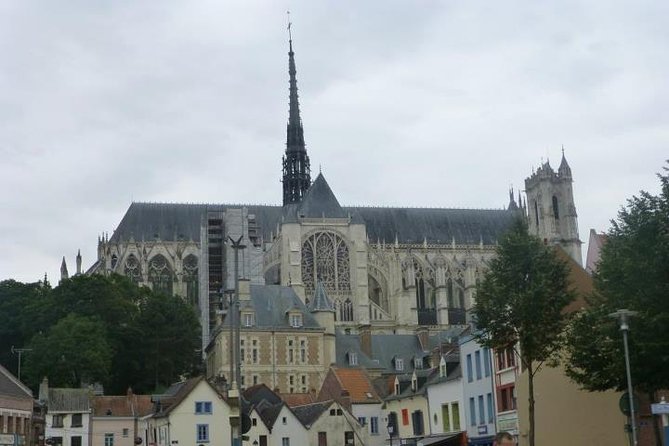
You begin at Amiens Cathedral, celebrating 800 years this year. The tour frames it as the largest Gothic cathedral in the world, and the guide uses the setting to explain Amiens from the Middle Ages to today.
What I like about starting here is that it gives your brain a non-war anchor. Before you hit memorial names and craters, you get a sense of how the city lives, how it grew, and why this region matters beyond WW1. It also helps you feel less like you are only traveling between battlefield pins.
Practical tip: give yourself a moment to slow down here. Even if you have limited time, take a minute to look up. The cathedral is the kind of place where the scale makes a quick stop feel short.
Villers-Bretonneux Military Cemetery: Where Australia’s WW1 Story Locks In
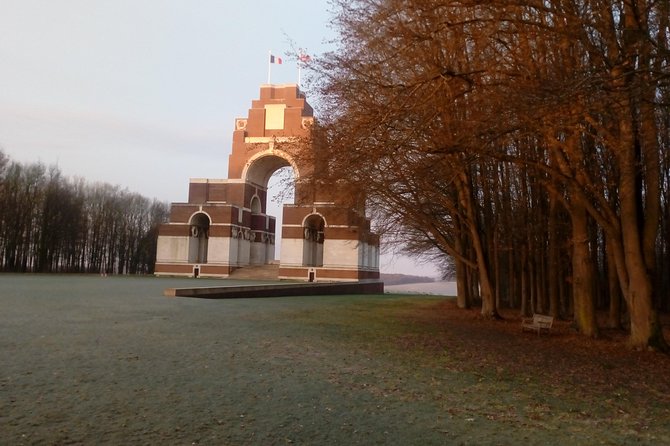
The first major battlefield stop is Villers-Bretonneux Military Cemetery, standing on the ground of the Australian Memorial. The guide explains Australia’s role on the Western Front in WW1, with special attention to the Allied counter-attack in April 1918.
Then you get time to pay respect at the graves of the Dig-gers, with a short walk environment and a listed 20 minutes for this part. This is not the time for rushing. The schedule gives enough room to pause, read, and absorb.
From a visitor-value standpoint, this stop is more than a photo opportunity. The cemetery and memorial sit in one emotional zone, and the guide’s framing helps you understand what that counter-attack meant. You are also in the right place to make sense of how Villers-Bretonneux became a lasting link between Australia and France.
Within easy reach:
- Paris: Arc de Triomphe Rooftop Tickets
★ 4.6 · 34,264 reviews - Paris: Orsay Museum Entry Ticket
★ 4.7 · 25,647 reviews - Paris: Evening River Cruise with Music
★ 4.4 · 22,721 reviews - Paris: Eiffel Tower Entry Ticket with Optional Summit Access
★ 4.4 · 20,035 reviews
Sir John Monash Centre: Interactive Storytelling That Makes Names Human
Next comes the big museum moment, Sir John Monash Centre, with 1 hour of visit time and admission included. The centre tells Australia’s story of the Western Front using interactive, multimedia installations and immersive experiences.
What sets it apart from a standard museum stop is the way it relies on voices. The tour describes letters, diaries, and life-size images that connect the journey of ordinary Australians to the places they fought and died.
If you are the type who gets more out of artifacts than speeches, this is your anchor stop. And if you are more of a visual learner, the multimedia format tends to stick. You will leave with a clearer mental map of who fought and what the day-to-day experience of war was like.
One note to keep in mind: on at least one day, the centre was reported as closed, but the overall day still included relevant stops. If this matters to you, ask ahead or keep expectations flexible.
Australian Corps Memorial: The Weight of Exact Numbers
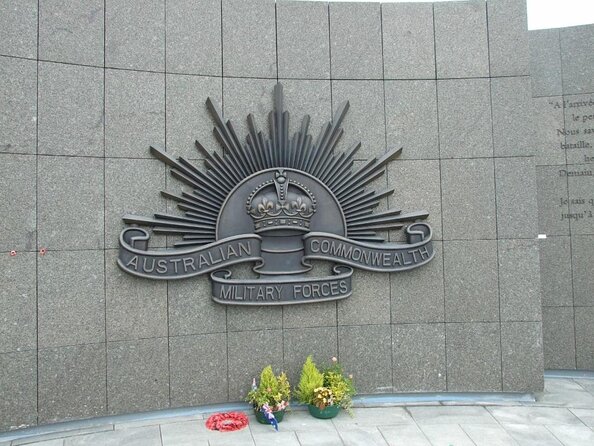
After Monash, you pause at the Australian Corps Memorial in the Villers-Bretonneux CWGC cemetery. It was inaugurated on 22 July 1922 by King George VI and is described as the last memorial of the Great War to have been erected.
The names engraved are staggering: 10,729 Australian servicemen. The tour also mentions the annual gathering at this site at dawn on 25 April for ANZAC Day.
This stop hits in a different way than the cemetery visit. Cemeteries force you to face individual graves. Memorial walls force you to face the scale of loss and the fact that many servicemen are remembered even when their final resting place is not straightforward.
Somme Valley to Chipilly: Panoramas Plus the Battle’s Big Picture
From Villers-Bretonneux you move into the valley of the Somme and toward Chipilly. There is a brief admiration stop at the 58th British Division Memorial, a stone monument showing a soldier comforting his wounded horse, inaugurated in 1922.
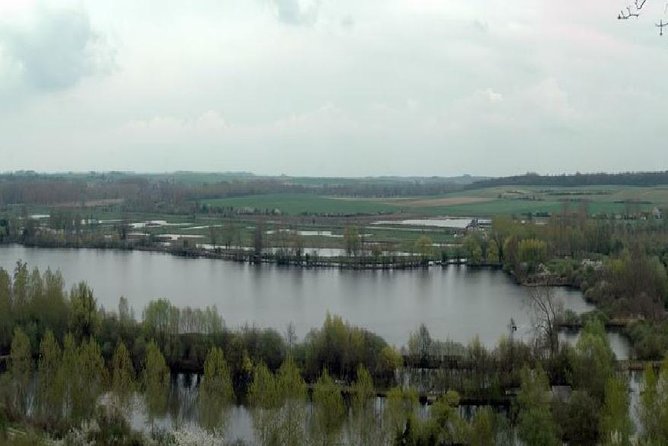
Then comes one of the best “orient your brain” moments: the viewpoint at Camp Cesar. From there you get a panoramic view over the Somme valley, tied to the Battle of the Somme name from 1916. On the way toward Albert, the guide covers the beginning of the battle, why it was planned, and which nations were involved.
This part is valuable because it helps you stop thinking of WW1 as a list of dates. You start to understand terrain, distance, and why certain places became hard to hold. The Somme area is broad, so those viewpoint moments save your sanity.
Time is short here, so do not plan to linger for snacks or shopping. Stand where the guide points, look, and let the explanations do their job.
Brebières Basilica: Neo-Byzantine Style and a WW1 Story on the Dome
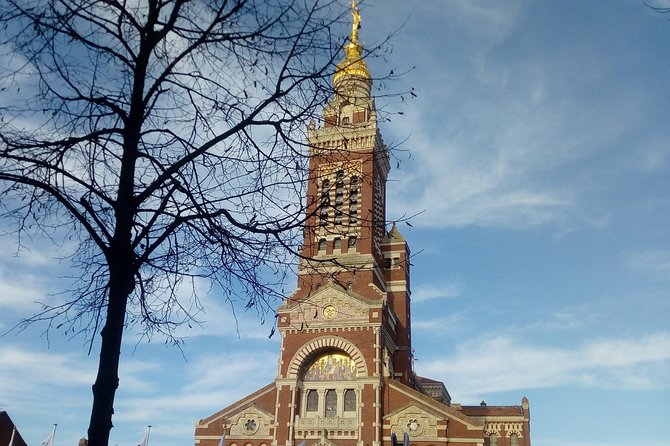
Next up is the Basilica Notre Dame de Brebières, described as Neo-Byzantine style built at the end of the 19th century. During WW1 it was entirely destroyed, then reconstructed identically by Edmond Duthoit, the son of the original architect.
The dome is covered with gold sheets and features a statue of the Virgin Mary holding baby Jesus. The guide shares the story attached to this statue during WW1.
This is a great palate cleanser between battlefield stops. It also gives you a sense of how the war reached into local faith and local architecture. If you only visit memorials, you can miss the way communities rebuild meaning.
Practical note: this is still a long day, so take a few minutes, get your bearings inside or around the basilica, and keep going. You want your energy for later stops like Lochnagar Crater and Pozières.
Lunch at Le Hygge Restaurant Brasserie: Plan for the Extra Cost
You get 1 hour for lunch at Le Hygge Restaurant Brasserie, with admission not included. This is your main free-standing break of the day, so use it well.
If you are carrying any personal research notes (a family name, a battalion, or a date), this is also when I would jot down questions for your guide before heading back out into the heavier memorial sections.
Lochnagar Crater: A Battlefield Feature With Measurable Scale
Then you move straight into the Battle of the Somme 1916 sector. The tour stop at Lochnagar Crater is described as created by a large mine placed beneath the German front lines on the first day of the battle.
The schedule includes a key detail that helps the site feel real: Lochnagar is listed as 70 feet deep and 330 feet wide, described as the largest crater in the Somme. The tour also notes that it was one of 19 mines placed beneath German lines from the British section of the Somme front to assist the infantry advance.
What I like here is that the numbers make the horror less abstract. You can see the scale, then connect it to strategy and the opening day of the offensive. This is not just a dramatic hole in the ground. It is part of the machinery of war.
Time is 20 minutes, so stand where you can take in the size, listen to the guide’s explanation, and avoid rushing away just because it is outdoors.
Pozières: 1st Australian Division Memorial and the Windmill Site
The tour then reaches Pozières, starting with the 1st Australian Division Memorial. The guide frames Pozières using an observation from Australian historian Charles Bean, describing it as extremely densely marked by Australian sacrifice. The itinerary notes that almost 7,000 men lost their lives there between 23 July and 3 September 1916.
You get 20 minutes at this stop, and the guide talks through the terrible battle and what made it so costly for Australians.
After that, you stop at the Windmill site at Pozières, established as an Australian memorial in the 1930s at the suggestion of Charles Bean. It commemorates 23,000 casualties, with some deaths tied to surrounding countryside. Opposite the site is the Tank Memorial, where the guide covers the role of tanks on the Western Front and the ideas behind modern warfare.
These Pozières stops are emotionally intense. The value is in pacing. The tour keeps the story grounded in specific memorials, then expands into the broader tech and tactical picture, tanks and all.
Also, expect your guide to connect it back to the earlier day at Villers-Bretonneux. You start to see the logic of why certain places became symbols for families and nations.
There is also a stop at Mouquet Farm in the schedule. The time listed there is not detailed in the data you provided, but it is treated as another key part of the Pozières area story on the route.
Thiepval Memorial to the Missing: When You Have Names Without Closure
Next is Memorial de Thiepval, described as the Memorial of the Missing and noted as the largest British War Memorial in the world. You get 45 minutes here, with the monument overlooking rolling countryside.
The key detail is the scale: names of over 72,000 soldiers who were missing or whose bodies were found but not identified. The guide focuses on military tactics and also on what it meant for families to not have certainty.
This stop is both history and human psychology. If you want one moment in the day that explains the long shadow of WW1, this is it. It also helps you understand why memorial language is not only about remembrance. It is about the experience of waiting.
Ulster Tower and Beaumont-Hamel: Different Commonwealth Stories, One Somme Field
Your day continues with the Ulster Tower, Northern Ireland’s national war memorial. It was officially opened on 19 November 1921 and commemorates men of the 36th Division and all those from Ulster who served in WW1.
The tour also notes that from the top of the hill, you can still see traces of the Somme frontlines in the opposite field, along with the remains of a German machinegun post.
This part is powerful because it reminds you that the Somme was not only an Australian story or only a British story. It was a Commonwealth-wide sacrifice spread across regions with their own identity and memorial style.
Finally, you reach the Memorial Terre-neuvien de Beaumont-hamel, with 30 minutes listed for the stop. The Newfoundland Memorial Park is described as the largest battlefield site in the Somme and dedicated to Newfoundlanders who served during WW1. The tour explains that the Battle of the Somme was the first major engagement of the Newfoundland regiment, with staggering losses on 1 July 1916.
The ground was purchased in 1921 by the women of Newfoundland and their government, and the site is described as a symbol of sacrifice and identity of the island.
If you have any personal connection to Newfoundland service, this is likely to land the hardest. Even if you do not, it gives you a fuller Commonwealth picture and makes the Somme feel like a map of shared loss, not just one nation’s narrative.
Pacing, Timing, and How to Prep for a Real Full Day
This is an 8-hour day, roughly from 9:00 am onward, with multiple outdoor stops across memorials and viewpoints. The tour data also lists moderate physical fitness as a requirement, so come ready to stand and walk at a steady pace.
The schedule is a mix of short stops (often around 20 minutes) and at least two larger anchor visits (Monash at 1 hour and Thiepval at 45 minutes). That structure works. It prevents you from getting museum-fatigued while still giving the big sites enough time to matter.
Bring practical comfort items for a long, emotionally heavy day. Wear shoes you trust. Keep a light layer for weather changes. And expect that WW1 sites can be quiet in a way that makes time feel slower, so plan to be patient with yourself.
If rain shows up, it is not a reason to bail, it is a reason to adjust your expectations. The itinerary still has indoor and sheltered elements, and your guide’s job is to keep the day readable even when conditions change.
Should You Book This Australian Battlefields Tour?
Book it if you want an Australian-focused WW1 day that connects memorials, museums, and battlefield terrain into one coherent story. The included Monash Centre time is a big plus, and the memorial scale details like 10,729 names at Villers-Bretonneux and over 72,000 at Thiepval help you understand what you are looking at.
Also book it if your trip includes personal family links. This guide has shown flexibility around adding relevant context when possible, and you will get more out of the day if you share names and details ahead of time.
Skip or reconsider if you want a light, casual sightseeing day. This is a full day, and the emotional weight is real. The lunch cost is extra, and some stops are short by design, so you should choose it for meaning, not for slow roaming.
If you want a structured way to see the Somme with context and care, this one is hard to beat.
Newly listed around France
- Paris Orsay Museum and Rodin Museum Daily Combo Ticket★ 4.0 · 32 reviews
- Paris Pastry Tour – Croissants, Macarons & Iconic French Desserts★ 5.0 · 232 reviews
- Paris Orsay Museum with Optional Seine River Cruise Tickets★ 4.0 · 65 reviews
- Paris Occult and the History of the Dark Arts Private Tour★ 5.0 · 17 reviews
- Île de la Cité Guided Tour & assistance Notre Dame entrance★ 5.0 · 22 reviews
- Paris Orsay Museum Entry Ticket with Digital Audio Guide★ 3.5 · 93 reviews
- Paris Opera Garnier Private Tour★ 5.0 · 42 reviews
- Notre Dame de Paris: Semi Private or Private Guided Tour Guide★ 5.0 · 30 reviews
Full-Day, compared.
Versailles Full Day Bike Tour with Palace, Gardens, & Picnic
Read our review →
Normandy American D-Day Beaches Full Day Tour from Bayeux
Read our review →
The Best of the French Riviera Full Day Tour
Read our review →