Reviewed · GUIDED
Guided Tour of Paris in Classic Convertible
A vintage 2CV makes Paris feel instantly playful. This guided classic convertible ride is all about seeing the city’s big icons and the small, hard-to-find streets in one smooth, comfy loop, with photo and video stops you do not have to plan. You also get a local guide who helps you understand what you are looking at, instead of just driving past it.
I really like the mix of major landmarks plus the streets you only reach by car, and I love how the stops are timed around views so you actually get memorable photos. One thing to consider is the schedule: at 2 hours, you are touring, not lingering, so you will want to be ready to jump out quickly for pictures and keep the pace with the guide.
In This Review
- Quick hits: what makes this tour worth your time
- Why a Citroën 2CV works so well in Paris
- The 2-hour plan: how the ride stays efficient without feeling rushed
- Sacré-Cœur and Montmartre viewpoints, with photo-friendly timing
- The central-city loop: from Vendôme to Concorde to the Champs-Élysées
- Eiffel Tower and Arc de Triomphe: landmark stops that actually deliver photos
- Seine banks, bridges, and Pont des Arts for a romantic ride on wheels
- Notre-Dame, Invalides, and the Panthéon: history you can point to
- Secret-feeling stops: royal squares, tiny streets, and film Paris
- What the guide really adds: stories, French playlists, and picture-perfect stops
- Comfort and practical tips for your best 2CV ride
- Price and value: what you pay for in a private 2-hour format
- Who should book this 2-hour classic convertible tour?
- Should you book the Paris classic convertible 2CV tour?
- FAQ
- How long is the Paris guided convertible tour?
- How many people can ride in the car?
- Is hotel pickup and drop-off included?
- Where does the tour focus?
- Do we get professional photos or videos?
- Can the roof be closed for rain or cold?
- What languages are available for the live guide?
- Is the tour private?
- Is the vehicle wheelchair accessible?
Quick hits: what makes this tour worth your time
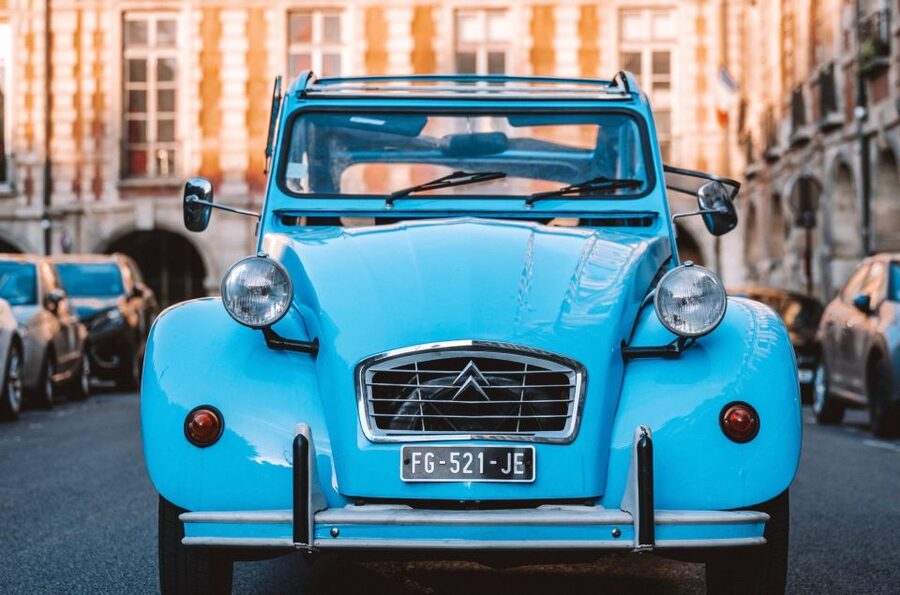
- Citroën 2CV convertible comfort with a roof that can close if needed
- Professional photos and videos taken for you at landmark viewpoints
- Small streets by car that buses cannot reach
- A route built for first-time orientation, covering the core of Paris
- Storytelling with a French music soundtrack, so the ride feels lived-in
- Pickup and drop-off in central Paris, so you spend energy on the city, not logistics
Why a Citroën 2CV works so well in Paris
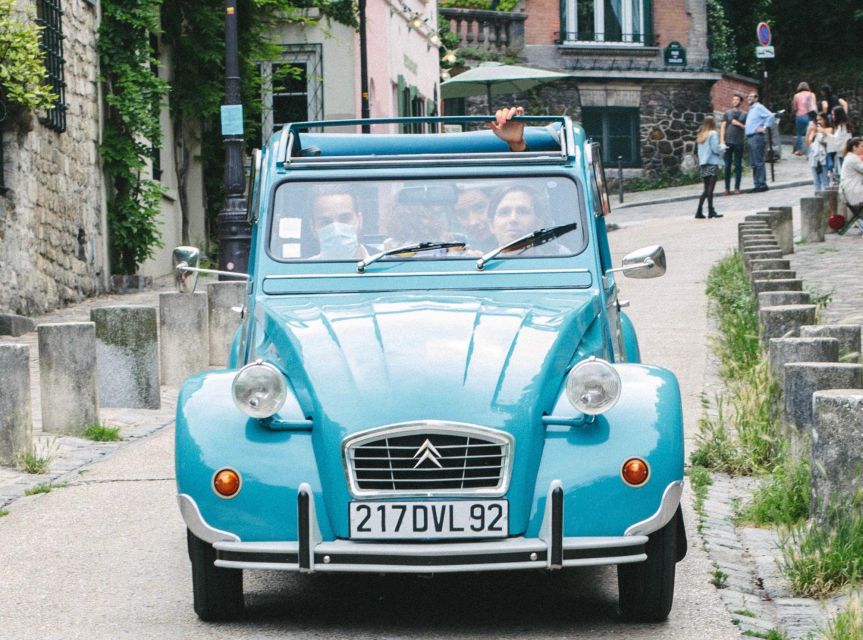
Paris is one of those places where how you move changes what you notice. Walking is great, but it is slow, exhausting, and you can end up missing the “in-between” parts of neighborhoods. This classic convertible tour solves that. The Citroën 2CV is small, charming, and instantly attention-grabbing, so you get a more social, fun Paris vibe right from the curb.
And the car is not just a gimmick. A 2CV’s open-air feel helps you notice details, like the changing architecture as you pass from grand boulevards to tighter, older streets. The driver also uses the car’s size to get you into corners of the city that big vehicles do not serve well. That means you are seeing Paris as it actually connects, not as a list of monuments lined up for a camera.
One more practical win: because it is a private group (up to three passengers), you are not spending time herding people or waiting for the slowest walker. You can move like a small unit, which matters when your time is limited.
Other Paris bookings to consider
- Paris: 1-Hour Seine Cruise departing from the Eiffel Tower
★ 4.4 · 77,472 reviews - Disneyland® Paris 1-Day Ticket
★ 4.6 · 49,412 reviews - Paris: Versailles Palace and Gardens Full Access Ticket
★ 4.6 · 41,579 reviews
The 2-hour plan: how the ride stays efficient without feeling rushed
In two hours, you can either see a few sites properly or skim a dozen without absorbing much. This tour aims for the first option by building the timing around photo moments and quick “get your bearings fast” stops.
You can expect pickup anywhere in Paris, then a guided loop that circles the famous sights while also cutting into districts that feel more local. You are not stuck with one long, straight-drive photo line either. The guide plans enough breaks so you can get landmark shots, plus stops where the setting looks better than the monument alone.
Stops are flexible within the time available. The tour typically includes a handful of major photo points like the Eiffel Tower, Arc de Triomphe, Sacré-Cœur, Moulin Rouge, and Notre-Dame, with additional “pass by” coverage for other key stops along the way. Translation: you get structure, but you also get room for the guide to choose the best angle when a view looks especially good.
Sacré-Cœur and Montmartre viewpoints, with photo-friendly timing
The ride starts by heading toward Sacré-Cœur Basilica, one of Paris’s highest points. That elevation is not just scenic. It is how you understand why Montmartre became the artistic “hangout” of so many famous names. Even if you do not spend hours up there, you get the big picture from the car, then step out for a break and photos.
From there, you travel through the Montmartre area, including Place du Tertre and the viewpoints near Moulin de la Galette. This part of Paris is steep, winding, and full of character, which is exactly why a small car helps. You can see the vibe without walking the whole hill.
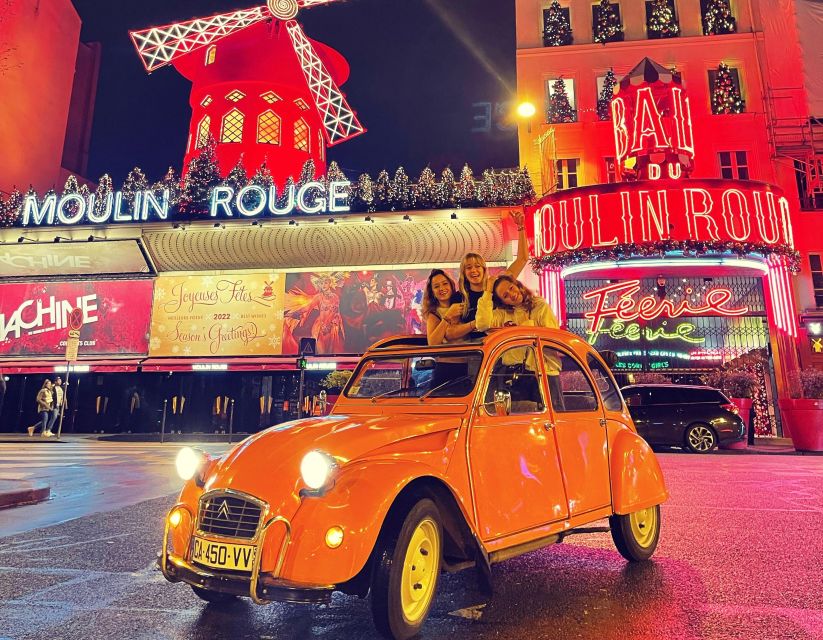
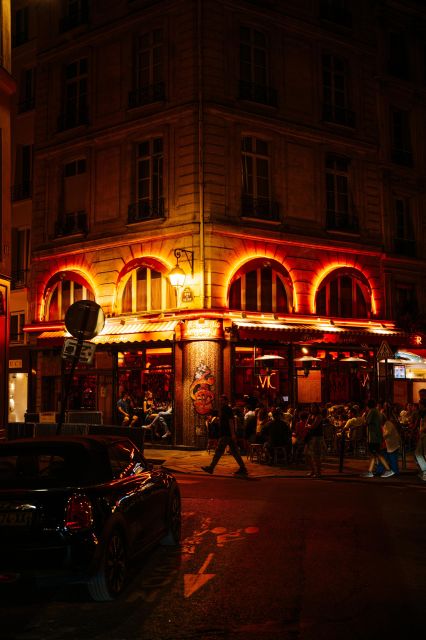
Moulin Rouge is another key stop on the circuit. It matters because it is tied to the Belle Époque and the famous can-can tradition, plus the kind of entertainment history that shaped how Paris sold itself to the world. The driver brings that context while you are right there, not an hour later when you have already moved on.
If you want a memorable photo with the skyline and rooftops in the background, this segment is where it usually happens. The tour often includes enough time at the key Montmartre moments to make your pictures look like a real Paris day, not a speed-run.
The central-city loop: from Vendôme to Concorde to the Champs-Élysées
After Montmartre, you slide into the heart of Paris, and that is where the story changes from “hilltop art town” to “imperial, royal, and grand boulevard Paris.”
You pass by places like Place Vendôme and Place de la Concorde, plus smaller squares such as Place Dauphine and Place Furstemberg. These stops are useful because they give you landmarks of power and planning. You start to see the grid of the city, then notice how the city’s style shifts by arrondissement and era.
Then comes the Champs-Élysées, the famous avenue in all its glory. The practical value here is not the street itself, it is the access. From the car, you can get the big boulevard sweep and then turn into the quieter streets that sit behind it.
You also pass along luxury corridors like Avenue Montaigne and Avenue George V, plus streets such as rue Saint-Honoré and rue de la Paix. Those names are not just for shopping guides. They help you understand how Paris presents itself, from fashion streets to historic shopping lanes, all in one flowing drive.
Within easy reach:
- Paris: Arc de Triomphe Rooftop Tickets
★ 4.6 · 34,264 reviews - Paris: Orsay Museum Entry Ticket
★ 4.7 · 25,647 reviews - Paris: Evening River Cruise with Music
★ 4.4 · 22,721 reviews - Paris: Eiffel Tower Entry Ticket with Optional Summit Access
★ 4.4 · 20,035 reviews
Eiffel Tower and Arc de Triomphe: landmark stops that actually deliver photos
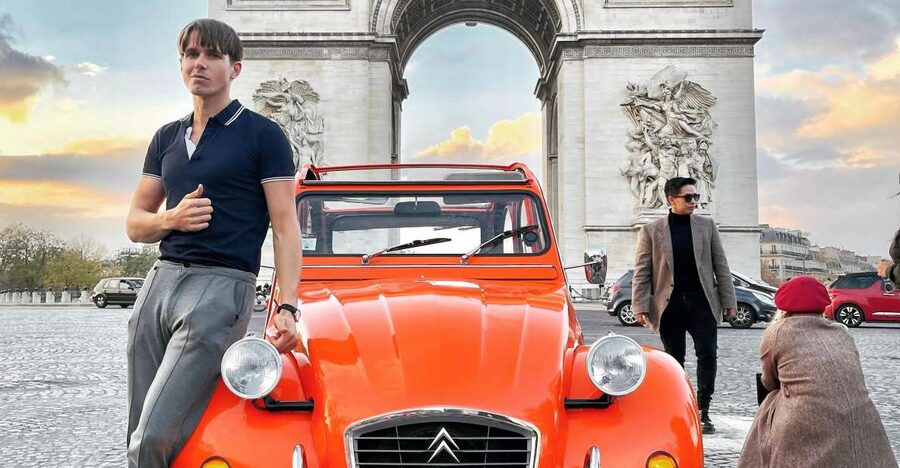
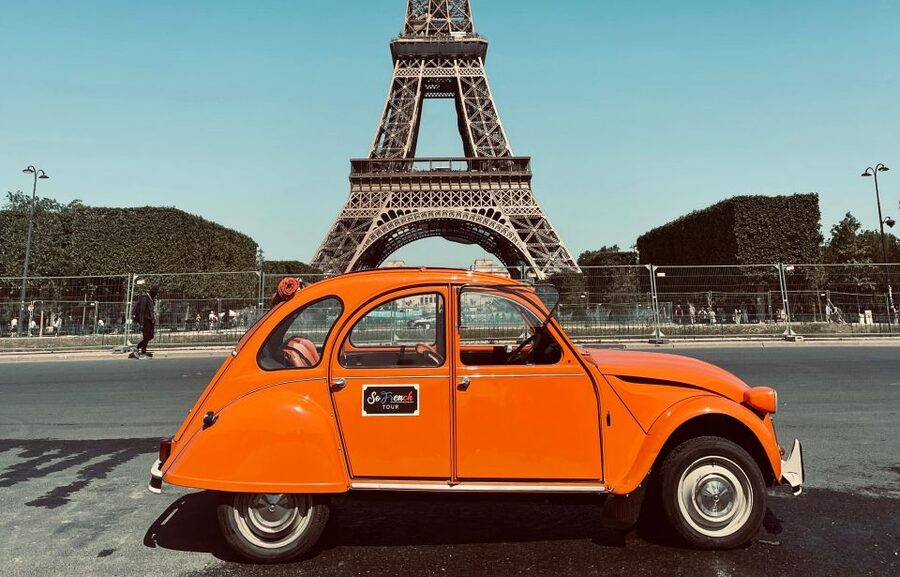
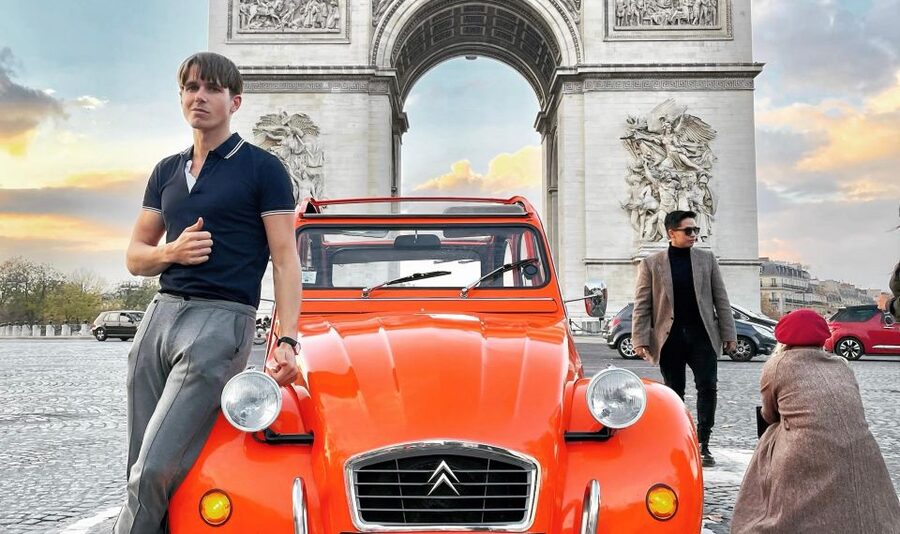
A lot of tours “see” the Eiffel Tower by driving past a view. Here, you get photo stops at the Eiffel Tower and Arc de Triomphe, with the guide taking pictures and videos for you. That matters because you spend less time fumbling with your phone and more time being present.
The guide also times the moments so you are not only staring at the monument. You are getting surrounding views, including the wide Parisian perspectives that make these monuments feel bigger than postcards. Several guides are known for taking very deliberate shots, and you can feel the difference when you compare your own snapshots to the ones someone else frames with you in mind.
One more small but meaningful detail: you are traveling in a car that draws attention. People often take photos of the car too, which adds to the fun and makes the experience feel like it belongs to a movie scene, not just a checklist.
Seine banks, bridges, and Pont des Arts for a romantic ride on wheels
Paris has a rhythm, and the Seine is one of the biggest beats. This tour brings you directly onto the banks of the Seine, so the city feels like it is flowing around you, not just sitting in front of you.
You pass under Paris’s oldest bridge, then move toward the romantic area around Pont des Arts, often called the lovers’ bridge because of its romantic reputation. Even if you have seen these spots before, the “car ride” version has a different feel. You get a guided view of how the river connects districts, and you notice the bridges as part of the city’s design system.
This segment is also one of the best for photos that look like Paris, not just Eiffel Tower. Think river light, reflections, and the layered buildings that make the Seine look different across seasons.
Notre-Dame, Invalides, and the Panthéon: history you can point to
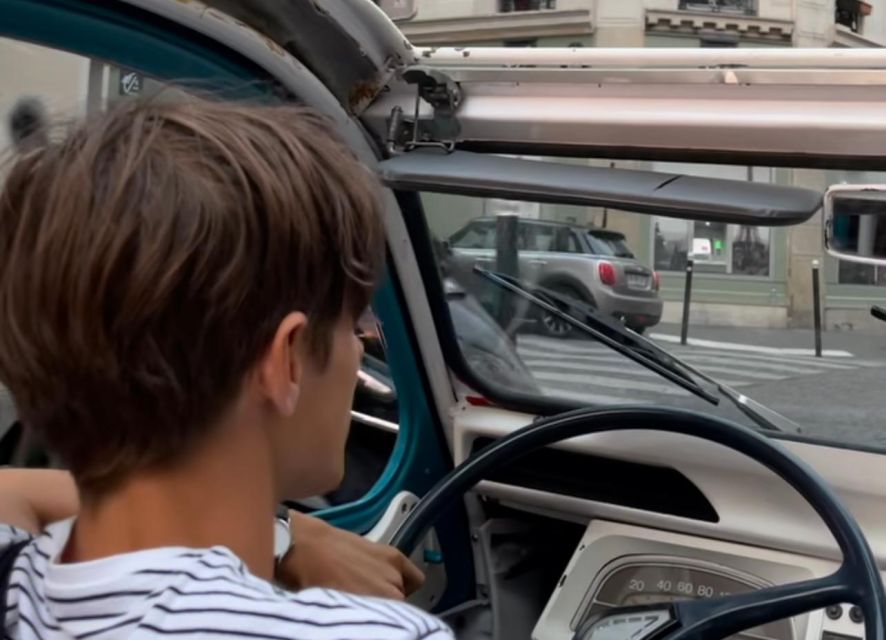
One of the best things about being driven through central Paris is that history becomes “visible.” You do not just read about a place, you move past it and the guide helps you connect eras.
Invalides is on the route, and it pairs well with the nearby grand architectural tone of central Paris. Notre-Dame is typically included as a break time with a photo stop, which is a smart setup because this is the moment you will want a quick, clean photo without crowd chaos hijacking your time.
Then you pass by or near the Panthéon. The Panthéon is one of those sites that feels important even before you understand the details, and the guide’s job is to translate why. You start to see Paris’s “public memory” model, where monuments mark education, politics, and national identity.
In the Latin Quarter area, you may also see the Jardin du Luxembourg and the look-and-feel of older Paris learning spaces. The overall effect is that you get a sense of how Paris organized itself around institutions, not only around tourist icons.
Secret-feeling stops: royal squares, tiny streets, and film Paris
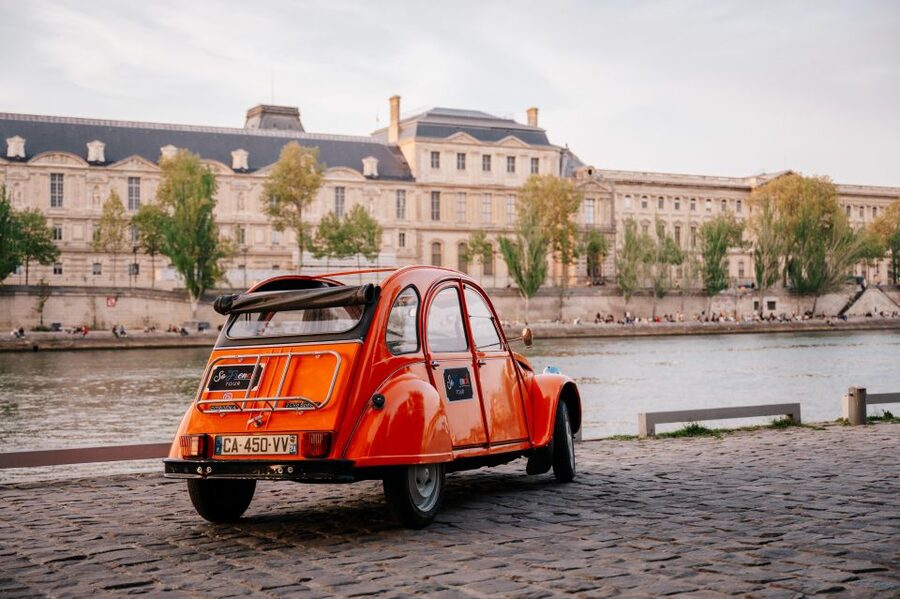
Paris is full of main sights. The real magic is finding the streets that feel too narrow for tourist buses and too local for most visitors to ever notice.
This tour is built around exactly that. You are taken through the smallest streets that buses could not take, including streets described as wide enough only for carriages. There is also mention of film locations, like Amélie and other movie-style Paris scenes, plus Emily and Paris spots, and a Midnight in Paris reference tied to Owen Wilson’s pickup scene.
Even if you are not a film superfan, this matters. It teaches you how to recognize Paris as a place people used as a set, not just a city that collects monuments. When the guide points out what changed and what stayed, you start seeing the city in layers.
You also pass royal and historic squares such as Place Vendôme and Place Concorde, then move into smaller, more intimate ones like Place Dauphine. That contrast helps you understand Paris as both spectacle and lived-in neighborhood life.
What the guide really adds: stories, French playlists, and picture-perfect stops
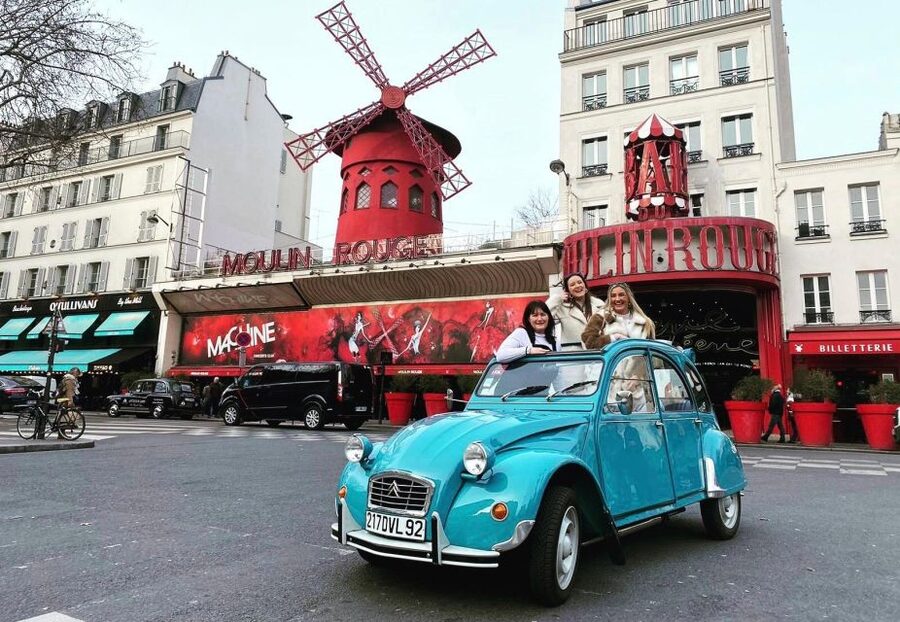
The car gets you the view, but the guide gives the meaning. The tour is led by a live guide in English, Spanish, or French, and you can tell they are focused on making the city make sense fast.
A pattern I like in guides I have experienced on tours like this: they mix big facts with small, memorable details. Here you hear history tied to what you are actually seeing on the street. You learn about iconic entertainment history at Moulin Rouge, why Sacré-Cœur sits where it does, and how squares like Vendôme and Concorde reflect shifts in Paris’s priorities.
Music also plays a role. French songs play during the ride, which seems small until you realize it changes the mood. The open-top feeling plus familiar French sound helps the whole experience gel into something more emotional than a lecture.
And photos are a big part of the value. The guide takes professional pictures and videos for you at stops, so you leave with results that look like a planned shoot. In multiple examples from guides, drivers make sure you get shots at the best angles and pause when something catches your eye.
Guide notes you might see mentioned: Pierre and Baptist show up repeatedly in real experiences, and guests praise their photo work and their calm navigation through busy, sometimes chaotic traffic.
Comfort and practical tips for your best 2CV ride
This tour is easy on your feet, but it is still an open-air experience most of the time, so plan for real weather. The roof can be closed if needed, and some guides provide extra warmth like blankets on cooler days, based on past experiences.
Pack like this:
- Wear layers, since Paris weather can shift fast in the afternoon into the evening.
- Bring a smartphone that you are comfortable holding for a short pause, even though you will also get professional photos.
- If you are sensitive to wind, keep your hair and sunglasses secured.
- You cannot bring drinks or food into the vehicle, so plan a drink break outside the car before or after.
Also, remember the group size rules. This is private and the car fits up to three passengers, excluding the driver. If you have more people, you can book multiple cars.
Finally, if you live far from the center of Paris, you can still get pickup, but you may get more of the famous core if you meet in a more central area. That is because most of the route focuses on central Paris, with Montmartre being the more remote stretch.
Price and value: what you pay for in a private 2-hour format
At $352 per group up to three passengers, you are not paying per person like a bus tour. You are paying for a private car, pickup and drop-off inside Paris, and a guide who plans photo stops around the landmarks you actually want.
So the value depends on how your travel group works:
- If you are traveling as a couple or small family, it can be strong value because you are splitting the cost across your group.
- If you are solo, it can still be worth it if you prioritize photos and comfort over squeezing into a larger group.
- If you want “big sights plus small streets” without walking for hours, a car-based format saves time and energy, which is a real cost you spend in other ways on a typical Paris day.
You are also paying for the planning and execution: navigating traffic, choosing routes, timing stops, and providing professional photo/video results. That is hard to replicate on your own unless you hire multiple people or spend hours juggling logistics.
Who should book this 2-hour classic convertible tour?
This is a great match for:
- First-timers who want core monuments with context
- Anyone who does not want to walk nonstop (older travelers, limited mobility days, or families with teens)
- People who care about photos and want someone else to take them at the right angles
- Travelers who like fun as well as history, especially with the car, the music, and the movie-location style storytelling
It may not be the best match if:
- You want long, unhurried time inside museums or at cathedral interiors
- You prefer purely walking-focused experiences where every step is the point
- You need a lot of room for more than three passengers in one car
Should you book the Paris classic convertible 2CV tour?
If you are trying to choose one “quick win” activity for Paris, I would lean toward booking this. It is one of the most efficient ways to get the postcard monuments plus the Paris texture you usually miss, and the professional photo/video stops are a real upgrade over trying to direct your own shots from a moving sidewalk.
My main advice before you book: be mentally ready for a fast, photo-focused pace. You will see a lot, but you will not linger like you would on a museum day. If that fits your travel style, the 2CV tour is a high-satisfaction way to end a first Paris trip or break up a busy itinerary with something fun and genuinely memorable.
FAQ
How long is the Paris guided convertible tour?
It runs for 2 hours.
How many people can ride in the car?
The car holds a maximum of 3 passengers, excluding the driver.
Is hotel pickup and drop-off included?
Yes. Pickup and drop-off are included, and they can pick you up anywhere in Paris.
Where does the tour focus?
The route covers central Paris sights in a single loop, with Montmartre as a more remote part of the route.
Do we get professional photos or videos?
Yes. The tour includes professional pictures, and the experience is described as taking professional photos and videos at stops.
Can the roof be closed for rain or cold?
The roof can be closed if needed.
What languages are available for the live guide?
English, Spanish, and French.
Is the tour private?
Yes. It is a private group tour.
Is the vehicle wheelchair accessible?
Wheelchair accessible is listed as available.
Newly listed around Paris
- The voice of Montmartre is a must-see in Paris★ 3.8 · 19 reviews
- Top Private Cruises in Paris with Champagne + more surprises★ 5.0 · 309 reviews
- The Official Emily in Paris Montmartre Walking Tour★ 4.7 · 40 reviews
- The Paris Pass® Plus: 90+ Attractions including The Louvre★ 3.4 · 386 reviews
- The Official Emily in Paris Locations Walking Tour★ 4.9 · 383 reviews
- The Official Emily in Paris Macaron-Making Workshop★ 4.9 · 68 reviews
- The Official Emily in Paris Wine & Cheese with Butter Making★ 4.9 · 20 reviews
- The Official Emily in Paris Croissant-Making Workshop★ 4.9 · 85 reviews
Guided, compared.
Louvre Guided Tour with Reserved Access & Boat Cruise
Read our review →
Louvre Museum Masterpieces Guided Tour with Access
Read our review →
Louvre Museum – Exclusive Guided Tour (Entry Included)
Read our review →
Skip-the-Line Guided Palace Tour and Full Access
Read our review →
Louvre Access with Mona Lisa Escort or Guided Option
Read our review →
Louvre Museum: Skip-the-Line Small Group Guided Tour
Read our review →
Louvre Museum Paris Essential Guided Tour Semi-Private 6ppl Max
Read our review →