
Reviewed · HISTORICAL TOURS
Historic Paris Walking Tour in English
Paris hits hardest when you walk it.
This Historic Paris Walking Tour in English is a tight, story-led route through some of the city’s biggest landmarks, without turning into a textbook. I like that it starts at Hotel de Ville (outside the metro, exit 5, look for a yellow umbrella) and then moves place to place with the kind of context that makes the streets feel lived-in, not just photographed. You also get an English-speaking local guide, and you can feel the difference in how questions get handled and how the group stays moving.
Two things I especially like: first, the way the tour uses the Louvre to explain how a palace became a museum, then connects it to the Mona Lisa and the drama of art theft. Second, it uses Notre-Dame Cathedral and the surrounding medieval mood to pull you into bigger Paris stories, including Quasimodo, revolution-era tensions, and the personalities that shaped the city. One possible drawback: this is 150 minutes of walking and it includes heavy historical references (including Hitler), so if you want only light romance and pretty facades, you may want to mentally skip ahead and focus on the architecture and art.
In This Review
- Key Points to Know Before You Go
- Start at Hôtel de Ville, find the yellow umbrella
- A 150-minute intro to Paris that actually connects the dots
- Louvre: how the palace became a museum (and a Mona Lisa story)
- Notre-Dame Cathedral: medieval mood, Quasimodo, and why it mattered
- Pont des Arts: the Seine, love legends, and photo-friendly walking
- Tuileries Gardens: a break that makes the whole tour feel human
- Eiffel Tower, Sainte-Chapelle, and the revolution-to-Napoleon thread
- The guide makes the difference, and the names show the style
- Price and value: why $31 can make sense for 150 minutes
- Who this tour suits best (and who might want a different day)
- Quick ways to get more out of the walk
- Should you book this Historic Paris Walking Tour in English?
- FAQ
- Where do I meet for the tour?
- How long is the Historic Paris Walking Tour in English?
- What landmarks will we see?
- Is the tour in English?
- How much does it cost?
- Is hotel pickup included?
- Is there a pay as you wish component?
Key Points to Know Before You Go
- Louvre-to-museum storytelling that explains the palace transformation and links to the Mona Lisa
- Notre-Dame Cathedral scenes with Quasimodo in the mix, so it feels like a story, not a stop
- Pont des Arts viewpoints that you can reach on foot, timed with the tour pace
- Tuileries Gardens time for a breather and easier photos than rushing between landmarks
- A narrative-driven guide approach, with past guides praised by name like Tom, Yazid, Harry, Francesca, and Victoria
- Enough structure for first-timers, especially if you are arriving solo and want instant bearings
Start at Hôtel de Ville, find the yellow umbrella
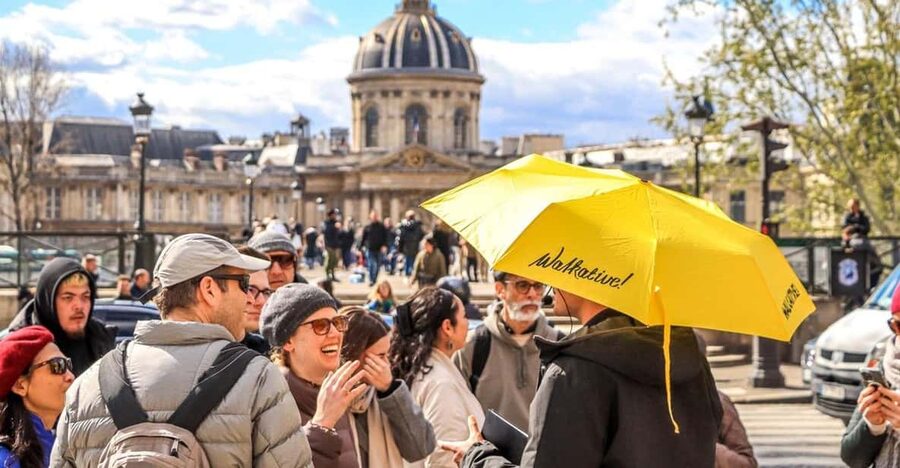
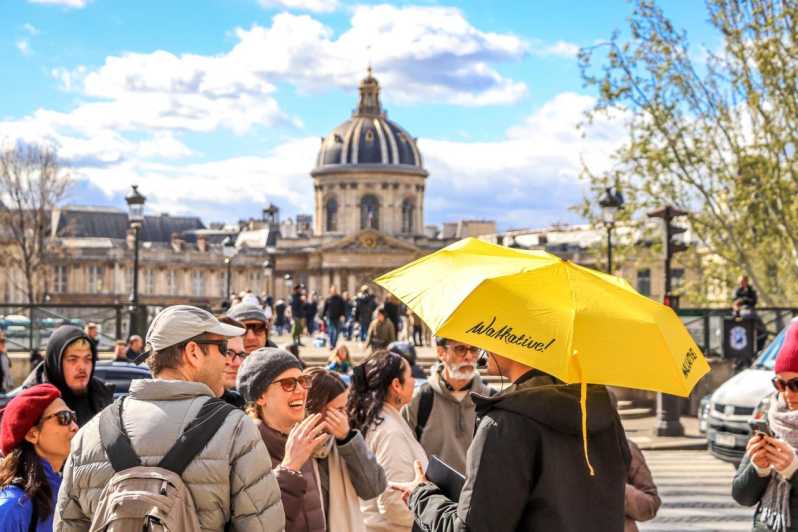
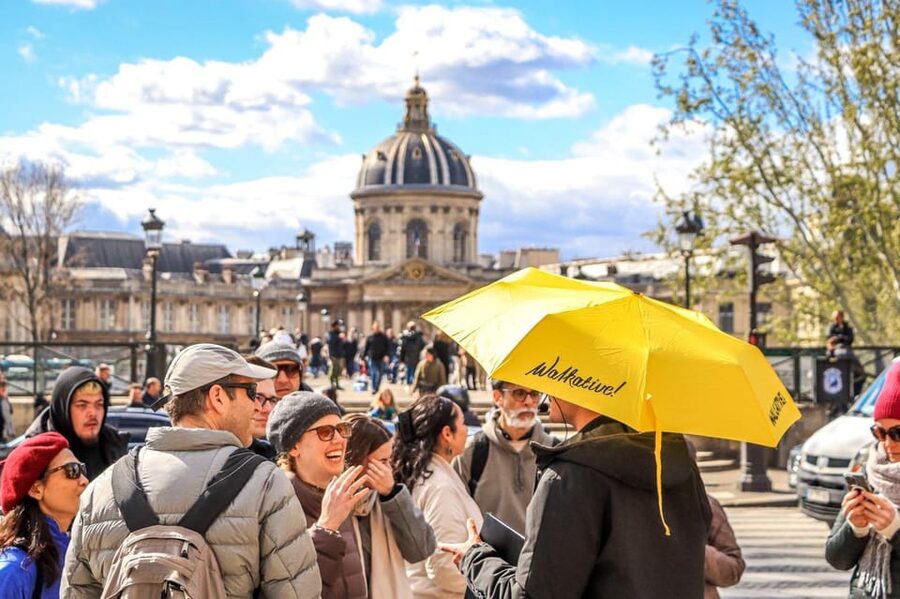
If you want the whole experience to feel easy, start with the meeting point. You’ll meet at Hotel de Ville, outside the metro at exit 5. The simple trick is to show up early enough to actually find the group, then look for the yellow umbrella. Aim to arrive about 10 minutes before the start so you’re not standing around while everyone else settles in.
This tour does not include hotel pickup or drop-off, so you’re using your feet and the metro like a real Paris day. That sounds basic, but it matters: walking tours work best when you’re already in the rhythm of the city instead of being delivered by van. Also, since the duration is 150 minutes, you’ll be thankful you didn’t waste that time circling the wrong corner.
More city walks in Paris:
- Paris Top Sights Half Day Walking Tour with a Fun Guide
★ 5.0 · 2,893 reviews - Montmartre Hidden Gems and Scenic Highlights Walking Tour
★ 5.0 · 2,684 reviews - Montmartre Hill French Gourmet Food and Wine Tasting Walking Tour
★ 5.0 · 2,588 reviews
A 150-minute intro to Paris that actually connects the dots
The best walking tours do one thing well: they create links. This one links Paris’s layers of power and culture, from early city growth and religious upheaval, to Enlightenment ideas, to the 19th-century push for wider boulevards and modern infrastructure. If you have ever looked at Paris and thought, Okay, I see the monuments, but how do they all connect, this helps.
You get an expert local guide and a thoroughly constructed narrative. In practice, that means you’re not just handed facts. You hear why the city looks the way it does and why certain places carry emotional weight. The guide also keeps the tone moving, mixing big ideas with human stories like love, desire, revenge, and famous figures such as Napoleon, Quasimodo, and even Hitler as part of Paris’s darker chapters.
There’s also a practical angle: Paris is enormous in feel, even when you stay in the center. A 150-minute walk gives you a first sweep of the main neighborhoods and a map in your head. That makes later days easier, because you can decide where to return based on what grabbed you.
Louvre: how the palace became a museum (and a Mona Lisa story)
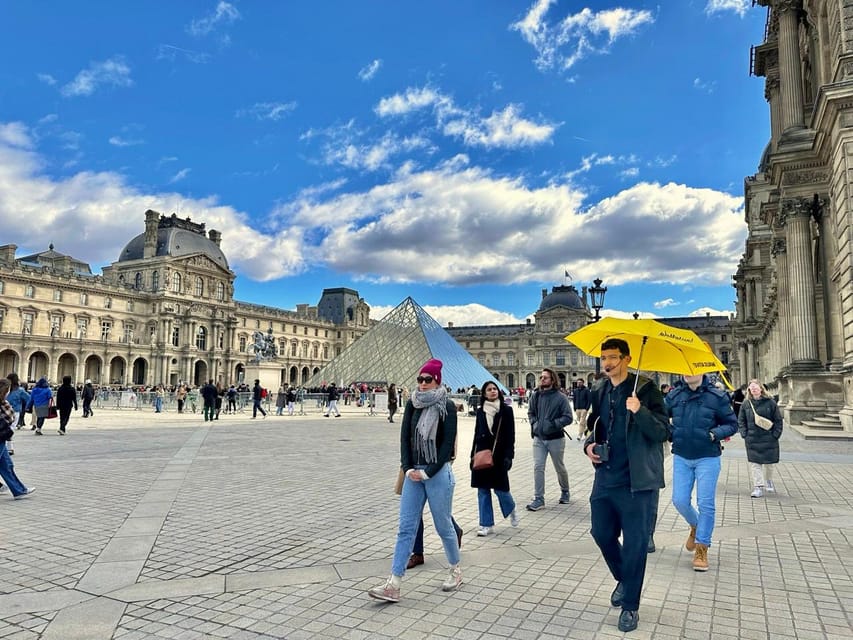
The Louvre stop is a major reason people pick this tour. The experience is designed to move beyond just seeing a famous building. You learn about the history of the palace and museum in a way that turns architecture into a timeline you can remember.
Then the tour adds narrative spice: it brings in the famous Mona Lisa and the most daring art theft in history. Even if you have only a passing interest in art, that story helps you think about the stakes. Paintings are not just pretty objects. They are symbols, targets, and proof of who holds cultural power.
What you should watch for on this stop is the pacing. The Louvre is a world-class destination, and it can swallow time. On a walking tour format, you’re not trying to cover everything inside. Instead, you’re using the exterior and the key context to set up a future visit. I like that approach, because it helps you return later with specific questions rather than visiting as a blur of rooms.
Notre-Dame Cathedral: medieval mood, Quasimodo, and why it mattered
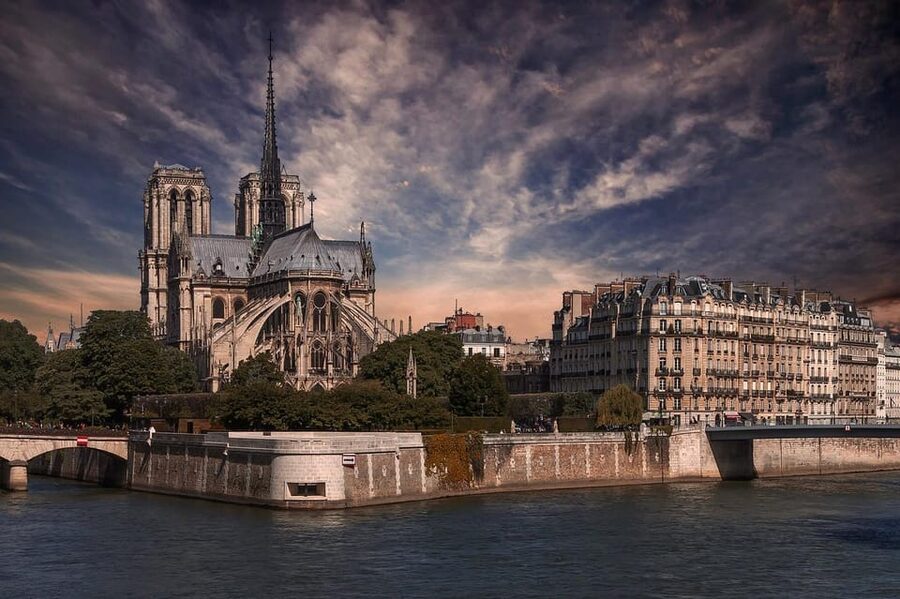
Next comes Notre-Dame Cathedral, and the tour treats it like more than a postcard. You get the medieval church atmosphere plus stories that connect to Quasimodo. That matters because Quasimodo is not just a character name, it’s a shortcut into how Paris fiction, folklore, and architecture can merge.
This stop also fits the tour’s broader theme. Paris has repeated cycles of conflict and rebuilding, and the tour uses those cycles to explain why the city feels both grand and fragile. Even without going deep into religious detail, you get the sense that this is a place tied to public life and public emotion.
A practical note: Notre-Dame area streets can be busy, even on calmer days. So your best move is to keep your focus on the guide, not on trying to take every photo at once. If you want the best shots, wait for the short pauses the guide builds into the route, especially near the transitions toward the river.
Other Paris bookings to consider
- Paris: Montmartre Highlights Walking Tour with a Local Guide
★ 4.9 · 2,318 reviews - Paris Île de la Cité and Notre-Dame Walking Tour With Crypt
★ 5.0 · 2,272 reviews - Paris: Montmartre Cheese, Wine & Pastry Guided Walking Tour
★ 4.8 · 2,255 reviews - Paris in a Day: Louvre or Orsay, Eiffel Tower, City Walk & Cruise
★ 5.0 · 1,956 reviews
Pont des Arts: the Seine, love legends, and photo-friendly walking
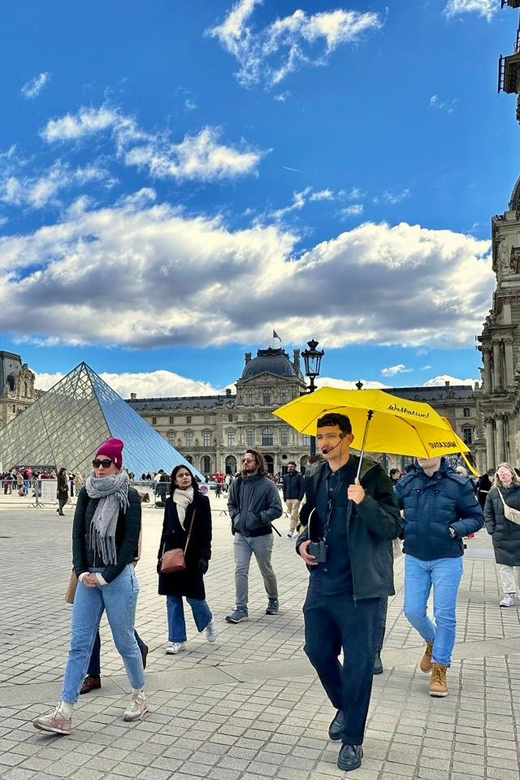
Then you’re at Pont des Arts, where the city opens out toward the Seine. This is one of those places where the guide’s job is partly storytelling and partly timing. The tour includes the bridge because it gives you a physical connection between neighborhoods, and it gives you views that are easier to frame when you are not sprinting.
Pont des Arts also supports the tour’s theme of love and desire, which shows up throughout the walking narrative. That makes the bridge more memorable than a simple crossing. You remember it as a moment in the story, not just a point on the map.
If you are the type who likes photos, this is a good segment to slow down and take a breath. You’ll likely have less time on later stops if the group is moving quickly, so use this one to capture the river angle that says Paris without needing extra captions.
Tuileries Gardens: a break that makes the whole tour feel human
The Tuileries Gardens stop is where the tour shifts from monument energy to calm. Gardens can seem like a soft landing, but they do something real for your day: they give you spacing. That’s important because the landmarks are heavy hitters. When everything is big, you need a reset button.
This part of the tour also pairs nicely with the broader Paris story being told. The narrative threads include the Enlightenment and the political push that led to the royal regime being overthrown, then the rise of Napoleon. In other words, ideas and power built the city, but people also needed places to breathe.
If you’re traveling in a cooler month, you might find the gardens less crowded and easier for lingering. If it’s warm, you’ll likely see more people just hanging out. Either way, aim to use the Tuileries time as your short break, not as another sprint point for photos.
Eiffel Tower, Sainte-Chapelle, and the revolution-to-Napoleon thread
This tour is not only about the four big highlights. The route also includes additional Paris touchpoints mentioned in the tour description, including Sainte-Chapelle and an Eiffel Tower reference. It also connects major figures to Paris, so you hear about Quasimodo, Napoleon, and Hitler and their ties to the city of love and light.
The value here is how it shapes your first impression of the city. Paris is often marketed as fashion, romance, and art. This tour adds another layer. It explains how wide boulevards, aqueducts, sewers, and parks were built as part of modernization, partly to prevent street barricades. That is a very Paris idea: design that is beautiful and also practical, even political.
When the tour brings in Napoleon, it doesn’t feel random. It follows the storyline of revolution, instability, and power shifts. Paris keeps reinventing itself, and this is a fast way to understand why.
If you like your history mixed with drama, you’ll probably enjoy the story energy. Just be aware that the content is not strictly cheerful. It includes violence and political repression as part of the way Paris developed. If you want a lighter day, you can still appreciate the architecture and art and treat the harder parts as context, not entertainment.
The guide makes the difference, and the names show the style
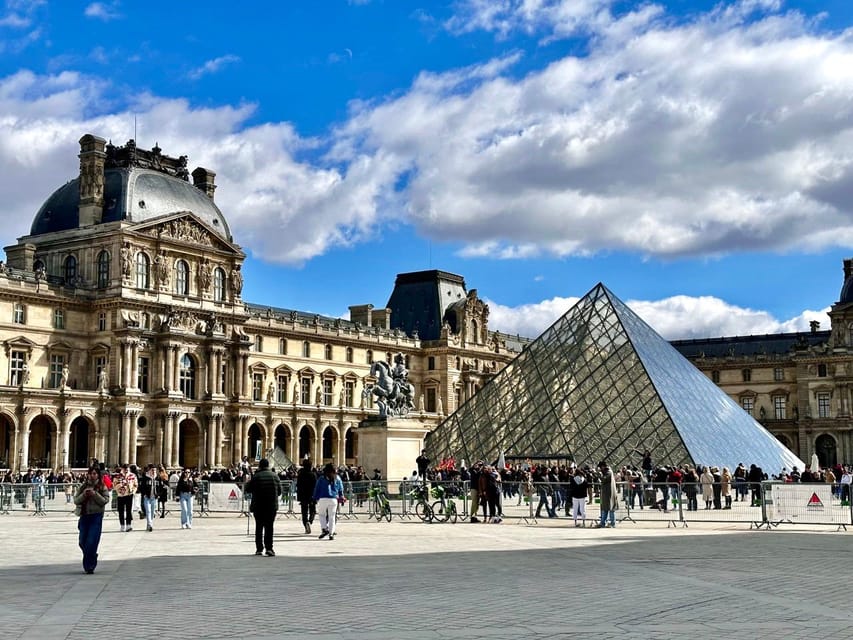
The guides are local, and the format is built for storytelling. That’s why past tour experiences named guides like Tom, Yazid, Harry, Francesca, Victoria, Thomas, Gurvan (also called Jay), Dawie, Tank, and Toto. The common thread in those comments is not just facts, it’s delivery: crisp explanations, humor, and the kind of enthusiasm that keeps a group listening.
In a good walking tour, you should feel two things:
- You can ask questions, and they get answered in a way that fits the story.
- You don’t spend the whole time looking at a phone. You’re looking up.
A couple guides were also described as using illustrations brought along, which is a smart move in Paris. When history shifts between centuries, quick visuals help you keep the timeline straight. And when the guide keeps everyone engaged for the full 150 minutes, you get the best value because you stop thinking you paid for a route and start realizing you bought clarity.
Price and value: why $31 can make sense for 150 minutes
At $31 per person for 150 minutes, the price is in the low to mid range for central Paris walking tours. But what makes it good value is the structure. You get an expert local guide and a narrative that covers multiple major landmarks in one go: Louvre, Notre-Dame, Pont des Arts, and Tuileries Gardens, plus additional stops like Sainte-Chapelle and an Eiffel Tower reference.
Also, the pricing here includes a reservation fee and the guide’s payment within a general pay as you wish system. That matters for your planning. You can reserve now and keep flexibility, but you’re not left guessing whether you should tip. You can reward the guide appropriately after the experience, depending on what you felt you received.
One more value point: first-timers often overspend on “must see everything” tickets. This is a tour that helps you prioritize. It does not try to replace a full museum day. It sets up a stronger visit later, which is where you actually spend your time.
Who this tour suits best (and who might want a different day)
This is a great pick if you want an efficient, meaningful first look at central Paris. You’ll especially like it if you:
- Are in Paris for a short trip and want major landmarks covered without full-day ticket overload
- Enjoy history that includes people, conflict, and culture, not just dates
- Want a calm start with the help of a guide and a structured walk
It may be less perfect if you:
- Want only light romance and clean, simple sightseeing
- Dislike darker historical references that include Hitler
- Prefer long museum time inside the Louvre or inside churches, since this is a walking tour format
As a rule, walking tours are also a good way to test your comfort with standing and uneven pacing. If you know you tire fast, wear comfortable shoes and bring a layer, because Paris weather can change your energy fast.
Quick ways to get more out of the walk
A few small tactics can upgrade the whole experience:
- Use the guide’s stories as a memory hook. When you hear Mona Lisa or Quasimodo, look for the visual cues near the buildings.
- Save your deepest questions for the transitions between stops. That’s when you’ll usually get the clearest answers without the group getting rushed.
- If you are traveling solo, lean into the group energy. Many people do this as their first Paris activity, and it’s a solid way to break the ice.
And yes, dress like you’re walking 150 minutes in real streets. Even if Paris looks glamorous, the sidewalks are still sidewalks.
Should you book this Historic Paris Walking Tour in English?
If you want a first-day Paris launchpad, I’d book it. The mix of Louvre, Notre-Dame Cathedral, Pont des Arts, and Tuileries Gardens gives you a balanced sweep of art, faith, river views, and calmer green space. The storytelling approach and the guide quality are the real drivers here, and the format is built to help you understand why Paris feels the way it does.
I would not book it if you want a purely cheerful highlights tour with no heavy political context. And I’d hesitate if your priority is spending lots of time inside major interiors. But for most people, especially first-timers, this is a strong use of time that makes later visits smarter.
FAQ
Where do I meet for the tour?
Meet at Hôtel de Ville, outside the metro at exit 5. Look for a yellow umbrella.
How long is the Historic Paris Walking Tour in English?
The tour lasts 150 minutes.
What landmarks will we see?
The tour includes stops connected with the Louvre, Notre-Dame Cathedral, Pont des Arts, and Tuileries Gardens. It also mentions Sainte-Chapelle and the Eiffel Tower area among other sights.
Is the tour in English?
Yes, the tour is in English with a live tour guide.
How much does it cost?
The price is $31 per person.
Is hotel pickup included?
No, hotel pickup and drop-off are not included.
Is there a pay as you wish component?
Yes. By booking, you join their general pay as you wish tour. The amount you pay covers the reservation fee and the guide’s payment.
More Historical Tours in Paris
- Paris: Dark History and Ghostly Guided Walking Tour
★ 4.7 · 1,000 reviews - Paris: Le Marais & Montmartre Jewish History Walking Tour
★ 4.8 · 170 reviews - Explore the Marais: History, Art & Local Culture
★ 4.6 · 105 reviews - The historic district of Montmartre
★ 4.9 · 66 reviews
Newly listed around Paris
- The voice of Montmartre is a must-see in Paris★ 3.8 · 19 reviews
- Top Private Cruises in Paris with Champagne + more surprises★ 5.0 · 309 reviews
- The Official Emily in Paris Montmartre Walking Tour★ 4.7 · 40 reviews
- The Paris Pass® Plus: 90+ Attractions including The Louvre★ 3.4 · 386 reviews
- The Official Emily in Paris Locations Walking Tour★ 4.9 · 383 reviews
- The Official Emily in Paris Macaron-Making Workshop★ 4.9 · 68 reviews
- The Official Emily in Paris Wine & Cheese with Butter Making★ 4.9 · 20 reviews
- The Official Emily in Paris Croissant-Making Workshop★ 4.9 · 85 reviews
Historical Tours, compared.

Louvre Museum Entry with History of Mona Lisa
Read our review →

Vieux Lyon Cultural & Historical Walking Guided Tour (English)
Read our review →

Toulouse Food & History Tour with a Chef (in English)
Read our review →
Small-Group Full-Day Tour of Côte de Nuits, Côte de Beaune Vineyards and Beaune Historical District
Read our review →
Browse the lists this tour appears in