
Reviewed · LILLE TOURS & ACTIVITIES
Lille: Explore the Titanic in virtual reality
Step into the Titanic, without the mess of reality.
This Lille VR experience lets you move freely through a faithful ship recreation, guided by historical narration, with no cables or controllers to get in your way. It is built to feel emotional, not gimmicky, so you end up understanding what the last hours meant for the people aboard.
I love the practicality here. The headset setup is designed so you can actually look around and walk in the space, which makes the experience easier to follow than most headsets that feel like you are stuck. I also like that the reconstruction is created with expert input, so when you wander into lounges, cabins, and even technical areas, it feels purposeful rather than random.
One drawback to plan for: the whole experience is short, about 1 hour total. If you want to linger like you would in a museum, this is more of a powerful first look than a long, slow tour.
In This Review
- Key Highlights You Will Care About
- VR on the Titanic in Lille, what you are really signing up for
- Getting started: welcome, briefing, then headset time
- The no-cable, no-controller freedom is the real tech flex
- Boarding the Titanic: what you do once you are inside
- Lounges, cabins, technical areas: how each space changes the experience
- Lounges: the human side
- Cabins: where the stakes feel personal
- Technical areas: the ship as a system
- Iconic scenes: the timeline makes sense
- Narration and passenger stories: what you will remember later
- How the historical recreation holds up (and why experts matter)
- Price and time: is $28 worth your hour?
- Who should book this Titanic VR experience in Lille
- Quick practical tips before you go
- Should you book the Titanic VR experience in Lille?
- FAQ
- How long is the Titanic VR experience in Lille?
- How much does it cost?
- Do I need cables or controllers?
- Is there a guide or narration during the experience?
- What languages are available?
- Is the experience wheelchair accessible?
- Is it suitable for children?
- Is it suitable for people with heart problems?
- Can I cancel or change my plans?
Key Highlights You Will Care About
- Cable-free, controller-free movement: You explore by moving naturally in the space.
- Historically informed recreation: Lounges, cabins, and technical areas are built for period accuracy.
- Guided narration with passenger stories: You get context tied to what you are seeing.
- Freedom to choose where to look: You are not forced to stare at one fixed point.
- Made to fit many audiences: It is accessible for a wide range of people, with a few clear limits.
VR on the Titanic in Lille, what you are really signing up for
Lille is a smart place to do this because it is indoors, climate-proof, and easy to fit between meals and museums. This is not just “Titanic themed VR.” It is a guided, story-led visit to a huge subject, delivered in a way that is hard to do with photos or even regular video.
The big idea is simple: you get a physical sense of scale and layout. You walk around. You look into rooms. You notice details. That matters with a ship like the Titanic, because the story is not only about one moment. It is about spaces where people lived, worked, and reacted as events unfolded.
If you are the type who usually reads every museum label, you will probably appreciate the structured narration. If you are more of a visual learner, you will still get value, because the experience is set up to let you explore while the story explains what you are seeing.
Other Lille bookings to consider
- Vieux Lille 2-Hour Guided Walking Tour
★ 4.5 · 1,220 reviews - Entrance Ticket Nausicaa, the biggest aquarium in Europe
★ 3.5 · 1,135 reviews - Lille Bus Tours
★ 4.4 · 1,133 reviews
Getting started: welcome, briefing, then headset time
Your session begins with a warm on-site welcome and a short intro. This matters more than you might think. VR can be disorienting if you jump in cold, especially when the experience includes movement freedom. The team prepares you first, so the time in the headset feels smooth instead of awkward.
After the briefing, you put on the premium VR equipment. The key is that the setup is described as the latest generation, and the experience is designed for movement without cables or controllers. That means less fiddling with gear, less worry about snagging something, and fewer distractions while you are trying to take in the ship.
One practical point: you will likely spend the first few minutes settling your balance and learning how turning and looking works in their free-movement space. Plan a calm mindset at the start, not a rush.
The no-cable, no-controller freedom is the real tech flex
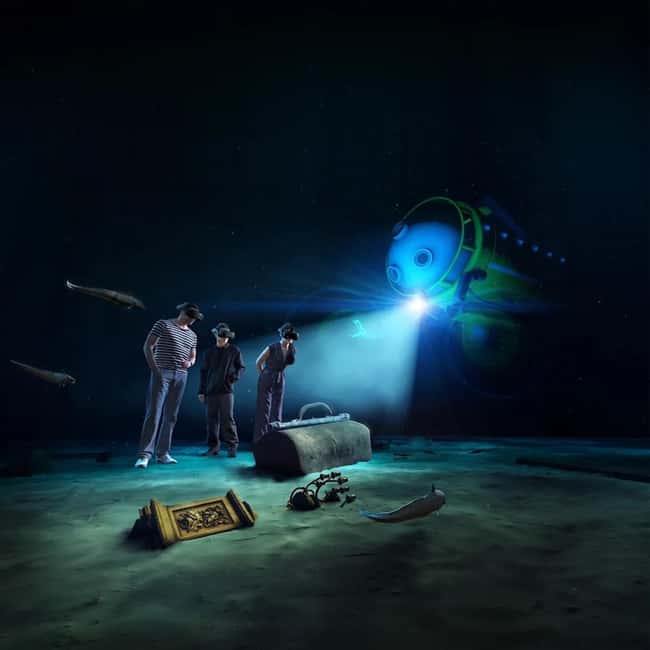
Most VR experiences either strap you into a fixed “view” or give you handheld controllers that control everything. Here, the highlight is that you can move around freely in the immersive space without cables or controllers.
What this changes for you:
- You can look at details at your own pace, instead of waiting for the next forced view.
- You can rotate your attention, room to room, like you would in real life.
- You can pause mentally. That is useful when the story gets heavier, because you are not constantly being yanked forward by prompts.
This freedom also reduces friction for people who do not love gaming-style VR. If you are new to headsets, this style is often easier to enjoy because your body is the input, not a handheld device.
There is still a reality check: VR movement can feel different than walking on pavement. If you are sensitive to motion or disorientation, give yourself time at the beginning, and do not try to sprint through the ship.
Boarding the Titanic: what you do once you are inside
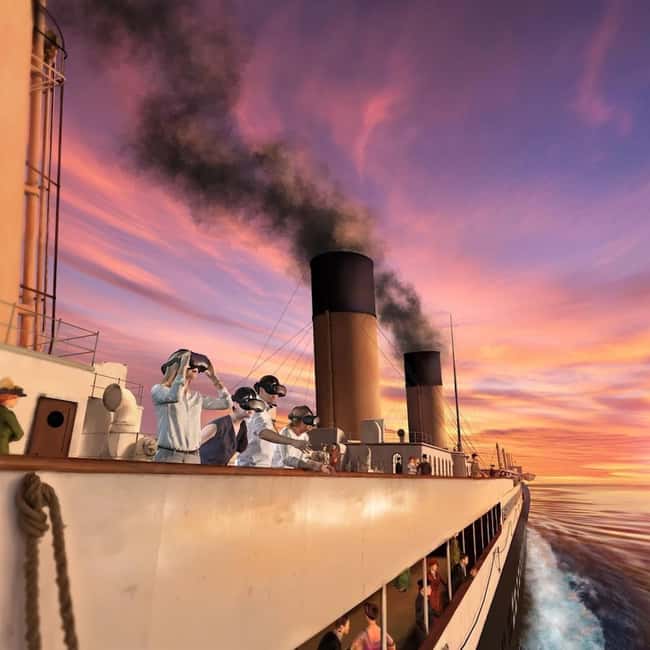
Once you enter the main VR space, the story guides you as you board the Titanic and start exploring. You are not simply watching a sequence of scenes. You are doing a guided walkthrough where you can wander through key areas.
Here is what you can expect to encounter, based on how the experience is described:
- Lounges: These are your social spaces, where atmosphere matters.
- Cabins: Where the passenger story becomes more personal.
- Technical areas: The less visible side of the ship, which helps the story feel grounded.
- Iconic scenes: You will see major moments tied to the timeline.
- Intertwined destinies: Narration connects what you are seeing to passengers and their overlapping stories.
The value of this structure is that it does not keep you at the surface. Even if you know the Titanic story already, walking through areas like cabins and technical spaces helps you understand the ship as a functioning machine and a shared home at the same time.
The narration does the important work of stitching it all together. You are free to explore, but you are not left wondering what you are looking at or why it matters.
Within easy reach:
- Lille Driving Tour by Convertible Citroen 2CV
★ 4.9 · 711 reviews - Unique Tour of Lille by Convertible 2CV – 1h00
★ 5.0 · 470 reviews - Lille: Entry ticket to the Museum of Illusions
★ 4.1 · 307 reviews - Lille: 24, 48 or 72-Hour City Pass & 24-Hour Transportation
★ 4.3 · 205 reviews
Lounges, cabins, technical areas: how each space changes the experience
Not all “rooms” in VR hit the same way. This experience uses different ship zones to shape your understanding.
Lounges: the human side
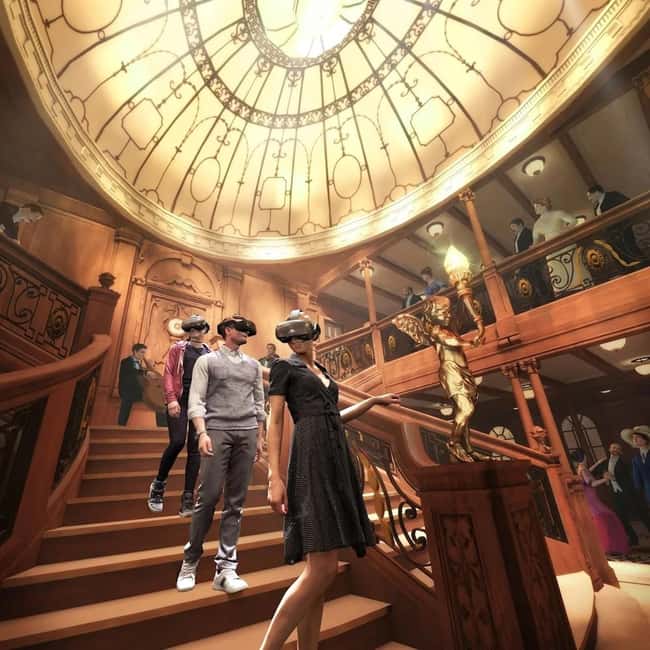
Lounges are where you feel the social rhythm of the ship. In a guided Titanic experience, these spaces are emotional because they represent normal life on board. When narration references people and decisions, the lounge setting makes it easier to imagine conversations, routines, and expectations.
For you, this tends to be the part where the VR feels most like a museum visit, because rooms like these are easy to orient yourself in. Look around, notice where people would gather, and let the story attach names and circumstances to the surroundings.
Cabins: where the stakes feel personal
Cabins turn the big tragedy into something more specific. Even when you do not know every passenger detail, the cabin concept makes you think about privacy, comfort, and vulnerability. When narration weaves passenger fates into the timeline, cabins are where the story lands hardest.
If you are sensitive to emotional content, this section is worth approaching slowly. You do not have to rush. The experience is designed to let you move and choose what to focus on.
Technical areas: the ship as a system
Technical areas are the part many Titanic overviews skip. Here, you get a look at the working side of the vessel, which makes the whole story feel more credible. You can see that the ship was not only a symbol. It was engineering, systems, and people trying to respond.
This is a real value add for curious minds. It helps you connect the human story to the practical reality of how things operate on a ship.
Iconic scenes: the timeline makes sense
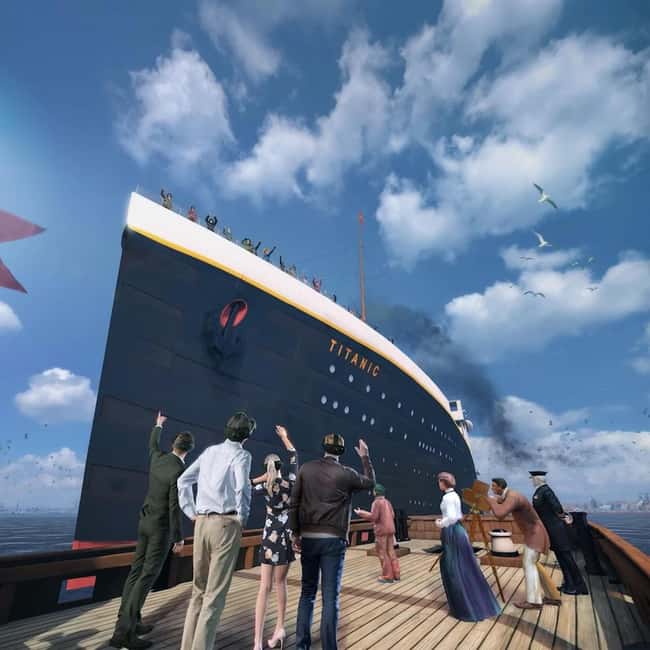
Iconic scenes are where the story becomes recognizable. They also serve as anchors, so the experience feels like more than wandering. You understand where you are in the last-hours timeline, because the narration is guiding you through those highlights.
Drawback to keep in mind: since the experience is limited to about an hour total, you might not get to repeat scenes or linger as long as you wish. Still, the “iconic moments” placement is useful because it gives you a clear arc.
Narration and passenger stories: what you will remember later
A Titanic story lives or dies on narration. Here, the experience includes guided exploration with historical narration, built to support a historical and emotional immersion.
What makes the storytelling practical is the way it links the spaces you visit to passenger perspectives. As you move through lounges, cabins, and technical areas, the narration connects scenes to intertwined destinies. That connection is what makes the ship feel inhabited rather than empty.
After the experience ends, you take off the equipment and share your impressions with the team. That last step is not just social. It helps you process what you saw while the details are still fresh, and you can ask questions if something stood out.
If you like learning through story, this section is often the reason people feel satisfied. You leave with more than visuals. You leave with a sense of how different lives overlapped in the same environment.
How the historical recreation holds up (and why experts matter)
This experience is described as a faithful recreation crafted with experts for historical immersion. Even without getting lost in the jargon, what that means for you is straightforward: the design aims for period accuracy in decor and overall atmosphere.
You will notice this in:
- how rooms feel arranged and decorated
- how the ship’s layout supports the passenger journey
- how the narration can refer back to spaces you just walked through
Expert input matters because the Titanic is famous, and that fame can easily lead to sloppy “Hollywood” versions. Here, the goal is a credible reconstruction so you trust what you are seeing.
Also, the experience includes team assistance throughout, plus safety and hygiene conditions guaranteed. In VR, those basics matter. Less stress means you can focus on the story and not worry about comfort or cleanliness.
Price and time: is $28 worth your hour?
At $28 per person for a session lasting 1 hour, you are paying for premium VR gear, guided narration, and staff support, not for a train ride or a long walking route.
So the value question is really: do you want a focused, high-impact introduction to the ship, or do you want a slow, repeatable deep dive?
This is how I would frame it:
- If you want a memorable, story-led experience and you are curious about how the ship functioned, it feels like fair value.
- If you expect a museum-length visit with time to re-check every room, the session length may feel short.
One more thing to consider: some content may be shown in its original language, while the host or greeter can help in French, English, or German. If language is a deal breaker for you, check that you are comfortable with mixed-language elements.
Who should book this Titanic VR experience in Lille
I think this is a great fit if you:
- enjoy guided experiences with a clear story arc
- want to see the Titanic layout in a way that feels more physical than photos
- are trying VR for the first time and prefer free movement over controller gameplay
It is also a good option for people who want something indoor and time-efficient in Hauts-de-France.
But it is not right for everyone. It is not suitable for:
- children under 8
- people with heart problems
Those limits are not tiny footnotes. In VR, your body matters. If any part of that list applies to you, look for a different activity.
Wheelchair accessibility is listed, which is a strong plus. If you use a wheelchair, you will still want to plan around the headset and movement space, but you are not shut out from the start.
Quick practical tips before you go
This is not the kind of tour where you need special clothing advice, but a few habits help:
- Arrive with a calm pace, so the briefing and headset fit feel easy.
- Plan for a short session. Mentally treat it like an intense overview, then decide if you want a longer follow-up activity on land.
- If you are sensitive to motion or VR discomfort, speak up during the briefing and take your time in the first moments.
Finally, if you care about language, remember that hosts can speak French, English, and German, while some content may be shown in its original language. You will get support, but the narration and scenes might include that detail.
Should you book the Titanic VR experience in Lille?
I would book this if you want a high-quality, guided Titanic experience without the logistical hassle of long tours. The combination of premium VR equipment, historical narration, and freedom of movement is what makes it worth your attention.
Skip it if you need a long, slow visit. Also skip it if the safety note about heart problems applies to you, or if you are traveling with children under 8.
If you are visiting Lille and you want something memorable, different, and emotionally grounded, this is a strong choice. It is short, but it aims to leave you with the ship’s layout and the passenger stories in your head, not just a passing feeling.
FAQ
How long is the Titanic VR experience in Lille?
The experience lasts 1 hour.
How much does it cost?
The price is $28 per person.
Do I need cables or controllers?
No. The VR experience is described as using the latest generation premium VR equipment without cables or controllers.
Is there a guide or narration during the experience?
Yes. You get guided exploration with historical narration.
What languages are available?
The on-site host or greeter can speak French, English, and German. Some content may be shown in its original language.
Is the experience wheelchair accessible?
Yes, it is listed as wheelchair accessible.
Is it suitable for children?
No. It is not suitable for children under 8.
Is it suitable for people with heart problems?
No. It is not suitable for people with heart problems.
Can I cancel or change my plans?
Yes. Free cancellation is available up to 24 hours in advance for a full refund, and you can reserve now and pay later.
Newly listed around Lille
- Tasty treasure hunt in Lille★ 4.2 · 21 reviews
- Private walking tour of downtown and Old Lille with a certified guide.★ 4.8 · 34 reviews
- Private custom tour with a local guide Lille★ 4.3 · 19 reviews
- NO DIET CLUB – LET’S GET THICK IN Lille !★ 4.8 · 93 reviews
- Lille: Entry ticket to the Museum of Illusions★ 4.1 · 307 reviews
- Lille : Vieux-Lille Walking Tour★ 4.5 · 61 reviews
- Lille: Scavenger hunt and beer tasting in Old Lille★ 4.5 · 23 reviews
- Lille International Pub Crawl with Free Shots & Fun Games★ 4.3 · 19 reviews
Lille Tours & Activities, compared.

Entrance Ticket Nausicaa, the biggest aquarium in Europe
Read our review →



24, 48 or 72-Hour City Pass & 24-Hour Transportation
Read our review →
Browse the lists this tour appears in