

Reviewed · LOUVRE HIGHLIGHTS GUIDED TOURS
Louvre Museum Access Private Guided Visit
A great guide turns the Louvre into sense. This private English visit centers on the Louvre’s biggest pull, including the Mona Lisa and the Nike of Samothrace, then explains how art shifts across eras.
I also like that the pacing is built for a short visit, with a clear art-story path instead of endless wandering. The trade-off is simple: two hours means you’ll get the highlights, not the whole museum.
You get a 2 hours focus with an adult admission ticket included (listed as €22), plus the framing of a professional art historian guide. That combo helps you understand what you’re seeing, not just what’s famous. One consideration: the Louvre is still the Louvre, so expect moderate walking and lots of crowd flow even with a private group.
In This Review
- Key things that make this Louvre visit work
- Private guide value: what you’re really paying for at the Louvre
- Two hours inside the Louvre: how the timing feels in real life
- Stop 1: Mona Lisa and the Louvre’s essential first impressions
- Stop 2: Roman gallery power, and why it shaped Europe
- Stop 3: Greek works that became Europe’s visual template
- Stop 4: Medieval art, and the bridge toward the Renaissance
- Stop 5: The Great Gallery and the Italian Renaissance high point
- Stops 6 and 7: Romanticism’s drama, then Neoclassicism’s calm
- After the tour: how to keep getting value once you’re free to roam
- Which guides people rave about, and why it matters
- Who should book this Louvre private guided visit
- Should you book this Louvre private guided visit?
- FAQ
- Is the Louvre entrance ticket included?
- How long is the private guided visit?
- What language is the guide?
- Where do we meet, and where does it end?
- Is this a private tour?
- Are there free admission options for some visitors?
- Is the booking refundable if plans change?
Key things that make this Louvre visit work
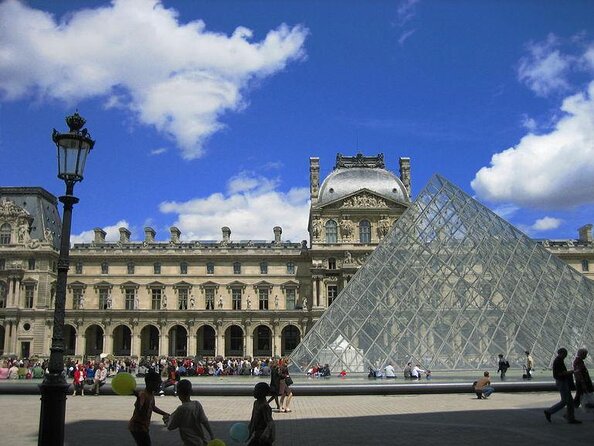
- A real art-timeline format that moves from antiquity to later European styles
- Private, English-speaking guide time so you can steer the focus toward what you care about
- Major masterpieces first, then less-famous works that still matter
- Roman, Greek, Medieval, Renaissance, Romantic, and Neoclassical galleries in one tight loop
- Small practical wins like saving time entering and receiving navigation tips after
Private guide value: what you’re really paying for at the Louvre
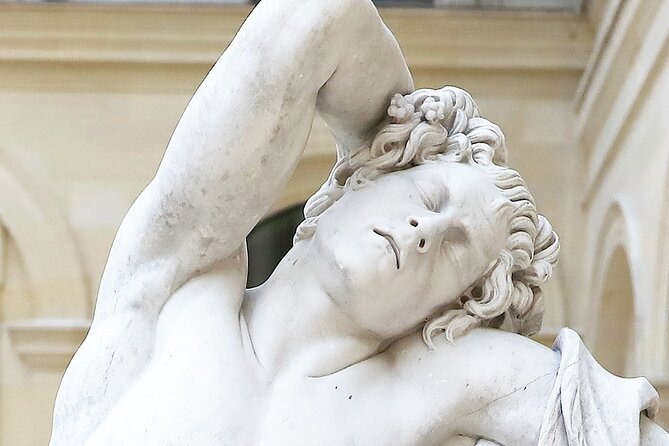
At $301.71 per person for about two hours, this is not a budget add-on. It is a time-saver and a meaning-maker.
The value is partly obvious: you’re paying for a professional art historian guide and a private experience. But the bigger win is how the guide turns the Louvre from a giant maze into a sequence you can follow. The Louvre is famous for being overwhelming. Here, you’re not just looking at paintings and statues, you’re getting the why behind them, with an evolution of art that moves across centuries.
Also, your museum entry is covered for adults (noted as a €22 entrance ticket). That matters because the Louvre’s pricing and ticket rules can add friction. When the guide brings that part handled, you spend your limited time on seeing, not managing.
Is it worth it for every traveler? If you love structure and context, yes. If you prefer to roam freely with no stops and no plan, you might feel boxed in by a timed visit. In other words, this is best as a guided “greatest hits plus meaning” session, not a slow all-day museum day.
More Louvre entries and guided rounds:
- Paris: Louvre Guided Tour with Reserved Access & Boat Cruise
★ 4.3 · 16,353 reviews - Louvre Museum Masterpieces Guided Tour with Access
★ 4.5 · 12,023 reviews - Paris: Louvre Overview, Exploration tour and Reserved Entry
★ 4.1 · 10,145 reviews
Two hours inside the Louvre: how the timing feels in real life
This private tour runs about 2 hours, and it loops back to the same meeting point at the end. You meet at Arc de Triomphe du Carrousel, Place du Carrousel, 75001 Paris, and the experience stays centered around getting you oriented and then moving efficiently through selected highlights.
The schedule is arranged as short gallery blocks, with multiple stops at roughly 15 minutes each. That format is surprisingly effective for the Louvre. It keeps you from losing momentum. Instead of one long “maybe we’ll find Mona Lisa” stretch, you hit major areas while your legs and attention are still fresh.
You should also assume you’ll do some walking. The tour notes a moderate physical fitness level, which lines up with what you should expect in the Louvre: stairs, wide floors, tight crowd lanes, and constant shifting movement. Wear comfortable shoes. Bring a layer, because indoor temperatures can swing.
Finally, this tour is offered in English, and you’ll receive a confirmation at booking time. It also uses a mobile ticket, which helps on the day.
Stop 1: Mona Lisa and the Louvre’s essential first impressions
Your tour begins at the Louvre and quickly hits what most people come for. You’ll see masterpieces such as the Nike of Samothrace and the Mona Lisa. The guide also doesn’t treat these like random icons. They’re used as anchor points to explain what made these works powerful in their original context, and how the museum shaped the way we now read them.
Here’s what I like about this opening: the guide’s job is not only to point, but to frame. At the Louvre, you can stare at a famous painting for 30 minutes and still feel like you learned nothing new. With a historian guide, you get the translation layer, so the famous works feel less like tourist checkmarks and more like art with an actual voice.
A small practical upside you’ll likely notice too is how you avoid wandering the wrong direction. Several guide experiences from other visitors emphasize that the Louvre is huge and easy to get lost in. Starting with a strong sequence helps you avoid that first-day disorientation.
The possible drawback is that if you want extra time with a single painting, the short stop structure may feel fast. This is built to cover ground and context. If you’re hoping to linger, plan to do that on your own after the guided portion.
Stop 2: Roman gallery power, and why it shaped Europe
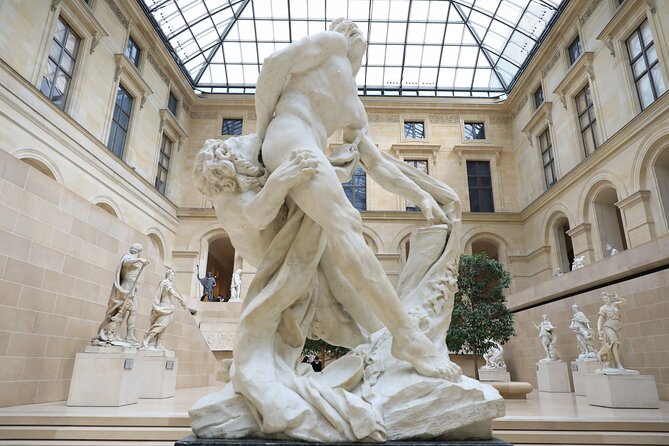
Next up is the Roman gallery, focused on the importance of Roman art and how it influenced later European art and culture.
Roman art can feel subtle if you only know it through school outlines. But in a guided setting, it clicks. The guide will connect Roman style and subject choices to what came after, including how European artists borrowed Roman ideas about form, grandeur, and storytelling.
This stop is also a useful palate cleanser. After the intensity of the most famous Renaissance and later works, Roman art gives you a different kind of “engine” for how European art developed. If you’ve ever wondered why so many later paintings look built on classical ideals, this is where you start seeing the link.
One thing to keep in mind: since the tour is time-limited, you won’t get a deep, slow lesson in every object. You’ll get the overview that helps you interpret what you see, then you can decide what to return to later.
Other Paris bookings to consider
- Paris: Orsay Museum Entry Ticket
★ 4.7 · 25,647 reviews - Paris: Louvre Museum Entry Ticket With Host and River Cruise
★ 4.6 · 9,926 reviews - Les Invalides: Napoleon’s Tomb & Army Museum Entry
★ 4.6 · 9,185 reviews - Louvre Museum – Exclusive Guided Tour (Entry Included)
★ 5.0 · 6,296 reviews
Stop 3: Greek works that became Europe’s visual template

The following stop centers on Greek works of art, and the tour highlights their crucial importance and influence on later European art and culture.
Greek sculpture and painting traditions often feel like the “starting line” for many ideas you’ll spot again and again in Europe: anatomy, proportion, idealized forms, and narrative through visual cues. In a guided hour or two, you might not become an expert, but you can gain the ability to notice what matters. You start thinking like an art historian, not just an observer.
In practical terms, this stop also helps you make sense of why the Louvre keeps classical galleries so prominent. They are not just decoration. They’re the roots of a lot of what European art later tried to achieve.
Stop 4: Medieval art, and the bridge toward the Renaissance
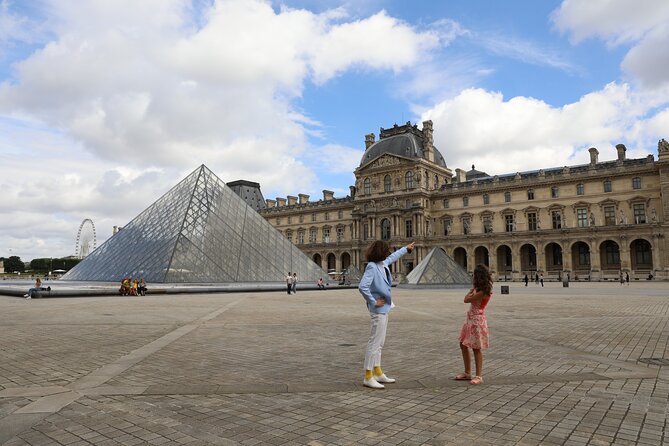
After antiquity, the tour shifts into Medieval art, with an emphasis on its influence on the Renaissance period.
This is an important transition moment. Medieval art often gets treated as a detour, but it isn’t. It carries religious storytelling, symbolism, and design choices that later eras either transformed or reacted to. When a guide walks you through this shift, you stop seeing history as a straight line and start seeing it as a chain of changes.
If you enjoy “how did we get from here to there,” this stop is exactly that. You’ll leave it with a better sense of how Renaissance artists had something to respond to, not nothing to build from.
The only consideration is that if you mainly want paintings, the Medieval galleries may feel less immediately familiar. The solution is to trust the guide’s framing. These works often make more sense once you know what question they were trying to answer.
Stop 5: The Great Gallery and the Italian Renaissance high point
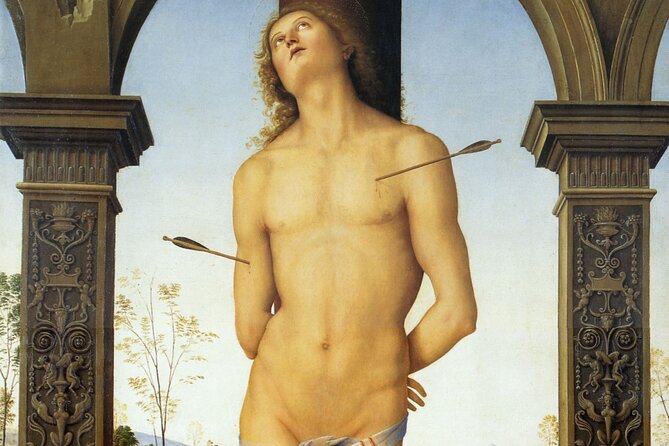
The tour then reaches the Great Gallery of the Louvre, described as the focal point of the museum, and it focuses on Italian Renaissance art.
This is where the Louvre’s big visual ambition shows. Renaissance art tends to deliver a kind of clarity and control, with composition and realism that many visitors associate with the pinnacle of European painting. In a guided format, you’re not just seeing beauty. You’re learning what Renaissance artists were aiming for and why their choices looked different from the eras before them.
This stop is also where you’ll benefit most from a guide who can explain style differences quickly. One of the most praised aspects of guides on this kind of experience is how they navigate the crowded museum and hit the right highlights without wasting time. It matters even more in a gallery that’s both famous and visually overwhelming.
Stops 6 and 7: Romanticism’s drama, then Neoclassicism’s calm

The final two gallery stops cover Romanticism and then Neoclassicism.
Romanticism is described as fiery and dramatic painting. Neoclassicism is described as elegant, poised, and sophisticated. That pairing is a smart way to end. It gives you a clear emotional contrast and helps you understand how taste and values shift over time.
Romanticism often pushes feelings and intensity forward. Neoclassicism often brings back order and restraint. When you see both in the same guided arc, you stop thinking of art styles as labels and start seeing them as responses to culture, politics, and ideas about what art should do.
If you like art that feels cinematic, Romanticism may be your favorite. If you like clean lines and compositional poise, Neoclassicism will likely land better. Either way, the tour’s structure makes the differences easy to spot.
After the tour: how to keep getting value once you’re free to roam
This kind of private tour is most satisfying when you treat it like a launchpad. Several guides are praised for helping people get their bearings fast and then giving navigation tips you can use right after. After your guided loop, you’ll have a better map in your head, not just a list of works.
Here’s what that means for your day plan:
- If your time is limited, go back to the areas or artists that genuinely grabbed you during the guided stops.
- If you have more time, use the art-era path as your backbone, then add extra rooms that match what you now understand.
One extra detail that you might notice during the broader Louvre experience, depending on what the guide points out and where you pass, is the original moat around the early fortification area. That kind of structural history can add a fascinating layer to your visit, especially if you like seeing the museum as a place with its own past, not only its collection.
Also, since food and drinks are not included, plan for a snack break. The Louvre day can run long, and having a small plan for water and meals makes your museum time feel smoother.
Which guides people rave about, and why it matters
This private visit uses professional art historian guides, and the guide names that show up in past experiences include Boris, Boraz, Tina, Mila, Amy, Adi, Anya, and Anne. While each guide brings their own personality, the common thread in praise is how they handle three things well:
- efficient movement through the museum,
- clear context for what you’re seeing,
- a sense of comfort, even if it’s your first time booking a private guide.
One reason this matters is that the Louvre is crowded enough that even confident museum-goers can feel tense. A good guide can reduce that stress by giving you a plan and then keeping you on it.
If you’re traveling solo, this also tends to feel more friendly than you’d expect. A private format means you’re not competing with a group for attention or drifting off-task.
Who should book this Louvre private guided visit
This is a great match if you want:
- a focused Louvre visit in about two hours
- a clear timeline from Greek and Roman art through Medieval and Renaissance, then into Romanticism and Neoclassicism
- an English-speaking guide who can explain the big connections between eras
- help maximizing time if you’re short on days in Paris
It’s less ideal if you:
- want to spend half a day in one gallery with no structure
- want an all-access, everything-in-one-go museum experience
- prefer an entirely self-guided route where you set every pace
If you do have flexible time, I’d still book it. Think of it like getting the Louvre’s “study notes,” so the rest of your wandering becomes intentional instead of random.
Should you book this Louvre private guided visit?
Book this if you care about context and you want to walk out feeling like the Louvre made sense. You’re paying for expert framing, private pacing, and a sequence that connects major works to the bigger story of European art.
Skip it only if you’re happy to take a map and hunt masterpieces on your own, because then you can get much lower-cost options. But if your priority is getting the highlights plus a clear explanation in a short window, this is the kind of booking that can turn a stressful museum into a satisfying one.
If you do book, give yourself good shoes time and a realistic plan: two hours will change how you see what you return to later, and that can be the best souvenir.
FAQ
Is the Louvre entrance ticket included?
Yes. The tour includes an adult museum entrance ticket listed as €22, and admission is covered for the museum stops during your visit.
How long is the private guided visit?
The tour is about 2 hours.
What language is the guide?
The tour is offered in English.
Where do we meet, and where does it end?
You meet at Arc de Triomphe du Carrousel, Place du Carrousel, 75001 Paris, France. The experience ends back at the meeting point.
Is this a private tour?
Yes. This is a private tour, and only your group participates.
Are there free admission options for some visitors?
Free admission applies to visitors under 18 and EEA residents under 26, as long as you show valid ID and proof of residency.
Is the booking refundable if plans change?
No. The experience is non-refundable and cannot be changed for any reason, and the amount you paid will not be refunded if you cancel or request an amendment.
Newly listed around Paris
- Paris Orsay Museum and Rodin Museum Daily Combo Ticket★ 4.0 · 32 reviews
- Paris Pastry Tour – Croissants, Macarons & Iconic French Desserts★ 5.0 · 232 reviews
- Paris Orsay Museum with Optional Seine River Cruise Tickets★ 4.0 · 65 reviews
- Paris Occult and the History of the Dark Arts Private Tour★ 5.0 · 17 reviews
- Île de la Cité Guided Tour & assistance Notre Dame entrance★ 5.0 · 22 reviews
- Paris Orsay Museum Entry Ticket with Digital Audio Guide★ 3.5 · 93 reviews
- Notre Dame de Paris: Semi Private or Private Guided Tour Guide★ 5.0 · 30 reviews
- Paris Opera Garnier Private Tour★ 5.0 · 42 reviews
Louvre Highlights Guided Tours, compared.

Louvre Guided Tour with Reserved Access & Boat Cruise
Read our review →
Louvre Museum Masterpieces Guided Tour with Access
Read our review →
Louvre Overview, Exploration tour and Reserved Entry
Read our review →
Louvre Museum Entry Ticket With Host and River Cruise
Read our review →
Mona Lisa & Louvre Masterpieces Tour with Reserved Access
Read our review →
Louvre Museum – Exclusive Guided Tour (Entry Included)
Read our review →
Louvre Museum Hosted Entry and Mona Lisa Audioguide
Read our review →
Louvre Access with Mona Lisa Escort or Guided Option
Read our review →Browse the lists this tour appears in