

Reviewed · LOUVRE HIGHLIGHTS GUIDED TOURS
Louvre Museum Guided Tour with Artist
The Louvre feels smaller with an artist guide. You get a tight 2-hour plan that starts with Paris street-art energy, then moves into the museum for a focused look at the Mona Lisa and other major works through an artist’s lens. The highlight is the chance to understand what you’re actually seeing, not just where to stand in a crowd.
I especially like the small group size, capped at up to 7 people, so questions do not get swallowed by the group. I also like the built-in art context, from Jean-Michel Othoniel’s metro artwork to I.M. Pei’s Pyramid and then into the museum galleries. One thing to consider: this is a highlights-first visit, so you’ll still need a follow-up plan for what you want to keep exploring after the 2 hours.
In This Review
- Key things that make this Louvre tour worth your time
- Where the tour begins: Le Kiosque des Noctambules and an art-first welcome
- Jean-Michel Othoniel’s Murano-glass vibe: symbolism before masterpieces
- I.M. Pei’s Pyramid: modern controversy and how artists borrowed the idea
- Inside the Louvre for 1 hour 40 minutes: Mona Lisa, Winged Victory, and artist-led meaning
- Small-group format (up to 7) and why it feels different than big tours
- Certified artist-guide style: how to get more out of the highlights
- What you pay and why it still makes sense
- How to make this 2-hour plan work for you
- Who should book this Louvre tour with an artist guide?
- Should you book this Louvre Museum guided tour with an artist?
- FAQ
- How long is the Louvre Museum guided tour with an artist?
- What is the meeting point for the tour?
- Where does the tour end?
- What does the tour price include?
- Is the tour offered in English?
- How many people are in the group?
- Do I need hotel pickup or drop-off?
- What are the main highlights you will see?
- Is there any free admission for certain visitors?
- What is the cancellation policy?
- Is public transportation nearby?
Key things that make this Louvre tour worth your time
- Le Kiosque des Noctambules gets you thinking about art and symbolism before you even enter the museum
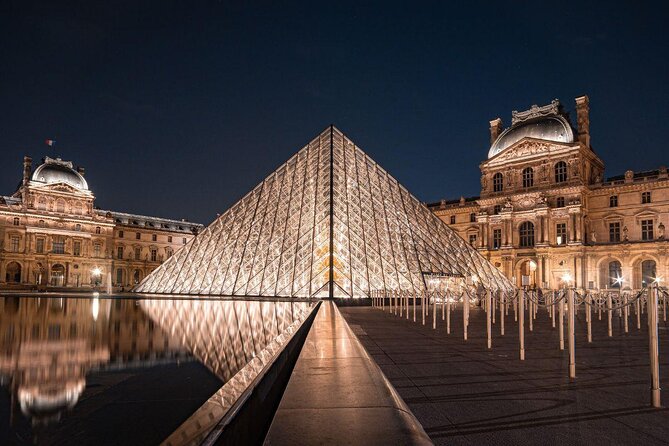
- Pyramide du Louvre spotlights the I.M. Pei design, including the controversy around it
- Mona Lisa plus major stars like the Winged Victory are part of the guided flow
- Certified artist-guide style explanations help you read the artworks instead of rushing past them
- Small group format (up to 7, with no more than 6 guests stated) makes it easier to ask questions
Where the tour begins: Le Kiosque des Noctambules and an art-first welcome
If you want the Louvre to feel less like a maze, I love that this tour starts with something totally different. You meet at Le Kiosque des noctambules, 12 Pl. Colette, 75001 Paris. It is an art stop that puts you in the right mood fast, before you deal with security lines and gallery crowding.
Stop 1 is tied to the Palais Royal to Musée du Louvre metro stop, a location designed by Parisian contemporary artist Jean-Michel Othoniel. The artwork is described as Murano glass-inspired, which is a useful detail because it hints at what the guide will likely help you notice: light, transparency, and symbolism. Even if your museum goal is all paintings, getting your eyes trained on material and meaning first pays off once you’re inside.
One practical perk: this start point is near public transportation, so you are less likely to burn time getting there. And because the group stays small, you can arrive, regroup, and move on without losing your place.
More Louvre entries and guided rounds:
- Paris: Louvre Guided Tour with Reserved Access & Boat Cruise
★ 4.3 · 16,353 reviews - Louvre Museum Masterpieces Guided Tour with Access
★ 4.5 · 12,023 reviews - Paris: Louvre Overview, Exploration tour and Reserved Entry
★ 4.1 · 10,145 reviews
Jean-Michel Othoniel’s Murano-glass vibe: symbolism before masterpieces
Stop 1 lasts about 5 minutes, but it is not filler. The tour frames this subway stop artwork as something with symbolism, not just decoration. Othoniel’s Murano-glass-inspired design is a good mental warmup for how the rest of the visit is structured.
Here is why this matters for your experience. Many people walk into the Louvre expecting only famous labels. But art, especially sculpture and painting, is full of choices. Color, texture, composition, and even the way figures relate to space are deliberate. Starting with a public artwork that is all about visual meaning nudges you toward the same habit inside the museum.
If you are traveling with kids, this pre-museum moment can also help. A short, visually clear stop gives younger visitors a win early, before the Louvre’s “big everything” scale takes over. And if you are an adult who gets overwhelmed easily, this kind of warmup helps you stop thinking only in terms of getting to the next photo.
I.M. Pei’s Pyramid: modern controversy and how artists borrowed the idea
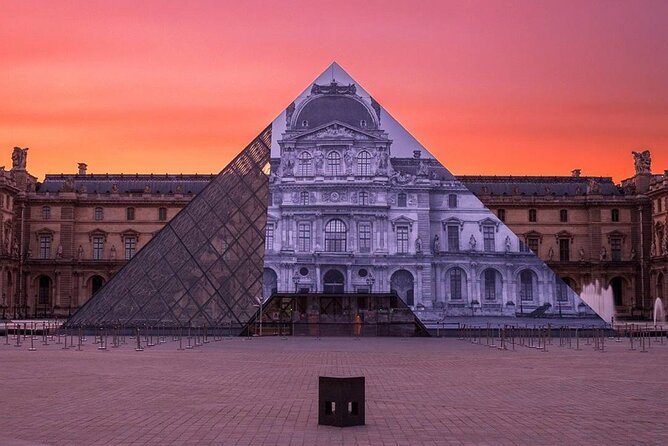
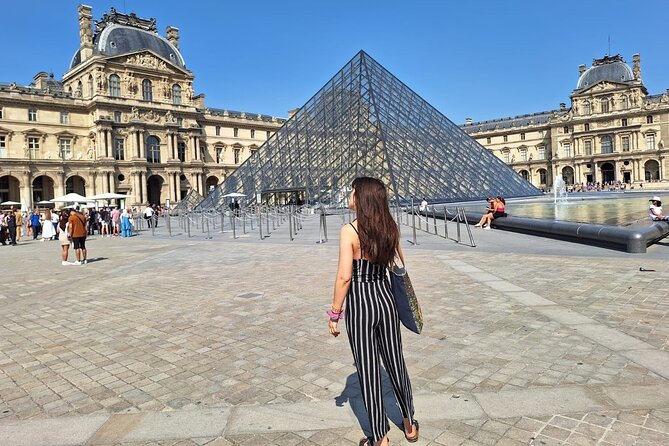
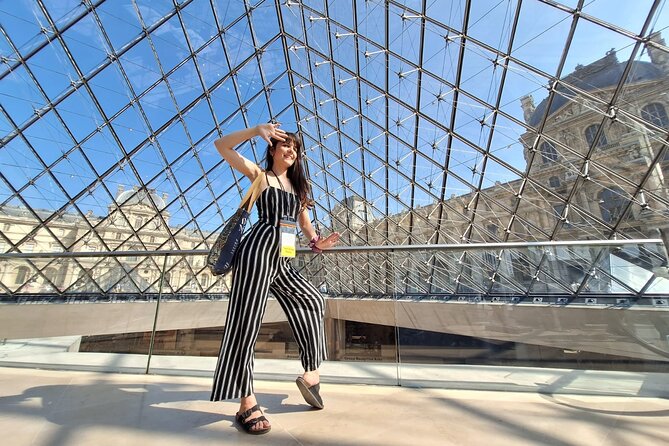
Next up is the Pyramide du Louvre, roughly 10 minutes on this guided stretch. I.M. Pei’s Pyramid is iconic, and the tour does something smart by discussing why people reacted to it. You are not just shown a landmark, you get the story behind the controversy.
That matters because the Pyramid is the Louvre’s shift point. It is modern architecture inserted into a museum that people often imagine as pure history. The tour also connects it to the broader art world, including how it inspired artists like JR. Even if you do not know JR’s work yet, the mention is useful: it tells you the Pyramid is part of a living conversation in contemporary art, not a dead design you quickly walk past.
Also, taking a short stop outside can save you energy later. The Louvre can drain people fast. A brief architecture moment helps reset attention before you go in.
Inside the Louvre for 1 hour 40 minutes: Mona Lisa, Winged Victory, and artist-led meaning
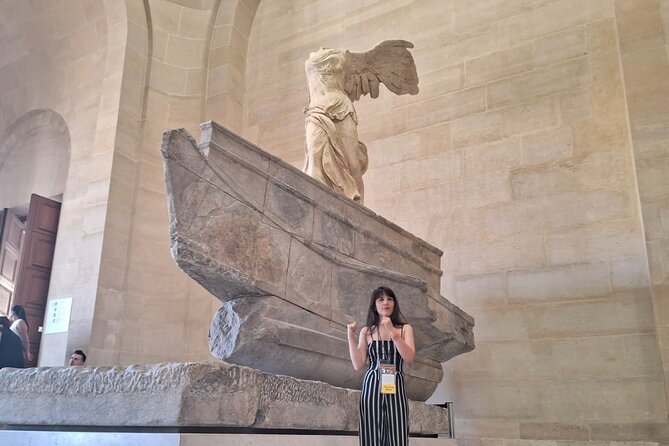
Stop 3 is where the time counts: about 1 hour 40 minutes inside the Louvre, with admission included. This is an artist-guided journey focused on major highlights and on understanding history through an artist’s point of view.
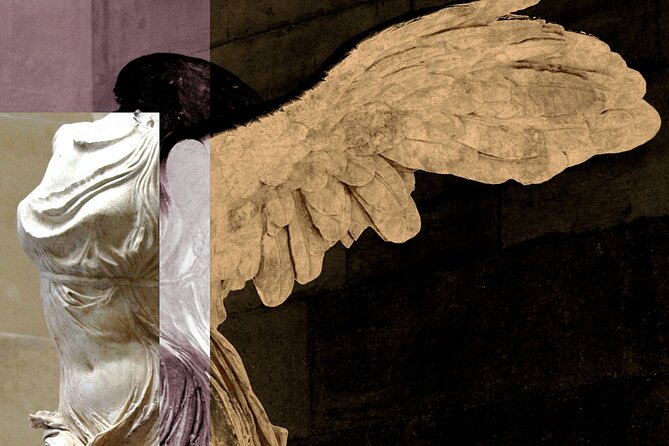
The tour explicitly includes masterpieces like the Mona Lisa and the Winged Victory of Samothrace. That combination alone covers a lot of what makes the Louvre feel like a universe. You get painting’s subtlety with the Mona Lisa, then switch to sculpture’s physical power with the Winged Victory, where the drama is not in tiny details but in scale, movement, and form.
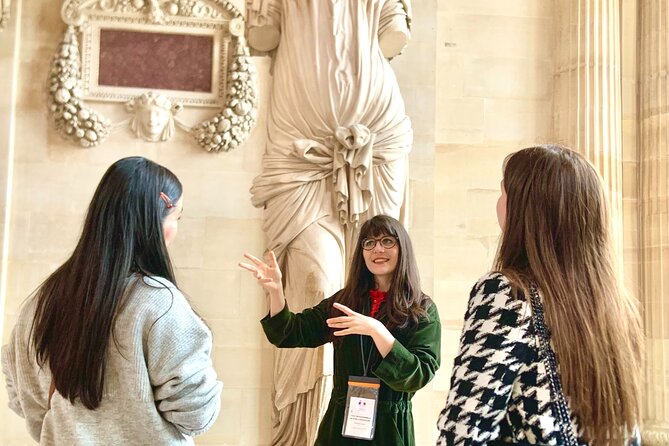
Here is what you should expect from an artist-guide approach. Instead of only telling you what a work is called, the guide should help you notice how the artist built it. That might include composition choices, symbolism, and why certain details mattered at the time. The tour is set up so you can understand the story behind the pieces, not just recognize them.
A big practical upside: the Louvre is massive. Without a plan, you can end up spending most of your limited time walking the wrong routes. A short guided chunk does two things for you. First, it helps you see key works with context. Second, it gives you a stronger sense of what to chase next once the tour ends.
Important note about pacing: you will not see everything. This is a “see the big stuff, understand it quickly, then continue at your pace” format. If your goal is to cover a specific wing or theme for hours, pair this with your own follow-up plan.
Other Paris bookings to consider
- Paris: Orsay Museum Entry Ticket
★ 4.7 · 25,647 reviews - Paris: Louvre Museum Entry Ticket With Host and River Cruise
★ 4.6 · 9,926 reviews - Les Invalides: Napoleon’s Tomb & Army Museum Entry
★ 4.6 · 9,185 reviews - Louvre Museum – Exclusive Guided Tour (Entry Included)
★ 5.0 · 6,296 reviews
Small-group format (up to 7) and why it feels different than big tours
The tour is described as a small group, no more than 6 guests per tour, and it can include a maximum of 7 travelers. Either way, you should assume the experience is designed for personal attention.
That is exactly the kind of difference that matters in the Louvre. When you have a large group, the guide has to keep moving and answers get cut off. With a smaller group, you can ask follow-up questions and the guide can slow down when someone is trying to understand a detail. The feedback around this tour strongly emphasizes that the guide stays patient and focused, including when families are there and kids need engagement that is not just a lecture.
There is also a navigation advantage. Crowds change by the minute in the Louvre, and the right route can save you time and frustration. In this kind of small-group experience, the guide’s route choices can keep the visit moving while still getting you to the right rooms for the highlights.
If you can swing it, treat the group size as part of the value. You are not just buying access, you are buying attention.
Certified artist-guide style: how to get more out of the highlights
This tour is led by a certified artist-guide and offered in English. That certification detail matters because the goal is interpretation, not only facts. You are supposed to learn the story behind the artworks from an artist perspective.
In plain terms, this is the difference between seeing the Mona Lisa as a famous face versus seeing how the work is built, why it mattered, and what you should pay attention to. With sculpture like the Winged Victory, it also changes how you look. Instead of thinking about a statue as a single moment, you learn to read the form and the drama in the body position and materials.
One more practical benefit: the guide can adapt to what you care about. If you have a short list, being able to steer the route toward your top interests can turn a “highlights tour” into a genuinely personal one.
What you pay and why it still makes sense
The price is $134.20 per person for a tour that runs about 2 hours. On the surface, that may look like a premium versus simply buying your own museum ticket. But this tour wraps together several things that you would otherwise have to handle yourself.
Here is what is included:
- Museum admission for adults, listed as €32 per person
- All entrance fees
- A 2-hour guided tour
- A certified artist-guide
- A €20 right of speech per reservation
Hotel pickup and drop-off are not included, so you should plan to meet the group at Le Kiosque des noctambules and arrive under your own steam.
The value angle is simple. You are paying for expert guidance plus structured time in a crowded setting. If your biggest Louvre stress is figuring out where to go and what to pay attention to, this price can feel fair because it buys you an efficient route and guided interpretation during your limited window.
Also, the tour is often booked about 17 days in advance on average. That tells me it is a popular way to do the Louvre if you want a guided, art-focused experience without losing the day.
How to make this 2-hour plan work for you
This tour ends inside the Louvre, so you can keep going on your own at your own pace. That structure is ideal if you want both guided meaning and free exploration afterward.
Here are smart ways to get the most out of it:
- Pick your top 3 must-sees before you go in. You will get the big highlights, but you’ll also want to steer the rest of your day.
- Treat the first two stops as attention training. By the time you reach the museum, your brain will already be thinking about design and symbolism.
- Use the tour time to ask “why” questions. The artist-guide format is best for understanding choices behind the art, not just collecting dates.
- Wear comfortable shoes. Even a short Louvre sprint includes plenty of walking across large halls.
If you are coming with children, this tour format also tends to help because it is short, focused, and designed to keep people engaged through the highlights.
Who should book this Louvre tour with an artist guide?
This is a great fit if:
- You are a first-timer and want a guided path to the Louvre’s biggest works without wasting hours guessing
- You care about meaning and interpretation, not only famous names
- You have limited time and want a smart “starter dose” that you can build on afterward
- You want a small-group experience where questions are actually practical
If you are an art deep-dive person who wants to spend most of the day on one school, one artist, or one theme, you might still enjoy this tour, but you should plan to extend your visit after. This tour is designed to set direction, not to replace long self-guided study.
Should you book this Louvre Museum guided tour with an artist?
My take: book it if you want the Louvre to feel understandable, not just huge. The mix of stops is clever, you start with street-level art context at Le Kiosque des noctambules, you get the Pyramid story at Pyramide du Louvre, and then you move into the museum for the highlights with an artist-guide approach.
The main reason to skip would be if you have a very specific personal plan and you already know exactly where you want to go for hours. In that case, a general guided highlights sprint might feel too short.
If you book, do one thing that will make the tour better: arrive with a simple list of what matters most to you. Then let the certified artist-guide help you connect the dots between what you see and what it means.
FAQ
How long is the Louvre Museum guided tour with an artist?
The tour lasts about 2 hours.
What is the meeting point for the tour?
The meeting point is Le Kiosque des noctambules, 12 Pl. Colette, 75001 Paris, France.
Where does the tour end?
The tour ends inside the Louvre Museum.
What does the tour price include?
It includes the museum entrance ticket for adults (listed as €32 per person), all entrance fees, the 2-hour guided tour, and a certified artist-guide, plus a €20 right of speech per reservation.
Is the tour offered in English?
Yes, it is offered in English.
How many people are in the group?
The experience is described as a small group with no more than 6 guests per tour, and it also states a maximum of 7 travelers.
Do I need hotel pickup or drop-off?
No. Hotel pickup and drop-off are not included.
What are the main highlights you will see?
The tour highlights include the Mona Lisa and the Winged Victory of Samothrace, along with stops at the Louvre Pyramid and the art-filled Le Kiosque des noctambules area.
Is there any free admission for certain visitors?
Yes. Free admission applies to visitors under 18 and EEA residents under 26 with valid ID and proof of residency.
What is the cancellation policy?
You can cancel for a full refund up to 24 hours in advance. If you cancel less than 24 hours before the start time, the amount paid is not refunded.
Is public transportation nearby?
Yes, the meeting area is near public transportation.
Newly listed around Paris
- Paris Orsay Museum and Rodin Museum Daily Combo Ticket★ 4.0 · 32 reviews
- Paris Pastry Tour – Croissants, Macarons & Iconic French Desserts★ 5.0 · 232 reviews
- Paris Orsay Museum with Optional Seine River Cruise Tickets★ 4.0 · 65 reviews
- Paris Occult and the History of the Dark Arts Private Tour★ 5.0 · 17 reviews
- Île de la Cité Guided Tour & assistance Notre Dame entrance★ 5.0 · 22 reviews
- Paris Orsay Museum Entry Ticket with Digital Audio Guide★ 3.5 · 93 reviews
- Notre Dame de Paris: Semi Private or Private Guided Tour Guide★ 5.0 · 30 reviews
- Paris Opera Garnier Private Tour★ 5.0 · 42 reviews
Louvre Highlights Guided Tours, compared.

Louvre Guided Tour with Reserved Access & Boat Cruise
Read our review →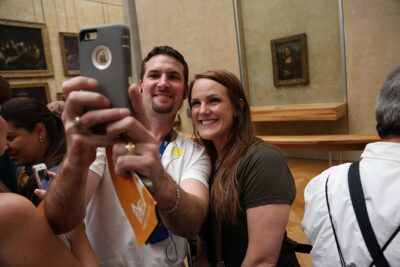
Louvre Museum Masterpieces Guided Tour with Access
Read our review →
Louvre Overview, Exploration tour and Reserved Entry
Read our review →
Louvre Museum Entry Ticket With Host and River Cruise
Read our review →
Mona Lisa & Louvre Masterpieces Tour with Reserved Access
Read our review →
Louvre Museum – Exclusive Guided Tour (Entry Included)
Read our review →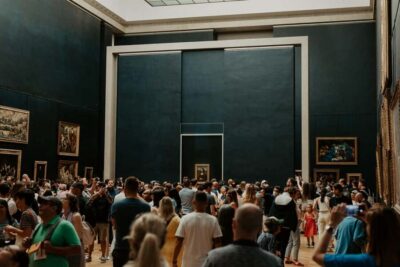
Louvre Museum Hosted Entry and Mona Lisa Audioguide
Read our review →
Louvre Access with Mona Lisa Escort or Guided Option
Read our review →Browse the lists this tour appears in