
Reviewed · FRANCE
Narbonne: visit the Archbishops’ Palace and Cathedral
Narbonne feels layered, like the city keeps rewriting itself. This tour stitches together Roman streets, big medieval power, and the calm hush of a cathedral cloister. I especially love the storytelling around the Archbishops’ Palace, and how the cathedral’s vaulted ceiling gets explained in a way you can actually see.
One thing to plan for: part of the most museum-like content is optional. You get the core sights and major interiors, but extra areas like the Donjon and museum add-ons need a separate €12 ticket.
In This Review
- Key things to notice in this Narbonne tour
- Narbonne’s Archbishops’ Palace and Cathedral, in plain terms
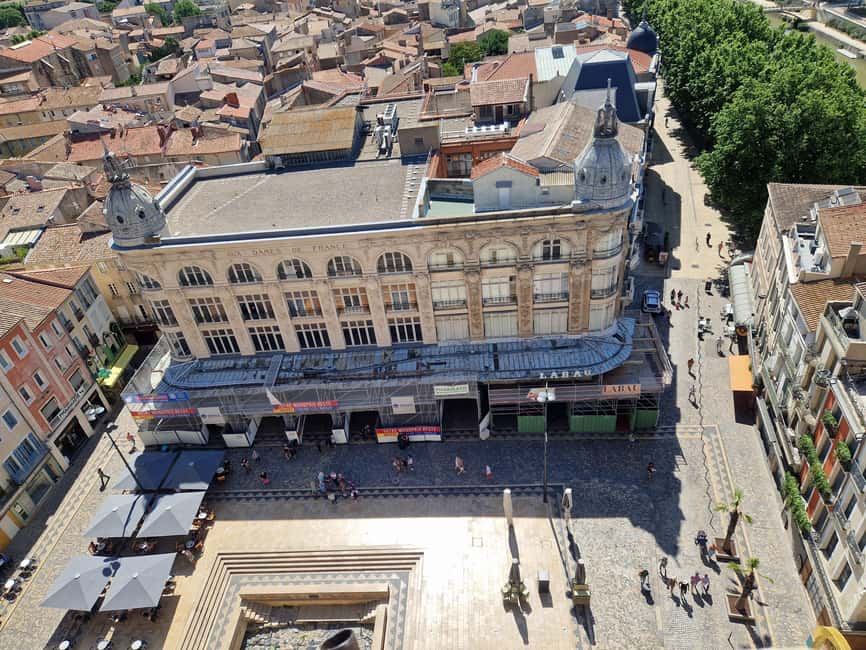
- Where you start: Les Halles de Narbonne and an easy first landmark
- Palais des Archevêques: the façade, the courtyard, and the Grand Staircase
- Following authority to the cathedral, with the cloister in between
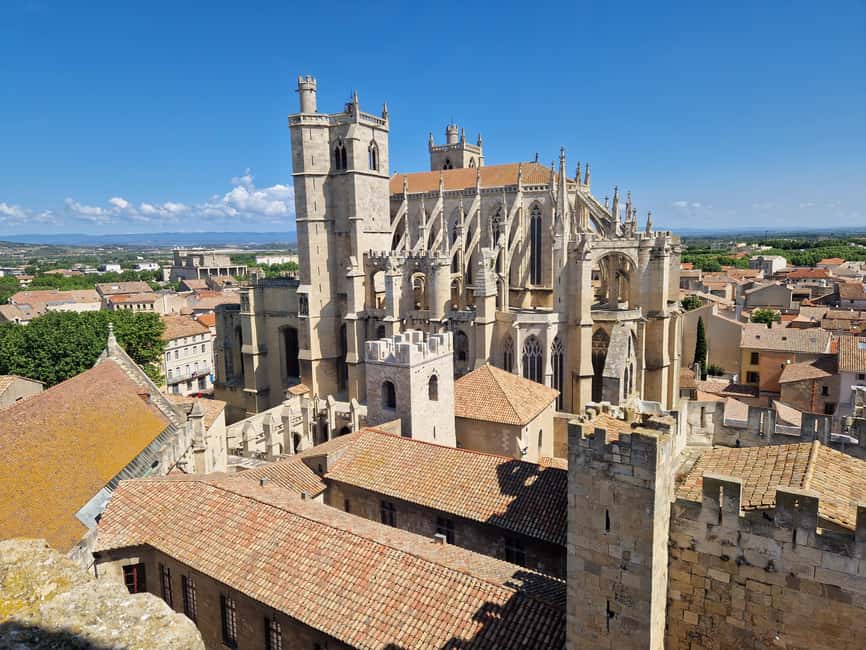
- Saint-Juste and Saint-Pasteur Cathedral: Gothic height you can feel
- The monumental organ and the altarpieces, front and center
- Via Domitia and Passage de l’Ancre: Roman Narbonne under medieval feet
- Archbishop’s garden to Promenade des Barques: the calmer part of the route
- Les Halles de Narbonne: where the tour meets real daily life
- Price and value: what $23 gets you, and what needs the extra €12 ticket
- Private group, languages, and who this tour suits best
- Should you book the Narbonne Archbishops’ Palace and Cathedral tour?
- FAQ
- How long is the Narbonne Archbishops’ Palace and Cathedral experience?
- Where do we meet for the tour?
- What language(s) is the live guide using?
- What is included in the tour?
- What parts cost extra and are not included?
- Is the tour wheelchair accessible?
- Is it a private group tour?
Key things to notice in this Narbonne tour
- Marion guides the route with pace and personality, keeping 2 hours from feeling like a lecture.
- You get the Via Domitia connection, so Narbonne is more than one pretty church stop.
- The cloister is a visual moment, especially the gargoyle views above you.
- Cathedral details are practical, from the monumental organ to multiple altarpieces.
- You finish with everyday Narbonne life, at Les Halles and the water-side Promenade des Barques.
Narbonne’s Archbishops’ Palace and Cathedral, in plain terms
This is a tight, smart loop through the center of Narbonne, built around one idea: the city’s identity was shaped by religion, and religion shaped the streets around it. You start in the civic heart, move through church power at the Palais des Archevêques, then shift into sacred space with Saint-Juste and Saint-Pasteur Cathedral. After that, you reconnect with daily life at Les Halles, and you cap it with the river-side walk that locals actually use.
The best part is how the story stays connected. You are not just ticking off landmarks. You’re learning why the buildings sit where they do, what the archbishops controlled, and how ancient Narbonne links into medieval Narbonne.
Elsewhere in France, also good:
- Paris: 1-Hour Seine Cruise departing from the Eiffel Tower
★ 4.4 · 77,472 reviews - Disneyland® Paris 1-Day Ticket
★ 4.6 · 49,412 reviews - Paris: Versailles Palace and Gardens Full Access Ticket
★ 4.6 · 41,579 reviews
Where you start: Les Halles de Narbonne and an easy first landmark
You meet at the main entrance to Les Halles de Narbonne, standing near the war memorial. Your guide, Marion, wears a green neckerchief with a professional card. It is a nice way to locate your group quickly, and it matters because the whole experience moves at an efficient walking pace.
I like that Les Halles is not just a finale. Starting here gives you a baseline for scale. Narbonne isn’t only monuments. It is still a working market city, and you feel that from minute one.
Palais des Archevêques: the façade, the courtyard, and the Grand Staircase
Your first big “wow” comes from the former Palais des Archevêques on Place de l’Hôtel de Ville. From the façade, you can already read power and ambition. The archbishop’s residence wasn’t tucked away like a private mansion. It was meant to face the city.
Then you enter the palace’s main courtyard, where the Grand Staircase does its job. Even if you are not obsessed with architecture, staircases in places like this are emotional design. They signal hierarchy. They say, this is where authority moves, meets, and receives visitors.
Practical tip: take a minute to look up and around the courtyard before you step deeper. That quick scan helps you understand what the guide is pointing out later.
Following authority to the cathedral, with the cloister in between
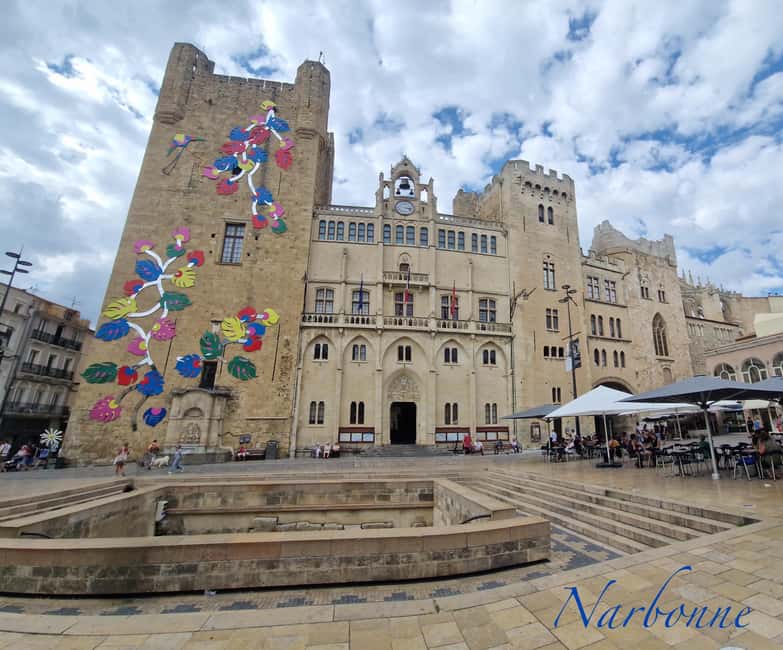
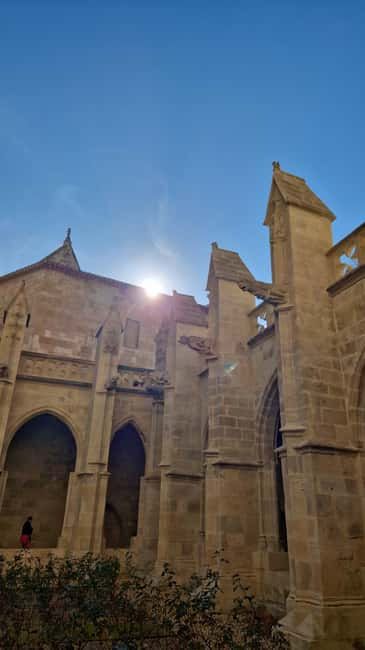
After the palace, the route follows the footsteps of the archbishops toward the cathedral. You cross the cloister, where gargoyles loom above. It is one of those details that can feel like decoration until someone shows you how it works as part of the whole Gothic atmosphere.
The cathedral cloister also gives you a breather. You shift from open stone and courtyards into a more contained, contemplative space. That contrast is useful on a 2-hour tour. It keeps you alert, and it makes the cathedral interior feel like an event rather than a stop you rush through.
Within easy reach:
- Paris: Arc de Triomphe Rooftop Tickets
★ 4.6 · 34,264 reviews - Paris: Orsay Museum Entry Ticket
★ 4.7 · 25,647 reviews - Paris: Evening River Cruise with Music
★ 4.4 · 22,721 reviews - Paris: Eiffel Tower Entry Ticket with Optional Summit Access
★ 4.4 · 20,035 reviews
Saint-Juste and Saint-Pasteur Cathedral: Gothic height you can feel
Inside Saint-Juste and Saint-Pasteur Cathedral, the focus lands on the height of the vaulted ceiling. This is the kind of feature that photos often flatten. On-site, with the guide’s explanation, you start to notice how the vertical space guides your eyes and controls the atmosphere.
This cathedral is known for 14th-century Gothic architecture, and the tour helps you connect the date to what you see. You are not just hearing a century label. You are learning what Gothic builders were trying to do with stone, light, and proportion.
If you like religious art, you will also enjoy the way the tour steers your attention toward specific objects rather than asking you to wander. That structure helps you leave with real impressions.
The monumental organ and the altarpieces, front and center
One of the most satisfying moments is when you pause for key internal artworks and furnishings. The tour highlights:
- the monumental organ
- a 17th-century altarpiece
- a 14th-century sculpted altarpiece, described like a picture book in terms of how it tells stories
Why this matters for you: if you have ever stood in a church and thought, I see a lot, but I do not know what I am looking at, this tour fixes that. You get named focal points. You learn what to notice in the composition and placement. Even if your art knowledge is basic, you can follow along.
A small caution: churches can have their own acoustics and lighting quirks. Give yourself a minute at each stop to find a comfortable angle, then let the guide take over the attention.
Via Domitia and Passage de l’Ancre: Roman Narbonne under medieval feet
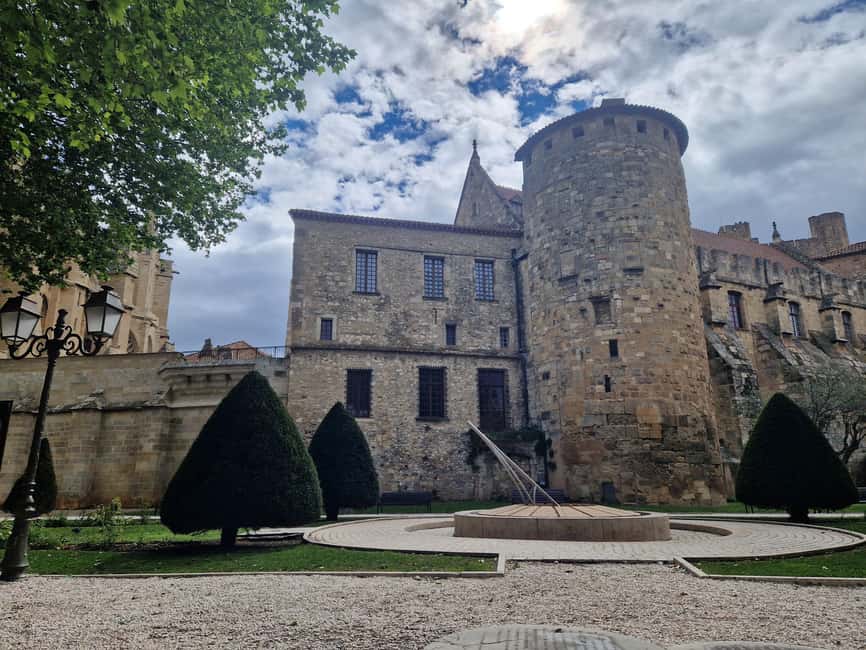
This tour includes the Via Domitia. That is a big deal because it turns your experience from medieval-only into a longer Narbonne story. Via Domitia was a Roman road, and hearing about it while you connect it to where the city developed helps you see why Narbonne mattered.
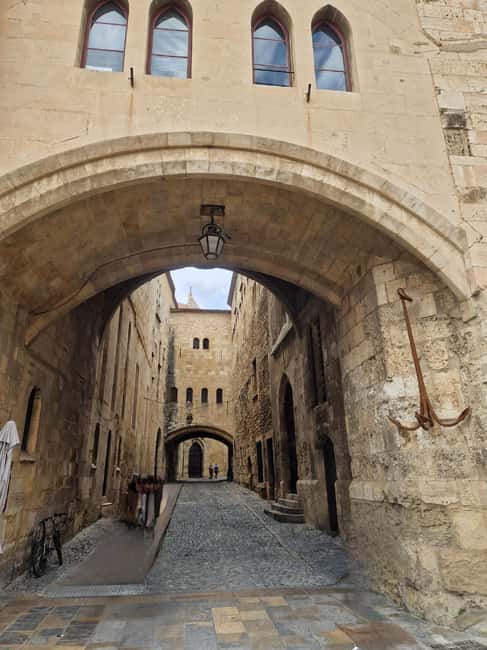
You also visit the Passage de l’Ancre. This is the kind of stop that can be easy to miss if you are walking on your own. On a guided loop, it becomes a clue. It helps explain how spaces link, how movement through town was designed, and how the ancient and medieval layers share the same ground.
Practical advice: if you are the type who wants photos, this is where you get them. Roman-to-medieval transitions create strong visuals, especially when the guide points out the “this is why it is here” details.
Archbishop’s garden to Promenade des Barques: the calmer part of the route
The tour shifts gears with the archbishop’s garden, then moves toward the Promenade des Barques, leading to Pont des Marchands. This is a rare combination: you get medieval church power, then you get water-side walking.
Why I like this section: it resets your senses after the cathedral interior. You can breathe, look outward, and process what you just learned. It also gives you context for Narbonne as a lived-in city. The river-side promenade feels less like museum space and more like everyday flow.
If your group includes someone who gets tired quickly indoors, this outdoor stretch is a relief without breaking the theme.
Les Halles de Narbonne: where the tour meets real daily life
You end with access to Les Halles, the emblematic meeting place of the Narbonnais. This is not just a marketplace stop for snacks. It is a way to understand the city’s rhythm after you’ve spent time with its ceremonial buildings.
Even if you do not buy anything, you get a sense of Narbonne as a working hub. It grounds the entire tour. Roman road, medieval cathedral, then food and conversations. That arc makes the history feel like it belongs to present-day streets.
Price and value: what $23 gets you, and what needs the extra €12 ticket
At about $23 per person for a 2-hour guided experience, this is strong value if you care about explanation, not just entry tickets. You get:
- exterior and interior courtyard time at the Archbishop’s Palace
- palace and cathedral key areas
- the cloister
- visits tied to Via Domitia and Passage de l’Ancre
- the archbishop’s garden
- Promenade des Barques to Pont des Marchands
- access to Les Halles
What is not included is important to know upfront. Admission to the Donjon, the town’s museum/art collection, and the Treasure Room require an additional €12 admission ticket. If you love museums, you might treat the core tour as the story framework, then decide later if you want to go deeper into the optional interiors.
My practical take: if you want the best “story to sights ratio” in a short window, this tour hits it. If you are also hunting for maximum museum time, budget that extra €12 so you do not feel rushed or surprised.
Private group, languages, and who this tour suits best
This is a private group experience with a live guide. The guide speaks French and Sangro, which can be a plus if you’re comfortable with local phrasing or want the story told in a regional voice.
It is also wheelchair accessible, which matters because cathedral and palace areas can be tricky in other cities. Here, you are not forced to choose between “some history” and “some access.”
Who it suits:
- If you want a concentrated history walk in 2 hours
- If you enjoy Gothic details but appreciate someone pointing out what matters
- If you like Roman connections, not just medieval ones
- If you want a serious look at Narbonne’s center, but with a market ending
Who might consider something else:
- If you want a long, museum-heavy afternoon with lots of gallery time, you will likely want to add the optional €12 areas.
Should you book the Narbonne Archbishops’ Palace and Cathedral tour?
Yes, if you want a short, well-shaped introduction to Narbonne’s main layers. The biggest selling points are the guided clarity and the way the route connects power, religion, and daily city life. Marion’s style is a real asset, and the tour is designed so you are not stuck guessing what you are looking at.
Book it if your goal is to leave with a mental map: Roman Via Domitia lines through the city, the archbishops built and ruled through visible architecture, and the cathedral is not only old, it is designed to make space feel tall and meaningful. If that sounds like your kind of trip, this is an easy yes.
FAQ
How long is the Narbonne Archbishops’ Palace and Cathedral experience?
It lasts about 2 hours.
Where do we meet for the tour?
Meet in front of the main entrance to Les Halles de Narbonne, near the war memorial.
What language(s) is the live guide using?
The tour is guided in French and Sangro.
What is included in the tour?
Included stops and access are: Via Domitia, Archbishops’ Palace (exterior and interior courtyards), Passage de l’Ancre, the cloister, the cathedral (interior and exterior), the archbishop’s garden, Promenade des Barques to Pont des Marchands, and access to Les Halles.
What parts cost extra and are not included?
Not included are admission to the Donjon, the museum (town’s art collection), and the Treasure Room. These are available with an additional €12 admission ticket.
Is the tour wheelchair accessible?
Yes, it is listed as wheelchair accessible.
Is it a private group tour?
Yes, it is a private group experience.
Newly listed around France
- Visit the lavender fields, the Gorges du Verdon and Moustiers.★ 5.0 · 17 reviews
- Provence small group half-day wine tour from Aix★ 4.5 · 18 reviews
- Monaco & the French Riviera – From AIX★ 4.5 · 20 reviews
- Picturesque Luberon – From AIX-EN-PROVENCE★ 5.0 · 55 reviews
- Luberon Market & Villages Day Trip from Aix-en-Provence★ 5.0 · 250 reviews
- Lunch in Provence: Discovering Local Flavors in Aix-en-Provence★ 5.0 · 38 reviews
- 5-Hours Lavender Fields Tour in Valensole from Aix-en-Provence★ 5.0 · 42 reviews
- Half day Wine Tour in Côtes de Provence Sainte-Victoire from Aix en Provence★ 5.0 · 27 reviews