
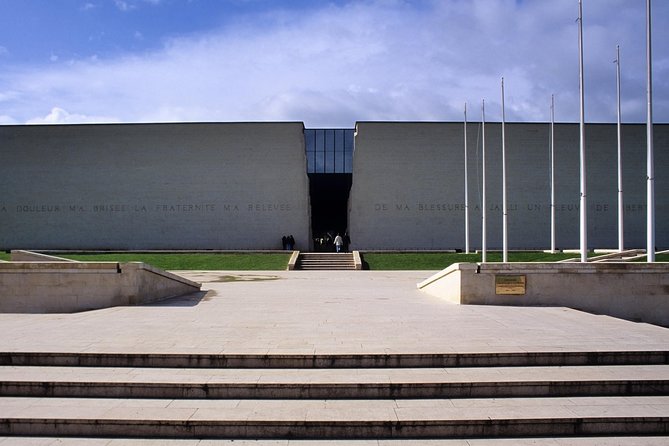
Reviewed · NORMANDY D-DAY BEACHES TOURS
Normandy D-Day Tour From Paris
Early mornings set the tone here.
This Normandy D-Day trip is interesting because it pairs key WWII landmarks with a small-group setting, capped at eight, so your guide can actually answer questions. I also love that the day builds toward the American Cemetery at Colleville-sur-Mer, with time set aside for the solemn ceremony and taps (when the schedule allows), so the history lands in a real, emotional way.
One possible drawback: it is a long day, starting at 6:30 am, and there is a substantial walk along the coast. Also, lunch is not included, so you’ll want to plan for food on your own if the included option does not suit your taste.
The good news is the logistics are mostly handled for you: round-trip rail between Paris and Bayeux is included, and you can choose standard or first-class rail fare. You’ll get an English-speaking guide, plus an emailed rail ticket and a mobile tour ticket, which makes the whole thing feel low-stress once you’re moving.
In This Review
- Key Things I’d Pay Attention To
- Normandy D-Day Day Trips Work Best When You Let the Route Drive
- Paris to Bayeux by Train, Plus Your Rail Class Choice
- Small-Group Storytelling, with Guides Who Actually Shape the Day
- Stop 1: Plages du Debarquement, Where the Coast Becomes a Map
- Stop 2: Sainte-Mère-Église and the Airman Story You Cannot Forget
- Stop 3: Utah Beach, First Landing and a Beachhead Mission
- Stop 4: Omaha Beach and the Cost of Delays
- Stop 5: Pointe du Hoc, Where the Rangers Climbed into Gunfire
- Stop 6: Arromanches-les-Bains and the Mulberrys Offshore Supply Line
- Stop 7: Colleville-sur-Mer and the American Cemetery That Changes Your Tempo
- Price and Value: What $480 Buys You, and What It Does Not
- Timing, Weather, and the Reality of a Coast-Based Day
- Quick Tips to Make This Tour Feel Worth It
- Should You Book This Normandy D-Day Tour From Paris?
- FAQ
- What is the duration of the Normandy D-Day tour from Paris?
- What time does the tour start?
- How many people are in the group?
- Is lunch included?
- Are admission tickets included for the stops?
- Does the tour include rail transportation from Paris?
- What happens if weather is bad?
Key Things I’d Pay Attention To
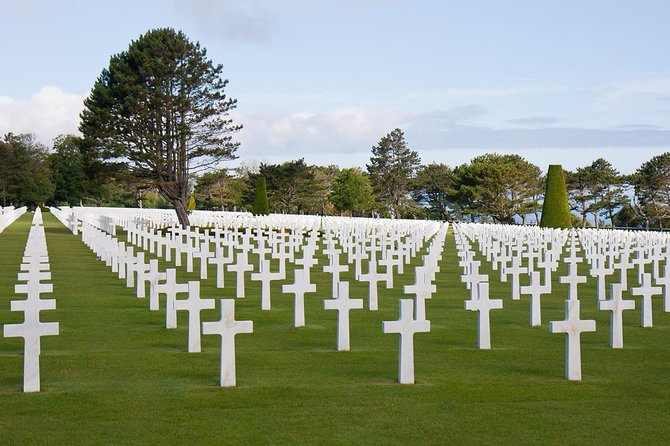
- Small group cap of 8 means you’re not lost in a crowd at the most meaningful places.
- Timed visit to the American Cemetery helps you catch the ceremony and taps at the right moment.
- Five beach and battlefield stops plus Arromanches and Pointe du Hoc give you a full picture, not just one highlight.
- Free admission at each listed stop helps your budget feel more predictable.
- Long travel day with lunch not included is the trade-off for seeing so much in one shot.
Normandy D-Day Day Trips Work Best When You Let the Route Drive
A D-Day tour lives or dies by pacing. This one is built around a train-and-coast route that gets you into Normandy early enough to see the beaches while the day is still calm, not packed. Once you’re there, the guide’s job is to give you the who, what, and why behind each stop, so the place names turn into a story you can follow.
Because you’re capped at eight travelers, you’ll also have a better shot at seeing what you care about. You can orbit your guide when you spot a detail, ask for the context, or clarify a confusing piece of the operation.
More D-Day beaches visits:
- Normandy American D-Day Beaches Full Day Tour from Bayeux
★ 5.0 · 2,103 reviews - Normandy American D-Day Experience – Group tour from Bayeux
★ 5.0 · 1,566 reviews - Omaha and Band Of Brothers Full Day Tour
★ 5.0 · 1,104 reviews
Paris to Bayeux by Train, Plus Your Rail Class Choice
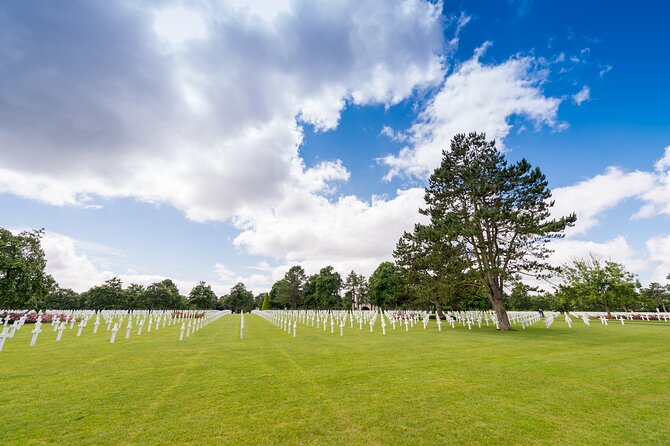
You start in Bayeux, and the tour includes rail to and from Paris. You’ll also get pick-up and drop-off in Bayeux, but local transfers from your Paris hotel are not included, so you’ll want to get yourself to the station on your own.
One practical benefit here is the option to choose standard or first-class rail fare. If you value a quieter ride and more space, first-class can make the long day feel less grindy. If you’d rather save that money, standard still does the job since the real effort starts when you step onto the Normandy coast.
Also note the tour starts at 6:30 am. That means your evening before matters. If you’re coming from another city or you’re not a morning person, plan to be well-rested, because you’ll likely feel every minute of that early departure.
Small-Group Storytelling, with Guides Who Actually Shape the Day
What consistently shines in the experience is the guide. Names that pop up in guide praise include Julie, Lucas, Alex, Sophie, James, Elisa, Eric, Brad, Mary Ellen, Victoria, and Rosalie, and the common thread is how they connect maps, movements, and personal stories.
In a small group, you tend to get more back-and-forth. That matters because D-Day geography can be tricky at first. Terms like beach sectors, headlands, and inland objectives stop being abstract once your guide points them out and explains how the fighting unfolded in real time.
That said, one fair caution: not every day will feel equally talk-heavy. A few people felt some parts leaned more toward short explanations and then free exploring, with less guided discussion during driving time. My advice is to come with curiosity before you arrive. If there’s a topic you want to understand, write down a question or two on your phone so you can ask at the right moment.
Stop 1: Plages du Debarquement, Where the Coast Becomes a Map
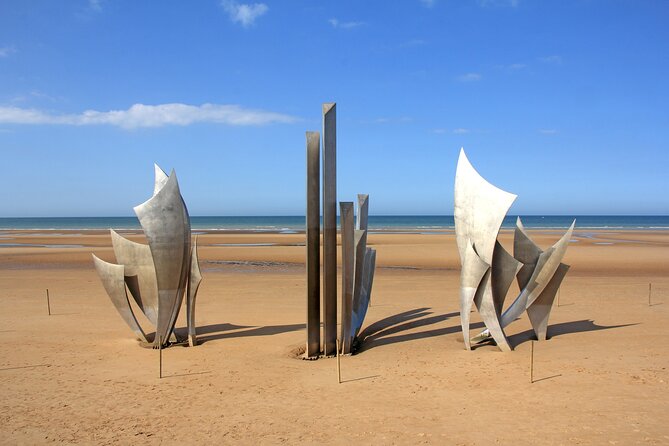
The day begins along the D-Day beaches in the Battle of Normandy area. Expect a historical talk at each coast spot, plus a respectful approach to what happened there. The itinerary notes a substantial walk, which is important because D-Day was shaped by terrain. You’ll see why cliffs, slopes, and beach width mattered to both landing forces and defenders.
This first segment sets your mental “grid.” You’ll start understanding how later stops connect, like how specific beaches linked to deeper objectives inland and toward ports.
Practical note: wear comfortable shoes with real grip. The coast is the part of the day you’ll remember most physically, even if you can’t quote every detail later.
More day trips out of Paris:
- Normandy Battlefields D-Day Private Trip with VIP Services from Paris
★ 5.0 · 240 reviews - Normandy D-Day Sites & Cemetery Day Trip from Paris with Lunch
★ 5.0 · 6,877 reviews - From Paris: Versailles Palace & Gardens with Transportation
★ 4.6 · 6,222 reviews - Day Trip to Mont-Saint-Michel from Paris
★ 4.5 · 4,876 reviews
Stop 2: Sainte-Mère-Église and the Airman Story You Cannot Forget
Sainte-Mère-Église is famous for the story of a parachutist who landed in an unexpected place, with one airman famously left dangling from the church steeple. Before you just treat this as a dramatic anecdote, the guide’s job is to connect it to the chaos of the pre-dawn drop, the units involved, and the liberation of the town.
Even with only about half an hour here, this stop is valuable because it puts faces on the operation. The village setting also makes it easier to understand why the early hours mattered so much: D-Day was not just an assault, it was a race to control towns, crossings, and routes.
Stop 3: Utah Beach, First Landing and a Beachhead Mission
Utah Beach is described as the first beach where Allied forces landed on the morning of June 6. The key point is that this wasn’t only about the shoreline. Utah Beach was part of a broader beachhead plan in the Cotentin region, with an emphasis on capturing Cherbourg, including its deep-water port potential.
You’ll learn that thousands of American soldiers were landed and fought over many days, not just one morning. That perspective matters. When you stand on a beach like Utah, it’s easy to think of a single moment. The guide helps you understand it as a sustained campaign.
Drawback consideration: with short timed stops, you won’t have hours to wander into every corner on your own. If you like to linger and read every plaque, keep your expectations realistic and focus on what the guide highlights.
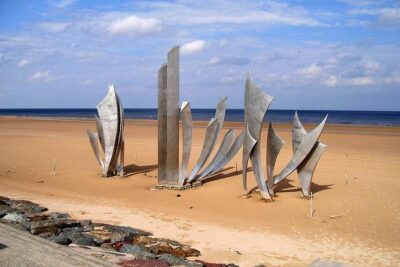
Stop 4: Omaha Beach and the Cost of Delays
Omaha Beach is often called Bloody Omaha, and the reason comes through in how the story is told. The itinerary describes mis-timed landings, foundered tanks, and lack of focused artillery support that delayed the taking of a crucial stretch, with the fight pushing well into the evening.
Why this stop is worth your time: it shows how plans collide with reality. D-Day success depended on many moving pieces working together, and Omaha is where you see the consequences when things did not line up.
Practical tip: bring a jacket or something warm. Coast wind can change fast, and you’ll be standing for talks and walking for views.
Stop 5: Pointe du Hoc, Where the Rangers Climbed into Gunfire
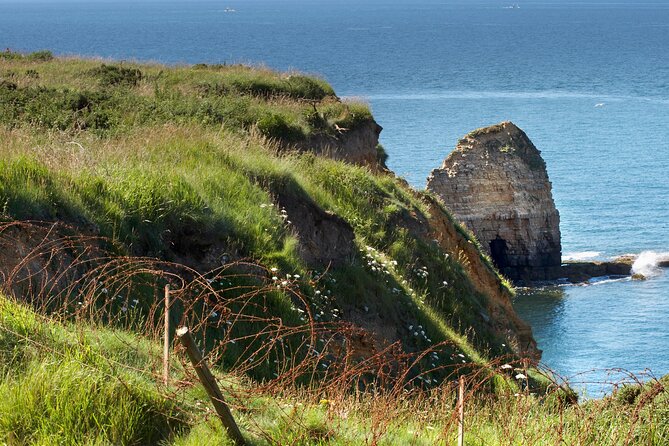
Pointe du Hoc is one of the most intense story stops because it’s about a cliff assault that sounds almost impossible. Rangers climbed upward toward German gunfire, and the account includes a brutal twist: the men had no idea the guns had been moved and concentrated right on their sector.
This is the kind of place where you understand why D-Day included more than landing craft. It included steep climbs, close-quarters action, and decisions under uncertainty. Even if you already know the basics, the physical setting and the guide’s explanation make the action feel immediate.
Expect a memorable visit. People consistently single out Pointe du Hoc because it looks like a target, not a battlefield, until you hear what happened there.
Stop 6: Arromanches-les-Bains and the Mulberrys Offshore Supply Line
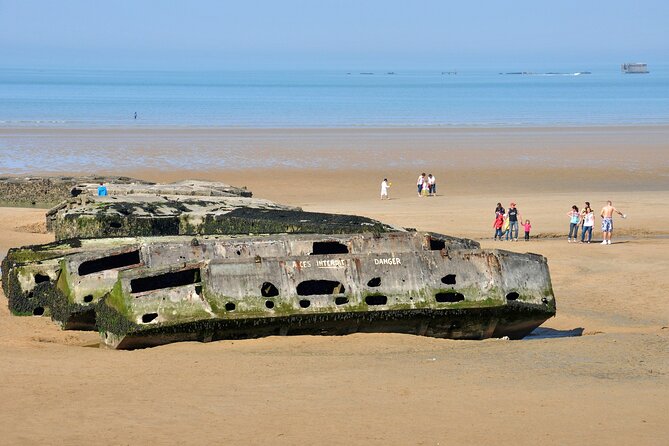
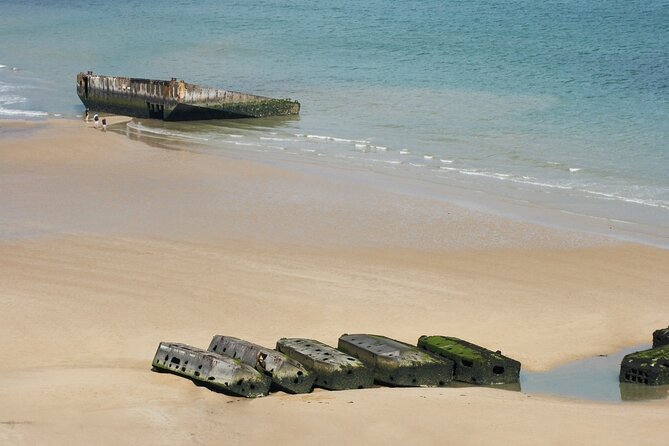
Arromanches-les-Bains shifts the focus from the initial fight to what came next: keeping supplies flowing. This modest fishing and resort town was a key foothold on June 6, and remnants of the so-called “Mulberrys” remain off shore.
Those Mulberry structures mattered because rough seas were tamed enough for ships to anchor and maintain the supply chain for troops. That connection is valuable. When you’re only thinking about beaches and explosions, it’s easy to forget the unglamorous work that made an invasion sustainable.
You’ll come away understanding that D-Day was not a single day event. It was an engineering and logistics push that had to survive weather, distance, and enemy fire.
Stop 7: Colleville-sur-Mer and the American Cemetery That Changes Your Tempo
Colleville-sur-Mer is the emotional centerpiece. The American Cemetery and visitor center sit on a bluff overlooking the English Channel and Omaha Beach. The site is 172 acres and is run by the American Battlefield Monument Commission, with a grid map that notes grave locations.
You’ll also hear about the scale: more than 9,000 servicemen lost their lives securing the beaches. One moving feature is the Wall of the Missing, where names are listed for those whose remains were never recovered.
The ceremony moment is often the highlight. Multiple guides and schedules line up to get you there in time for taps and the lowering of the flag at the American Cemetery. When that happens, the whole group quiets down fast, and the day stops feeling like sightseeing.
If you want to take photos, do it thoughtfully. This is a place where you’ll likely prefer silence over camera clicks.
Price and Value: What $480 Buys You, and What It Does Not
The price is $480 per person for an approximately 13-hour day. Lunch is not included, and local Paris transfers are not included, but round-trip rail between Paris and Bayeux is included, plus pick-up and drop-off in Bayeux.
Here’s the value logic I use: you’re paying for time, transportation planning, and a guide to stitch together multiple sites that would otherwise require careful driving and constant route decisions. If you tried to do this on your own with public transit, you’d spend a lot of time managing connections and then still need a plan for the inland pieces like Pointe du Hoc and the Arromanches supply story.
Also, admission is listed as free at each stop on the itinerary. That helps keep your day from turning into surprise costs once you arrive.
Where the price can feel steep: it’s still a long day with several short stops. If you want slow museum time at every location, you might wish you had more hours per site. The tour is built for breadth and coherence, not deep solo wandering.
Timing, Weather, and the Reality of a Coast-Based Day
This experience requires good weather. If it is canceled due to poor weather, you’ll be offered a different date or a full refund. That matters because the coast is the product here. Rain and wind can make walking less pleasant and talks less comfortable.
Bring layers. Even in warmer months, coast mornings can feel cooler than Paris. Plan for wet ground too. One advantage mentioned in the experience is that umbrellas are available.
Finally, there’s the stamina factor. The tour notes moderate physical fitness level requirements. That does not mean you need to be an athlete, but you should be comfortable walking outdoors for periods and moving between stops.
Quick Tips to Make This Tour Feel Worth It
- Wear shoes you can walk in on uneven coastal ground.
- Set your phone’s notes app with a couple questions before the day starts, then ask when the guide stops at the right moment.
- If you like context, consider pairing the day with a film on the return ride, since the emotional weight of D-Day changes how you watch it.
- Pack a light layer and something rain-ready. Coast weather has opinions.
Should You Book This Normandy D-Day Tour From Paris?
If you want one guided day that hits the biggest D-Day sites with a coherent storyline and a small group of eight, this is an easy yes. The best part is how the guide-led stops, from Utah and Omaha to Pointe du Hoc, connect to the American Cemetery at Colleville-sur-Mer, where the ceremony timing can be especially moving.
I would not book this if you dislike early mornings, you hate walking outdoors, or you need long independent time at each location. The day is full, and lunch is on you. Also, pay attention to the train timing from Paris so you don’t start the tour scrambling.
If you’re traveling from Paris and you want a focused, respectful D-Day overview with real human storytelling, this one earns its strong rating.
FAQ
What is the duration of the Normandy D-Day tour from Paris?
The tour runs for about 13 hours.
What time does the tour start?
The start time is 6:30 am.
How many people are in the group?
The group size is capped at eight travelers.
Is lunch included?
No. Lunch is not included.
Are admission tickets included for the stops?
Admission tickets are listed as free for the stops included in the itinerary.
Does the tour include rail transportation from Paris?
Yes. Round-trip rail between Paris and Bayeux is included, along with pick-up and drop-off in Bayeux.
What happens if weather is bad?
If the tour is canceled due to poor weather, you will be offered a different date or a full refund.
Newly listed around Bayeux
- Le Havre Shore Excursion: Private Day Tour with Omaha Beach & American Cemetery★ 5.0 · 57 reviews
- 2 Hours Tour in La Balaiterie Sweeper’s House★ 5.0 · 19 reviews
- “Pleasure” ride on an all-terrain electric scooter★ 4.5 · 21 reviews
- Le Havre Shore Excursion: Private Day Tour to Juno Beach Sector & Ardenne Abbey★ 5.0 · 17 reviews
- Immersive tour DISTILLERIE PERE MAGLOIRE★ 5.0 · 314 reviews
- Small Group Guided D-Day Tour and Mémorial de Caen Museum★ 5.0 · 237 reviews
- Guided Tour in an Old Convertible Car on the Côte de Nacre★ 5.0 · 66 reviews
- Private Tour to Discover the Treasures of Caen★ 5.0 · 17 reviews
Normandy D-Day Beaches Tours, compared.

Normandy D-Day Sites & Cemetery Day Trip from Paris with Lunch
Read our review →
Normandy D-Day Small-Group Day Trip with Omaha Beach, Cemetery & Cider Tasting
Read our review →
Normandy D-Day Beaches and American Cemetery Day Trip from Paris
Read our review →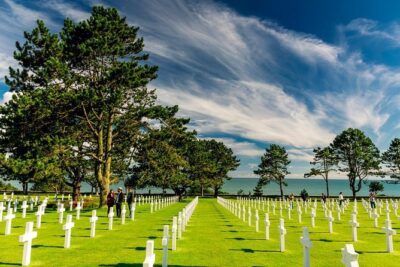
Normandy American D-Day Beaches Full Day Tour from Bayeux
Read our review →
Normandy American D-Day Experience – Group tour from Bayeux
Read our review →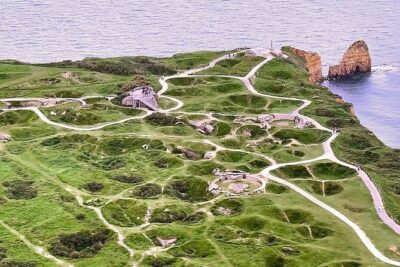
Omaha Beach D-Day Experience – Afternoon group tour from Bayeux
Read our review →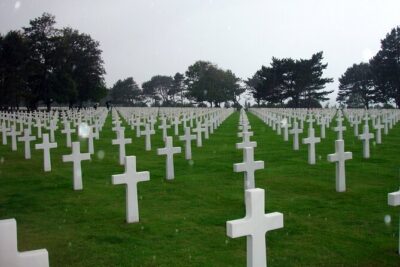
Browse the lists this tour appears in