
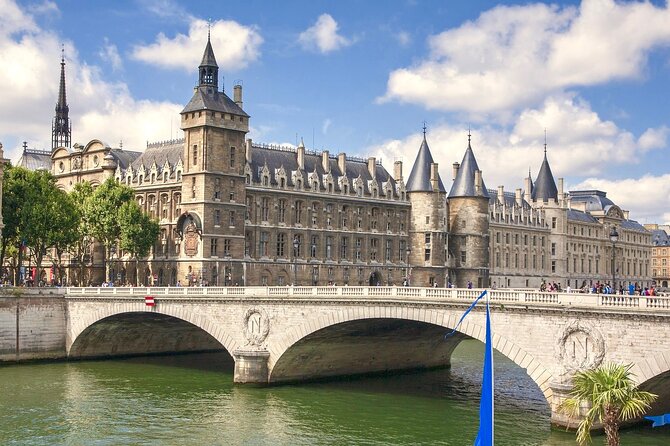
Reviewed · CITY TOURS
Paris City Center Free Walking Tour (Tip-Based)
Paris tells its story on foot. This tip-based tour strings together Île de la Cité, Notre-Dame area sights, Seine bridges, the Louvre surroundings, and Eiffel Tower views, all with a guide who stitches the big moments of France into street-level walking.
I love the outside-the-landmarks approach. You get key context at spots like Notre-Dame and the Louvre without hunting for ticket lines or waiting behind ropes. I also love the way the guides keep you in the story, with clear English and a microphone that helps in busy squares.
One consideration: expect some standing and a fair amount of walking. If you need a bathroom break, plan ahead, since the best chance to step away can come later in the route.
In This Review
- Key highlights at a glance
- Why This Paris City Center Walk Works So Well
- Starting at Fontaine Saint-Michel, Then Into the Real Center (Île de la Cité)
- Notre-Dame From the Outside, With the French Revolution Thread
- Stopping for Fontaine Saint-Michel, Then Crossing Toward WWII History
- Place Dauphine and Henri IV: The Calm Square That Feels Like a Pause Button
- Pont Neuf: Oldest Bridge Energy and the Legends You’ll Want to Know
- The Louvre Area Without Entering: Leonardo, Francis I, and the Glass Pyramid Views
- Tuileries Gardens to Eiffel Tower Views: Royal Design Meets Modern Paris
- Pace, Group Size, and Why the Guide Matters More Than You Think
- Price, Tipping, and the Real Value of a Tip-Based Model
- Who Should Book This Tour (and Who Might Want a Different One)
- Should You Book This Paris City Center Free Walking Tour?
- FAQ
- How long is the Paris City Center Free Walking Tour?
- Where does the tour start and where does it end?
- Is the tour offered in English?
- Do you enter Notre-Dame or the Louvre during the tour?
- How much is the tour, and is it really tip-based?
- How can you leave tips?
- What is the maximum group size?
- Is the tour dependent on weather?
- Are service animals allowed?
- What is the cancellation window for a full refund?
Key highlights at a glance
- Story-driven city center route: France’s turning points, especially the French Revolution and Napoleon, show up again and again.
- Icon views without entry: Notre-Dame and the Louvre are discussed from the outside, plus you still get strong sightlines.
- Seine bridges with WWII detail: You’ll stop for bullet-hole history and the wartime survival story of Paris.
- Henri IV stops with smart context: Place Dauphine, the Henri IV statue, and Pont Neuf connect the dots fast.
- Guides that keep the energy up: Names you may see referenced include Alberto, Ezra, Bruce, Sanna, Kiara, and Michael.
- Flat, manageable walking for most people: Groups stay together, and guides often pace so everyone can follow.
Why This Paris City Center Walk Works So Well
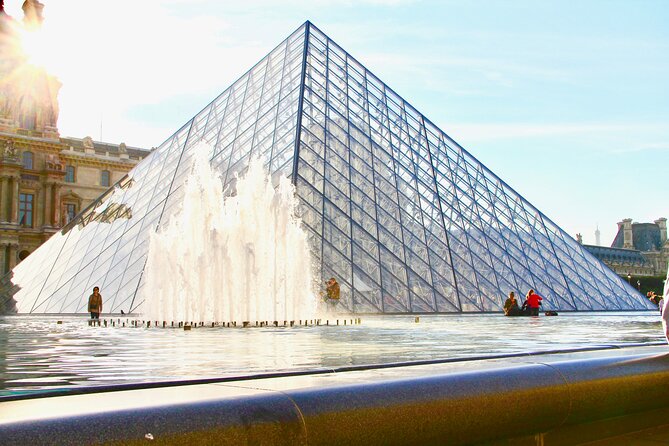
Central Paris can feel like a blur of statues, bridges, and postcard angles. This tour gives you a route that’s easy to follow and history you can actually place in time. The magic is how the guide ties visual landmarks to people and events, so you don’t just look at buildings, you understand why they matter.
You’re moving through the city core at a comfortable pace for a couple of hours. The guide also brings humor and extra explanations when questions pop up, which makes it more like a smart walk with a local than a lecture with a headset.
More city walks in Paris:
- Paris Top Sights Half Day Walking Tour with a Fun Guide
★ 5.0 · 2,893 reviews - Montmartre Hidden Gems and Scenic Highlights Walking Tour
★ 5.0 · 2,684 reviews - Montmartre Hill French Gourmet Food and Wine Tasting Walking Tour
★ 5.0 · 2,588 reviews
Starting at Fontaine Saint-Michel, Then Into the Real Center (Île de la Cité)
You meet at Fontaine Saint-Michel at Pl. Saint-Michel in the 5th arrondissement. This is a good jump-in point because it already sits in a “walking Paris” zone with strong street energy.
From there, you head to Île de la Cité, the island that formed the earliest heart of Paris. The story begins with the Parisii tribe, then shifts to Roman influence, and finally lands in the medieval era where so much of Paris’s identity took shape. Even if you’ve seen photos of this area, being on the ground helps. The scale of the streets and the way viewpoints line up around the island make it feel like the city’s original hub.
Practical note: if you’re sensitive to cold or rain, this is a good moment to get your layers settled. It’s early in the walk, and the rest of the route has plenty of outdoor time.
Notre-Dame From the Outside, With the French Revolution Thread
Next is Cathedrale Notre-Dame de Paris. The key detail for you: you won’t enter the cathedral on this tour. Instead, the guide focuses on what you can see nearby and what the building represents across centuries.
You’ll hear about construction starting in 1163, then jump to later chapters that shape modern memory. The most useful part is how the guide links Notre-Dame to major French turning points, including the French Revolution and Napoleon’s coronation. You finish this stop with a clearer mental map of how France’s politics reshaped its culture and monuments.
Possible drawback: since there’s no inside visit, you won’t get that “first step into the nave” impact. But you do get something practical. You learn what to notice next time you pass by Notre-Dame, even if you come back on your own.
Stopping for Fontaine Saint-Michel, Then Crossing Toward WWII History
You return to the Fontaine Saint-Michel area as a stop point on the route. This is a helpful reset for your brain. After the heavy Notre-Dame context, you shift to a lighter moment, then the guide quickly brings you back to the city’s layers of rebuilding and renewal.
Then comes a standout: Pont Saint-Michel. Here, the guide points out bullet holes from World War II and explains why Paris did not end up destroyed. It’s one of those stops where the story makes the stone feel less like scenery and more like evidence.
If you’re a visual learner, this is where the tour earns its reputation. You see the bridge, then your guide gives you the wartime context that turns that bridge into a historical document.
Other Paris bookings to consider
- Paris: Montmartre Highlights Walking Tour with a Local Guide
★ 4.9 · 2,318 reviews - Paris Île de la Cité and Notre-Dame Walking Tour With Crypt
★ 5.0 · 2,272 reviews - Paris: Montmartre Cheese, Wine & Pastry Guided Walking Tour
★ 4.8 · 2,255 reviews - Paris in a Day: Louvre or Orsay, Eiffel Tower, City Walk & Cruise
★ 5.0 · 1,956 reviews
Place Dauphine and Henri IV: The Calm Square That Feels Like a Pause Button
You’ll walk to Place Dauphine, a charming square with strong “pause here” energy. The guide connects it to Henri IV and highlights that it was one of the first projects under his reign. The practical win: you’re in a calmer pocket of the center where you can look around instead of only moving forward.
This is also a smart lunch-thinking stop. Many guides naturally give you a moment to orient yourself, and you’ll often find nearby cafés and casual places to eat. Even if you don’t choose a meal right then, you’ll be more ready for lunch later because you’ll have already picked up the surrounding vibe.
After that, you move to the equestrian statue of Henri IV, where the route pivots from general Paris to a specific person. The guide explains his short reign and why it left a mark you can still read in the city.
Pont Neuf: Oldest Bridge Energy and the Legends You’ll Want to Know
Next up is Pont Neuf, the oldest bridge in Paris. The guide does more than recite dates. You get stories tied to power, street life, and the way Paris locals used bridges in daily routines long before modern tourism.
One detail that makes this stop memorable is the mention of “tooth pullers of Paris.” Even if you only catch it as a quick story, it’s a great example of how this tour blends official history with street-level reality. That balance keeps the walk from becoming purely monumental.
This part of the route also gives you great river views. The Seine isn’t just pretty. It’s part of how Paris worked and how events played out, including conflicts and rebuilding efforts.
The Louvre Area Without Entering: Leonardo, Francis I, and the Glass Pyramid Views
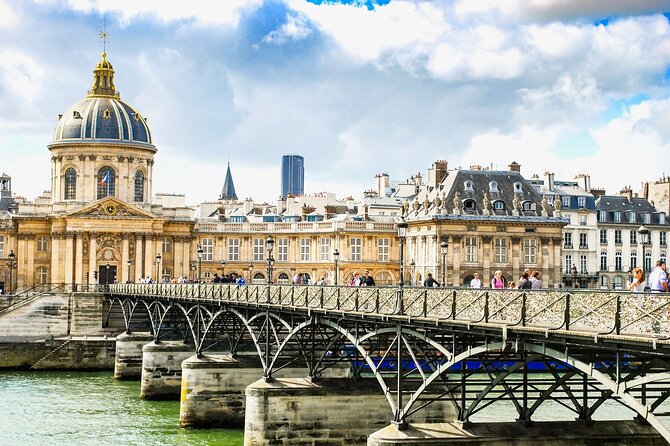
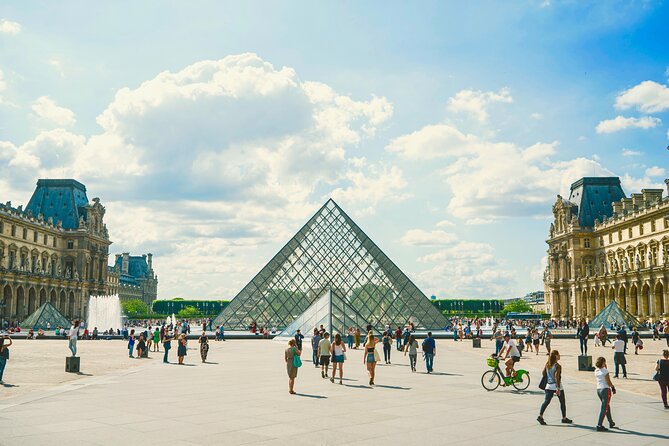
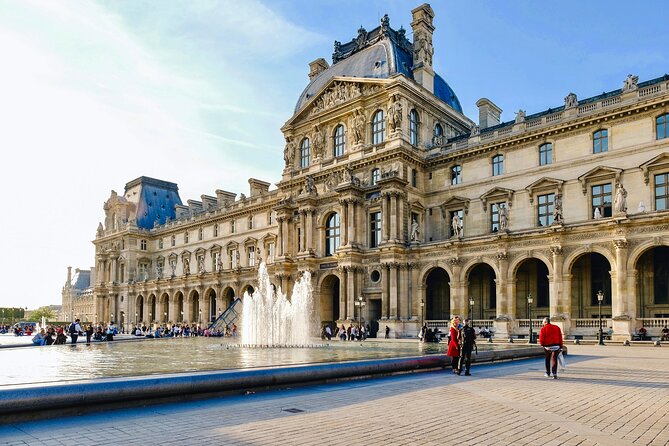
You’ll reach the Louvre Museum area, but again, you won’t enter. The advantage for you is time and flow. You get a high-impact stop without spending your tour time in lines, ticket checks, or indoor crowd management.
The guide connects the Louvre to major figures, including Leonardo da Vinci and why the Mona Lisa became such a global magnet. You’ll also hear how Francis I helped shape the Louvre into a palace and the foundations of what it became. That context matters because the Louvre can feel like a giant art vault from the outside. This tour gives it a storyline.
You’ll also get views of the glass pyramid. Even without entering, it helps to see how modern design sits against the museum’s older identity. The guide explains what you’re looking at in plain terms, not art jargon.
Practical note from experience-style advice: after a couple of hours outdoors, your feet may start asking for mercy. If you can, consider planning your own restroom stop before you get too far into the back half of the walk.
Tuileries Gardens to Eiffel Tower Views: Royal Design Meets Modern Paris
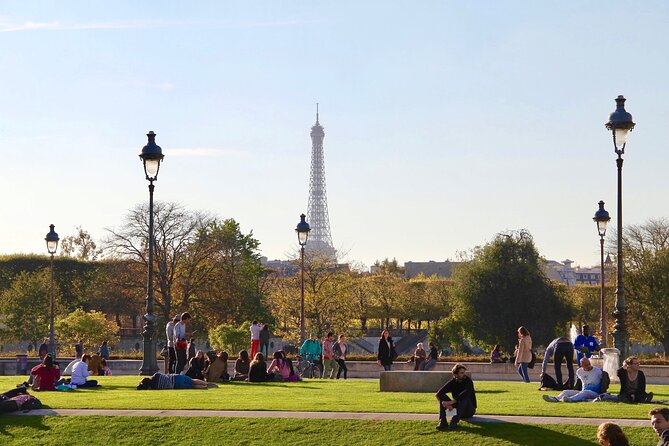
Now the route starts to shift toward the west and toward the “wow” photo angles. First you’ll stop at the Jardin des Tuileries, where the guide connects the gardens to royal ambition. You’ll hear about statues, sculptures, and fountains, and you’ll also get the idea that the Tuileries helped create a mood, not just a pretty park.
One helpful detail is the mention that the gardens were designed to create mystique and majesty, with the landscape tied to the same landscape artist credited for Versailles gardens. That comparison gives you a framework. You can look at what’s in front of you and understand the inspiration behind the layout.
Then the tour finishes with Eiffel Tower views from the direction of the Tuileries. The guide ties the viewpoint to Gustave Eiffel and how the 1889 construction worked, so you get more than the usual skyline photo. It’s a satisfying end because you leave with a clear mental connection between the Eiffel Tower as a symbol and the design effort behind it.
Pace, Group Size, and Why the Guide Matters More Than You Think
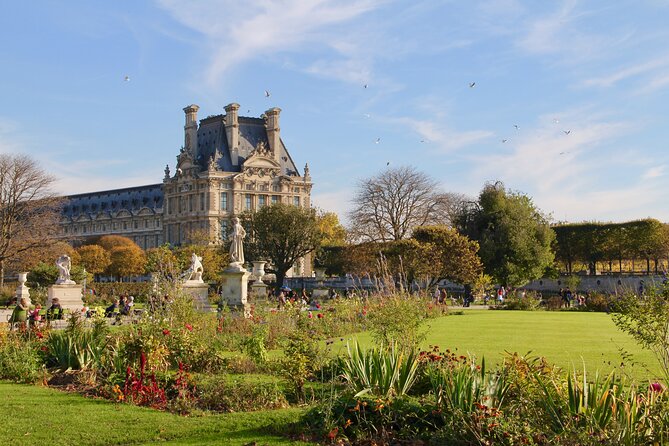
This tour runs about 2 hours 15 minutes. In real life, a walk like this can run a little longer, especially if you’re asking questions or the guide is taking time with the group. That tends to be a plus, because you’re not just sprinting from stop to stop.
Group size tops out around 50 travelers, which can sound big. The practical reality is that you’re still able to hear the guide. Multiple guides are known for using body microphones and/or amplified sound to keep the group connected, even in louder public areas.
On the walking itself: you’re on mostly flat terrain through central spots, and several people have said it feels like less walking than they expected for the time. Still, you should treat it like a proper city walk. Wear shoes you trust.
If you’re bringing kids or teens, this kind of story-driven format can work well because it mixes big names, dramatic events, and visual cues at each stop. If your group includes seniors, the best move is to go at a steady pace and hydrate, because outdoor standing times can creep up.
Price, Tipping, and the Real Value of a Tip-Based Model
The listed price is low, shown here as about $3.62 per group (up to 9), but this is a tip-based walking tour. In practice, the value comes from the guide, the route planning, and the fact that you’re getting a guided narrative across major central landmarks.
What I like about this model is that it puts quality front and center. If your guide is great, you have a direct way to reward that. If the guide isn’t a match for your style, at least the financial risk is low compared to a standard ticketed tour.
One thing to be ready for: tips are accepted only via credit/debit cards and electronic payments, and VAT is added to contributions. So bring a card or plan on using your phone, and you won’t get stuck mid-tour.
Who Should Book This Tour (and Who Might Want a Different One)
Book this if you want a fast, readable introduction to central Paris with a strong history thread. It’s especially good if you care about French Revolution and Napoleon-era stories, because those topics show up repeatedly as the guide connects buildings and bridges to the people who changed France.
You’ll also like it if you want the highlights without paying museum entry for a tight schedule. You’ll get outside context at Notre-Dame and the Louvre area, plus a classic Paris finish with Eiffel Tower views.
Consider a different option if you’re hoping for a lot of interior time. The cathedral and Louvre are not entered. Also, if you want frequent bathroom breaks, you may need to manage that yourself, since the route is dense with standing and walking segments.
Should You Book This Paris City Center Free Walking Tour?
Yes, if you want a smart, story-first overview of central Paris with a guide that keeps the pace lively. I’d book it early in your trip, because you’ll leave with a framework for understanding what you see later, including why certain monuments and bridges look the way they do.
If your schedule is tight and you want to avoid ticket lines, this is a clean way to do the big names from the outside. Just go prepared for outdoor time, and have a card ready for tips through electronic payment.
FAQ
How long is the Paris City Center Free Walking Tour?
It lasts about 2 hours 15 minutes.
Where does the tour start and where does it end?
The tour starts at Fontaine Saint-Michel, Pl. Saint-Michel, 75005 Paris, France and ends at Tuileries Garden, 75001 Paris, France.
Is the tour offered in English?
Yes, it is offered in English.
Do you enter Notre-Dame or the Louvre during the tour?
No. The tour does not include entering Notre-Dame or entering the Louvre Museum.
How much is the tour, and is it really tip-based?
It is listed as about $3.62 per group (up to 9), and it is tip-based.
How can you leave tips?
Tips are accepted only via credit/debit cards and electronic payments, and VAT is added to contributions.
What is the maximum group size?
The tour has a maximum of 50 travelers.
Is the tour dependent on weather?
Yes. It requires good weather, and if it’s canceled due to poor weather, you’ll be offered a different date or a full refund.
Are service animals allowed?
Yes, service animals are allowed.
What is the cancellation window for a full refund?
You can cancel up to 24 hours in advance for a full refund, as long as you cancel at least 24 hours before the start time.
Newly listed around Paris
- The voice of Montmartre is a must-see in Paris★ 3.8 · 19 reviews
- Top Private Cruises in Paris with Champagne + more surprises★ 5.0 · 309 reviews
- The Official Emily in Paris Montmartre Walking Tour★ 4.7 · 40 reviews
- The Paris Pass® Plus: 90+ Attractions including The Louvre★ 3.4 · 386 reviews
- The Official Emily in Paris Locations Walking Tour★ 4.9 · 383 reviews
- The Official Emily in Paris Macaron-Making Workshop★ 4.9 · 68 reviews
- The Official Emily in Paris Wine & Cheese with Butter Making★ 4.9 · 20 reviews
- The Official Emily in Paris Croissant-Making Workshop★ 4.9 · 85 reviews
City Tours, compared.

Eiffel Tower Summit Option with Seine River Cruise and City Tour
Read our review →
Paris in a Day: Louvre or Orsay, Eiffel Tower, City Walk & Cruise
Read our review →

Lyon City Hop-on Hop-off Sightseeing Bus Tour
Read our review →
Eiffel Tower Hosted Tour, Seine Cruise and City Tour
Read our review →
Golf Cart in Paris – Private Guided City Tour – Pickup Included
Read our review →
City and River Seine Tour on an Amphibious Bus
Read our review →Browse the lists this tour appears in