
Reviewed · LOUVRE HIGHLIGHTS GUIDED TOURS
Paris Louvre Exclusive Semi Private Guided Tour Max 6 People
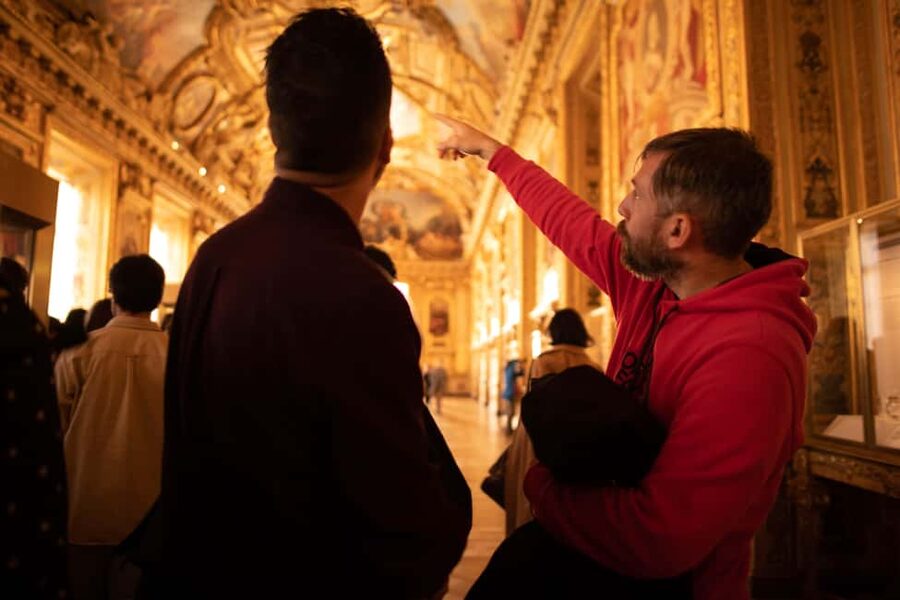
Paris’s Louvre is too big to do properly in one go. This max-6, semi-private visit is interesting because it funnels you straight to the museum’s best-known works without the usual herd mentality. I like the small group size and the focus on seeing multiple major masterpieces in a 2 hour window, plus getting a guide who helps the stories click. One thing to consider is that this is a shared experience, so if the group dynamic turns tense, the pace can feel off.
What I really like here is the chance to stand in front of the Mona Lisa and still see other crowd favorites right after, not just the one famous painting and a sprint to the next room. I also like the mix of what you cover, including Greek sculpture (like Venus de Milo), plus works tied to the Louvre’s long history and role as more than a museum.
The possible drawback is simple: at the Louvre, timing and meeting point accuracy matter. If you arrive late, you can miss the early momentum that makes a highlight tour feel smooth, and your guide may not be able to slow down.
In This Review
- Key highlights at a glance
- Why a max-6 Louvre tour is worth it
- Meeting at the Louis XIV statue, then getting oriented fast
- Passing the Louvre Pyramid and setting the route
- Guided time in the museum: how the highlights package works
- The Mona Lisa stop: the one you should not rush
- Venus de Milo and the world of Greek sculpture
- Great Sphinx of Tanis: when the Louvre becomes a time machine
- Delacroix, Canova, and the value of technique with context
- Why the guide’s stories about the Louvre matter
- Staying after the tour: turning 150 minutes into a longer day
- Price and time: what you are really buying
- Who this tour fits best (and who might want another option)
- A quick, realistic note on meeting and group dynamics
- Should you book this max-6 Louvre guided tour?
- FAQ
- How long is the Paris Louvre Exclusive Semi Private Guided Tour?
- What group size is included in this tour?
- Where do I meet my guide?
- What language will the guide speak?
- Which highlights can I expect to see?
- Are entry tickets included?
- Can I stay in the Louvre after the guided tour?
- What should I bring with me?
- Is wheelchair access available?
- What is the cancellation policy?
Key highlights at a glance
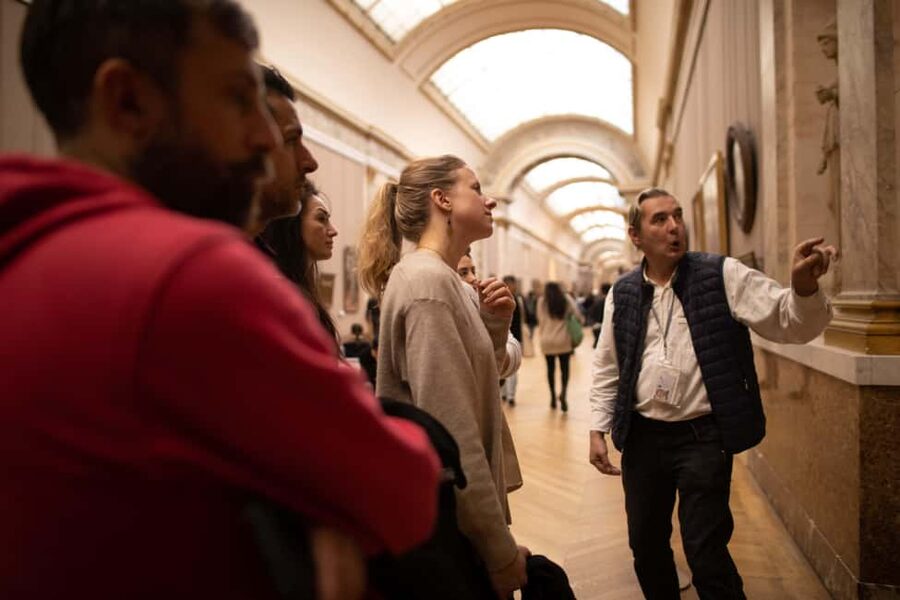
- Max-6 group keeps the experience calm and easier to hear and ask questions
- Mona Lisa focus gives you real time in front of the world’s most famous portrait
- Dozens of masterpieces in a tight visit, including Venus de Milo and more
- Fortress and palace stories add context beyond the art itself
- Stay after the tour with your entry ticket to keep exploring on your own
- Multi-language guides (English, French, Portuguese, Spanish, Russian, Swedish) help you match your comfort level
Why a max-6 Louvre tour is worth it
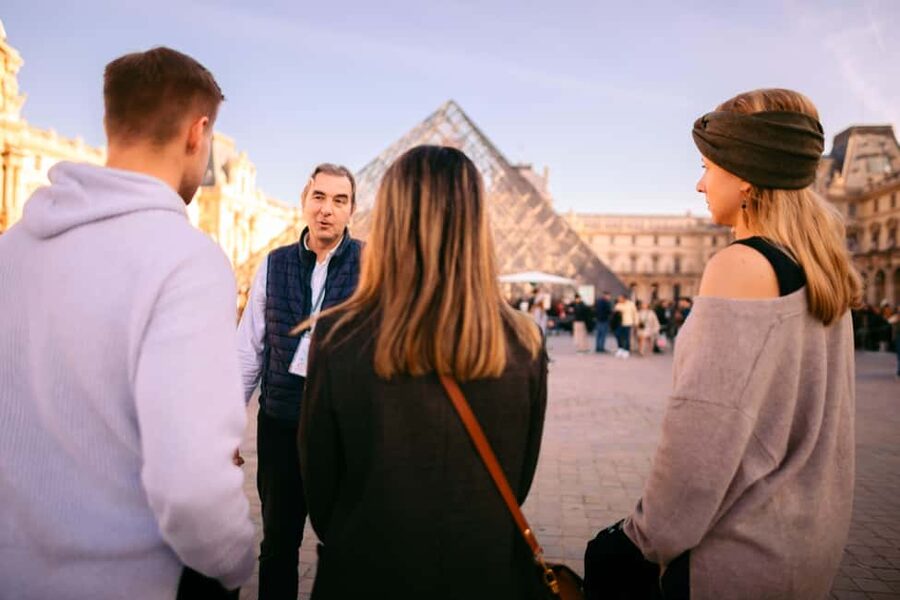
The Louvre can feel like two museums at once. One is the museum you see from the ticket line, crowded and loud and made for quick checks. The other is the one you want, where you actually understand why these objects matter, and you notice details you would otherwise walk right past.
That is where a max-6, semi-private format helps. With only six people, your guide can slow down just enough for meaningful stops, and you spend less time waiting for a bigger group shuffle. You also tend to get a smoother flow through rooms that are otherwise hard to navigate when crowds surge.
At $199 per person for about 150 minutes, you are paying for time and guidance. This is not a bargain-bucket museum pass. It is closer to buying a plan, plus an expert’s eyes. If you care about seeing the real highlights without losing hours, this kind of tour can feel like good value.
More Louvre entries and guided rounds:
- Paris: Louvre Guided Tour with Reserved Access & Boat Cruise
★ 4.3 · 16,353 reviews - Louvre Museum Masterpieces Guided Tour with Access
★ 4.5 · 12,023 reviews - Paris: Louvre Overview, Exploration tour and Reserved Entry
★ 4.1 · 10,145 reviews
Meeting at the Louis XIV statue, then getting oriented fast
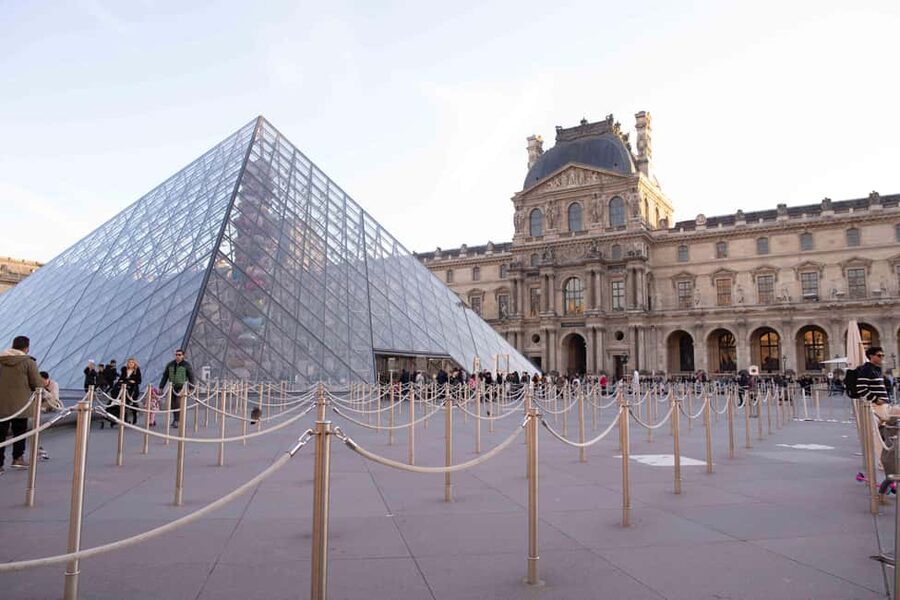
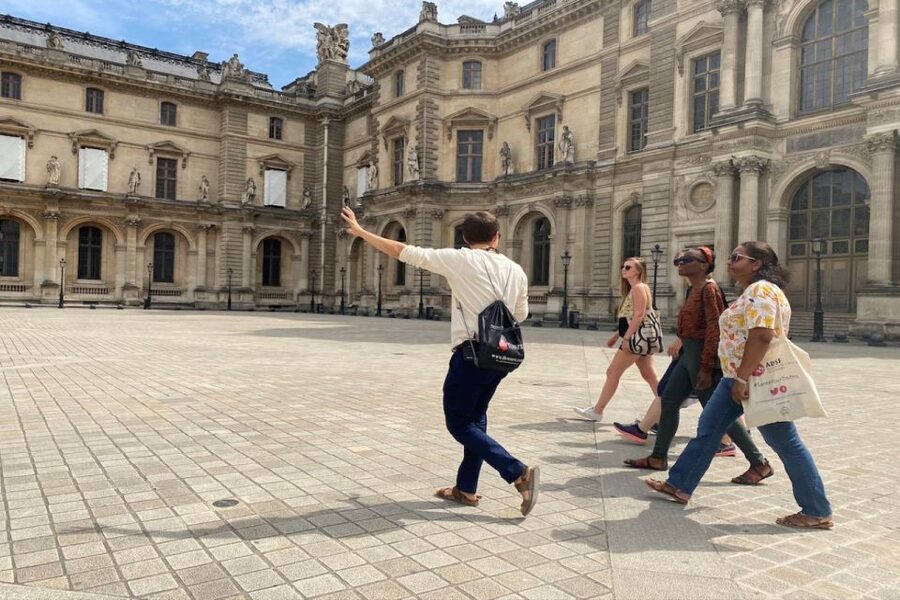
Your meeting point is clearly defined: under the Louis XIV statue with a horse in front of the glass pyramid. Your guide will be holding a LivTours sign. That matters more than it sounds. The Louvre’s entrance area can confuse even confident travelers, and a good start keeps the whole visit on track.
Plan to arrive 10 to 15 minutes early. This does two things. First, it gives you time to locate the exact spot and settle your group basics (tickets, ID, your meeting check). Second, it lets the guide build the route in the smartest order before the real crush hits.
In a museum like the Louvre, your biggest enemy is wasted movement. You end up spending energy figuring out where to go instead of spending it on what to see. A strong meeting point and a quick first beat helps you get your bearings fast.
Passing the Louvre Pyramid and setting the route
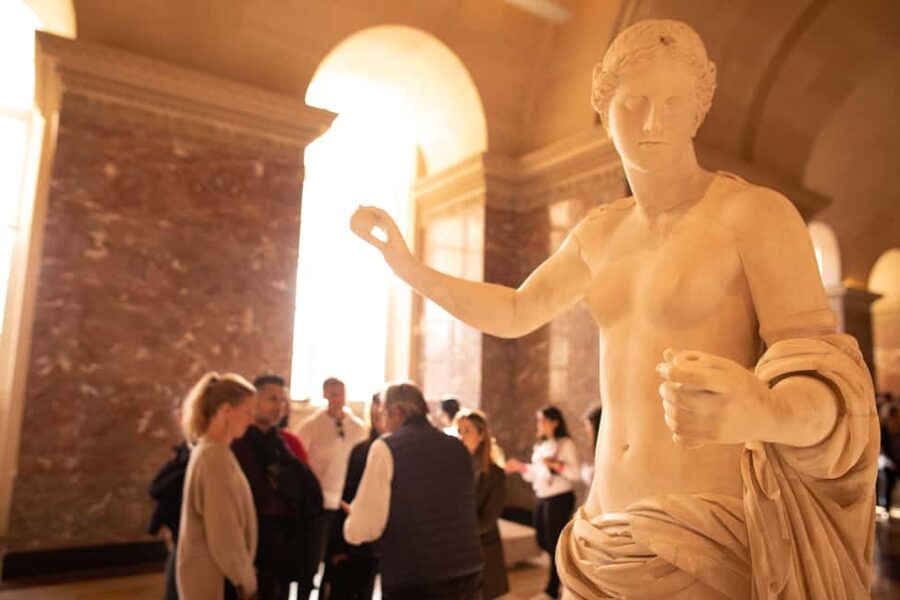
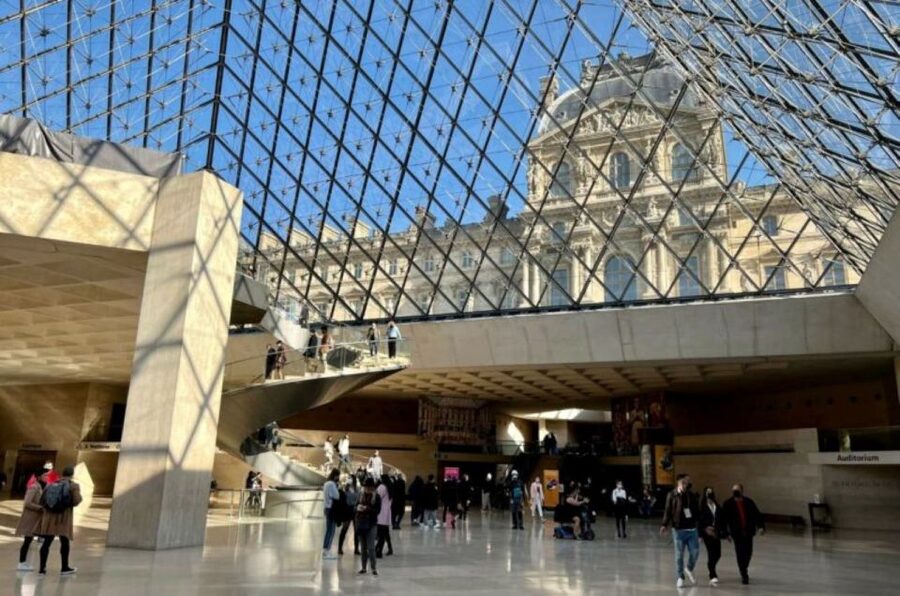
The tour includes a pass by the Louvre Pyramid. That is more than scenery. It is a simple cue that you are entering the Louvre’s real geographic center, where the museum’s layout and sight lines connect a lot of major areas.
Right after the pyramid moment, the tour is set up to move into the museum and hit the highlights efficiently. This is the key benefit of a short guided tour: you get a curated path that tries to compress what usually takes multiple visits.
A small note on pacing: in summer and on popular days, the Louvre can be crowded enough that you will spend some time moving as a group. The value of a max-6 plan is that those crowd slows feel temporary, not constant.
Guided time in the museum: how the highlights package works
This tour is built around one big idea: in about 2 hours, you can see dozens of major works if someone else handles the route and tells you what to look for. The guide brings you to key stops across different eras and styles, so the tour does not feel like a single-artist checklist.
You should expect a pattern that repeats throughout: you arrive at a work, you get context, then you have a chance to look closely. The tour also ties the art to the Louvre itself, including how the museum long ago functioned as a fortress and royal palace. That helps the building stop being just a backdrop and start feeling like part of the story.
In terms of what you will see, the tour description signals a spread of major names and periods, including Da Vinci, Canova, and Delacroix, plus Greek sculpture like Venus de Milo and Egyptian ties like the Great Sphinx of Tanis.
Other Paris bookings to consider
- Paris: 1-Hour Seine Cruise departing from the Eiffel Tower
★ 4.4 · 77,472 reviews - Disneyland® Paris 1-Day Ticket
★ 4.6 · 49,412 reviews - Paris: Versailles Palace and Gardens Full Access Ticket
★ 4.6 · 41,579 reviews - Paris: Arc de Triomphe Rooftop Tickets
★ 4.6 · 34,264 reviews
The Mona Lisa stop: the one you should not rush
Yes, the Louvre is famous for many masterpieces. But the practical reality is that most people’s Louvre plan lives or dies by the Mona Lisa moment. This tour gives that moment the attention it deserves.
You are guided to stand in front of the Mona Lisa, and the experience is described as unhurried within the constraints of a 150-minute visit. In other words, you should not feel like you are being dragged past it. You also get more than the famous label. A good guide will help you notice why this painting became such a magnet across centuries, and what to keep an eye out for when you are finally right there.
If you are visiting for the first time, this is the stop that makes the entire trip feel legitimate. It is also where you will learn something that changes your perception. Even if you have seen images a hundred times, being in the room changes the scale, the crowd rhythm, and your own focus.
Venus de Milo and the world of Greek sculpture
Another major highlight is the inclusion of Greek masterpieces, specifically Venus de Milo. This matters because Greek sculpture in the Louvre can feel both familiar and weirdly distant. You know the silhouette, but you might not know what you are actually looking at.
With a guide, you can connect the sculpture to its cultural context, and to the way the Louvre became a place where masterpieces from different worlds were brought under one roof. The tour positions Greek works as part of the museum’s broader narrative, not just as a quick photo stop.
If you enjoy art that rewards close looking, this is a strong part of the route. It is also a good counterbalance to the Mona Lisa moment, because it changes your visual and emotional gear immediately.
Great Sphinx of Tanis: when the Louvre becomes a time machine
The tour description also points to the Great Sphinx of Tanis. That kind of stop is valuable because it reminds you the Louvre is not only European painting and marble portraits. It holds objects that can feel like they belong to different galaxies.
Egyptian pieces bring another kind of realism to the building’s history. They also add variety to your museum day, especially if you are the type who gets fatigued by rooms of similar-looking European galleries.
Even if you are not an Egypt expert, you can still enjoy the experience when a guide connects the object to the Louvre’s collecting history and the sheer scale of what the museum contains.
Delacroix, Canova, and the value of technique with context
The tour names Delacroix and Canova, which tells you the route probably includes major works beyond the absolute headline stars. This is where a guided approach can save you from the common problem of the self-guided Louvre visit: you spend time finding things, then you do not know what you are looking at once you arrive.
In practical terms, this is often where guides help you see technique and mood instead of just reading dates. One guide style that shows up in past experiences is connecting history and artistic choices, so you understand why a brushstroke or sculptural gesture feels the way it does.
If you are the kind of traveler who likes a museum visit to feel like a conversation, not a scavenger hunt, this tour’s structure is a good match.
Why the guide’s stories about the Louvre matter
The Louvre’s biggest strength is also its biggest challenge. With so many works, you can end up knowing names but not knowing relationships.
That is why the tour’s focus on the museum’s past as a fortress and royal palace is not filler. It gives you a framework for what you are seeing. When you know the building’s layers and purpose changed over time, you start noticing details differently, like how spaces feel designed for power, display, and control.
This kind of context also makes the art feel more anchored. The Mona Lisa becomes not just a painting, but a piece seen through centuries of collecting and display habits.
Staying after the tour: turning 150 minutes into a longer day
One of the smartest features here is simple: your ticket remains valid after the guided portion. That means you can keep visiting at your leisure.
This is a big deal because it lets you follow your curiosity without feeling like you missed the one important part. You can do a second pass in the areas you liked, linger where you felt the most drawn in, or look for other famous works you noticed during the guide’s route.
In terms of planning, I recommend you decide in advance how you will use the extra time. If you want more paintings, head toward your favorite style. If you want more sculpture, use the guided highlights as your starting map. Even a half hour of free roaming can turn a “quick highlights” day into a more satisfying museum visit.
Price and time: what you are really buying
At $199 per person for 2 hours to 150 minutes, this tour is priced for convenience and focus. You are not paying only for access to the museum, because the entry tickets are included. You are mainly paying for:
- a route that hits major masterpieces efficiently
- a guide who connects works to story and context
- small-group pacing that makes the highlights feel personal
The best value is for first-time visitors or anyone who knows they cannot stand around for hours waiting for motivation. If you already love the Louvre and plan to spend half a day or more, you might not need a guided highlight package. But if you want the famous works plus context and you care about doing it in a manageable timeframe, the cost starts making sense.
Who this tour fits best (and who might want another option)
This is ideal for you if:
- you want the Louvre’s biggest masterpieces without turning the day into logistics
- you prefer a small group experience rather than a big bus tour
- you like museum visits with stories that connect art to place
It might be less ideal if:
- you already know exactly which rooms you want and you want maximum freedom
- you plan to spend the entire day at a slower pace, room by room
- you are very sensitive to crowd movement and prefer quieter hours
Also, because the guide can adjust to your interests, it helps if you come with at least a few preferences. Even a short wishlist can make the experience feel more like it was tailored for you.
A quick, realistic note on meeting and group dynamics
The tour is built for a smooth flow, but real-world group travel is real-world group travel. Plan for the meeting point to matter, and give yourself that 10 to 15 minute buffer.
Also, remember this is max-6, semi-private, not fully private. That means other people’s pace and attention can influence the overall rhythm. If you are the type who needs total control of timing, a fully private option may feel safer.
Still, the overall experience quality is clearly tied to the guide. When the guide is strong at navigating crowds and reading the room, this tour feels worth every minute.
Should you book this max-6 Louvre guided tour?
I’d book it if you want a high-impact Louvre visit that prioritizes the works most people travel for, like the Mona Lisa, plus major sculpture and painting highlights, all in a small-group format. The inclusion of entry tickets and the ability to stay after the tour make the 150-minute core feel less like a rushed hit-and-run.
Skip it if you already plan to spend a full day at the Louvre and you are comfortable picking your own route with confidence. In that case, you might prefer a longer independent plan or a different style of guided experience.
If you are on the fence, use this rule of thumb: if you want the Louvre’s best-known masterpieces plus context, without getting stuck in the most confusing parts of the museum layout, this tour is a strong choice.
FAQ
How long is the Paris Louvre Exclusive Semi Private Guided Tour?
The tour lasts about 2 hours, or up to 150 minutes.
What group size is included in this tour?
It is a semi-private group with a maximum of 6 people.
Where do I meet my guide?
Meet under the Louis XIV statue with a horse in front of the glass pyramid. The guide will be holding a LivTours sign.
What language will the guide speak?
The guide is available in English, French, Portuguese, Spanish, Russian, and Swedish.
Which highlights can I expect to see?
You will have the chance to see major works including the Mona Lisa and other famous pieces such as Venus de Milo and the Great Sphinx of Tanis, along with artists like Da Vinci, Canova, and Delacroix.
Are entry tickets included?
Yes, entry tickets are included.
Can I stay in the Louvre after the guided tour?
Yes. Your ticket allows you to keep visiting after the guided portion finishes.
What should I bring with me?
Bring a passport or an ID card.
Is wheelchair access available?
Non-folding wheelchairs and electric wheelchairs are not allowed.
What is the cancellation policy?
You can cancel up to 24 hours in advance for a full refund.
Newly listed around Paris
- The voice of Montmartre is a must-see in Paris★ 3.8 · 19 reviews
- Top Private Cruises in Paris with Champagne + more surprises★ 5.0 · 309 reviews
- The Official Emily in Paris Montmartre Walking Tour★ 4.7 · 40 reviews
- The Paris Pass® Plus: 90+ Attractions including The Louvre★ 3.4 · 386 reviews
- The Official Emily in Paris Locations Walking Tour★ 4.9 · 383 reviews
- The Official Emily in Paris Macaron-Making Workshop★ 4.9 · 68 reviews
- The Official Emily in Paris Wine & Cheese with Butter Making★ 4.9 · 20 reviews
- The Official Emily in Paris Croissant-Making Workshop★ 4.9 · 85 reviews
Louvre Highlights Guided Tours, compared.

Louvre Guided Tour with Reserved Access & Boat Cruise
Read our review →
Louvre Museum Masterpieces Guided Tour with Access
Read our review →
Louvre Overview, Exploration tour and Reserved Entry
Read our review →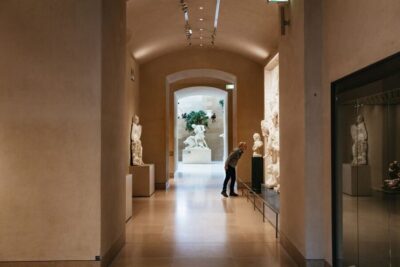
Louvre Museum Entry Ticket With Host and River Cruise
Read our review →
Mona Lisa & Louvre Masterpieces Tour with Reserved Access
Read our review →
Louvre Museum – Exclusive Guided Tour (Entry Included)
Read our review →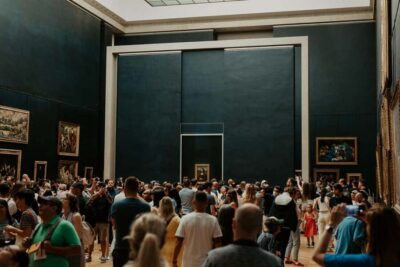
Louvre Museum Hosted Entry and Mona Lisa Audioguide
Read our review →
Louvre Access with Mona Lisa Escort or Guided Option
Read our review →Browse the lists this tour appears in