
Reviewed · MARAIS DISTRICT WALKS
Paris: Marais District & Jewish Quarter Guided Tour 12 guest
The Marais has layers you can actually walk through. This 150-minute guided stroll connects royal-era Paris to the Jewish Quarter, with an art historian’s eye for what you see and what it used to mean.
Two things I love most: the way it pairs landmarks like Place des Vosges with the smaller, human-scale details in the streets, and the feel of a small group of up to 12 that keeps questions welcome.
One heads-up: you will not enter synagogues on this tour, since access is restricted for security and only for worshippers.
In This Review
- Key highlights you will notice fast
- From Saint-Antoine into the Marais, 150 minutes that feel focused
- Quick logistics that matter on foot
- Saint-Paul-Saint-Louis and Hôtel de Sully, where the Marais starts to make sense
- Place des Vosges, the royal square you can still walk around
- Hôtel Carnavalet and the mansions that used to be homes
- Pletzl to rue des Francs-Bourgeois, Jewish Paris in the 1800s
- Rue des Rosiers and Joseph Migneret Garden, plus tomb stones that stop you
- Optional architecture stops, Pompidou and Hôtel de Ville in one walking line
- Saint Gervais Church and finishing with perspective
- Guides and pacing, what makes it feel personal
- Price and what you truly get for $61
- Bag rules you should respect
- Who this tour suits best (and who should consider another plan)
- Should you book this guided Marais and Jewish Quarter walk?
- FAQ
- How long is the Paris Marais District & Jewish Quarter guided tour?
- How much does the tour cost?
- What is the maximum group size?
- Where does the tour start?
- What language options are available?
- Is synagogue entry included?
- Is food included?
- Is hotel pick-up or drop-off included?
- What should I bring?
- Are large bags allowed?
Key highlights you will notice fast
- A 12-guest max keeps the pace human and the storytelling specific.
- Place des Vosges gives you a perfect visual anchor for Marais history.
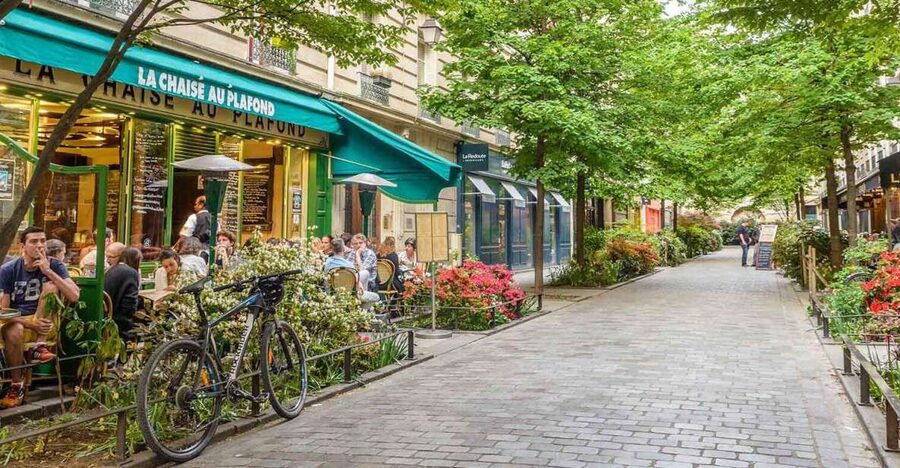
- Pletzl and rue des Francs-Bourgeois show how the Jewish Quarter shaped the neighborhood in the 1800s.
- Courtyards and mansions let you read class and power in stone facades.
- Art historian guide style means you get meaning, not just dates.
- Jewish-quarter walking past tomb stones and graves adds a quieter, more personal layer.
From Saint-Antoine into the Marais, 150 minutes that feel focused
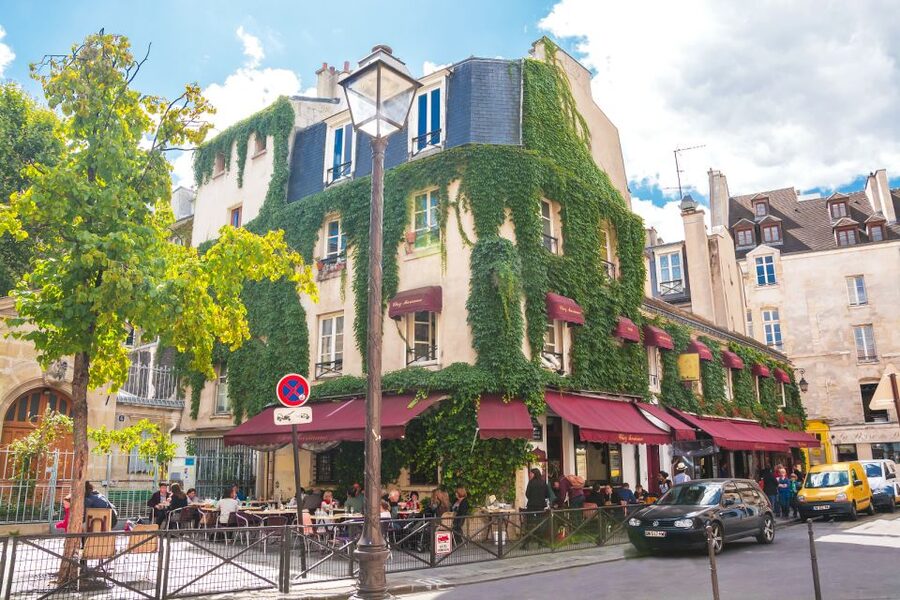
Paris can be a lot. This tour helps you sort one part of town at a time, starting around the Marais, a district that used to sit beyond the old center and later became central. In 150 minutes, you are not trying to “see everything.” You are learning how the neighborhood was built, who lived here, and how that story changed as Paris grew.
The tour runs as a walking experience with a moderate amount of walking. You will move from site to site, with short walks between major points and plenty of time to look closely at buildings, street plans, and the little clues guides can point out. If you like city walking that is more thinking than rushing, this format works well.
Group size matters here. With a maximum of 12 guests, you are less likely to get stuck listening from the back with nobody able to hear questions. Also, languages are covered (Russian, German, French, Italian, English, Spanish), and the guide is a professional art historian, so the emphasis stays on interpretation.
More Marais wanders:
- Award-Winning Paris French Bakery Experience — Le Marais, 4th Arr
★ 4.5 · 1,186 reviews - Paris Le Marais Food Tour With 10+ Tastings, Cheese, Wine & More
★ 5.0 · 985 reviews - Paris Le Marais District Original Food and Wine Tasting Tour
★ 4.5 · 880 reviews
Quick logistics that matter on foot
You will start from a meeting point that can vary by option, and one common starting address is 133 Rue Saint-Antoine. Bring passport or an ID card. And keep your bag light. No luggage or large bags are allowed, and inside museum spaces the rules get stricter.
Saint-Paul-Saint-Louis and Hôtel de Sully, where the Marais starts to make sense
Early on, you begin by getting the big picture of the Marais. The guide frames it as a district that went from being outside the core of Paris to becoming the core itself. That shift is not a trivia fact. It helps you understand why the architecture feels like it belongs to multiple eras packed together.
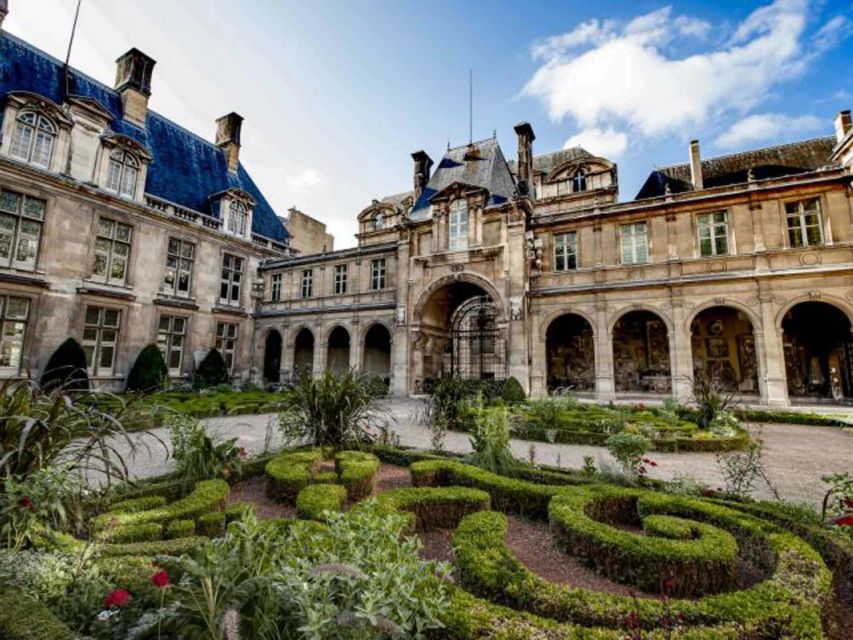
From there, you will pass Paroisse Saint-Paul Saint-Louis. Even if you do not go inside, the church and its setting help establish the religious and civic gravity that shaped this area over time. Then you move toward the courtyard of Hôtel de Sully, a place that feels almost like stepping into a lesson. Courtyards are key in the Marais. They reveal how buildings were organized for privacy, status, and daily movement.
If you enjoy architecture that tells on itself, this portion is a good warm-up. Courtyards and churches work like book covers: they hint at the themes the tour keeps returning to, power, wealth, religion, and the way Paris elites used the neighborhood.
Place des Vosges, the royal square you can still walk around
Then comes one of the easiest places to fall in love with: Place des Vosges. This is not just a pretty square. On the tour, it is used as a visual summary of the Marais. The layout helps you see what the district was built to do, and how public space worked for residents close to the center of authority.
This stop is also a chance to slow down. The square gives you a controlled environment to compare architecture and scale: the symmetry, the repeating facades, and the sense that the city planned something lasting. Even if you are not a big architecture person, you will come away with clearer instincts for what you are looking at.
One practical tip: give your phone a break for a minute. If you listen and look at street alignment from within the square, the rest of the walking becomes easier. You start to notice how the Marais “frames” you rather than just surrounds you.
Other Paris bookings to consider
- Paris: 1-Hour Seine Cruise departing from the Eiffel Tower
★ 4.4 · 77,472 reviews - Disneyland® Paris 1-Day Ticket
★ 4.6 · 49,412 reviews - Paris: Versailles Palace and Gardens Full Access Ticket
★ 4.6 · 41,579 reviews - Paris: Arc de Triomphe Rooftop Tickets
★ 4.6 · 34,264 reviews
Hôtel Carnavalet and the mansions that used to be homes
As the tour continues along the older streets, you start meeting the Marais the way the neighborhood actually is: one mansion after another. These are not anonymous buildings. They were homes of people with influence, and many later became museums or public spaces.
A highlight here is a stop at Musée Carnavalet. The tour focuses on how the Marais grew into its identity, and Carnavalet is a natural anchor because the museum connects the district to broader Paris life. One useful detail: museum rules can affect what you can bring. Inside, only handbags or small thin backpacks are allowed, and some rooms require quiet. Your guide will explain what to expect before you enter those spaces.
Even if you do not spend long inside, the museum stop helps you leave with a stronger sense of the district’s timeline. It turns the area from “pretty buildings” into a readable timeline of how neighborhoods change while the stone keeps the past visible.
Pletzl to rue des Francs-Bourgeois, Jewish Paris in the 1800s
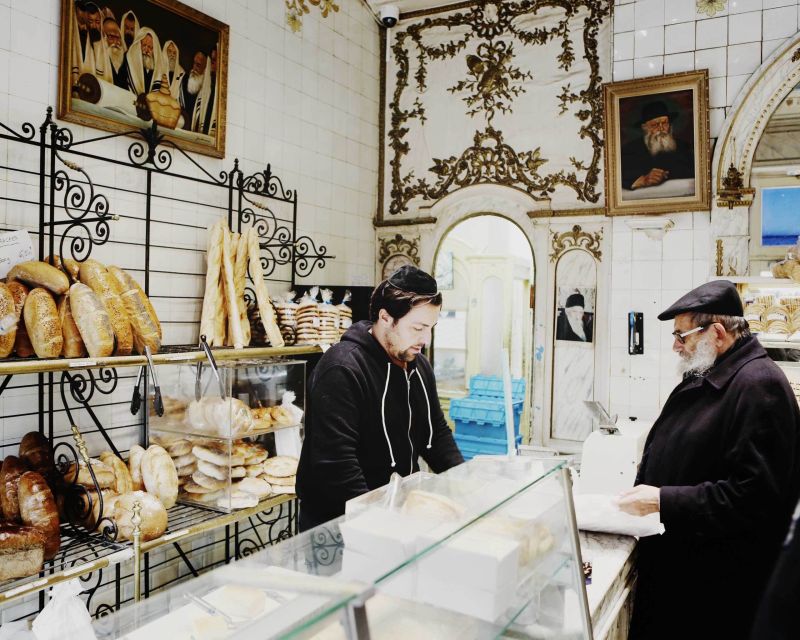
The tour’s turn toward the Jewish Quarter is where the Marais story expands from power and nobility into community life. You will move through the Pletzl, the heart of Jewish neighborhood culture, and you will pass familiar markers like bakeries and boutiques. The guide connects those street-level details to the larger picture of why the Marais became such a center for Jewish Parisians in the 18th and 19th centuries.
Then you continue toward rue des Francs-Bourgeois, a street known for shops and for its role as a corridor through the neighborhood. This is an important stretch because it shows the difference between living space and commercial space. You can see how streets served daily life, and how the neighborhood’s energy became part of its identity.
One thing I really like about this section is that it does not treat history like a distant museum label. It uses the streets as evidence. You learn what the neighborhood looked like for real people, not just what it looked like for visitors.
Rue des Rosiers and Joseph Migneret Garden, plus tomb stones that stop you
Next, the tour leads through rue des Rosiers and toward the Rosiers – Joseph Migneret Garden. This is where the tone often shifts. The area can feel lively in a normal walking sense, but the tour brings in a more reflective layer by focusing on memorialization and memory.
You may also stroll past artistic tomb stones and graves. That is not filler. It changes how you read the neighborhood. Instead of only thinking about commerce, you start seeing continuity, loss, survival, and the way communities leave marks when they cannot keep everything.
If you tend to rush through Paris, this portion is a good reminder to slow your pace just enough to let the meaning land. Your guide will frame what you are seeing and keep it respectful.
Optional architecture stops, Pompidou and Hôtel de Ville in one walking line
Depending on how the route plays out, you might get introduced to Centre Pompidou and Hôtel de Ville. These are big architectural jumps: Pompidou represents a later Paris with a different design language, while Hôtel de Ville connects to civic identity and governance.
Why include them? Because the Marais sits next to newer Paris in a way many neighborhoods do not. These contrasts help you understand the city as an ongoing project. Paris does not swap identities all at once. It stacks them, and you can spot the layering just by walking.
Even if you are not going inside, these “look at the skyline” moments are useful. They help you map where you are in the bigger geography of the city, so the Marais feels like part of Paris rather than an isolated pocket.
Saint Gervais Church and finishing with perspective
As you near the end of the route, you may pass by Saint Gervais Church. This kind of stop matters even when you are not entering. Churches help you feel the religious and social rhythm of historic Paris. They also give the guide an opportunity to connect the neighborhood’s Jewish story with the wider Paris context in a way that feels grounded, not forced.
By the time the tour finishes, the Marais should feel less like a photo backdrop and more like a place with a readable logic. You have seen squares tied to planning, courtyards tied to status, streets tied to daily life, and memorial spaces tied to memory. That combo is what makes the experience stick.
Guides and pacing, what makes it feel personal
The overall feel comes down to the guide. With an art historian leading the walk and a max group size of 12, the tour stays conversational. In past groups, guides such as Eden have been praised for being friendly, with engaging commentary and excellent English. Others, like Francois, have brought humor into the mix while keeping the emotional weight of the neighborhood present.
That style matters because it keeps the tour from turning into a memorization exercise. You are not just collecting facts. You are getting explanations that help you look at stone and street layouts with better instincts.
Pacing is also a quiet strength. The walking segments are short enough that you are not constantly sprinting to the next stop. You get frequent “look here” moments, and the guide checks that everyone is with the group.
Price and what you truly get for $61
At about $61 per person for 150 minutes, this is priced like a focused city walking tour with a trained guide, not like an all-day museum ticket. For me, the value comes from three parts:
- The guide is an art historian, so you get interpretation at each stop, not only location descriptions.
- You get a compact route that covers the Marais and Jewish Quarter in one coherent story.
- The group cap at 12 improves the experience quality, especially if you like asking questions.
What you should factor in: the tour does not include food or drinks. You will also not get hotel pick-up or drop-off. And most importantly, synagogue entry is not included, since access is restricted to worshippers for security reasons.
So think of this tour as a strong historical and cultural orientation. It is great for getting your bearings and for learning how to look. Then you can choose what to do next, on your own time, based on what interests you most.
Bag rules you should respect
Bring a light bag. Luggage or large bags are not allowed, and museum spaces have their own limits. If you show up with a big suitcase vibe, you risk being stuck managing it rather than learning. A small handbag or a thin backpack is the safer bet.
Who this tour suits best (and who should consider another plan)
This tour fits best if you want:
- A walking tour that connects major landmarks and smaller street details
- A historical narrative with context for the Jewish Quarter and the Marais
- A guide-led experience where the group stays small
It may be less ideal if:
- You need step-free wheelchair or fully accessible pacing. Wheelchair tours are available only on request, and the semi-private option is not available for those with walking disabilities or wheelchair users.
- You are hoping for synagogue visits. The tour does not include synagogue entry.
Should you book this guided Marais and Jewish Quarter walk?
I think you should book if you want an easy-to-follow route that teaches you how to read the Marais. The mix of Place des Vosges, major mansions and museum touchpoints like Musée Carnavalet, plus the Jewish neighborhood focus around the Pletzl and rue des Rosiers, gives you a balanced view of the area.
Skip it only if synagogue access is your top priority, or if you cannot handle moderate walking. Otherwise, it is one of those Paris experiences where learning makes the streets more interesting, not less.
FAQ
How long is the Paris Marais District & Jewish Quarter guided tour?
It lasts 150 minutes.
How much does the tour cost?
The price is $61 per person.
What is the maximum group size?
The tour has a maximum of 12 guests per guide.
Where does the tour start?
Meeting point may vary depending on the option booked, and one listed starting location is 133 Rue Saint-Antoine.
What language options are available?
Live guides are available in Russian, German, French, Italian, English, and Spanish.
Is synagogue entry included?
No. The tour does not include entry into any synagogues, since access is restricted to worshippers for security reasons.
Is food included?
No. Food and drinks are not included.
Is hotel pick-up or drop-off included?
No. Hotel pick-up and drop-off are not included.
What should I bring?
Bring a passport or ID card.
Are large bags allowed?
No. Luggage or large bags are not allowed, and inside museums only handbags or small thin backpacks are allowed.
Newly listed around Paris
- The voice of Montmartre is a must-see in Paris★ 3.8 · 19 reviews
- Top Private Cruises in Paris with Champagne + more surprises★ 5.0 · 309 reviews
- The Official Emily in Paris Montmartre Walking Tour★ 4.7 · 40 reviews
- The Paris Pass® Plus: 90+ Attractions including The Louvre★ 3.4 · 386 reviews
- The Official Emily in Paris Locations Walking Tour★ 4.9 · 383 reviews
- The Official Emily in Paris Macaron-Making Workshop★ 4.9 · 68 reviews
- The Official Emily in Paris Wine & Cheese with Butter Making★ 4.9 · 20 reviews
- The Official Emily in Paris Food Tour★ 4.8 · 39 reviews
Marais District Walks, compared.

Award-Winning Paris French Bakery Experience — Le Marais, 4th Arr
Read our review →
Paris Le Marais Food Tour With 10+ Tastings, Cheese, Wine & More
Read our review →
Paris Le Marais District Original Food and Wine Tasting Tour
Read our review →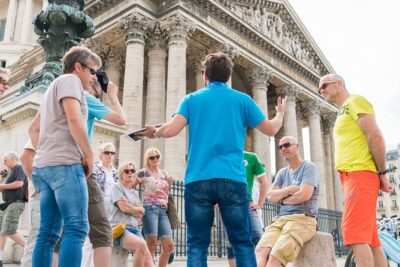
Paris Bike Tour Hidden Secrets in the Latin Quarter & Le Marais neighborhoods
Read our review →
Paris Culinary Tour: 11 Tastings & 2 Wines in Le Marais
Read our review →

Le Marais District Food Tour with 10+ Tastings & Wine
Read our review →
Browse the lists this tour appears in