Reviewed · PRIVATE
Paris Private Montmarte Tour : Sacre Coeur with Expert Guide
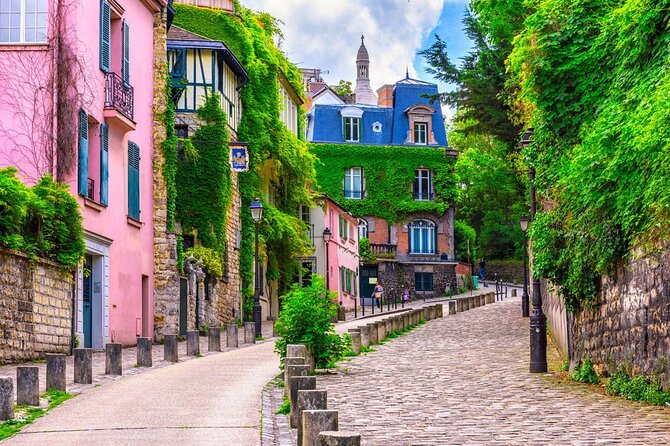
Cobblestones, artists, and Sacre-Coeur in two hours. This private Montmartre tour is built around real streets, with an expert guide pointing out why places like Le Mur des Je t’aime and Place du Tertre matter, and ending at Sacre-Coeur for a classic Paris view. I love how the route strings together art, film, and everyday life without feeling like you’re racing. One consideration: the area is hilly, so plan for uphill steps and wear shoes with grip.
It also feels personal in motion. Guides such as Selda, Daniel, Danyel, and Laura are known for keeping the talk lively, answering questions as you go, and stopping when you need a breather. You’ll spend your time where the neighborhood actually happens, not just in the postcard corners.
In This Review
- Quick hits to know before you go
- Entering Montmartre the right way: from Place Blanche to a viewpoint finale
- Stop-by-stop on this Montmartre and Sacre-Coeur walk
- Moulin Rouge photo moment (and why it’s quick)
- Café des Deux Moulins, from movie fame to neighborhood life
- Le Mur des Je t’aime, the meaning behind the postcard
- Place des Abbesses, historic architecture and the unique metro gate
- Le Moulin de la Galette, built in 1662
- La Maison de Dalida, the singer’s footprint in the neighborhood
- Vigne du Clos Montmartre, the last vineyard in Paris
- Rue de l’Abreuvoir, one of Montmartre’s oldest streets
- Le Bateau-Lavoir, why painters gathered here
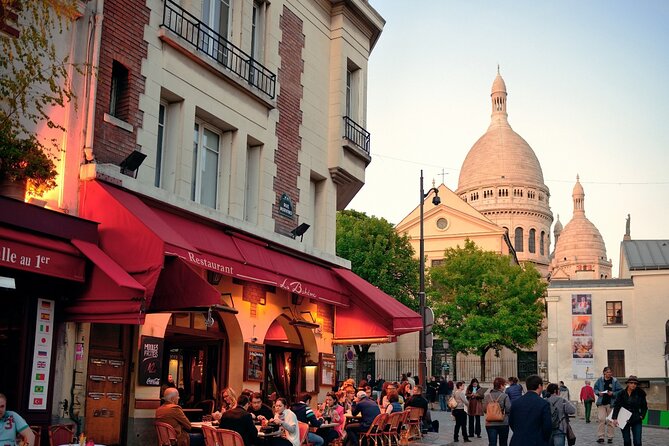
- Place du Tertre, the street-painter scene in action
- Dali Museum Paris, only if it’s open
- Basilique du Sacré-Cœur, your finish and the view payoff
- Why this route is better than a basic Montmartre checklist
- What you will pay for, and what you won’t
- Price and value: $241.87 per group for up to 2
- Walking reality: hills, breaks, and shoes that won’t betray you
- Who should book this Montmartre and Sacre-Coeur tour?
- Should you book this tour?
- FAQ
- How much is the private Montmartre tour?
- How long does the tour last?
- Is the tour offered in English?
- How many people are in the group?
- Where do we meet, and where does the tour end?
- Is Sacre-Coeur entrance included?
- Is the Moulin Rouge show included?
- Is the Dali Museum stop included?
- Is there free cancellation?
Quick hits to know before you go
- Private group pricing up to 2, with a tour size that can run up to 30 people total
- Sacre-Coeur as the finish, right where the best viewpoint energy is
- Most major stops are free or exterior, while museums and shows are not included
- Street-painter time at Place du Tertre, plus an easy way to spot artists working in real life
- Artist landmarks beyond the basics, including Moulin de la Galette (1662) and the Bateau-Lavoir area
- Guides often slow down for breaks, which matters on Montmartre’s slopes
Entering Montmartre the right way: from Place Blanche to a viewpoint finale
You start at 5 Pl. Blanche, 75009 Paris, a practical launching pad that’s close to public transport. From there, the day is paced for walking. You’re not just seeing buildings, you’re moving through a neighborhood that still feels like it has a pulse.
The route is designed for a 2 to 2 hours 20 minutes experience. That time window is enough to connect the dots, but short enough that you won’t feel trapped in a long ladder of stops. You’ll also end at the front of Basilique du Sacré-Cœur on 35 Rue du Chevalier de la Barre, 75018 Paris, where the view makes the climb feel worth it.
Other Paris bookings to consider
- Paris: 1-Hour Seine Cruise departing from the Eiffel Tower
★ 4.4 · 77,472 reviews - Disneyland® Paris 1-Day Ticket
★ 4.6 · 49,412 reviews - Paris: Versailles Palace and Gardens Full Access Ticket
★ 4.6 · 41,579 reviews
Stop-by-stop on this Montmartre and Sacre-Coeur walk

Here’s what you’ll actually do and why each stop matters, beyond the label on a map.
Moulin Rouge photo moment (and why it’s quick)
Your first stop is Moulin Rouge, about 20 minutes. You’ll see the famous cabaret of the world from the outside, and it’s a great early target for photos that look instantly like Paris. Admission for the show is not included, so think of it as a photo and orientation stop, not an all-in evening plan.
Why I like starting here: it gives you a reference point. Once you know where the spectacle sits, the rest of Montmartre’s artist world makes more sense.
Café des Deux Moulins, from movie fame to neighborhood life
Next comes Café des Deux Moulins for about 10 minutes. The tour points out the cafe tied to the film Amélie, but you’ll also be in the real street around it, not just behind a ticket booth. Admission is listed as free here, so you’re mostly there to look, snap a photo, and keep walking.
This is a nice palate cleanser after Moulin Rouge. You shift from “big name” tourism to something that feels more lived-in.
Within easy reach:
- Paris: Arc de Triomphe Rooftop Tickets
★ 4.6 · 34,264 reviews - Paris: Orsay Museum Entry Ticket
★ 4.7 · 25,647 reviews - Paris: Evening River Cruise with Music
★ 4.4 · 22,721 reviews - Paris: Eiffel Tower Entry Ticket with Optional Summit Access
★ 4.4 · 20,035 reviews
Le Mur des Je t’aime, the meaning behind the postcard
At Le Mur des Je t’aime, you get around 10 minutes. The guide explains the story behind the Wall of Love, which turns a quick photo stop into a moment with actual context. Admission is listed as free, so again, it’s not about ticket time.
If you’ve ever seen this wall online, the value here is the narration. The guide helps you notice the details instead of just moving past it.
Place des Abbesses, historic architecture and the unique metro gate
Place des Abbesses takes about 15 minutes. You’ll see a notable church and the historic metro entrance that gives the area its recognizable feel. Admission is listed as not included for this stop, so don’t plan on a sit-down or museum-style visit. Treat it as exterior views and street-level discovery.
This part of the route helps you understand the “old Paris” layer running under the famous art layers.
Le Moulin de la Galette, built in 1662
Le Moulin de la Galette is a short stop at about 10 minutes. The highlight is the windmill itself, built in 1662, plus the way artists used to come here. Admission for this stop is listed as free, which makes it easy to fit in without worrying about extra fees.
I like this stop because it connects Montmartre’s art story to something physical and specific. It’s not only legend, it’s a landmark you can point to.
La Maison de Dalida, the singer’s footprint in the neighborhood
Next is La Maison de Dalida, around 5 minutes. You’ll pass by Dalida’s old home and learn her story as it ties to Montmartre’s creative scene. There’s no admission element here, and the point is connection, not entry.
Even if you don’t know her music well, this makes the neighborhood feel more personal. Montmartre isn’t frozen in time, it keeps collecting artists of different kinds.
Vigne du Clos Montmartre, the last vineyard in Paris
You then reach Vigne du Clos Montmartre for about 10 minutes. This is the last vineyard of Paris located in Montmartre, and it’s a great contrast to the surrounding streets and terraces. Admission is listed as not included, which usually means you’re there to see and learn, not to plan a long ticketed visit.
This vineyard stop is one of those “wait, Paris has this?” moments. It helps you see Montmartre as more than scenery.
Rue de l’Abreuvoir, one of Montmartre’s oldest streets
Rue de l’Abreuvoir is about 15 minutes and is designed for pictures. The guide frames it as both an older street in the area and a well-known one, so you get the best of “history feel” plus “you’re in the right place.” Admission is listed as free here, so it’s a straightforward walk-and-look stop.
Bring your phone, but also look up. The angle of the street is part of why photos work.
Le Bateau-Lavoir, why painters gathered here
At Le Bateau-Lavoir, you’ll spend around 15 minutes. The tour focuses on why this place mattered for artists and painters, and you’ll also have a view of Paris. Admission is listed as free.
This is one of the stops where the guide can change the entire experience. With the right explanation, the area stops feeling like a random name and starts feeling like a chapter in Paris art history.
Place du Tertre, the street-painter scene in action
Place du Tertre takes about 10 minutes. You’ll walk through the small cafes and squares and you’ll meet local painters with their working skills. Admission is listed as free.
This is where you should slow down and actually watch hands at work. If you want a souvenir-style interaction, this is the easiest place on the route to do it informally.
Dali Museum Paris, only if it’s open
Then comes Dali Museum Paris for about 10 minutes. The plan is to visit the Dali gallery area where you can see real paint and statues of Salvador Dali if the museum is open. Admission is not included here, so the cost can be an extra line item if you decide to enter fully.
It’s a good stop if you’re a fan of Dali. If you’re not, the value is still in the contrast, Montmartre’s art world has a wide range of styles.
Basilique du Sacré-Cœur, your finish and the view payoff
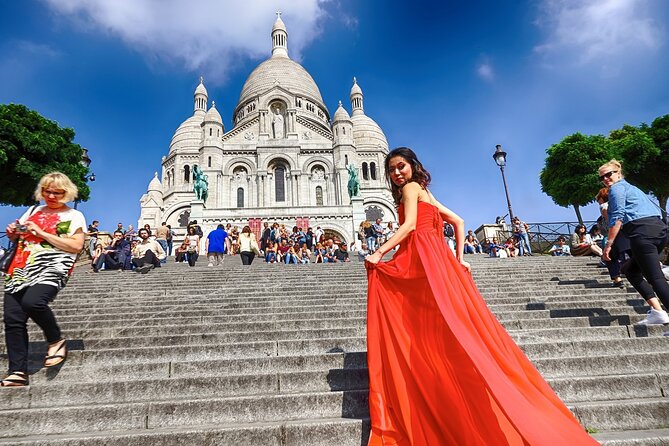
Finally, you reach Basilique du Sacré-Cœur de Montmartre for about 10 minutes. The tour ends at the front where you’ll get the view, and the guide gives history and context about the basilica. Admission is listed as free for this stop.
I like finishing here because the church feels like a conclusion instead of a starting burden. You’ve earned it with walking, and the panorama hits harder once you’ve climbed through the neighborhood.
Why this route is better than a basic Montmartre checklist
This tour works because it connects three threads that often get separated in casual visits: the art history, the pop-culture layer, and the street reality.
You get mainstream reference points like Moulin Rouge and Café des Deux Moulins. You also get the “why people came here to work” explanation, like Bateau-Lavoir and the Moulin de la Galette connection to artists. Then you close with the symbolic crown of Sacre-Coeur, so the day has structure, not just stops.
The best moment isn’t necessarily one single site. It’s when the guide ties together names and places, so you start noticing patterns: where painters worked, where audiences gathered, and how the neighborhood shaped artists as much as art shaped the neighborhood.
What you will pay for, and what you won’t
The guide is included. Everything else is mostly about choices.
Not included:
- Tips
- Moulin Rouge show
- Entrance to the museums (this matters most for the Dali Museum Paris stop)
Most of the rest is designed as walk-through or free-admission style moments, including stops listed as free such as Café des Deux Moulins, Le Mur des Je t’aime, Le Moulin de la Galette, Le Bateau-Lavoir, and Le Moulin de la Galette.
If you’re trying to budget tightly, plan for possible extra costs only where museums or shows enter the picture. Everything else is arranged so you can enjoy the stops without feeling nickel-and-dimed.
Price and value: $241.87 per group for up to 2
At $241.87 per group (up to 2), this isn’t the cheapest Montmartre option. It’s also not meant to be. It’s priced for a private-style experience, with a guide leading the pacing and the storytelling.
For two people, you’re paying for:
- a guided route that keeps you oriented on hills
- time-efficient stops that don’t waste your legs
- context that helps you understand what you’re seeing, from Dalida to Dali and the artist gathering points
If you’re solo, this might feel expensive compared to group tours. If you’re traveling as a couple or small pair who wants the guide’s focus, the math often feels fair because you’re not paying extra per person beyond that group rate.
Walking reality: hills, breaks, and shoes that won’t betray you
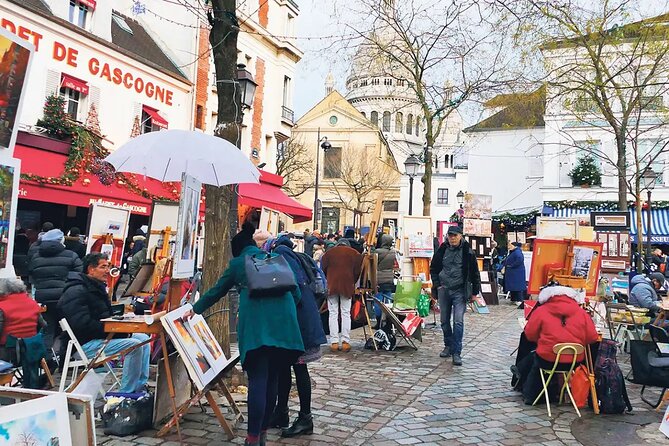
Montmartre is hilly. That part is real, not a figure of speech. The good news is that the tour is set at a walking pace where a guide can slow down for needed breaks.
You should still dress like you’re walking a lot. Bring shoes that can handle cobblestones and slopes. Also keep your water situation in mind, since the stop times are fairly short and you’re moving through multiple areas.
If you want a smooth experience, treat this as a guided hike with art stops, not a sit-down museum day.
Who should book this Montmartre and Sacre-Coeur tour?
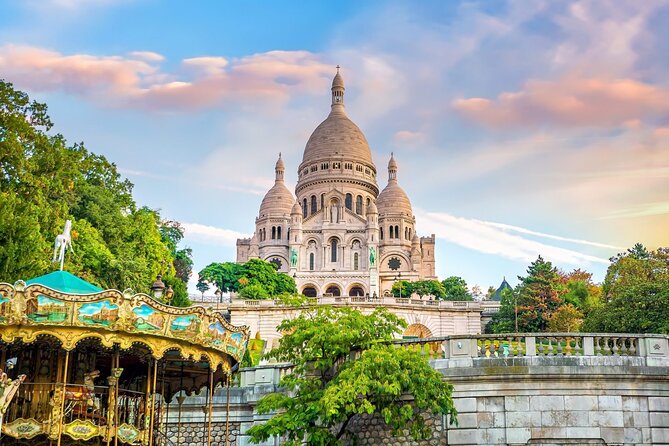
This is a great fit if:
- you want Montmartre plus Sacré-Cœur in one focused outing
- you like art stories that connect places, names, and why people gathered where they did
- you have limited time and want a route that keeps moving but doesn’t feel chaotic
- you’re okay with hills and want a manageable length (about 2 to 2 hours 20 minutes)
It can also work well with teenagers. The guide style matters here, and the ones leading these walks are often described as fun and interactive, which helps keep attention during the uphill stretches.
If you want lots of long museum hours, you might find the time tight, especially since museum entrance is not included and the Dali stop depends on whether it’s open.
Should you book this tour?

Book it if you want your Montmartre day to feel guided from street to basilica, with real context and no heavy ticket burden. The biggest win is the structure: photo-worthy landmarks, artist-world stops, and a payoff at Sacre-Coeur that feels earned.
Skip it if you’re the type who wants to linger for half a day inside museums, or if hills are a deal-breaker for you. Otherwise, this is a strong way to see Montmartre without getting lost in the maze of streets and names.
FAQ
How much is the private Montmartre tour?
It costs $241.87 per group for up to 2 people. The price is for the group, not per person.
How long does the tour last?
The duration is about 2 hours to 2 hours 20 minutes.
Is the tour offered in English?
Yes, it is offered in English.
How many people are in the group?
This tour has a maximum of 30 travelers.
Where do we meet, and where does the tour end?
You start at 5 Pl. Blanche, 75009 Paris, and you finish at the front of Basilique du Sacré-Cœur de Montmartre, 35 Rue du Chevalier de la Barre, 75018.
Is Sacre-Coeur entrance included?
The basilica stop is listed as admission ticket free in the tour plan.
Is the Moulin Rouge show included?
No. The Moulin Rouge show is not included, and the Moulin Rouge admission ticket is listed as not included.
Is the Dali Museum stop included?
The Dali Museum stop is part of the walk, but entrance to the museums is not included. The gallery visit is described as possible if it is open.
Is there free cancellation?
Yes. You can cancel for a full refund up to 24 hours in advance of the experience start time.
Newly listed around Paris
- Paris Orsay Museum and Rodin Museum Daily Combo Ticket★ 4.0 · 32 reviews
- Paris Pastry Tour – Croissants, Macarons & Iconic French Desserts★ 5.0 · 232 reviews
- Paris Orsay Museum with Optional Seine River Cruise Tickets★ 4.0 · 65 reviews
- Paris Occult and the History of the Dark Arts Private Tour★ 5.0 · 17 reviews
- Île de la Cité Guided Tour & assistance Notre Dame entrance★ 5.0 · 22 reviews
- Paris Orsay Museum Entry Ticket with Digital Audio Guide★ 3.5 · 93 reviews
- Notre Dame de Paris: Semi Private or Private Guided Tour Guide★ 5.0 · 30 reviews
- Paris Opera Garnier Private Tour★ 5.0 · 42 reviews
Private, compared.

Louvre Museum Paris Essential Guided Tour Semi-Private 6ppl Max
Read our review →
SUV Private Transfer: Paris to Charles de Gaulle Airport (CDG)
Read our review →

Top Private Cruises in Paris with French Champagne and surprises
Read our review →
Golf Cart in Paris – Private Guided City Tour – Pickup Included
Read our review →
Private Paris Airport Arrival Transfer – CDG & ORLY Airports
Read our review →
Paris Private Arrival Transfer from Charles de Gaulle (CDG) or Orly (ORY)
Read our review →