
Reviewed · FRENCH FOOD TOURS
Paris: The Ultimate Wine and Cheese Tasting in English
Cheese and wine, but taught like a lesson. At Les Caves du Louvre in the Paris area, you taste 10 wines and 10 cheeses, with an English expert guiding you through French regions like Bordeaux, Burgundy, and the Rhone Valley. It is a fun 2-hour class, not a random sip-and-mingle.
I especially like the way the session connects what is in your glass to the label on the bottle. You get hands-on training in pairing, plus the idea of AOP (the French regulation system), so you can make smarter choices after you leave. One consideration: the experience is alcohol-focused, and a non-alcoholic beverage is not included.
In This Review
- Key Takeaways Before You Go
- What This 2-Hour Tasting Covers (And Why It Works)
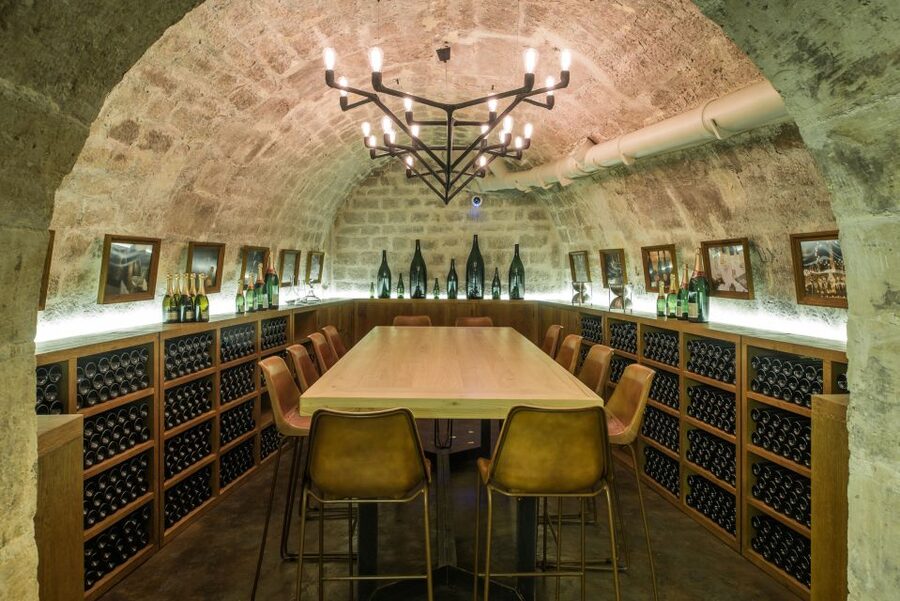
- Inside the Cellar Tasting Room at Les Caves du Louvre
- Your Wine Flight: 5 Whites, 5 Reds, and the Regions Behind Them
- The Cheese Lineup: Brie, Blue, and Loire Goat on Purpose
- Pairing Techniques You Can Use the Same Night
- AOP Labels: How to Read French Wine Without Guessing
- Getting the Most From an English Wine Expert
- Price and Value: Is $128 a Good Deal for Wine and Cheese?
- Who Should Book This Tasting, and Who Might Skip It
- Should You Book This Paris Wine and Cheese Tasting?
- FAQ
- How long is the Paris wine and cheese tasting class?
- Is the tasting offered in English?
- How many wines and cheeses are included?
- Where does the tasting take place?
- What is included in the price?
- Is hotel pickup included?
Key Takeaways Before You Go
- 10 wine and 10 cheese tastings in 2 hours, so you learn fast without dragging it out
- A French terroir tour through major regions like Bordeaux, Burgundy, and the Rhone Valley
- AOP explained in practical terms, so labels stop feeling like a code
- English guidance with real-world experience, and recent guides have included Alexis, Clemant, and Justan
- Cheese variety you can actually compare, including Brie, blue cheese, and fresh goat cheese from the Loire Valley
- A lineup that can change by season, which makes repeat visits more interesting
What This 2-Hour Tasting Covers (And Why It Works)
This is built like a guided lesson, with tastings as the homework. In two hours, you move through 5 white wines and 5 red wines, and each wine is matched with a cheese tasting. That format matters because you are not just tasting flavors, you are learning how the flavors behave together.
The value is in the structure. Instead of receiving vague advice like some pairings are great, you get a system: how to taste, how to describe what you notice, and how to connect the taste to the region and style. You also get direct training on choosing wine and pairing it with cheese, which is the kind of takeaway you can use at any Paris wine shop.
You will taste representative French options, with the theme of terroir, growing conditions, and soil types coming up through the discussion. That is not just trivia. It helps you understand why a wine tastes a certain way, and why cheese pairings often work when the flavors share traits like saltiness, fat, or acidity.
More food rounds in Paris:
- Authentic Parisian Gourmet Food Tour with 10 Local Dishes & Wines
★ 5.0 · 4,754 reviews - Devour Paris Ultimate Food Tour
★ 5.0 · 2,087 reviews - Private Montmartre Food Tour with Wine, Cheese & Pastries
★ 5.0 · 1,027 reviews
Inside the Cellar Tasting Room at Les Caves du Louvre
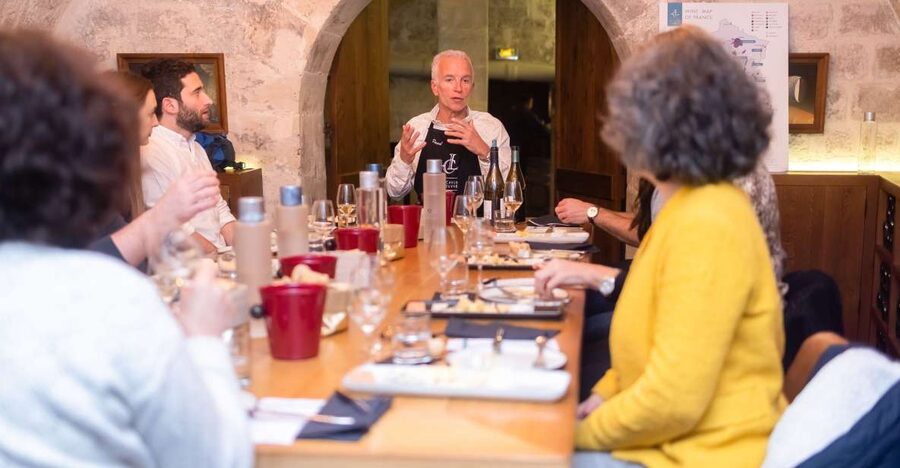
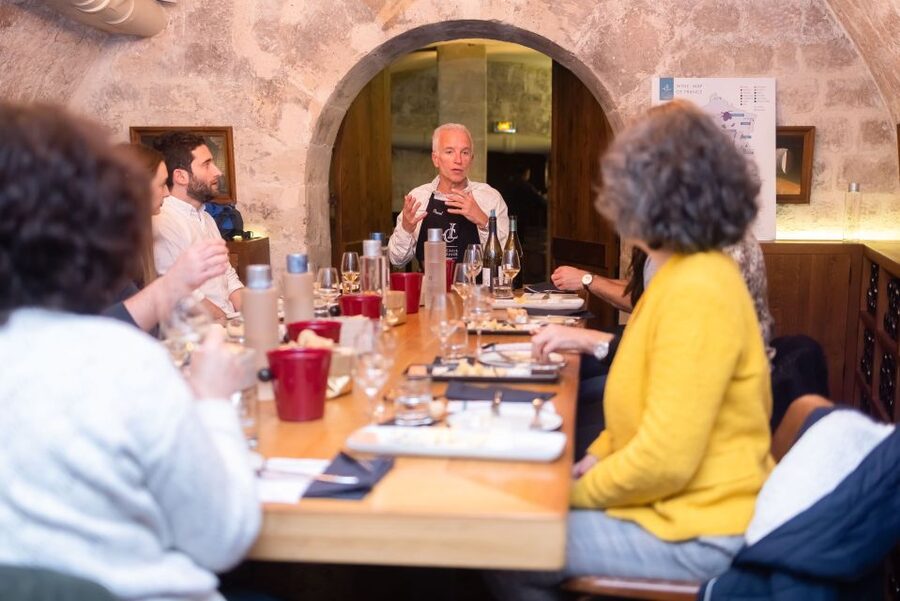
The setting is part of the point. You enter the cellar, and you taste in a dedicated tasting space described as stunning, which keeps the event feeling special instead of rushed. Cellar settings also help the vibe stay focused. You can listen, taste, and compare without the distraction of a loud restaurant scene.
Because this is a class, you should expect guidance throughout. The English expert is there to steer the tasting, explain what you are tasting, and keep the pace moving so you actually get through the lineup. You will likely get questions answered as you go, which is one reason these sessions feel memorable when the guide is on top of the material.
One small practical tip: plan to arrive ready to taste. This is only 2 hours, so there is not much time to catch up if you start late or you are still figuring out what to order for dinner.
Your Wine Flight: 5 Whites, 5 Reds, and the Regions Behind Them
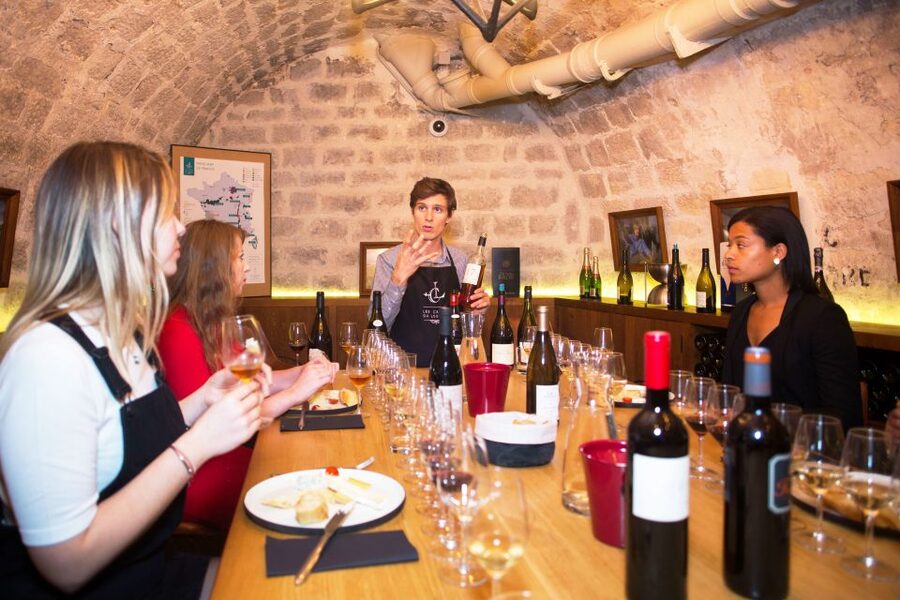
The flight is designed to give you a quick map of French styles. You get 5 white wines and 5 red wines, representing important wine regions, including Bordeaux, Burgundy, and the Rhone Valley. That matters because French wine can feel intimidating when every bottle looks related but tastes different.
Here is what you should look for during the whites. Whites from different regions often differ in how bright they taste, how much fruit shows up, and how they handle acidity. Once you start tasting with that lens, the later pairings make more sense because cheese is not a single category. Brie is not blue cheese, and fresh goat cheese is not aged goat cheese, so the wine needs to flex.
For reds, the big win is learning to distinguish styles rather than just naming grapes. The guide’s focus on wine regions and tasting techniques helps you notice the things that change with place and production, like how structure shows up, how tannins feel, and whether the wine tastes more earthy, fruity, or spicy.
Also, pay attention to terroir talk. When someone connects wine flavor to growing conditions and soil types, it turns wine into a readable landscape instead of a mystery. Even if you cannot identify everything, you start building a sense of what to expect from a bottle before you drink it.
The Cheese Lineup: Brie, Blue, and Loire Goat on Purpose
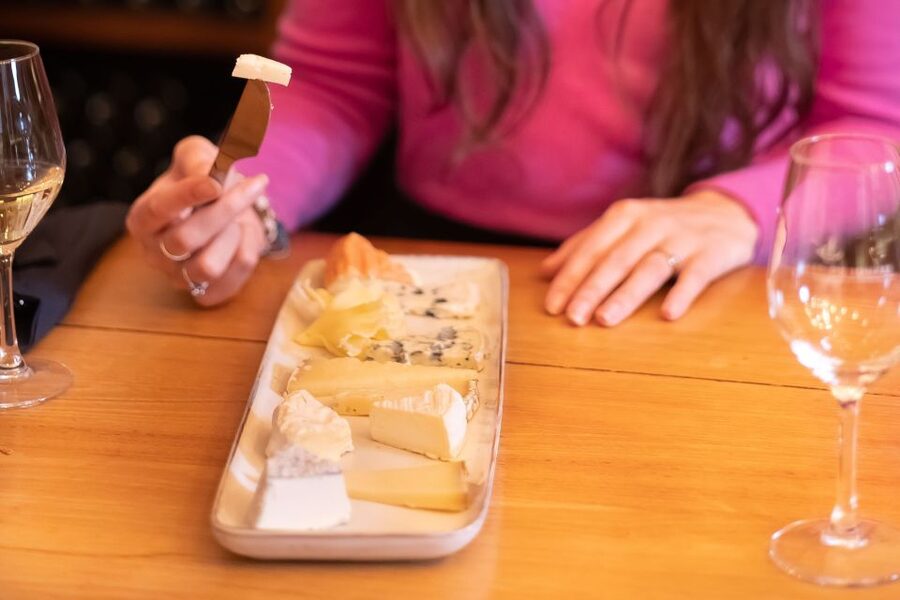
The cheese part is not an afterthought here. You taste 10 cheeses, and the menu includes examples you can recognize, like Brie and blue cheese, plus fresh goat cheese from the Loire Valley. That gives you anchor points, which makes the learning easier.
Brie is a great comparison starter because it is creamy and mild, so it can make the wine feel rounder and softer. Blue cheese is the opposite energy: salty, tangy, and intense. It tends to challenge wines, so it is a useful test for whether you understand pairing logic instead of just liking whatever tastes good at first.
Fresh goat cheese from the Loire Valley is another smart inclusion. Goat cheese often brings tang and a lighter feel than cow cheeses, so it can highlight acidity in wine. When your wine and cheese pair successfully, you can usually taste why: the cheese either amplifies the wine’s freshness or smooths out harsh edges.
You may find that the strongest memories come from the cheeses you did not expect to like. One guide-led experience was described as even surprising for someone who does not usually enjoy cheese, because you get enough variety to find a style you actually enjoy.
Within easy reach:
- Paris: 1-Hour Seine Cruise departing from the Eiffel Tower
★ 4.4 · 77,472 reviews - Disneyland® Paris 1-Day Ticket
★ 4.6 · 49,412 reviews - Paris: Versailles Palace and Gardens Full Access Ticket
★ 4.6 · 41,579 reviews - Paris: Arc de Triomphe Rooftop Tickets
★ 4.6 · 34,264 reviews
Pairing Techniques You Can Use the Same Night
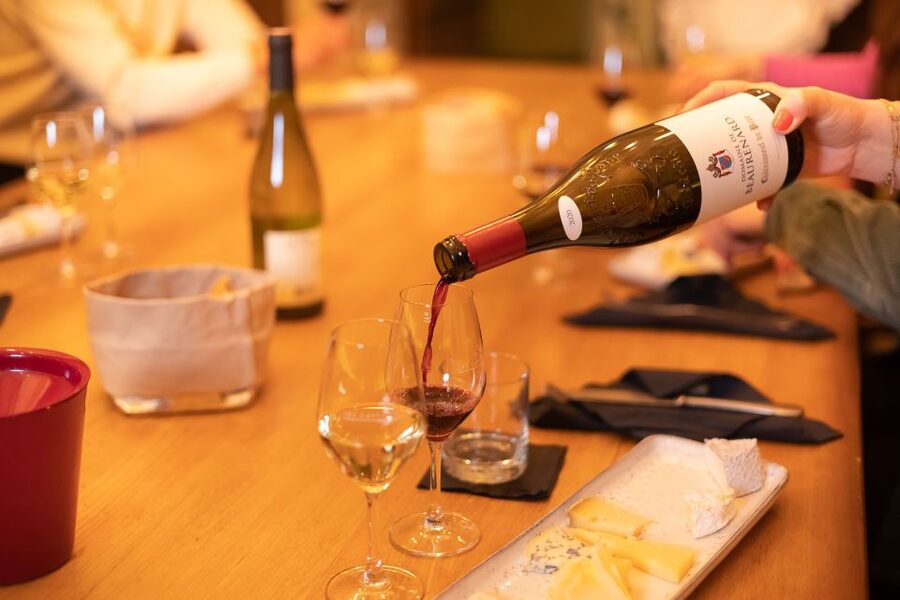
This is where the class earns its keep. You are not just told that wine and cheese go together. You learn tasting techniques and pairing reasoning, including how to choose wine and match it with cheese.
A practical way to think about it: cheese brings salt, fat, and acidity in different proportions. Wine then either balances those traits or amplifies them. When you learn what to look for, the pairing stops being luck.
During the tastings, you will naturally start grouping cheeses and noticing what you feel on your palate. For example, creamy cheeses can handle richer wines, but intense cheeses can overpower simple flavors. The guide’s job is to help you connect the dots quickly so you can make similar choices later.
This is also why the pacing matters. With 10 pairings in 2 hours, you get repeated practice. Your brain learns faster when you do the task over and over, instead of hearing a single explanation and then leaving.
AOP Labels: How to Read French Wine Without Guessing
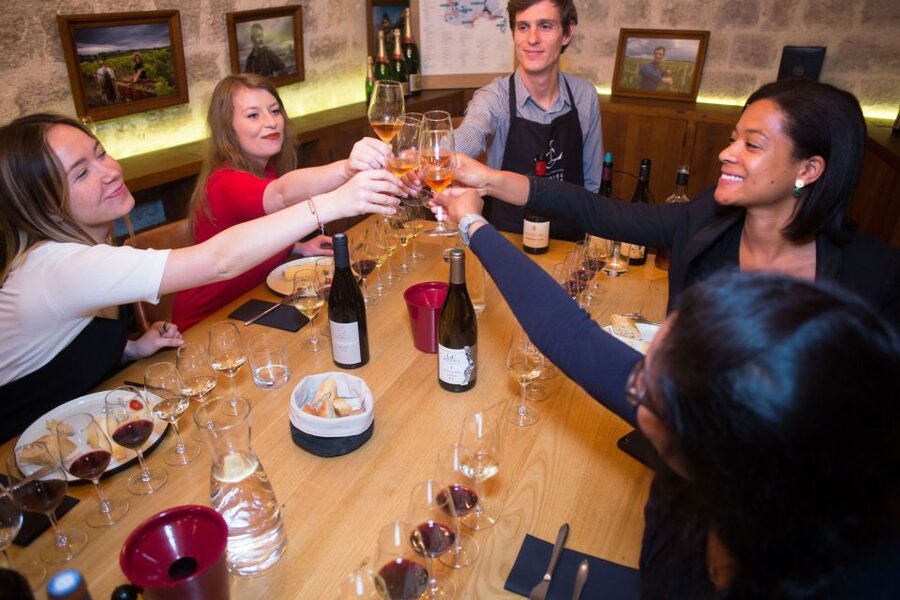
One of the most useful parts is the discussion of AOP, the French regulation system. The point is not to memorize rules like a robot. The point is to understand why some bottles are built around a place, and why that place tends to guide style.
When you learn AOP, you start seeing the label as information about production constraints and region identity. That can help you decide which bottle fits your mood, especially when you are standing in a Paris shop with a shelf full of similarly named wines.
In a tasting class, AOP makes more sense because you taste the result immediately. Instead of reading about regulations, you taste wines from different regions and connect what you feel to what the label is telling you. It is like watching the theory turn into flavor.
Getting the Most From an English Wine Expert
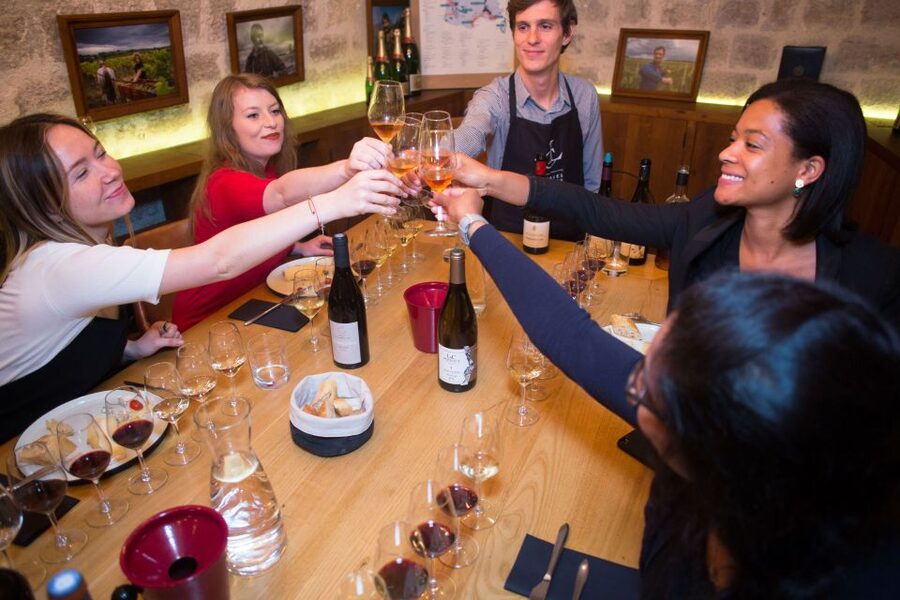
This experience runs in English, which is a real advantage in Paris if you want to understand every step. You are not stuck decoding gestures and guessing what a term means while your glass gets passed along.
Based on recent class experiences, the guides can be especially engaging when it comes to pairing logic and regional explanations. Examples named in recent tastings include Alexis, Clemant, and Justan, and the common thread is that they answer questions and explain terroir and growing conditions in a way you can follow.
Here is how to make the most of the 2 hours. Go in with at least a few questions ready, like what style you usually like, or which region you are most curious about. Then listen for the pattern in how the guide connects flavor to place, because that is the learning you will carry beyond the tasting room.
If you are the type who asks questions during museum tours, you will probably love this format too. The class is built for interaction.
Price and Value: Is $128 a Good Deal for Wine and Cheese?
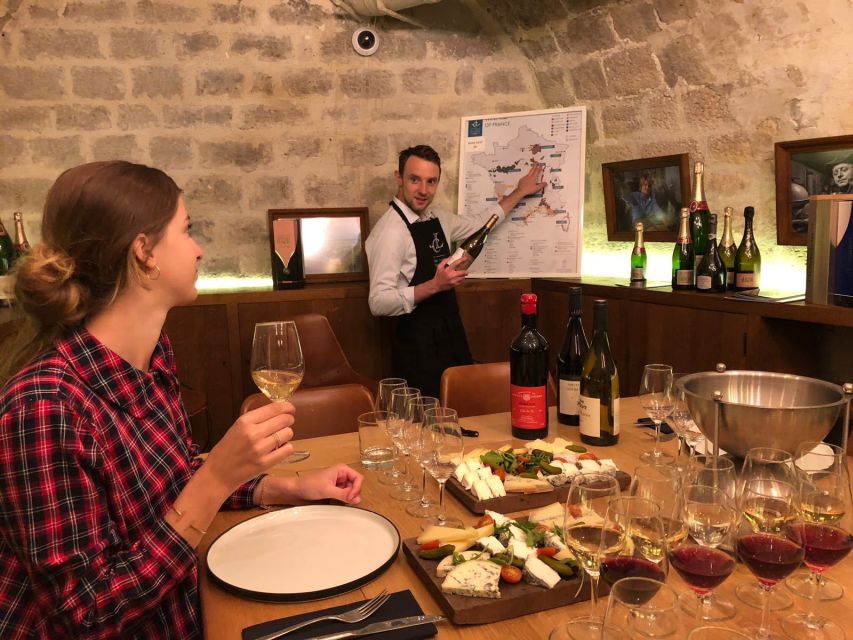
At $128 per person for 2 hours, this is not a bargain-basement tasting. But it is not priced like a generic event either. You get entry to the cellar, a 2-hour tasting class, and tastings of 10 wines and 10 cheeses, led by an English expert.
Think of the cost in terms of value per tasting. You are paying for guided instruction plus a serious amount of food and drink, not just a few samples. The real value is what you learn about choosing wine and pairing it with cheese. That knowledge can save you money on future bottles and helps you avoid buying random things that do not match your taste.
Also, there is a hidden value in structure. The tastings are done in a controlled setting where you can compare wines and cheeses side-by-side. That is harder to do on your own at home or in a restaurant, especially in a short window.
If you want wine education and actual pairing practice, the price starts to make sense. If you only want a light stroll through a snack spread, then it might feel like a lot.
Who Should Book This Tasting, and Who Might Skip It
This is best for adults 18 and up who want a guided, language-friendly wine and cheese lesson. It suits you if you are curious about French regions and want a clear path to understanding wines in a way you can use.
You will probably enjoy it if you like structure. Ten pairings in two hours means you taste enough to build comparisons, and you learn enough to label what you like.
Consider skipping if you prefer alcohol-light experiences, because the class is built around tasting 10 wines and a non-alcoholic beverage is not included. Also, if you are bringing kids, this one is not suitable under 18.
Should You Book This Paris Wine and Cheese Tasting?
If you want a compact French wine education with real pairing practice, this is a strong pick. The combination of a cellar setting, 10 wine and 10 cheese tastings, and English instruction makes it feel both special and useful, not just scenic.
Book it if you want to leave knowing what to look for on a French label, how to think about pairing, and how to connect taste to region. If your goal is only casual sampling, you might find a cheaper food-and-wine option fits better.
FAQ
How long is the Paris wine and cheese tasting class?
The experience lasts 2 hours.
Is the tasting offered in English?
Yes. The instructor is an English-speaking wine expert.
How many wines and cheeses are included?
You taste 10 wines and 10 cheeses, with 5 white wines and 5 red wines.
Where does the tasting take place?
It takes place at Les Caves du Louvre in the Ile-de-France, France area.
What is included in the price?
The entry of the cellar, the 2-hour tasting class, tastings of 10 wines and 10 cheeses, and an English wine expert are included.
Is hotel pickup included?
No. Hotel pickup and drop-off are not included. A non-alcoholic beverage is also not included.
More Wine Tours in Paris
- Paris: Moulin Rouge Cabaret Show Ticket with Champagne
★ 4.7 · 16,088 reviews - Loire Valley Castles Day Trip from Paris with Complementary Wine
★ 4.5 · 3,907 reviews - Paris: Montmartre Cheese, Wine & Pastry Guided Walking Tour
★ 4.8 · 2,255 reviews - Paris: Paradis Latin Cabaret Show with Optional Champagne
★ 4.6 · 2,231 reviews
More Food & Drink in Paris
- Paris: Seine Cruise & Crepe Tasting near the Eiffel Tower
★ 4.4 · 11,231 reviews - Normandy D-Day Small-Group Day Trip with Omaha Beach, Cemetery & Cider Tasting
★ 5.0 · 2,786 reviews - Paris: Illuminated Evening River Cruise & Waffle Tasting
★ 4.1 · 2,697 reviews - Montmartre Hill French Gourmet Food and Wine Tasting Walking Tour
★ 5.0 · 2,588 reviews
Newly listed around Paris
- The voice of Montmartre is a must-see in Paris★ 3.8 · 19 reviews
- Top Private Cruises in Paris with Champagne + more surprises★ 5.0 · 309 reviews
- The Official Emily in Paris Montmartre Walking Tour★ 4.7 · 40 reviews
- The Paris Pass® Plus: 90+ Attractions including The Louvre★ 3.4 · 386 reviews
- The Official Emily in Paris Locations Walking Tour★ 4.9 · 383 reviews
- The Official Emily in Paris Macaron-Making Workshop★ 4.9 · 68 reviews
- The Official Emily in Paris Wine & Cheese with Butter Making★ 4.9 · 20 reviews
- The Official Emily in Paris Croissant-Making Workshop★ 4.9 · 85 reviews
French Food Tours, compared.
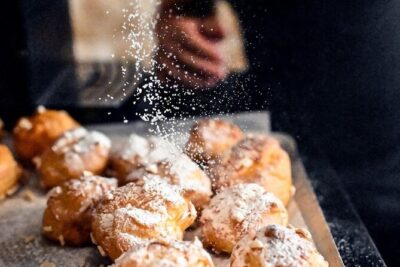
Authentic Parisian Gourmet Food Tour with 10 Local Dishes & Wines
Read our review →
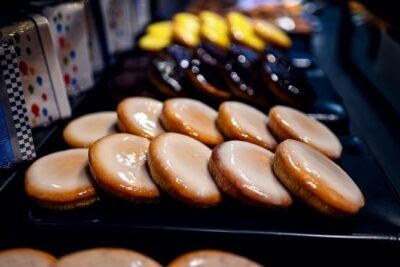
Private Montmartre Food Tour with Wine, Cheese & Pastries
Read our review →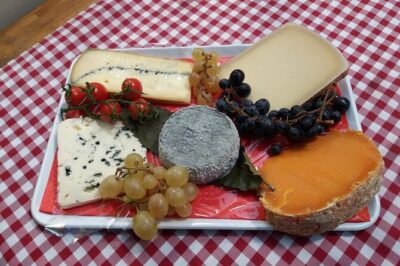
Paris Le Marais Food Tour With 10+ Tastings, Cheese, Wine & More
Read our review →
Paris French Sweets Tasting Tour with Pastries and Chocolates
Read our review →
Paris Le Marais District Original Food and Wine Tasting Tour
Read our review →
Paris Montmartre Food Tour – A Full French Meal by Do Eat Better
Read our review →
Paris Culinary Tour: 11 Tastings & 2 Wines in Le Marais
Read our review →Browse the lists this tour appears in