Reviewed · PRIVATE
Paris WW2 The German Occupation Small group or Private tour
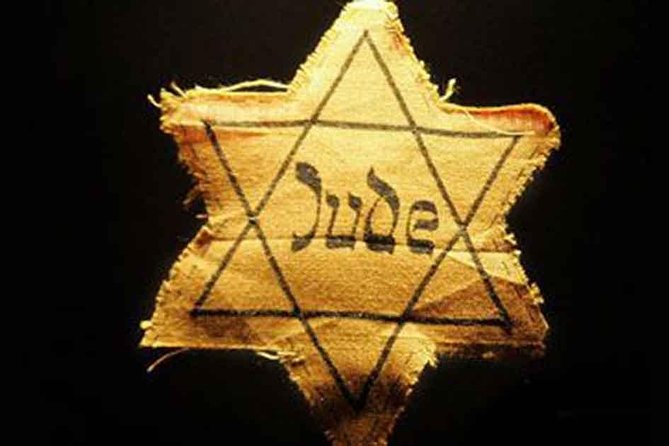
Paris wartime streets still have scars.
This small-group WWII walk, led by Chris Pollard, focuses on what people did and why, as you move through places that still look normal today. I especially liked how the tour treats buildings like a stage, so the story lands with real human stakes, not just dates.
My second big favorite is the art and occupation thread, including what happened at Jeu de Paume and how looting, propaganda, and terror worked together. You also get to stand in the orbit of major wartime power sites, from the Hotel Meurice and the Ritz area to other German-controlled addresses you would normally pass without a second thought.
One thing to consider: this is an outdoor walk that can run about 3 to 3.5 hours, and it covers heavy subject matter. If you want something light or purely museum-style, you may feel the tone is too direct.
In This Review
- Quick hits before you book
- Place Colette meetup, then into Occupied Paris without the bus glare
- A WWII tour that follows choices, not just buildings
- Palais-Royal area: where power looks normal
- Rue de Rivoli to the west: the occupation network in street form
- Jeu de Paume: looted art and what it signals about occupation policy
- Coco Chanel, Maxim’s, and the occupation’s takeover of culture
- Place de la Concorde finish: royal executions, German headquarters, and visible scars
- How long it takes, what you’ll be doing, and what to bring
- Shoah and the Jewish Quarter topic, handled carefully on a general tour
- Private tours and tailoring: when you want your questions answered
- Price and value: what you get for $108.84
- Should you book this WWII Occupation tour?
- FAQ
- Where does the tour start?
- How long does the tour last?
- How big is the group?
- What language is the tour in?
- Do you visit Jeu de Paume and what’s the focus there?
- Is a Holocaust memorial included on the general tour?
- What if my schedule is tight and I want less time?
- What happens if there are too few people booked?
Quick hits before you book
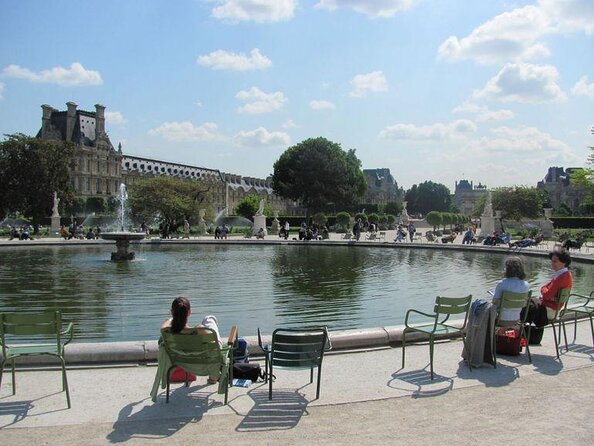
- Meet at Place Colette (Metro Exit 5) near the Comédie-Française, so you start in the city center with easy orientation.
- Small group size, up to 10 people, with time for questions and for the guide to adjust depth.
- A people-first WWII story, built around decisions by Germans, French authorities, collaborators, and resistance members.
- Jeu de Paume is a centerpiece, connecting Nazi policy to stolen artworks and what that meant for Jewish life.
- Finish at Place de la Concorde, where you can see war damage and liberation scars in plain sight.
Place Colette meetup, then into Occupied Paris without the bus glare
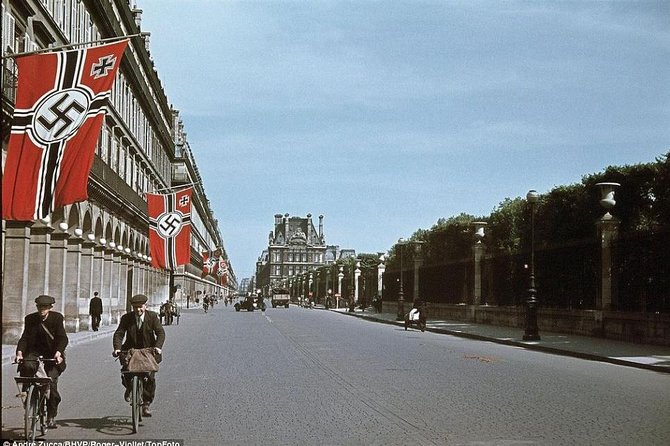
You start at Place Colette Rue Saint-Honoré, at Metro Exit 5, across from the Comédie-Française. That matters because you are already in the historic grid where Parisian daily life, government, and occupation power all overlap.
From there, you spend the time moving west from the Louvre area toward Place de la Concorde, picking up sites along the way. The pace stays human. You are not trying to check off a list of monuments, you are following how the occupation shaped choices street by street.
And you have to respect that this is led by one guide, Chris Pollard, not a rotating cast. The benefit is continuity. He can keep the thread of why certain locations mattered, even when the group slows down with questions.
Other Paris bookings to consider
- Paris: 1-Hour Seine Cruise departing from the Eiffel Tower
★ 4.4 · 77,472 reviews - Disneyland® Paris 1-Day Ticket
★ 4.6 · 49,412 reviews - Paris: Versailles Palace and Gardens Full Access Ticket
★ 4.6 · 41,579 reviews
A WWII tour that follows choices, not just buildings
Here is the style that makes this tour work: it is not a strict chronological history lecture. Instead, it is a snapshot of a unique four-year period, with context that explains behavior on multiple sides.
Chris Pollard’s approach is about causation. You will hear how political pressure, military strategy, and social pressure created the conditions that later enabled policies like the Final Solution. Then you will see how those currents played out in real Paris locations, including doors and hotel facades people walk by every day.
You should also know the itinerary is not locked into a rigid script. The number and exact mix of stops can vary from one departure to another, based on questions and where the group wants more depth. That sounds vague, but it is actually practical. It means you are less likely to get rushed through talking points you do not care about.
Palais-Royal area: where power looks normal
Your tour begins with a first stop around Palais-Royal, a short opening moment that sets the scene. It is a useful start because Palais-Royal sits close enough to the big landmarks that you can quickly understand how the occupation reached into the city’s center.
This is also where you start learning to read the city differently. In normal sightseeing, the Louvre, the arcades, and the formal streets get treated like scenery. In this tour, they become reference points for control, surveillance, and the way the occupiers plugged themselves into Paris life.
If you are the type who likes your history grounded in exact place names, you will appreciate how early you start collecting those addresses. The later “big” stops land better because you already have a mental map.
Rue de Rivoli to the west: the occupation network in street form
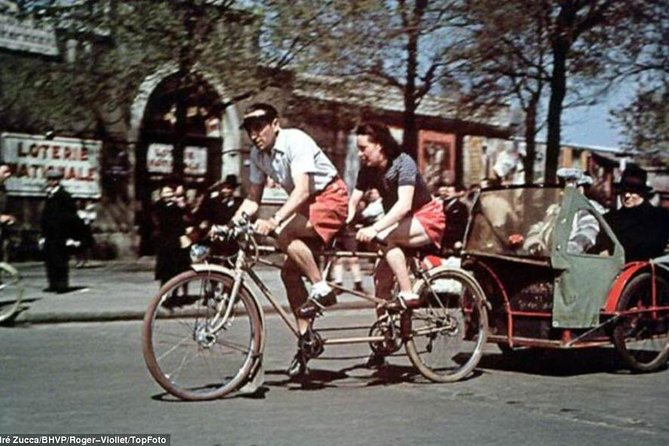
The heart of the walk runs through Rue de Rivoli and nearby streets. This is where the tour turns from general setup into specific occupation mechanics: headquarters, collaboration, intelligence, and resistance.
You cover a stretch that can include major locations such as:
- The Louvre exterior view as a landmark backdrop to occupation power
- The Hotel Meurice, tied to German Army headquarters for Paris
- The Place Vendôme area, including the Ritz zone and what connects it to anti-Nazi efforts among people inside the occupation apparatus
- Key collaboration links connected to the PPF and its leader
- Secret locations tied to early Allied spying, including the Societe Maurice Duclos and its radio work
- The Continental Hotel, another important German-controlled site
- Rue de Castiglione areas associated with trials and the way hotels were requisitioned
- Rue Rouget de Lisle, where the organic resistance began in October 1940
- Jeu de Paume, central to Nazi handling of looted artwork
- Place de la Concorde, where the war’s scars and liberation traces remain visible
What I like about this structure is that you do not just hear that resistance existed. You see how the occupation created risk, how intelligence networks formed, and how ordinary streets could become nerve centers. It also helps that the guide talks about French and German, and also foreign dynamics, so the story feels less like a two-sided movie.
Within easy reach:
- Paris: Arc de Triomphe Rooftop Tickets
★ 4.6 · 34,264 reviews - Paris: Orsay Museum Entry Ticket
★ 4.7 · 25,647 reviews - Paris: Evening River Cruise with Music
★ 4.4 · 22,721 reviews - Paris: Eiffel Tower Entry Ticket with Optional Summit Access
★ 4.4 · 20,035 reviews
Jeu de Paume: looted art and what it signals about occupation policy
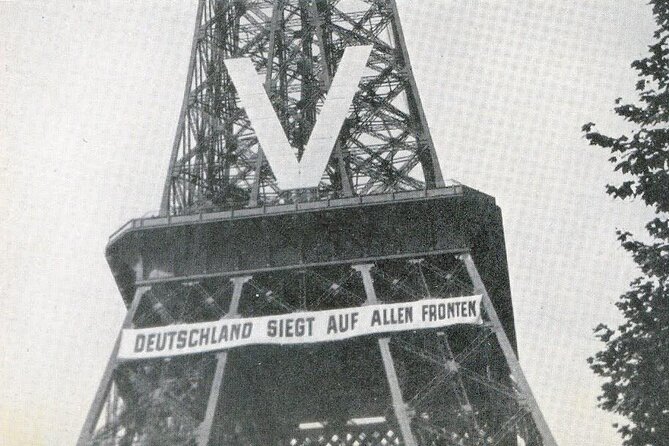
Jeu de Paume is one of the most striking stops on this kind of tour because it connects a cold policy with something human. Nazis did not only seize power, they seized cultural assets too, then used those actions as part of the larger occupation system.
The tour frames Jeu de Paume as a place where the Nazis stored, processed, and looted artworks before sending them to Germany. You also get the broader thread of what happened to Jewish art, including how the occupation treated Jewish communities as targets rather than as neighbors.
One warning, gently stated: this is not a light stop. The tone fits the topic. If you want to keep your visit strictly to “effects on buildings,” you might find this section emotionally heavy. If you want to understand the logic of occupation, it is essential.
Coco Chanel, Maxim’s, and the occupation’s takeover of culture
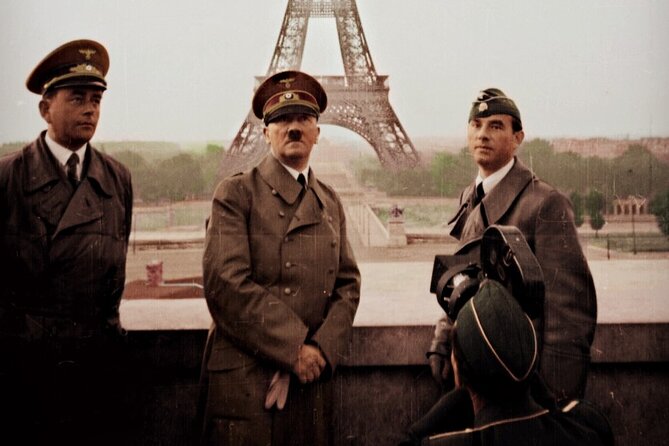
A WWII tour that only talks about arrests and weapons can feel one-dimensional. This one does something different by showing how occupation reached into culture and daily life.
You will hear about Coco Chanel’s stay at the Ritz, which is one of those historical details that makes you stop and look closer. You are also guided through café spaces, including the famous Maxim’s, and the way cinemas and venues were taken over by Germans.
These moments matter because they show what “occupation” meant on the ground. It was not only checkpoints. It was menus, meetings, entertainment, and the psychological effect of seeing power become routine.
It is also a reminder that people in the same city lived with the same streets yet faced very different pressures depending on who they were and what role they were allowed or forced into.
Place de la Concorde finish: royal executions, German headquarters, and visible scars
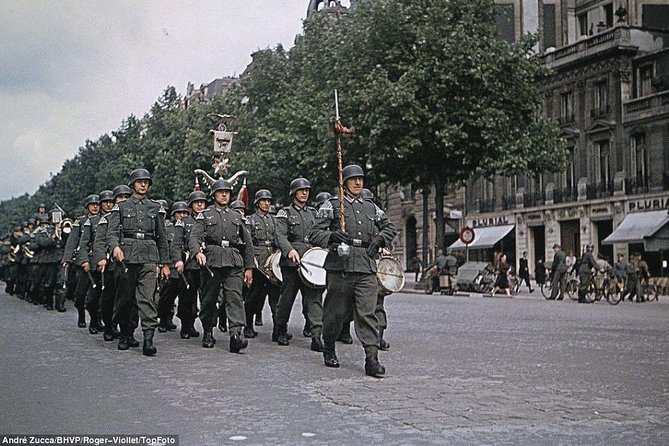
You end around Place de la Concorde, and timing can put the finish between about 3 and 3.5 hours total for the general experience. That ending is well chosen. The square concentrates layers of Paris history, and the war marks are still readable.
In this finale, you will connect:
- The square’s earlier role, when it was called Place Louis XV and tied to the French Revolution, including where Louis XVI and Marie Antoinette faced the guillotine
- German headquarters presence linked to the twin Naval Ministry and Hotel Crillon during the war
- The Grand Palais, described as the largest freestanding building in Paris, and the only one actually destroyed in this period
- Bullet holes and hidden scars from the fighting for liberation
- The Luxor obelisk, which is a reminder of how long the city has carried symbolic monuments even while history changes underneath them
I like ending here because it stops the tour from feeling like you’re stuck in the past. You stand in a real public space, with traffic and tourists moving around you, but you have a different set of eyes now. The war stops being a chapter and becomes a set of physical traces.
How long it takes, what you’ll be doing, and what to bring
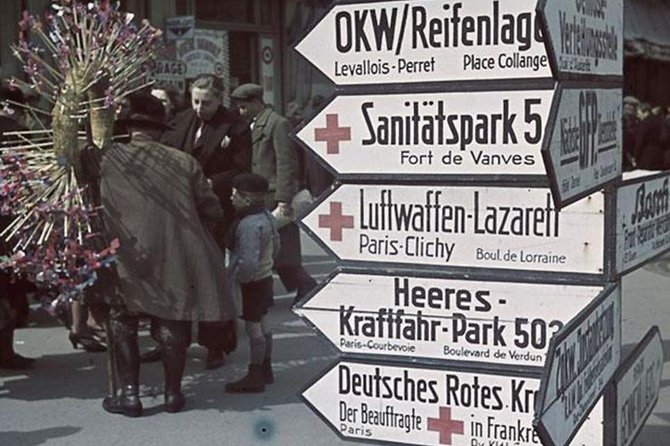
Plan for an outdoor walking pace of roughly 3 to 4 hours. One review-style tip you should treat seriously: you can expect about 2 miles of walking over roughly 4 hours, so comfortable shoes matter.
Because it is outdoors, your comfort will depend on the day. Dress in layers, and bring water. It is also smart to remember this is not a sit-and-watch tour. You may pause under cover when it exists, but you should be ready to walk in weather that Paris throws at you.
If you have mobility limits, consider whether you can handle steady walking over that distance. The tour does not claim to be fully sedentary, and the stops are distributed across central streets.
Shoah and the Jewish Quarter topic, handled carefully on a general tour
This is one place where the tour design shows intent. On the general experience, you will talk about the overall currents that led to the implementation of the Final Solution in France, including conditions for Jewish people in Paris and occupied France in the lead-up years. The guide also covers their role in the resistance.
But the experience time is limited. So on the general version, the tour does not aim to go deep into the subject in a way a dedicated memorial-focused program would. If you want a more specific focus, private Shoah tours are mentioned as the right fit, including options where stops like a Holocaust memorial may be included.
In other words: you are not being ignored on the general tour, but you are also not being asked to force a major subject into a few rushed minutes.
Private tours and tailoring: when you want your questions answered
This is offered as small group or private. The small group version caps at 10 travelers, and it is set up to keep the conversation personal. You are allowed to ask questions, and the guide can shift the depth and sometimes the mix of sites based on what people want to understand more.
If you book private, you get the chance to personalize the itinerary and flexible start times. Reviews also point out that Chris asks for interests in advance, and that visual materials and photos help bring the story to life.
If you love WWII details, this tour can be a fast-track to the kind of specificity you would struggle to piece together alone.
Price and value: what you get for $108.84
At $108.84 per person for about 3 to 4 hours, the price is less about “access to Paris sites” and more about expertise and interpretation. You are paying for a guide who can connect institutions, streets, and human decisions into one coherent walk.
Two value boosters stand out from the details you provided:
- Small group limits mean you are not stuck listening to a script while others talk over you
- Site time is shown as admission-free for key stops, so you are not also funding separate museum entries during the tour
The tour also uses a practical format. You do not spend time traveling between far-apart areas by bus. You stay in the dense center where the occupation story is literally built on top of itself.
Should you book this WWII Occupation tour?
Book it if you want a street-level WWII account with specific addresses, including Gestapo-linked sites, German-controlled hotels, resistance beginnings, and the Nazi looting trail at Jeu de Paume. It is a strong choice for first-time visitors who still want more than basic highlights.
Skip it, or consider a dedicated Shoah-focused private option, if you know you want a memorial-heavy, subject-specific program, or if you have a low tolerance for emotional weight. And if you hate outdoor walking, you might feel constrained by the format.
If you fall somewhere in the middle, this is one of the better values in Paris for turning the city’s still-visible marks into an understandable story, led by Chris Pollard with real room for questions.
FAQ
Where does the tour start?
The meeting point is Place Colette, Rue Saint-Honoré, 75001 Paris, with Metro Exit 5 near the Comédie-Française.
How long does the tour last?
It is listed as about 3 to 4 hours, with the end around Place de la Concorde and typical timing for the general experience between about 3 and 3.5 hours.
How big is the group?
The experience is capped at a maximum of 10 travelers, and it is described as small group with 8 to 10 people to maintain quality.
What language is the tour in?
The tour is offered in English.
Do you visit Jeu de Paume and what’s the focus there?
Yes. Jeu de Paume is part of the route, and the focus is on how Nazis stored, processed, and looted artworks before sending them to Germany.
Is a Holocaust memorial included on the general tour?
On the general tour, the topic is discussed in context, but the tour typically ends at Place de la Concorde rather than at a Holocaust memorial. Holocaust-memorial stops are described as part of specific Holocaust-focused tours or private Shoah tours if requested.
What if my schedule is tight and I want less time?
The tour duration is described as flexible around the 3 to 3.5 hour range, and the guide may adjust depending on the group, questions, and requests for how you want to manage time.
What happens if there are too few people booked?
The tour requires a minimum of 4 people to run. If it does not meet that minimum, you will be offered a different date or experience, or a full refund.
Newly listed around Paris
- Paris Orsay Museum and Rodin Museum Daily Combo Ticket★ 4.0 · 32 reviews
- Paris Pastry Tour – Croissants, Macarons & Iconic French Desserts★ 5.0 · 232 reviews
- Paris Orsay Museum with Optional Seine River Cruise Tickets★ 4.0 · 65 reviews
- Paris Occult and the History of the Dark Arts Private Tour★ 5.0 · 17 reviews
- Île de la Cité Guided Tour & assistance Notre Dame entrance★ 5.0 · 22 reviews
- Paris Orsay Museum Entry Ticket with Digital Audio Guide★ 3.5 · 93 reviews
- Notre Dame de Paris: Semi Private or Private Guided Tour Guide★ 5.0 · 30 reviews
- Paris Opera Garnier Private Tour★ 5.0 · 42 reviews
Private, compared.
Louvre Museum Paris Essential Guided Tour Semi-Private 6ppl Max
Read our review →
SUV Private Transfer: Paris to Charles de Gaulle Airport (CDG)
Read our review →

Top Private Cruises in Paris with French Champagne and surprises
Read our review →
Golf Cart in Paris – Private Guided City Tour – Pickup Included
Read our review →
Private Paris Airport Arrival Transfer – CDG & ORLY Airports
Read our review →
Paris Private Arrival Transfer from Charles de Gaulle (CDG) or Orly (ORY)
Read our review →