
Reviewed · HISTORICAL TOURS
Private Bordeaux History Tour with a glass of Bordeaux wine.
Old streets, big stories, and zero rush.
This private walking tour stitches together Bordeaux’s most recognizable landmarks with an English guide who keeps it personal, not like a mass group shuffle. I like the 2-hour pace because it helps you get your bearings fast, and you still get time for real questions. A special plus is the included glass of Bordeaux wine at the end, so the day doesn’t end with just photos. One thing to consider: it is only 2 hours, so if you want long museum-style stops or deep inside-visit time, you’ll need another plan too.
I also like how the route favors major, walkable landmarks tied to big moments, like the Saint-André Cathedral and its role in royal weddings, including Eleanor of Aquitaine and King Louis VII. Guides I’ve seen praised by name, like Victor and Emma, are good at linking architecture to what Bordeaux became over time, including the long stretch of English influence and the way later leaders helped modernize the city for walking. The main drawback is that entrance inside monuments is not included, so a few stops are best enjoyed from the outside.
In This Review
- Key highlights worth your time
- Price and what you get in 2 hours of Bordeaux walking
- Starting at Cathédrale Saint-André, where Eleanor of Aquitaine fits into the skyline
- Tour Pey-Berland and Rue Saint-Catherine: the city’s main spine in history terms
- Rue du Loup and the Middle Ages: how Bordeaux got English
- Place du Palais and Porte Cailhau: power at the city gate
- Place de la Bourse and Miroir d’Eau: civic Bordeaux at eye level
- Grand Théâtre de Bordeaux: Victor Louis, nine muses, and a theater you can read
- Place Gambetta and Passage Sarget: squares and corridors that keep the story moving
- Place du Chapelet, Notre-Dame church, and the sound of the organ
- Allées de Tourny and the Monument aux Girondins at Place des Quinconces
- The included Bordeaux wine stop: a simple end with real local flavor
- Who this tour suits best (and who might want something else)
- Should you book this Bordeaux history tour?
- FAQ
- How long is the Bordeaux history tour?
- Is this tour private?
- Is the tour offered in English?
- What is included besides the walking tour?
- Are monument entrance fees included?
- Where do I start and where does the tour end?
Key highlights worth your time
- Private group experience so you can ask questions and set the tempo.
- Saint-André Cathedral UNESCO stop with major Gothic details and famous royal connections.
- Rue Saint-Catherine pedestrian core for an easy history-to-street-life connection.
- Porte Cailhau and Place de la Bourse photo stops that look great and teach you why they matter.
- Grand Théâtre de Bordeaux interior glimpse plus the story behind Victor Louis and the building.
- Wine included at a partner bar you can treat like your unofficial farewell toast.
Price and what you get in 2 hours of Bordeaux walking
At $90.36 per person for about 2 hours, the value is all about the format: you’re buying a private guided walk plus an included glass of Bordeaux wine. That means you are not paying for entrance tickets to lots of museums, and the schedule is built around major sights you can cover on foot.
It is also priced like a guide-led experience, not a self-guided stroll. The route makes sense for first-timers because you leave with a mental map of where Bordeaux’s power shifted over centuries, from Gothic religious authority to civic monuments and theater-era culture.
Quick reality check: monument entrances are not included, and the stops are mostly about what you can see and understand from outside or on street-level. If your travel style is “I want to go in everywhere,” you may feel time pressure and end up wishing you had booked a longer, inside-focused day.
Other Bordeaux bookings to consider
- Bordeaux: Cité du Vin Entry Ticket and Wine Tasting
★ 4.6 · 3,885 reviews - Bordeaux: River Garonne Cruise with Glass of Wine and Canelé
★ 4.5 · 3,630 reviews - From Bordeaux: Afternoon Saint-Emilion Wine Tasting & snack
★ 4.8 · 1,581 reviews
Starting at Cathédrale Saint-André, where Eleanor of Aquitaine fits into the skyline
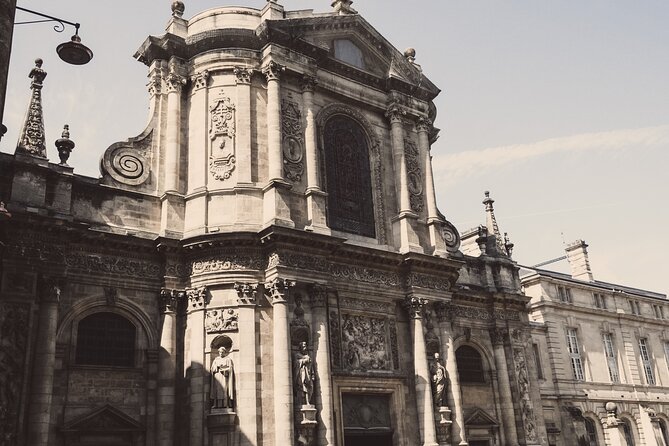
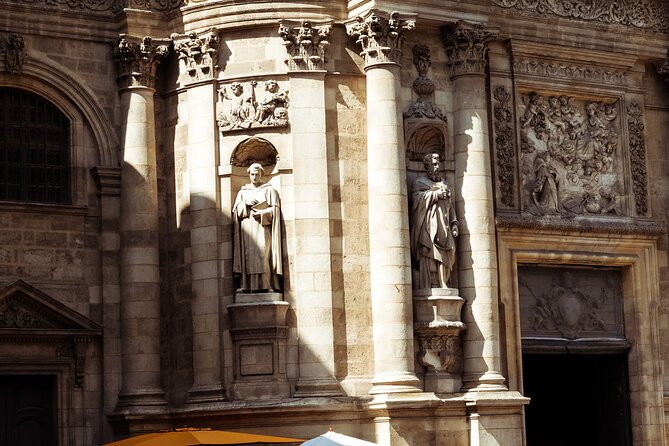
Your walk begins at Cathédrale Saint-André de Bordeaux (Pl. Pey Berland). This is one of the easiest places to anchor your visit because the cathedral is both visually dramatic and historically heavyweight. You’ll look at Gothic architecture, carved details, and the way the building signals Bordeaux’s long role as a cultural and religious center.
One standout story tied to this stop is the cathedral’s connection to royal weddings, including the union of Eleanor of Aquitaine and King Louis VII. That kind of detail matters because it explains why this site is more than pretty stone. It’s a clue to how Bordeaux’s elite and institutions operated, and how major events played out in public, sacred spaces.
Practical tip: plan on taking photos from a few angles. You’ll get the best results by moving a step or two at a time instead of trying to capture everything from one spot.
Tour Pey-Berland and Rue Saint-Catherine: the city’s main spine in history terms
Next, you work your way down Rue Saint-Catherine, stopping for Tour Pey-Berland along the way. Rue Saint-Catherine is known as the longest pedestrian street in Europe, and that pedestrian nature is part of why it is such a good history connector. You see how the street functions like a modern public living room, and your guide can tie that everyday movement back to older layers of the city.
This portion is also a momentum builder. It’s where Bordeaux starts to feel like a real place, not just a list of monuments. You’ll walk past architecture that shows different eras in close contact, and you’ll get an explanation of how the road evolved from an older route into today’s shopping and street-life corridor.
The time here is short, about 15 minutes for the tour Pey-Berland stop. That’s actually a good thing on a first visit. You get the essentials without getting stuck while crowds and stores compete for your attention.
Rue du Loup and the Middle Ages: how Bordeaux got English
A short stop at Rue du Loup shifts the tone from gothic grandeur to medieval power and political change. This is where you’ll hear the story of how Bordeaux became connected to English influence, and why the Middle Ages shaped the city’s path.
The best part of this segment is that it reframes the streets you’re already walking. Instead of treating alleyways and side corners like filler between big landmarks, you learn why specific areas gained importance, and how political control leaves traces in the urban fabric.
This also works well if you like “cause and effect” history. You’ll start noticing that Bordeaux’s architecture is not random decoration. It’s often a record of who had control, who built, and who wanted to be seen.
Within easy reach:
- Medoc or Saint Emilion Wine Tasting and Chateau from Bordeaux
★ 5.0 · 1,415 reviews - Saint Emilion Day Trip with Sightseeing Tour & Wine Tastings from Bordeaux
★ 5.0 · 1,120 reviews - Bordeaux: Guided Walking Tour
★ 4.4 · 1,038 reviews - Saint Emilion Half-Day Trip with Wine Tasting & Winery Visit from Bordeaux
★ 4.5 · 1,034 reviews
Place du Palais and Porte Cailhau: power at the city gate
After the cathedral zone, you’ll move to Place du Palais, where the focus is on architectural design and the thinking behind the space. Even in a short stop, this kind of detail helps you understand how Bordeaux planned for public life. It’s not just where people walked, it’s how authority and city order were organized.
Then comes Porte Cailhau, one of the most memorable sights on the route. This 15th-century gateway is described as a blend of Gothic and Renaissance styles, and it connects to a specific moment: it was built to honor King Charles VIII’s victory at Fornovo.
Here’s what makes Porte Cailhau a strong stop: it’s easy to imagine the city as a defended place. You’ll learn about its strategic role in guarding Bordeaux, and also how it functioned as a symbolic entrance tied to regional prosperity. In other words, you’re looking at architecture that was meant for both protection and messaging.
If you like architecture, take your time looking at the mix of styles. The building is a quick visual lesson in how tastes and influences shifted.
Place de la Bourse and Miroir d’Eau: civic Bordeaux at eye level
Your tour then moves toward Place de la Bourse and the Miroir d’Eau. This is a classic Bordeaux moment because it blends grand civic design with a modern feature that people love to photograph. The guide’s job here is to keep you from seeing it as just a pretty square.
You’ll also get a structured “sightline education,” where key monuments along the way become easier to spot as you progress. The tour route includes stops that loop through Bordeaux’s cultural center, with landmarks such as the Grand Théâtre de Bordeaux and the Basilica of Saint-Michel, plus views toward Pont de Pierre.
From a value perspective, this section is one of the biggest wins of the tour. You get a sense of how Bordeaux organized public life around squares, theaters, and monumental crossings, without spending half your day commuting between far-apart sites.
Grand Théâtre de Bordeaux: Victor Louis, nine muses, and a theater you can read
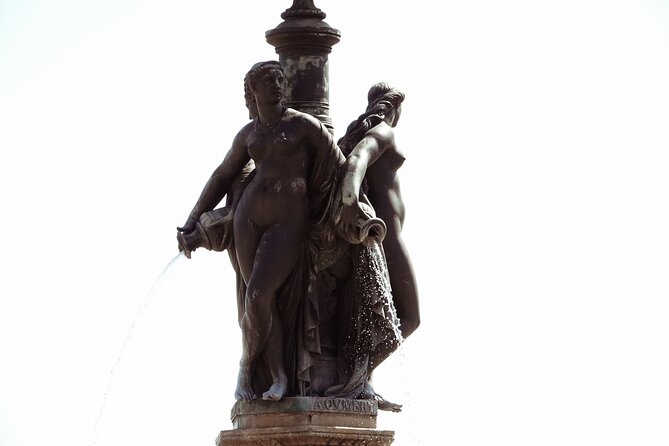
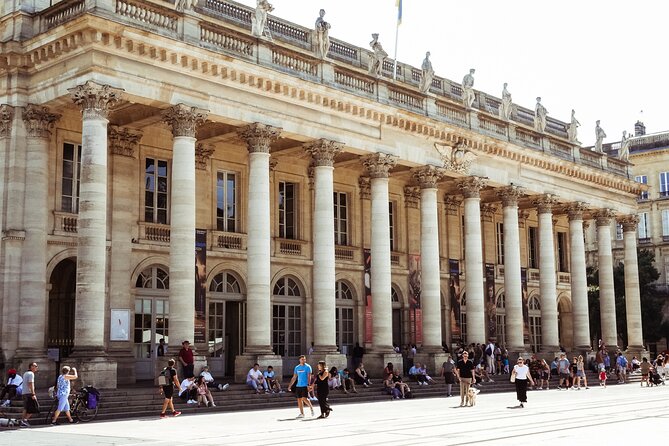
At the Grand Théâtre de Bordeaux, you’ll focus on neoclassical architecture and the story behind it. It was built in 1780 and designed by architect Victor Louis.
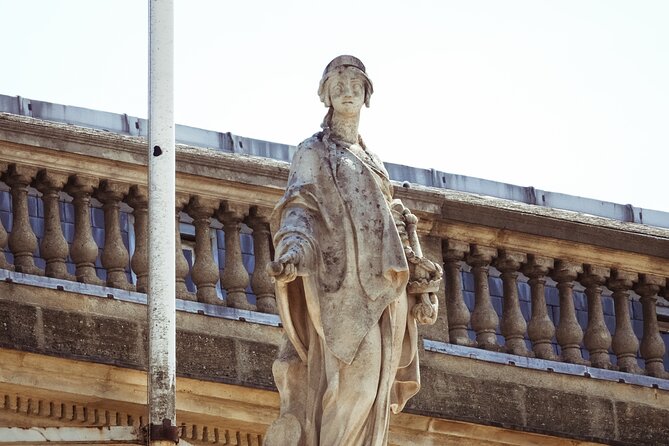
You’ll be able to appreciate the colonnaded façade and statues linked to the nine muses and goddesses. That detail makes the building feel like an intentional statement about culture, not just a place to watch shows.
If you’re the kind of person who likes the inside of landmarks, note this carefully: the stop description highlights stepping inside to see opulent features like the grand staircase and a chandelier. That said, entrance inside monuments is not listed as included, so I would treat inside access as something you’ll only get when the guide’s route allows it. In practice, expect a mix of street-facing and street-adjacent viewing here, depending on what’s open on the day.
Place Gambetta and Passage Sarget: squares and corridors that keep the story moving
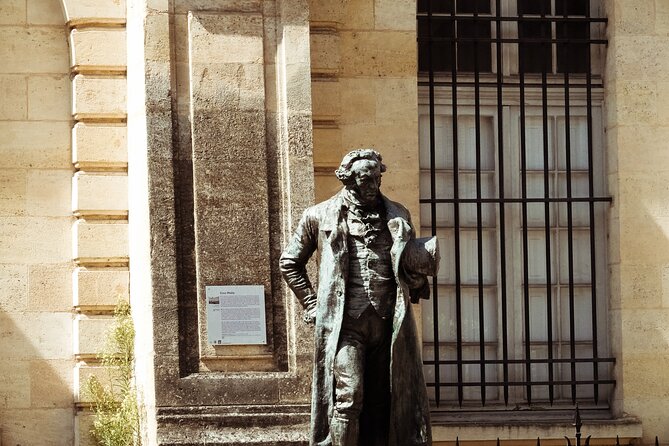
You’ll next reach Place Gambetta, a square with a layered past. It’s tied to the city’s western gate history and later became part of 18th-century urban transformation. The stop also connects to Bordeaux’s political story during the French Revolution.
What you’ll appreciate here is the shift from heavy stone monuments to a more relaxed square setting. You get a place to pause, look at the gardens, and absorb how Bordeaux mixes monumental history with day-to-day calm.
Then you’ll step into Passage Sarget, a late 19th-century covered passage. This stop is for people who like architecture details you would otherwise miss. It is designed to connect Rue de la Porte-Dijeaux with Place des Grands-Hommes, and it takes inspiration from Parisian arcades.
You’ll notice the glass roofing, intricate ironwork, and refined stone architecture. And the history behind it fits a pattern Bordeaux repeats across centuries, commerce and ideas often share the same physical corridors. Passage Sarget once served as a hub for luxury boutiques and intellectual gatherings during the Belle Époque.
Place du Chapelet, Notre-Dame church, and the sound of the organ
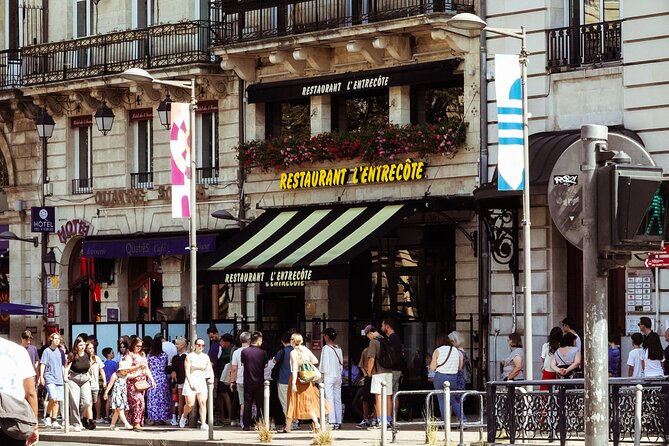
At Place du Chapelet, you’ll see the Church of Notre-Dame, built in the 17th century. This is a more reflective stop. The church is known for its impressive organ, and the description says it still resonates during special performances.
There’s also a notable art-related detail tied to the site: it’s said to be the place of a famous painter’s funeral in the 19th century. The lack of a specific name here is actually fine. Even without it, the point is clear, this is a place where art and civic life overlapped.
If you’re sensitive to noise, aim for a calm moment to look up at architectural features. Churches often make you slow down, which is exactly what this walk needs after the more tourist-heavy squares.
Allées de Tourny and the Monument aux Girondins at Place des Quinconces
Your final stretch leans back into city planning and revolutionary memory.
Allées de Tourny is presented as a grand avenue shaped by a key figure in Bordeaux’s transformation, with influence that even reached urban development in Paris. The big takeaway is the way long boulevards can represent power and vision, not just a place to walk.
Then you finish at Place des Quinconces with the Monument aux Girondins. This monument commemorates the Girondin deputies who perished during the French Revolution. Expect dramatic sculptures symbolizing liberty, the triumph of the Republic, and Bordeaux’s maritime heritage.
If you want one sentence to hold the whole tour together, it’s this: Bordeaux keeps telling its story through public architecture. The walk ends with a monument that does not hide its message, it broadcasts it.
The included Bordeaux wine stop: a simple end with real local flavor
After you walk, you’ll get a glass of Bordeaux wine at a partner bar. This is included, so you can budget without wondering if a drink will cost extra.
Why this matters: Bordeaux wine is not a separate theme tacked on at the end. It’s part of how the city built wealth and identity, and the guide’s explanations about Bordeaux’s evolution often make the wine feel like a logical payoff, not just a perk.
A practical approach: take your time with the first sip. Use it to review the landmarks you just saw. This is when history starts to stick, because your brain links taste with place.
Who this tour suits best (and who might want something else)
This works great for you if:
- you want a private history guide in English and you prefer a calmer pace than group tours
- you’re short on time and want major Bordeaux landmarks covered in about 2 hours
- you like connections between political events and what you see in the city
It may feel tight if:
- you want long inside visits and museum-style pacing
- you’re a Bordeaux superfan who already knows the city well and wants deep archaeology or wine-region detours
Should you book this Bordeaux history tour?
Yes, if you want a first-visit orientation that feels personal and not rushed. The strongest reasons to book are the private format, the clear focus on major monuments, and the included wine glass that gives the day a satisfying close. Plus, the guide quality seems to matter a lot here, with named praise for guides like Victor and Emma for tying details to what Bordeaux became over time.
I’d only skip it if your top priority is spending lots of time inside buildings, or if you’d rather trade guided history for self-directed wandering. For most people, this tour is an efficient, human-scaled way to understand Bordeaux without turning your vacation into a checklist.
FAQ
How long is the Bordeaux history tour?
It’s about 2 hours.
Is this tour private?
Yes. It is a private tour, so only your group participates.
Is the tour offered in English?
Yes, the guide is English speaking.
What is included besides the walking tour?
You get an included glass of Bordeaux wine at a partner after the tour.
Are monument entrance fees included?
Entrance inside the monuments is not included.
Where do I start and where does the tour end?
You start at Bordeaux Cathedral, Cathédrale Saint-André de Bordeaux, Pl. Pey Berland, 33000 Bordeaux, France, and you end at Place des Quinconces, 33000 Bordeaux, France.
Newly listed around Bordeaux
- 2-Hour Bordeaux Segway Tour★ 4.5 · 42 reviews
- Saint-Emilion Food and Wine Day Tour★ 5.0 · 323 reviews
- Private tour of Bordeaux by a Bordeaux historian★ 4.5 · 16 reviews
- Saint Emilion Full Day Wine and Bike Tour★ 5.0 · 167 reviews
- Château de Fieuzal, Pessac-Léognan: Visit and Tasting★ 5.0 · 18 reviews
- Bordeaux bike tour “The Best of Bordeaux”★ 5.0 · 164 reviews
- Virtual Room Bordeaux – 1st team virtual reality experience★ 5.0 · 47 reviews
- The essential in Bordeaux, private tour with a local★ 5.0 · 26 reviews
Historical Tours, compared.
Louvre Museum Entry with History of Mona Lisa
Read our review →

Vieux Lyon Cultural & Historical Walking Guided Tour (English)
Read our review →

Toulouse Food & History Tour with a Chef (in English)
Read our review →
Small-Group Full-Day Tour of Côte de Nuits, Côte de Beaune Vineyards and Beaune Historical District
Read our review →
Browse the lists this tour appears in