
Reviewed · 2CV RIDES
Private Tour of Paris in a convertible citroën 2CV
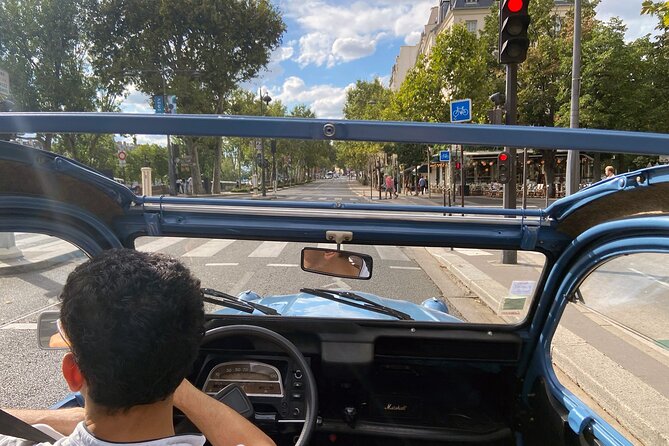
A 2CV turns Paris into a photo set. Riding in a vintage 2CV with Jean-Baptiste, you get panoramic city views from an open-top ride, plus the freedom to hop out for pictures when you want. I also like how this tour covers a lot of iconic Paris in a short time, so you can get oriented fast. One thing to consider: the experience is about an hour, so you will see many sights from the road and along quick stops, not in-depth museum time.
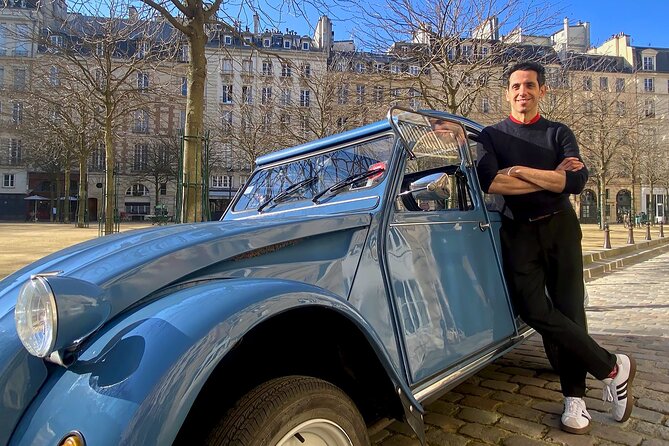
This is a private tour for just your group of up to three, with pickup offered and a guide in English. You start right at a meeting point near your chosen address, next to a small blue convertible car, so you spend less time herding yourself across town.
No tickets are included, so plan on enjoying exteriors, viewpoints, and architecture rather than going inside every stop. And since the tour requires good weather, keep an eye on the forecast, especially if you are traveling in seasons where Paris can be unpredictable.
In This Review
- Key highlights in this Paris 2CV tour
- Why a convertible Citroën 2CV makes Paris feel instantly different
- Price and value: private car time for up to three
- The pickup that keeps your day from unraveling
- The one-hour route: from Louxor obelisk to royal Paris icons
- Hôtel de Crillon and the Louxor obelisk: starting with big scale
- The luxury avenue stretch: boutiques and classic Paris brasseries
- Place de l’Étoile laps: Arc-area symbols in motion
- Pont d’Iéna and the Eiffel Tower framing: one view that does the work of a museum
- Alexandre III bridge and the Grand and Petit Palais: film-ready scenery
- A neoclassical church associated with high-society weddings
- Opéra area: Haussmann grandeur, famous cafés, and designer windows
- Austerlitz Column, the Ritz Hotel, and the standard meter
- Fashion and design streets, plus Molière’s birthplace connection
- Cardinal Richelieu’s former residence, the Ministry of Culture, and the Council of State
- Louvre area: royal roots, the Mona Lisa setting, and the glass pyramid
- The 1900 World’s Fair railway station and Jacquemart’s Rhinoceros
- Palais Bourbon: where the deputies work
- Photo and comfort tips for an open-top Paris ride
- What is not included, and how to plan your day around it
- Who this private 2CV Paris tour fits best
- Should you book this private Tour of Paris in a convertible Citroën 2CV?
Key highlights in this Paris 2CV tour
- Open-air 2CV views for that cool Paris breeze and easy landmark spotting
- Fast coverage in a compact ride, ideal when you have limited time
- Photo-friendly flexibility, including chances to stop and take your own shots
- A route built around top landmarks, from the Arc area to the Eiffel Tower viewpoints
- Classic Paris architecture at street level, including major Haussmann-era icons
Why a convertible Citroën 2CV makes Paris feel instantly different
Paris is best when you can read the city. You notice the street widths, the building heights, and the way neighborhoods connect. A top-down Citroën 2CV does something walking tours cannot: it keeps you facing the city while still moving at car speed. That means less time stuck behind slow traffic on foot, but also less time shut away from the atmosphere.
The vibe is also simple and memorable. You are not in a gray van. You are in a recognizable, vintage convertible that basically invites everyone to look up and smile as you pass. It turns normal sightseeing into an event, which is exactly what you want on a first visit, or anytime your schedule is tight.
The other reason I like this setup is photo logic. An open roof gives you cleaner angles for skyline shots and landmark backdrops, and you are not craning your neck over a bus window.
More 2CV rides in Paris:
- Vintage 2CV Adventure: 2 -Hour Paris Secrets Tour
★ 4.5 · 488 reviews - Paris: Discover Paris 2CV
★ 4.9 · 472 reviews - Paris: 1-Hour Vintage Citroen 2CV Tour
★ 4.7 · 314 reviews
Price and value: private car time for up to three
This tour costs $132.75 per group, up to three people, and it runs about one hour. In practical terms, that can work out well if you travel as a small group of friends, a couple, or a family of three. Split it three ways and the per-person cost becomes much easier to stomach.
You are paying for two things: private transportation and a guide. That combo matters in Paris because driving in central areas can be complex, and knowing where to pause for the best angles can save you real energy. Even if you have seen the big postcards before, a good route helps you avoid random, inefficient zigzags through neighborhoods.
One caution on value: entrance tickets are not included. So treat this as an excellent way to see Paris’s highlights from the outside and from strategic viewpoints, then add paid entries later if you want deeper time.
The pickup that keeps your day from unraveling
Paris sightseeing often fails for a boring reason: getting started. Here, pickup is offered, and you meet your guide in front of the address you selected, next to a small blue convertible car.
That detail sounds small, but it changes your whole morning. Instead of trying to coordinate a time-consuming meetup near a metro station, you can often begin from where you are staying. If you are arriving from a busy travel day, that matters.
You also get a mobile ticket, and you receive confirmation at booking unless you book within one hour of travel. It is a small operational thing, but it reduces stress so you can focus on the ride.
The one-hour route: from Louxor obelisk to royal Paris icons
This is a highlight circuit built to maximize impact per minute. Here is how the tour’s flow feels, stop by stop, and what each area is really for.
Other Paris bookings to consider
- Paris: 1-Hour Seine Cruise departing from the Eiffel Tower
★ 4.4 · 77,472 reviews - Disneyland® Paris 1-Day Ticket
★ 4.6 · 49,412 reviews - Paris: Versailles Palace and Gardens Full Access Ticket
★ 4.6 · 41,579 reviews - Paris: Arc de Triomphe Rooftop Tickets
★ 4.6 · 34,264 reviews
Hôtel de Crillon and the Louxor obelisk: starting with big scale
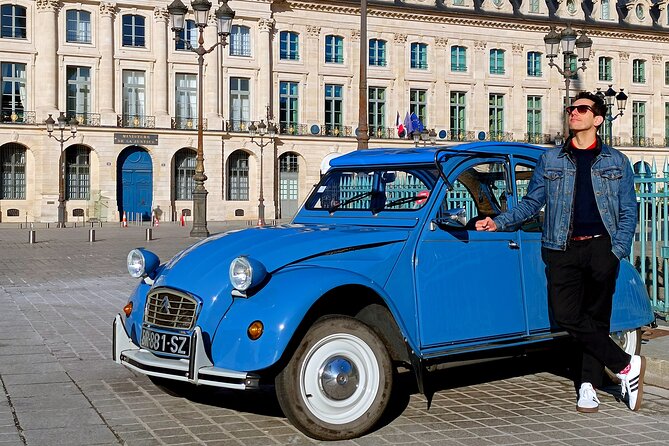
You begin near Hôtel de Crillon, then head toward the obelisk from Louxor. This is a great warm-up stop because the obelisk makes Paris feel immediately global and layered, not just French postcard. You also get an early look at how Paris frames monumental objects against grand buildings.
From here, the tour starts to shift into a “main avenues and major viewpoints” mode. That is your best strategy when time is short, because the sights are spaced out and you want to keep your energy intact.
The luxury avenue stretch: boutiques and classic Paris brasseries
Next comes the famous avenue often described by French sources as the most beautiful in the world, lined with luxury boutiques and well-known brasseries. Even if you are not shopping, this stretch is about tempo. The city looks polished here, and you can read the contrast between high-end storefronts and Paris’s everyday café culture.
This is also one of those areas where you can snap photos quickly from the car or during a brief pause. You get the rhythm of Paris without committing to a long walk.
Place de l’Étoile laps: Arc-area symbols in motion
A Paris car tour is never complete without at least a lap around Place de l’Étoile. You will see the Flame of the Unknown Soldier and names connected to Napoleon I’s victories.
Seeing this area from a moving car is surprisingly effective. The Arc and the surrounding roundabout can feel confusing when you arrive on foot. From the road, you understand the layout fast, and your landmarks stop being isolated objects and start becoming a connected system.
Pont d’Iéna and the Eiffel Tower framing: one view that does the work of a museum
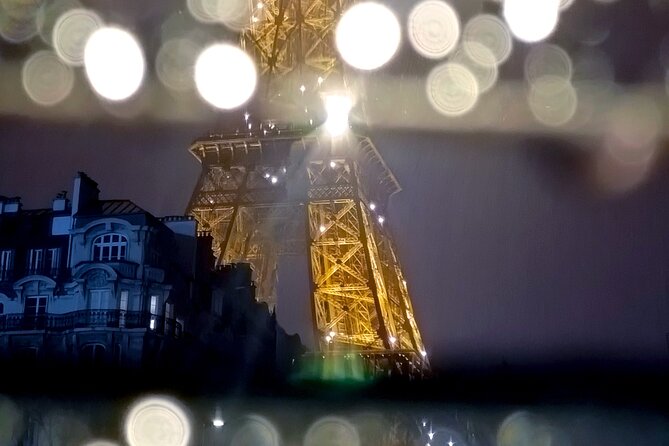
Then you cross the river via Pont d’Iéna, followed by the Avenue de Suffren and the École Militaire. These landmarks frame the view over the Champ de Mars toward the Eiffel Tower.
This is the part of the tour where you get a “Paris looks like Paris” moment. The Eiffel Tower is obvious, but the framing is what sells it. From these angles, you can appreciate the geometry of the city, not just the monument itself.
If you care about photos, the open-top ride helps you capture the skyline cleanly. You can also take quick shots without detouring into crowded pedestrian bottlenecks.
Alexandre III bridge and the Grand and Petit Palais: film-ready scenery
You then pass over Alexandre III, which leads toward the Grand Palais and the Petit Palais. The Grand Palais has a dramatic glass roof, while the Petit Palais across the way is defined by its beautiful portal on Avenue Winston Churchill.
This section is ideal if you like architecture that looks good even when you are just passing by. It is also one of the more cinematic stretches of central Paris. The bridge and palaces look like they belong in old movies because they were built for that kind of spectacle.
A neoclassical church associated with high-society weddings
Next is a church tied to high-society weddings in Guy de Maupassant’s Bel Ami, described here as an example of early 19th-century neoclassical architecture.
Even if you do not know the literary background, you can still appreciate why it gets attention. Neoclassical churches have a calm, structured look that stands in contrast to Paris’s grand boulevards and baroque flourishes. From the car, you are not going to study every detail, but you will spot the design cues quickly.
This is also a good place to remember that Paris is not just monuments. It is also writers, social life, and the way buildings reflect status.
Opéra area: Haussmann grandeur, famous cafés, and designer windows
After that, the tour moves into the crown jewel area of Haussmannian Paris, surrounded by Galeries Lafayette, Café de la Paix, and Avenue de l’Opéra. In other words, you are in the neighborhood where Paris turns into a stage set.
You can treat this as a two-for-one stop. First, you get the grand architectural impression. Second, you get Paris as shopping city and café city at the same time.
Right after, you pass boutiques for luxury jewel brands like Cartier, Tiffany’s, and Chanel. Even if you are not buying, those windows are part of the experience. They help you understand the visual language of this part of Paris.
Austerlitz Column, the Ritz Hotel, and the standard meter
The tour continues past the Austerlitz Column, then toward the Ritz Hotel area, and onward to the standard meter.
This is a more interesting segment than it sounds on paper. It is a shift from romance and glamour toward symbols of measurement, power, and modern identity. The Ritz area gives you the famous name, while the standard meter brings in a quieter, nerdy Paris fact that makes the city feel real and specific, not just dramatic.
If you like learning odd-but-true details while moving quickly, this kind of stop is exactly why a guided route is valuable.
Fashion and design streets, plus Molière’s birthplace connection
Then you ride through a street of fashion and design, but also the place where Molière was born in 1622. That pairing works well because it links Paris’s creative reputation across centuries.
You might look at the storefronts and think fashion, then the guide ties it back to theatre and literature. The effect is a Paris that makes sense, where culture is not a separate category, it is woven into the city.
Cardinal Richelieu’s former residence, the Ministry of Culture, and the Council of State
Next, you visit the former residence of Cardinal Richelieu. The route includes the Ministry of Culture and the Council of State, and it also features a 17th-century garden.
This stop changes the mood. You are still in central Paris, but the feel shifts toward institutions and history rather than shopping energy. The garden reference is important too, because Paris’s green pockets are part of how the city softens its own grandeur.
Even from outside, it is a reminder that the city runs on more than tourists. It is also governance and cultural policy.
Louvre area: royal roots, the Mona Lisa setting, and the glass pyramid
Then comes the big one: home to kings of France for centuries before becoming a home for the Mona Lisa, plus the glass pyramid since 1989.
Seeing this from a car keeps your day moving, but you can still appreciate the transition. The Louvre is one of those places where modern and historical Paris meet constantly. The glass pyramid is the visible marker of that blend, and it helps you understand that the Louvre is not frozen in time.
This is also a natural point to consider adding a paid museum entry later. The outside view gives you orientation, while the inside gives you depth.
The 1900 World’s Fair railway station and Jacquemart’s Rhinoceros
Next is a former railway station built for the opening of the 1900 World’s Fair, where you can see Jacquemart’s Rhinoceros. This is a fun stop because it adds surprise. Paris can feel predictable until you hit a detail like this, where the city’s future-facing history shows up.
The rhinoceros detail is exactly the kind of “wait, really?” item that makes a short tour memorable. It is also a reminder that Paris attractions often connect to specific buildings and decorative stories.
Palais Bourbon: where the deputies work
The tour ends with Palais Bourbon. This is another example of neoclassical architecture, built under Louis XIV, where the 577 deputies meet.
This part matters if you want Paris to feel like a living capital, not just a gallery of views. You get a sense that the city is organized around government, decisions, and civic life, even in the middle of tourism.
And because you are in a moving vehicle, you finish with a sense of “I got the full Paris picture,” from royalty and culture to institutions and governance.
Photo and comfort tips for an open-top Paris ride
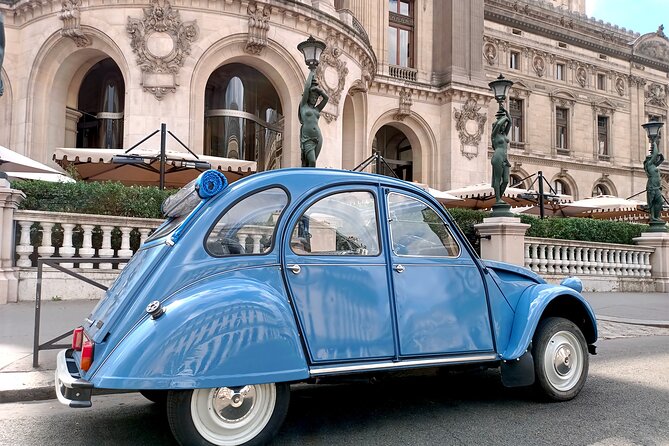
A convertible is fun, but it needs a little common sense. Paris breeze can be pleasant or chilly depending on the day. Bring a light layer so you can stay comfortable when the wind picks up.
For photos, plan around the natural pauses the route offers. You will be able to take pictures at stops, and you can also step out during certain moments. The open roof helps you get landmark backdrops without awkward camera angles.
Also, if you are sensitive to loud city sounds or traffic noise, expect normal Paris street levels during driving. This is part of the experience, but it is good to know so it does not surprise you.
What is not included, and how to plan your day around it
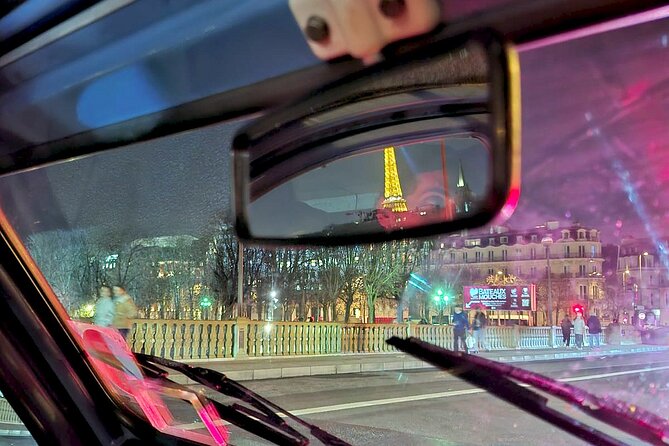
Entrance tickets are not included. That is not a problem if you want a quick overview, but it does mean you should not expect to walk into major attractions during this one-hour window.
So I recommend treating this tour as your Paris “framework.” Use it to spot where you want to return on foot. After the car tour, you will have a much better sense of what is worth your time for a museum ticket or a longer guided walk.
Who this private 2CV Paris tour fits best
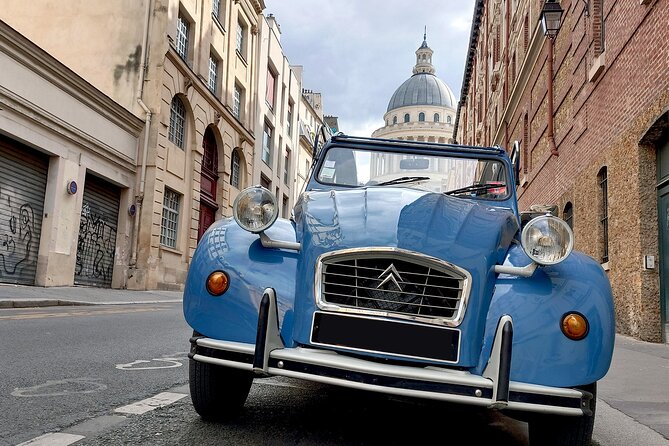
This tour is a strong match if you:
- Have limited time and want major landmarks covered efficiently
- Prefer a private experience over large group buses
- Want open-air views and quick photo opportunities
- Like learning context from a guide while moving through neighborhoods
It may feel less ideal if you want deep, ticket-based museum time inside major sites. Since the duration is about an hour and the car tour emphasizes route and stops, it is not built like a slow, step-by-step museum day.
Should you book this private Tour of Paris in a convertible Citroën 2CV?
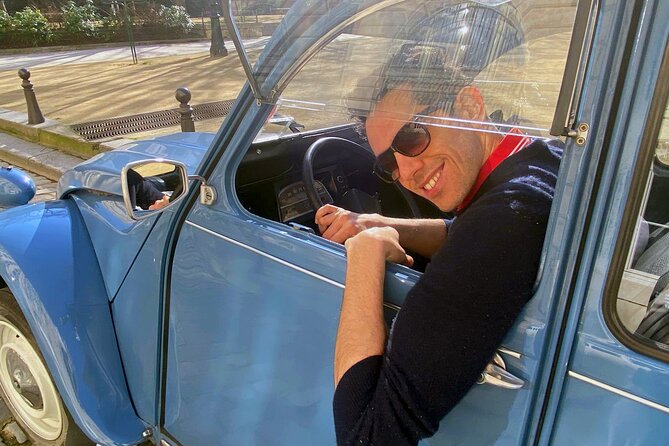
If your goal is to fall into Paris quickly, this is an easy yes. The private setup, the open-air 2CV, and the route packed with Eiffel Tower framing, Arc-area landmarks, and Louvre surroundings make it a practical first-day move.
Book it especially if you value photo-friendly stops and want to reduce walking time while still getting a real sense of city layout. Just go in with the right expectation: you are seeing the highlights and architecture from outside and from viewpoints, not doing every attraction entrance in one hour.
Newly listed around Paris
- Paris Orsay Museum and Rodin Museum Daily Combo Ticket★ 4.0 · 32 reviews
- Paris Pastry Tour – Croissants, Macarons & Iconic French Desserts★ 5.0 · 232 reviews
- Paris Orsay Museum with Optional Seine River Cruise Tickets★ 4.0 · 65 reviews
- Paris Occult and the History of the Dark Arts Private Tour★ 5.0 · 17 reviews
- Île de la Cité Guided Tour & assistance Notre Dame entrance★ 5.0 · 22 reviews
- Paris Orsay Museum Entry Ticket with Digital Audio Guide★ 3.5 · 93 reviews
- Notre Dame de Paris: Semi Private or Private Guided Tour Guide★ 5.0 · 30 reviews
- Paris Opera Garnier Private Tour★ 5.0 · 42 reviews
2CV Rides, compared.
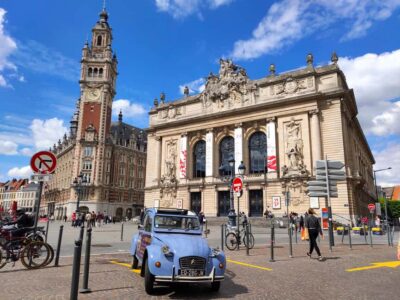
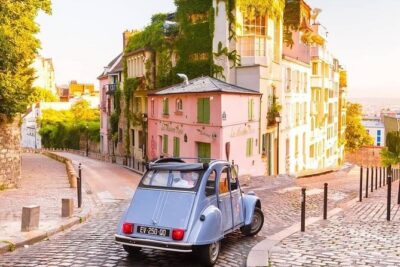
Vintage 2CV Adventure: 2 -Hour Paris Secrets Tour
Read our review →
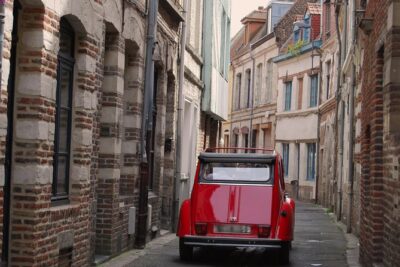
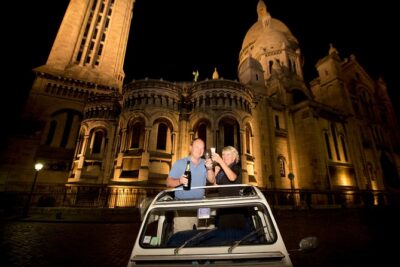
Paris and Montmartre 2CV Tour by Night with Champagne
Read our review →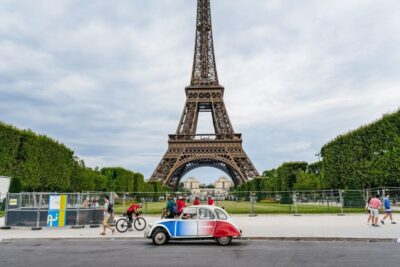
Browse the lists this tour appears in