
Reviewed · FRANCE
Saint-Malo: The Fate of Last Corsairs in the 18th Century
Corsair stories hit differently in Saint-Malo. I love how this two-hour walk, led by a guide in period costume, turns the streets into a living 18th-century map for corsairs from Saint-Malo to Grande Bé.
The standout is Pierre, a former crew member of Captain Surcouf, who explains the century’s mix of danger and strategy in clear, human terms. I also like the final rocky shoreline moment at Grande Bé, where sea views do the talking and you can actually see the coast that shaped those fights.
The only catch is the walking. The tour runs rain or shine, includes rocky beach terrain, and it is not suitable for people with mobility impairments or children under 8.
In This Review
- Key things I’d prioritize before you go
- Meeting Saint-Vincent Cathedral and Finding Your Corsair
- Saint-Malo’s Streets as a Corsair Map
- Grande Bé: The Rocky Finish and the Views That Make It Worth It
- The Historical Upside: Understanding Revolution to First Empire
- Pierre’s Surcouf Connection: Why the Guide Makes the Difference
- Price and Value: $23 for Two Hours That Actually Moves
- Who This Tour Suits Best (And Who Should Skip It)
- Timing, Weather, and What to Bring So You’re Comfortable
- Should You Book Saint-Malo: The Fate of Last Corsairs?
- FAQ
- How long is the Saint-Malo corsair tour?
- What is the meeting point?
- Is the tour available in languages other than French?
- Does the tour run in bad weather?
- What should I bring?
- Is hotel pickup included?
- Is it suitable for young children or mobility needs?
Key things I’d prioritize before you go
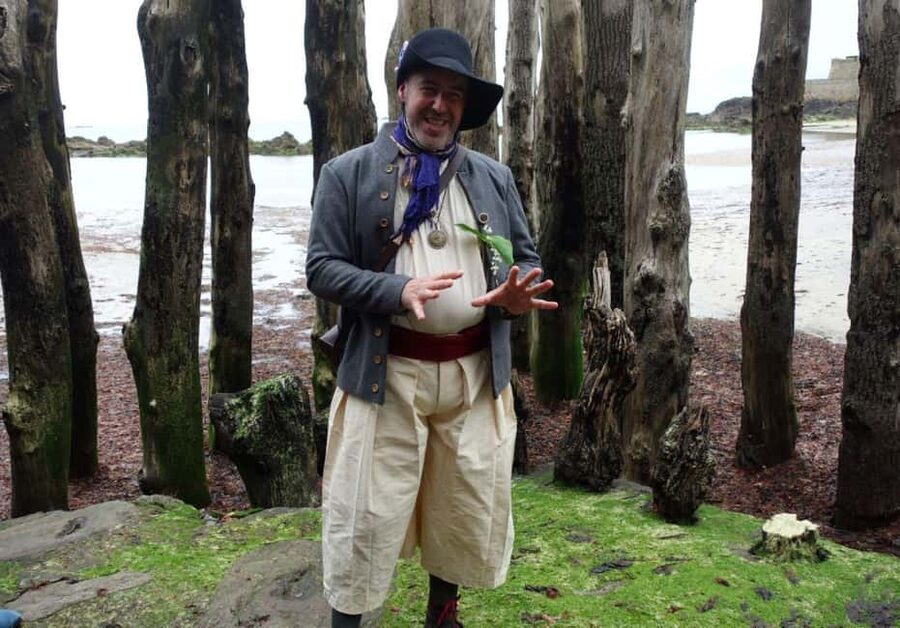
- Pierre the Surcouf-era guide: you get an insider-style storyteller, not just a lecturer
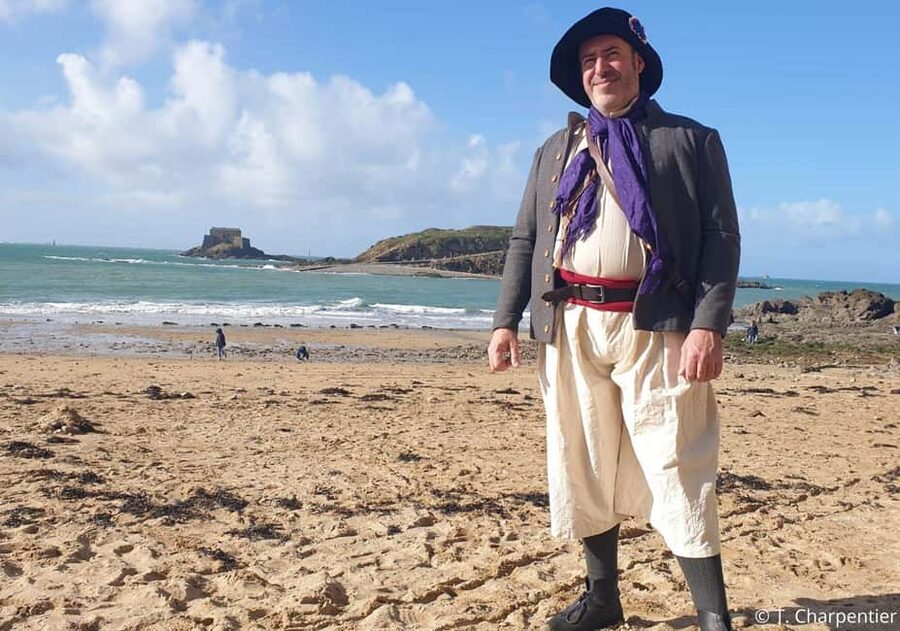
- Period costume, done for effect: the outfit and character help the 18th century feel real
- A fortifications-to-coast walk: old-town streets connect to the sea, step by step
- Grande Bé as the payoff: rocky beaches plus big coastal views
- Revolution to First Empire context: the story tracks upheaval, not just pirates-at-sea fun
Meeting Saint-Vincent Cathedral and Finding Your Corsair
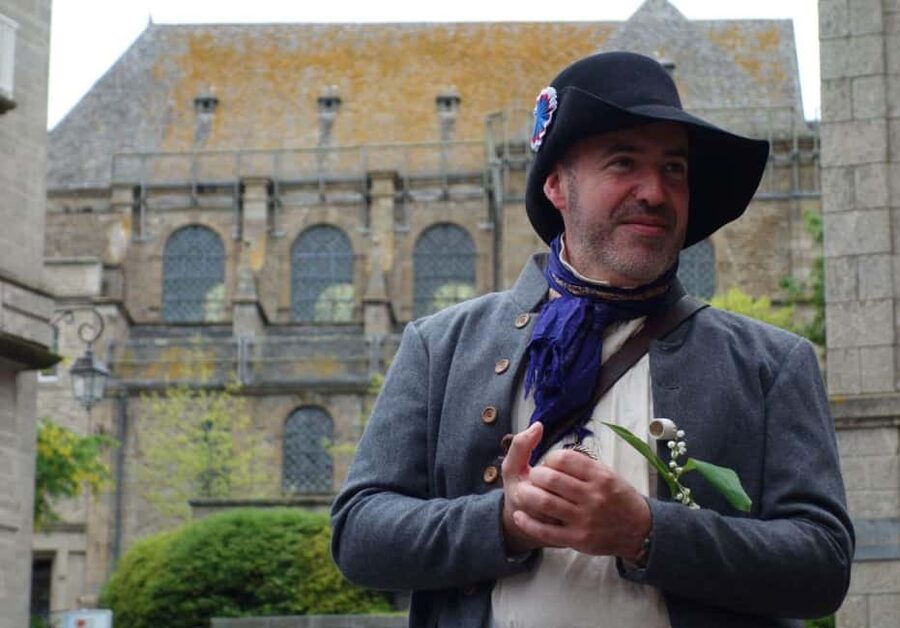
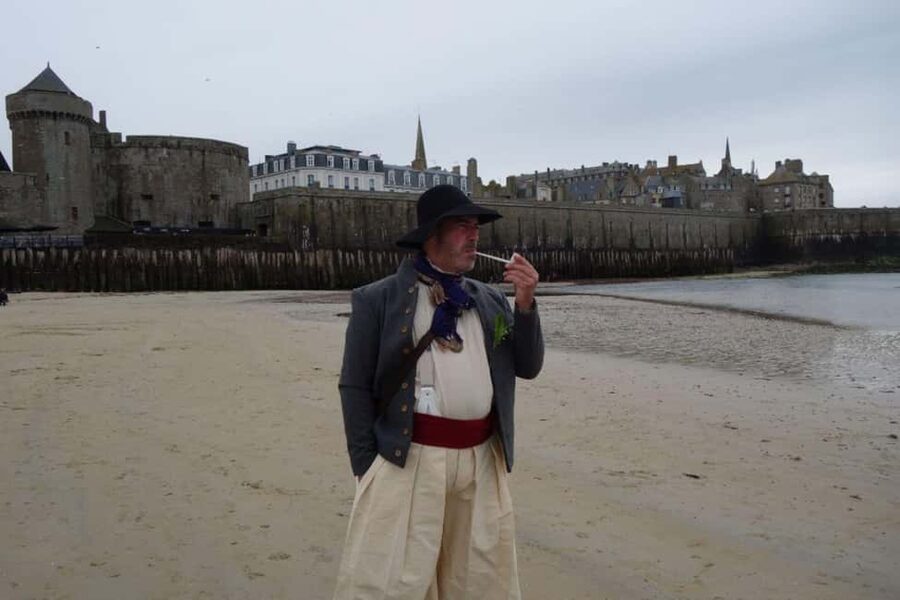
This tour starts where Saint-Malo’s story shows up fast, at the entrance of Saint-Vincent Cathedral. You’ll meet your guide right there, and you should spot him easily because he’s in historical outfit. That matters more than you might think. When your guide looks the part from the first minute, the rest of the walk feels like a time jump, not a standard sightseeing loop.
You also need to plan for a practical reality: this is a 2-hour experience with walking. The terrain includes a rocky beach stretch later, so your shoes should be comfortable and grippy. Even if you are the type who likes to pack light, bring something you can walk on when the ground turns uneven.
One more detail that helps: the tour is live guided and in French. If your French is basic, it can still work because the guide’s delivery is built around performance and storytelling, but you will get the most when you follow the plot beats. If you’re traveling with friends who are strict about language limits, this is worth considering.
Elsewhere in France, also good:
- Paris: 1-Hour Seine Cruise departing from the Eiffel Tower
★ 4.4 · 77,472 reviews - Disneyland® Paris 1-Day Ticket
★ 4.6 · 49,412 reviews - Paris: Versailles Palace and Gardens Full Access Ticket
★ 4.6 · 41,579 reviews
Saint-Malo’s Streets as a Corsair Map
Saint-Malo is known for its harbor identity, but the charm of this experience is how it connects that maritime world to the tight streets and fortified feeling of the city. You’re not just looking at buildings. You’re walking through them as if you’re moving with a crew preparing for the next uncertain sea day.
I like that the guide ties the city’s layout to the corsair lifestyle. You’ll hear how alliances mattered, how strategy shaped risk, and how the same coast could be both workplace and battlefield. That framing gives you a better lens for understanding what you see. Even if you already know the basics of corsairs, the way the guide narrates the century helps you connect dots between everyday streets and high-stakes maritime decisions.
There’s also a performance element that really lands. In the group atmosphere, you can feel that the guide is fully in role, and people respond to it like it’s real work. It’s not just costumes for photos. It’s the way he speaks and gestures, and it keeps you paying attention, especially when you’re hearing about shifting loyalties and sudden political changes.
If you’re the type who loves vivid storytelling, you’ll likely enjoy the pace here. You get walking, you get narration, and you get the sense of a guided chapter that follows the coast’s logic.
Grande Bé: The Rocky Finish and the Views That Make It Worth It
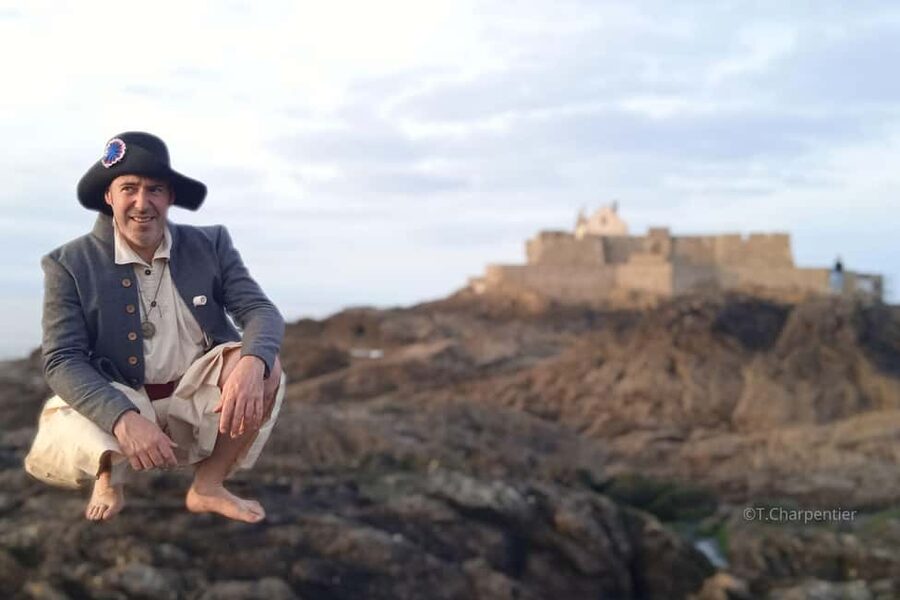
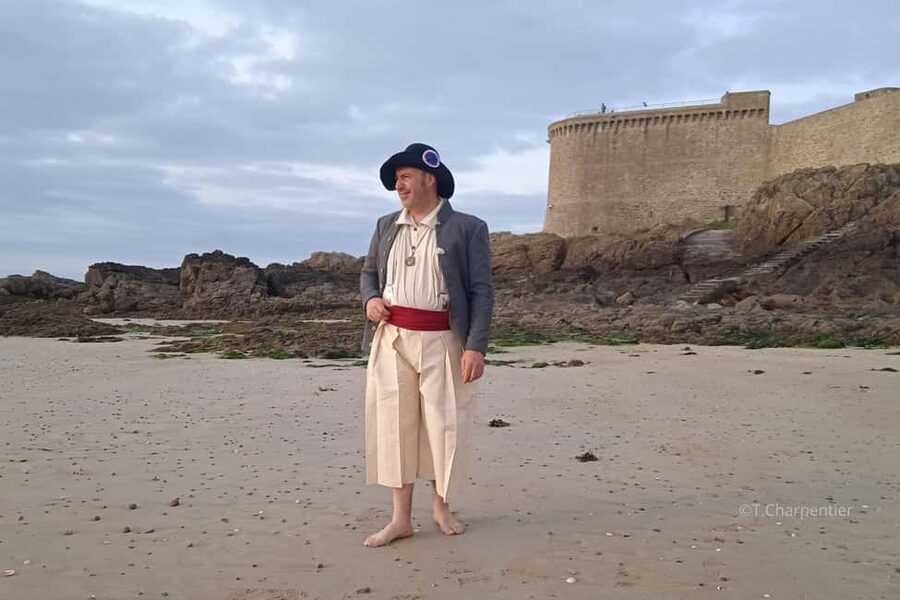
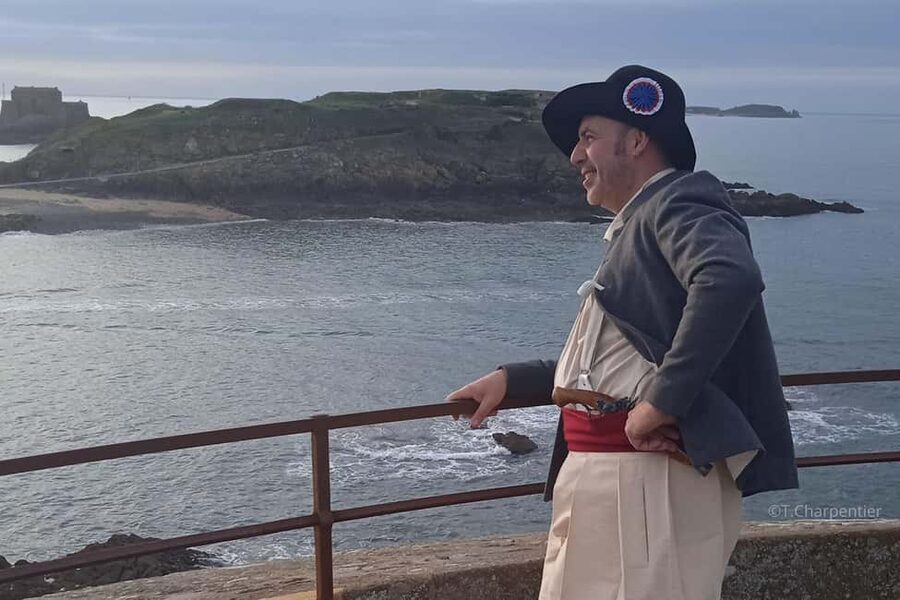
The climax of the walk is the move out toward Grande Bé, ending with rocky beaches and open sea views. This is the part you can’t fake with a photo. When the guide positions the story against the actual shoreline, you understand why coastal geography mattered so much in the 18th century.
What you’re going to feel here is simple: the sea is not background. It’s the main stage. The final stretch is described as rocky, and you should trust that. Bring shoes you can handle on uneven ground, because the terrain is part of the experience. If you come expecting easy pavement, you’ll be annoyed at best and uncomfortable at worst.
Even in bad weather, you still get the payoff because coastal spaces keep their drama. Rain does not ruin the view concept. Wind can make the sea look even more dramatic. Just know you are likely to get a bit damp, so dress accordingly.
If you only have time for one stop in Saint-Malo that gives you a “this is why they fought here” moment, Grande Bé does a lot of that heavy lifting in a short window.
The Historical Upside: Understanding Revolution to First Empire
The storyline doesn’t just sit in a pirate-adventure bubble. It tracks an era when power and loyalties changed fast, moving from the Revolution toward the First Empire. That is a big deal for how you interpret what you hear on this walk.
Corsair life, in this framing, becomes more than sea raids and tall tales. You start to see the logic behind risk. In unstable political moments, maritime actors had incentives, pressures, and opportunities that weren’t the same year to year. The guide’s focus on upheavals helps you understand why a city like Saint-Malo could look outward so intensely.
You’ll also hear a sense of how alliances worked like strategy, not like romance. That’s how the century feels in practice: everything shifts, and crews had to navigate uncertainty while keeping their operations running. Once you hear it this way, the city and coastline stop being scenery and start being “terrain for decisions.”
If you are a history-only-at-museums person, this might still work. The tour doesn’t drown you in dates. It uses the 18th-century setting to explain why the people in the story behaved the way they did.
Within easy reach:
- Paris: Arc de Triomphe Rooftop Tickets
★ 4.6 · 34,264 reviews - Paris: Orsay Museum Entry Ticket
★ 4.7 · 25,647 reviews - Paris: Evening River Cruise with Music
★ 4.4 · 22,721 reviews - Paris: Eiffel Tower Entry Ticket with Optional Summit Access
★ 4.4 · 20,035 reviews
Pierre’s Surcouf Connection: Why the Guide Makes the Difference

This tour is led by Pierre, and the most important detail is that he has a personal, character-driven connection to Captain Surcouf’s world. You’re not getting a guide who simply reads facts off a board. Pierre tells the story from an angle that emphasizes seamanship thinking, crew mentality, and the way strategy and danger braided together.
That Surcouf tie gives the narrative spine. Surcouf is not treated like a distant name. You get him as part of a local culture and a fearless spirit associated with Malouin corsairs at the turn of the century. Even if your knowledge of Surcouf is limited, the guide’s structure helps you follow.
The other reason I like Pierre’s approach is that it tends to stay understandable. In the anecdotes around his role performance, the pattern is consistent: he communicates in a way that keeps people engaged and makes the story easier to grasp. The result is that you spend less time translating in your head and more time actually listening.
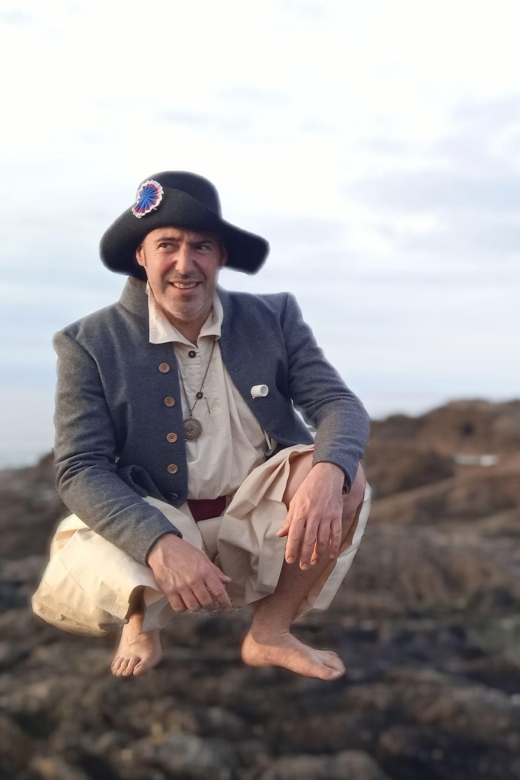
And because the guide wears period costume, you get a visual reminder while the story shifts through political upheaval. That combination is what turns a city walk into a narrative walk, with a clear beginning, middle, and shoreline finale.
Price and Value: $23 for Two Hours That Actually Moves
At $23 per person for a 2-hour guided tour, this is priced like a short, ticketed experience rather than a full-day excursion. The value comes from three things you cannot easily replicate alone.
First, you get a professional guide in historical outfit, speaking live in French. That storytelling layer is the product. You are paying for interpretation, pacing, and the narrative link between old town streets and the coast at Grande Bé.
Second, the Surcouf connection through Pierre makes the history feel specific. Generic pirate tours can stay vague. Here, the story is anchored to a named figure and a crew perspective.
Third, the tour ends where the city’s sea drama matters most. Many visitors wander Saint-Malo and then separately find Grande Bé on their own. This ties those pieces into one clean arc, with the guide helping you read the shoreline through the lens of corsair life.
If you’re spending only a day or part of a day in Saint-Malo, this kind of short guided format is a good use of time. Two hours is long enough for a real arc, but short enough that you can still fit in other sights, especially if you prefer not to stack too many commitments in one day.
Who This Tour Suits Best (And Who Should Skip It)
This experience is best for people who like history that has a voice. If you enjoy stories where the setting matters, and you want Saint-Malo’s coastline explained through maritime strategy, you’re in the right place.
It is also a solid pick for families with older kids, as long as they meet the age requirement. The tour is not suitable for children under 8, so plan accordingly.
The biggest “no” is mobility. The tour is not suitable for people with mobility impairments, and it includes rocky beach walking. If that is you, you would likely find the ground conditions and route challenging.
Finally, if you need zero walking in your itinerary, this is not a match. Comfortable shoes are explicitly recommended, because the rocky beach segment is part of the deal.
Timing, Weather, and What to Bring So You’re Comfortable
The tour runs rain or shine. So if your travel style includes checking weather apps and expecting your day to stay dry, adjust your mindset. Plan for damp conditions and for wind near the sea.
Your packing list is simple:
- Comfortable shoes with good traction
- Clothing you can wear in variable coastal weather
That’s it. The walking pace and rocky terrain are the real considerations. Once you’re comfortable underfoot, the story takes over and you’ll likely forget you were worried about the weather.
Should You Book Saint-Malo: The Fate of Last Corsairs?
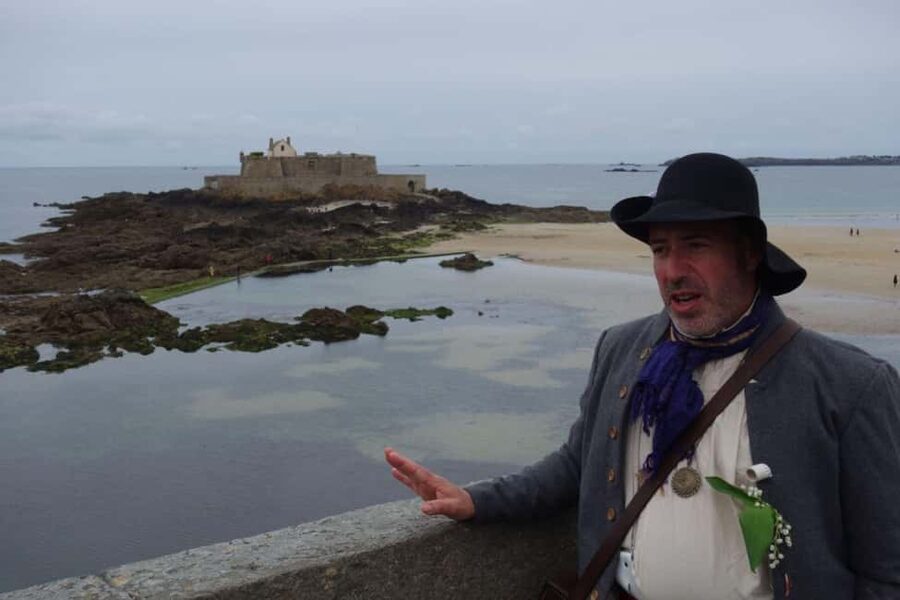
I think you should book this tour if you want a short, story-driven way to understand Saint-Malo through its corsair past, with a guide who brings that world to life in period costume. The Pierre angle and the Surcouf connection add specificity, and the Grande Bé rocky shoreline payoff makes the walking feel earned, not like a chore.
I would skip it if you cannot do rocky ground, if you’re traveling with a child under 8, or if you need an entirely indoor or flat-walk experience. Also, because the tour is in French, you should only book if you’re comfortable with French narration, even if you don’t understand every word.
If you’re on the fence, this is the kind of 2-hour experience that tends to leave you with a stronger picture of the coast than you would get from browsing alone. It’s value-focused, paced for real attention, and built around a place where the sea history is still visible.
FAQ
How long is the Saint-Malo corsair tour?
It lasts 2 hours.
What is the meeting point?
You meet your guide at the entrance of Saint-Vincent Cathedral. You can recognize him by his historical outfit.
Is the tour available in languages other than French?
The live tour guide is French.
Does the tour run in bad weather?
Yes, it takes place rain or shine.
What should I bring?
Wear comfortable shoes, since part of the tour involves walking on a rocky beach.
Is hotel pickup included?
No, hotel pickup and drop-off are not included.
Is it suitable for young children or mobility needs?
It is not suitable for children under 8 and not suitable for people with mobility impairments.
Newly listed around France
- Visit the lavender fields, the Gorges du Verdon and Moustiers.★ 5.0 · 17 reviews
- Provence small group half-day wine tour from Aix★ 4.5 · 18 reviews
- Monaco & the French Riviera – From AIX★ 4.5 · 20 reviews
- Picturesque Luberon – From AIX-EN-PROVENCE★ 5.0 · 55 reviews
- Luberon Market & Villages Day Trip from Aix-en-Provence★ 5.0 · 250 reviews
- Lunch in Provence: Discovering Local Flavors in Aix-en-Provence★ 5.0 · 38 reviews
- 5-Hours Lavender Fields Tour in Valensole from Aix-en-Provence★ 5.0 · 42 reviews
- Half day Wine Tour in Côtes de Provence Sainte-Victoire from Aix en Provence★ 5.0 · 27 reviews