
Reviewed · LOUVRE HIGHLIGHTS GUIDED TOURS
Skip-the-Line Louvre Museum Tour with Artist
A Louvre visit can feel like a maze. This tour helps you move with confidence, with skip-the-line entry and a certified artist-guide who teaches you how to look at art like an artist, not a tourist. I like the small-group pace and the way the guide ties masterpieces to technique. One drawback to consider: it is a 2 hour highlights format, so you will not see everything.
You meet at Le Kiosque des noctambules, then head to the Louvre Pyramid for reserved entry. The tour runs with live guidance in Albanian, English, or French (audio headsets are used when available), and the group is kept to no more than 6 people. That size matters here. In a museum this huge, you want time to ask questions and actually keep up.
In This Review
- Key points that make this Louvre tour work
- Why a painter-guide changes the Louvre game
- Meeting at Le Kiosque des noctambules: start easy, start in the right place
- The Louvre Pyramid and reserved entry: the time you save is the time you keep
- The 2 hour highlights route: seeing Mona Lisa, Venus de Milo, and Nike up close
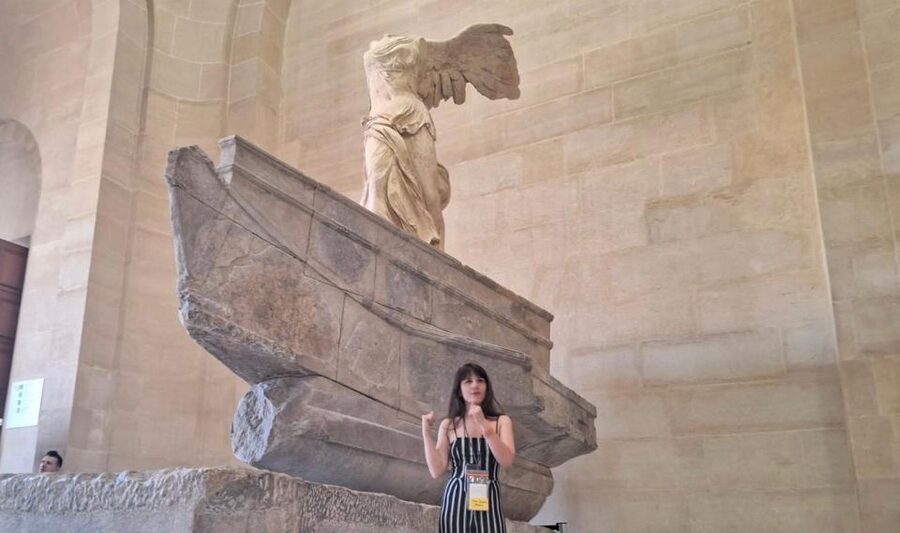
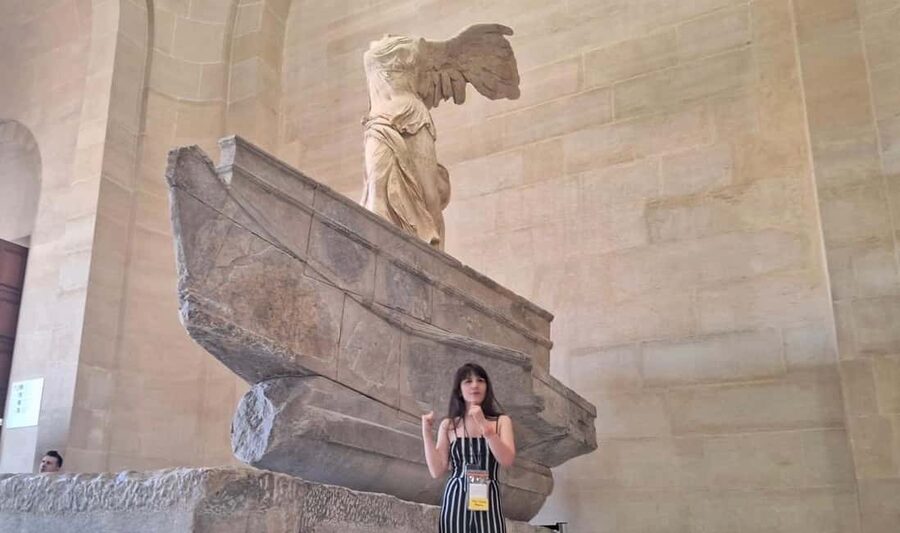
- Close looking at Nike: drapery, motion, and why the details matter
- Venus de Milo: the power of silhouette and form
- Mona Lisa: interpreting the aesthetic language, not just the fame
- How the guide teaches: certified artist, live storytelling, and real questions
- Group size, pace, and what you trade for comfort
- Practical logistics that actually matter on Louvre day
- Is the $246 price actually fair for a Louvre tour?
- Who should book this Louvre skip-the-line artist tour?
- Should you book this Louvre skip-the-line tour with an artist?
- FAQ
- Where do we meet for this tour?
- How do I get to the meeting point by metro?
- Is skip-the-line entry included?
- How long is the tour, and what group size should I expect?
- What languages are offered?
- Is this tour suitable for wheelchair users?
Key points that make this Louvre tour work

- Small group, max 6 visitors, so the experience stays human sized
- Skip-the-line access with reserved tickets through a separate entrance
- Certified artist-guide (also a painter), with technique-focused explanations you can use
- Close encounters with Mona Lisa, Venus de Milo, and Nike
- From Greek Antiquity to the Italian Renaissance, a clear path through the Western canon
- Audio headsets when available, so you can hear your guide in louder galleries
Why a painter-guide changes the Louvre game
The Louvre is famous for being big. It is also famous for being overwhelming. What I like about this tour is that it treats the museum as something you can learn in real time, not just wander through.
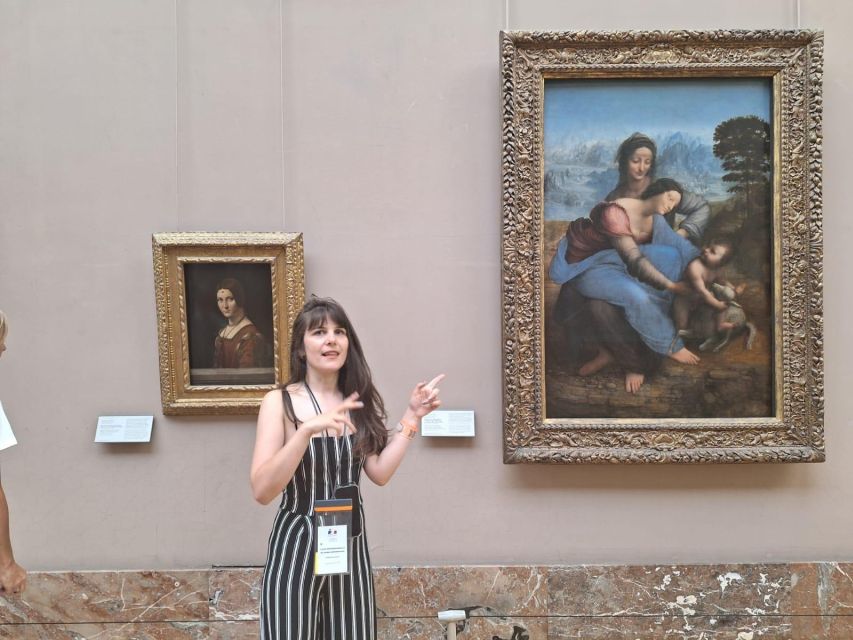
A painter-artist guide brings a different kind of attention. Instead of only dates and famous names, you get help noticing how a work is built. The tour is designed around understanding artistic techniques, including insights tied to masters like Da Vinci. That shift is practical: once you can spot how an artist creates depth, texture, or mood, you can walk through other rooms afterward and keep using the same mental tools.
The second thing I value is the pace. With a tiny group and a 2 hour plan, you are not trying to sprint across half the museum. You are given a guided route that concentrates on what to look for, when to look, and how to interpret what you see.
The tradeoff is simple. You are paying for focus. If you want a self-directed marathon of every wing, this format will feel short.
More Louvre entries and guided rounds:
- Paris: Louvre Guided Tour with Reserved Access & Boat Cruise
★ 4.3 · 16,353 reviews - Louvre Museum Masterpieces Guided Tour with Access
★ 4.5 · 12,023 reviews - Paris: Louvre Overview, Exploration tour and Reserved Entry
★ 4.1 · 10,145 reviews
Meeting at Le Kiosque des noctambules: start easy, start in the right place
You do not meet at the Louvre. You meet at Le Kiosque des noctambules by Jean-Michel Othoniel, a Murano glass beads sculpture located across from the Comédie Française.
This is one of those details that can make or break your day, because the Louvre area is busy and security lines can be unpredictable. Meeting outside lets your group gather calmly, meet the guide, and get oriented before you head into the museum. It also helps you avoid the common stress of arriving late and scrambling at the entrance.
Getting there is straightforward if you use the metro. The recommended station is Palais Royal – Musée du Louvre, with the Place Colette exit. Comfortable shoes matter because you will be walking through museum corridors after entry.
Also note the identity rule: you should bring your passport or ID card. An ID copy is accepted, according to the tour info.
The Louvre Pyramid and reserved entry: the time you save is the time you keep
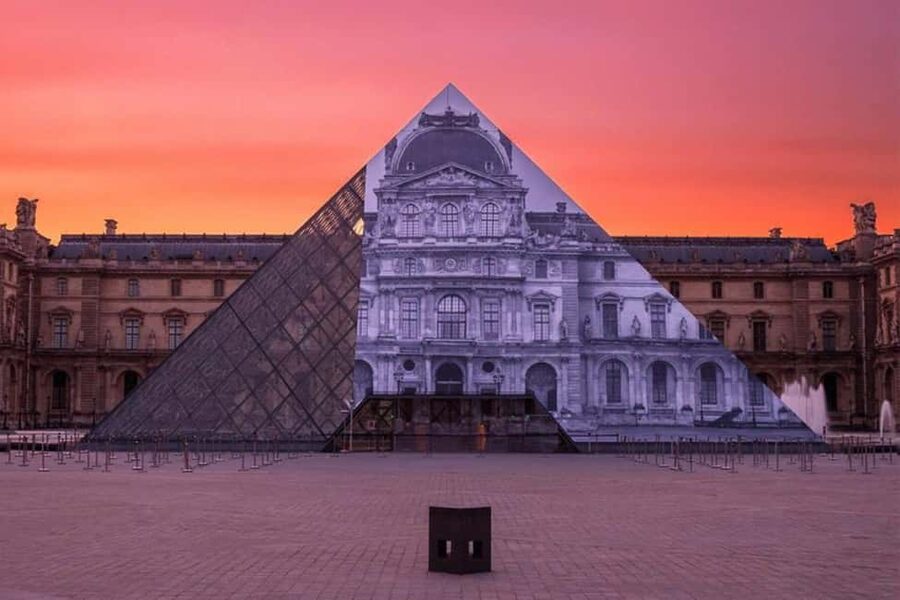
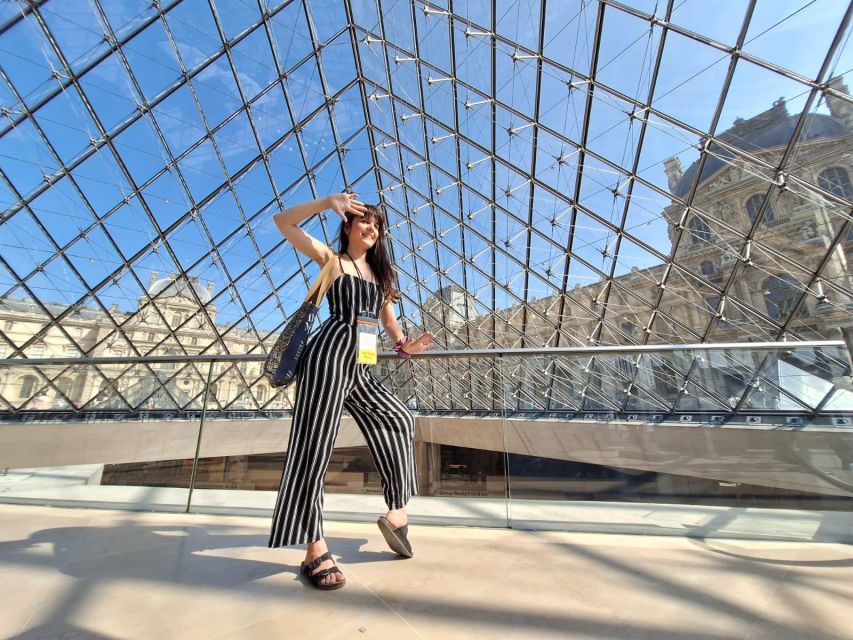
After meeting, your group goes to the Louvre Pyramid. This is where the tour begins in a more organized way, with guided orientation at the start of your visit.
The biggest practical advantage here is reserved entry via a separate entrance. That means you are not stuck in the long general admission line. In a museum like the Louvre, saved time is not just convenience. It protects your energy. It also gives you more chance to actually enjoy the art instead of spending your best morning in transit queues.
Your guide also uses those early minutes to set expectations. You are not just receiving tickets, you are getting direction. That is where a small group shines. If you have questions about what you want to prioritize, your guide can steer the route to match your interests within the 2 hour window.
If you prefer a slow arrival, the 2 hour duration can feel like a sprint once you are inside. But with the reserved entry and the planned highlights, the tour keeps you moving with purpose.
The 2 hour highlights route: seeing Mona Lisa, Venus de Milo, and Nike up close

This is the heart of the experience: a guided museum tour focused on the Louvre’s most requested masterpieces, but framed with interpretation and technique.
You get to follow a path through major art periods, tracing the evolution of art history from Greek Antiquity to the Italian Renaissance. That matters because it turns isolated famous objects into a story. Instead of thinking, This is a statue, this is a painting, you start seeing how ideas and styles change over time.
Other Paris bookings to consider
- Paris: Orsay Museum Entry Ticket
★ 4.7 · 25,647 reviews - Paris: Louvre Museum Entry Ticket With Host and River Cruise
★ 4.6 · 9,926 reviews - Les Invalides: Napoleon’s Tomb & Army Museum Entry
★ 4.6 · 9,185 reviews - Louvre Museum – Exclusive Guided Tour (Entry Included)
★ 5.0 · 6,296 reviews
Close looking at Nike: drapery, motion, and why the details matter
Nike is a centerpiece of the tour’s approach. The guidance specifically calls out close observation of Nike’s flowing folds. That is a smart teaching method because it forces you to stop treating sculpture as a single shape and start seeing the artist’s work in surface and form.
In plain terms, you practice looking for the “how.” How does the stone or sculpted form suggest movement? How does the figure guide your eye? Those observations are exactly the kind of skills you can carry to other rooms later.
Venus de Milo: the power of silhouette and form
Venus de Milo is another highlight where you get more than a quick glance. The tour encourages you to interact with the art on a personal level and learn how to interpret art history through what you see.
Even without technical art jargon, you can learn to read the work. Start with the overall proportions, then look at how the form is simplified and controlled. A guide helps you avoid the common mistake of only searching for one angle that gets a good photo. Instead, you learn what to pay attention to in person.
Mona Lisa: interpreting the aesthetic language, not just the fame
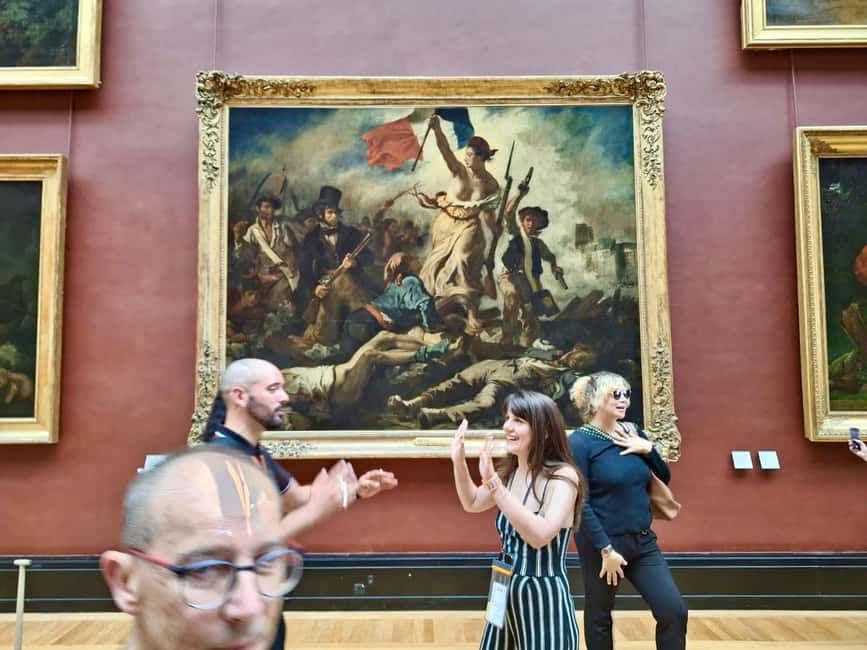
Mona Lisa is where many Louvre tours rush. This one is built around the idea of a real encounter. You get a close experience, paired with help interpreting the aesthetic language of the painting and understanding the significance behind what people fixate on.
A certified artist-guide can add something useful here because you are not only learning the history. You are learning how artists create effects, how a portrait communicates presence, and how attention is guided across the surface.
If you have seen Mona Lisa in photos before, the big win is that you can now compare what you expected with what you actually see in person, and you can ask why it works. That is hard to do when you are standing in a crowd and moving every few seconds.
How the guide teaches: certified artist, live storytelling, and real questions
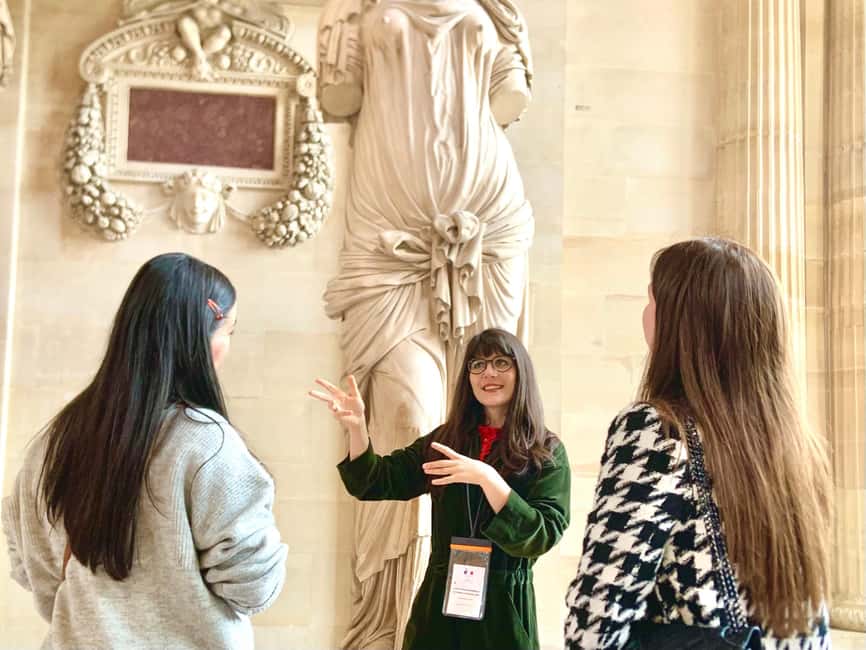
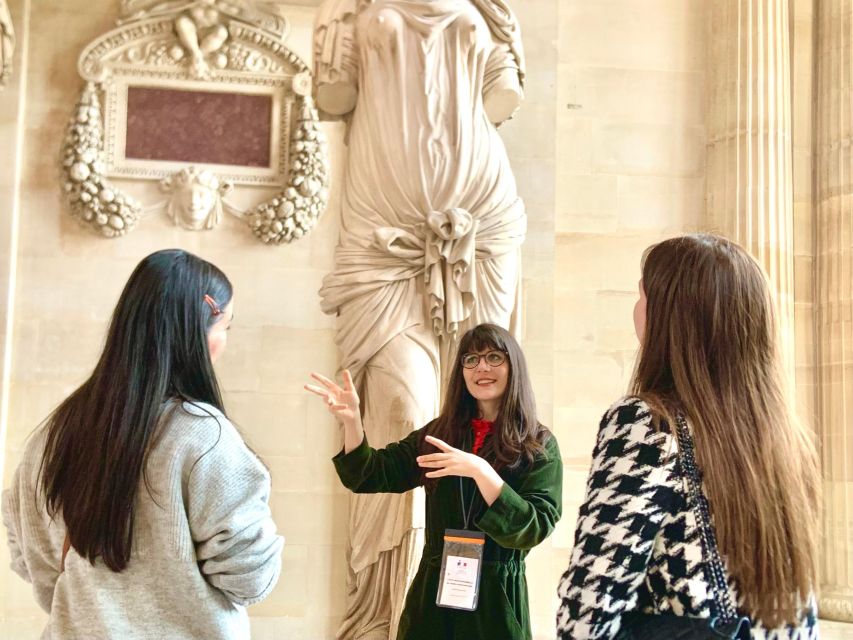
This tour is led by a live certified artist-guide who is also a painter. That combination shows up in the way the explanations are structured: you get context, then you are guided back to specific visual elements.
You can see the payoff in the review style of feedback, where people highlight how guides like Blerta and Arianna handle questions and create a pace that works for different ages. Guides are also described as engaging with kids and helping families keep up without getting lost in jargon.
One review also notes that Blerta worked to minimize stairs for mobility needs. That is a helpful detail to consider if you have limited mobility. At the same time, the tour info states it is not suitable for wheelchair users. So if you use a wheelchair, you will need a different plan.
If you do not speak French, the tour offers Albanian, English, and French. That matters here because art history can get confusing fast when you are doing it through translation shortcuts.
Finally, audio headsets are included when available. In busy galleries, that can be the difference between catching the story and missing it.
Group size, pace, and what you trade for comfort
This tour caps the group at no more than 6 visitors. That is the sweet spot for a museum guide. You are close enough to hear, but not so close that it feels crowded and tense.
With a 2 hour duration, you will cover a guided set of key works, not the entire Louvre. That is a drawback if you want a broad survey across dozens of departments. It is also a benefit if you are time-limited and want to leave with real understanding, not just images in your phone.
The tour format also gives you a better chance to customize your priorities, at least to the extent that the highlights route allows. One family-specific approach was mentioned in feedback as guides asking what the group wanted and shaping the experience accordingly.
Practical logistics that actually matter on Louvre day
Here are the nuts and bolts that affect your comfort and flow.
What is included
- Shared tour of the Louvre Museum
- Entry tickets to the Louvre
- Live artist guide
- Audio headsets when available
What you should plan for
- No pickup or drop-off, so you will need to get yourself to the meeting point
- Bring passport or ID card, comfortable shoes, and a reusable water bottle
- ID card copies are accepted
What is not allowed
- Weapons or sharp objects
- Food and drinks
You also want to be mindful of your energy. You are walking through a large museum during peak hours in many seasons. Comfortable shoes are not optional if you want to enjoy the art instead of thinking about sore feet.
Is the $246 price actually fair for a Louvre tour?
At $246 per person for a 2 hour tour, you are not paying for access alone. You are paying for three value drivers that tend to cost real time and frustration on your own:
- Reserved entry via a separate entrance, which helps you avoid the worst waiting.
- A small group, which means you are not competing with crowds for your place near the art.
- An artist-guide’s interpretation, which turns famous works into learnable lessons.
If you have limited time in Paris, that can be a smart trade. A Louvre self-guided day can easily turn into a “see everything, remember nothing” experience, simply because you do not know what to look for first.
On the other hand, if you already love art history and you are comfortable creating your own route, you may feel like this is more than you need. The best match is someone who wants structure and explanation, not just admission.
Who should book this Louvre skip-the-line artist tour?
I think this tour fits best if you:
- Want a high-impact Louvre visit focused on the big masterpieces
- Like art history, but want it explained in plain, visual terms
- Are traveling with kids or teens and need an approach that keeps them engaged
- Prefer a small group over a large coach-style tour
- Appreciate a guide who teaches technique-focused looking
I would skip it (or plan carefully) if you:
- Need wheelchair access, since the tour info states it is not suitable for wheelchair users
- Want a slow, open-ended tour across many departments with no schedule pressure
- Have no interest in guided interpretation and only want to browse
Should you book this Louvre skip-the-line tour with an artist?
Yes, if you want to walk out of the Louvre feeling like you understand what you saw, not just that you saw the famous highlights. The combination of skip-the-line reserved entry, tiny group size, and a painter-artist guide is exactly what helps the Louvre feel manageable in 2 hours.
Book it especially if Mona Lisa, Venus de Milo, and Nike are on your must-see list and you also want help interpreting why they matter. If your priorities are broader than that, you might consider a longer museum plan. But for many first-time visitors, this is a strong “high value per hour” way to do the Louvre.
FAQ
Where do we meet for this tour?
You meet at Le Kiosque des noctambules by Jean-Michel Othoniel, across from the Comédie Française. The tour does not meet at the Louvre itself.
How do I get to the meeting point by metro?
Use Palais Royal – Musée du Louvre metro station and exit at Place Colette.
Is skip-the-line entry included?
Yes. The tour includes entry tickets to the Louvre and skip-the-line access through a separate entrance.
How long is the tour, and what group size should I expect?
The tour lasts 2 hours, and the group is limited to no more than 6 visitors per tour.
What languages are offered?
The live tour guide offers Albanian, English, and French.
Is this tour suitable for wheelchair users?
No. The tour is not suitable for wheelchair users.
Newly listed around Paris
- The voice of Montmartre is a must-see in Paris★ 3.8 · 19 reviews
- Top Private Cruises in Paris with Champagne + more surprises★ 5.0 · 309 reviews
- The Official Emily in Paris Montmartre Walking Tour★ 4.7 · 40 reviews
- The Paris Pass® Plus: 90+ Attractions including The Louvre★ 3.4 · 386 reviews
- The Official Emily in Paris Wine & Cheese with Butter Making★ 4.9 · 20 reviews
- The Official Emily in Paris Locations Walking Tour★ 4.9 · 383 reviews
- The Official Emily in Paris Macaron-Making Workshop★ 4.9 · 68 reviews
- The Official Emily in Paris Croissant-Making Workshop★ 4.9 · 85 reviews
Louvre Highlights Guided Tours, compared.

Louvre Guided Tour with Reserved Access & Boat Cruise
Read our review →
Louvre Museum Masterpieces Guided Tour with Access
Read our review →
Louvre Overview, Exploration tour and Reserved Entry
Read our review →
Louvre Museum Entry Ticket With Host and River Cruise
Read our review →
Mona Lisa & Louvre Masterpieces Tour with Reserved Access
Read our review →
Louvre Museum – Exclusive Guided Tour (Entry Included)
Read our review →
Louvre Museum Hosted Entry and Mona Lisa Audioguide
Read our review →
Louvre Access with Mona Lisa Escort or Guided Option
Read our review →Browse the lists this tour appears in