
Reviewed · HISTORICAL TOURS
Strasbourg on Foot: Historic Center and Petite France with a Local Guide
Strasbourg gets easier on foot. This 2-hour walk strings together the city’s biggest symbols and its most charming medieval corners, with a local guide who turns famous landmarks into a connected story from start to finish. I like that it begins at Place Kléber and ends in La Petite France, so you go from main-street energy to slow-water postcard calm without getting lost.
Two things I really like: you get real architectural payoff at Notre-Dame Cathedral (including the multicolored stained glass light and the astronomical clock at certain times), and you finish in the canals-and-half-timbered atmosphere of La Petite France with a guided, paced walk that helps you spot what matters.
One possible drawback: this tour is only 2 hours, so you won’t have endless time at any single stop. Also, cathedral clock moments depend on timing, so if you miss the exact “wow” window, you’ll still enjoy the building, but the spectacle might be less dramatic.
In This Review
- Key points at a glance
- Place Kléber to your bearings in Strasbourg
- Notre-Dame Cathedral’s stained glass light and the clock moment
- Rohan Palace and the power story behind the halls
- Ponts Couverts: why the covered bridges were built
- Gutenberg Square and the craft-market layers of old Strasbourg
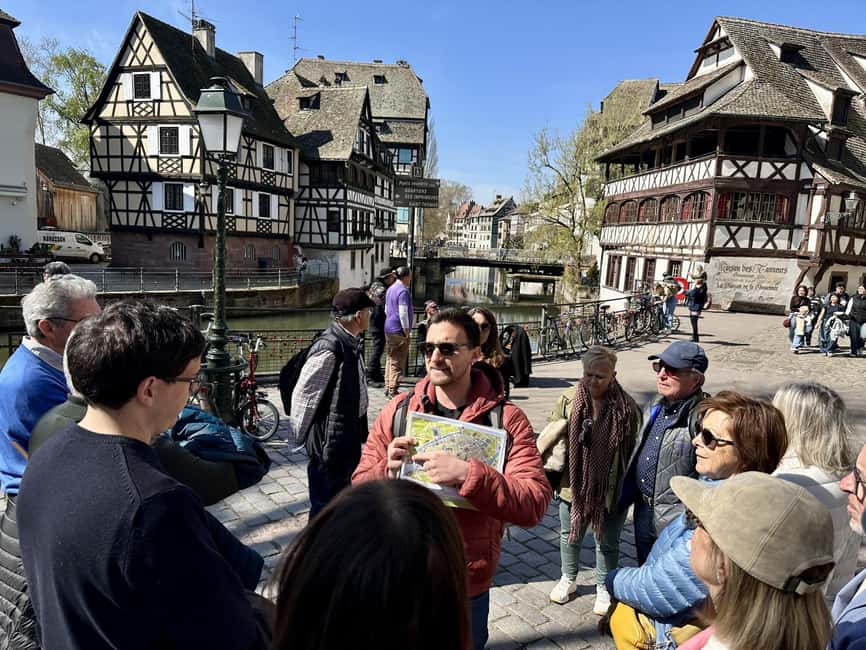
- La Petite France: canals, half-timbered houses, and a calm finish
- The sweet tasting and why the guide makes the difference
- Timing, languages, and how to plan your two hours
- Price and value at $34 for a guided historic walkthrough
- Should you book this Strasbourg on Foot tour?
- FAQ
- How long is the Strasbourg on Foot tour?
- Where does the tour start?
- Which languages are available?
- What is included in the tour?
- Does the tour include a visit inside Notre-Dame and Rohan Palace?
- Is cancellation or payment flexible?
Key points at a glance
- Place Kléber first: you start where the city naturally gathers, and the vibe can feel especially magical during Christmas season with the tree.
- Notre-Dame time with payoff: you’re positioned for the stained glass effect and the astronomical clock when it’s on display.
- Rohan Palace context: you learn why this 18th-century residence mattered politically and culturally, with stories tied to major historical names like Marie Antoinette and Napoleon.
- Ponts Couverts meaning: the covered bridges aren’t just pretty, you learn the defensive, urban-history reason they exist.
- Petite France guided walk: medieval canals, traditional houses, and cobbled streets are explained as you go, not after the fact.
- A sweet tasting plus practical tips: you get a typical Alsatian sweet and a city map with recommendations to keep your day going.
Place Kléber to your bearings in Strasbourg
If you want to understand Strasbourg fast, start at Place Kléber. It’s the beating heart of the city, and the tour plan uses that logic well. You get an easy warm-up right where people meet, shop, and flow through the city, which makes everything else you see feel less random.
During the Christmas season, this square turns into a festive stage with a towering Christmas tree that dominates the view. That matters because it gives you a visual reference point the moment you step off the tour, even later when the lights are off. The guide also starts with the essentials, so you’re not just following a route, you’re learning the city’s geography.
Practical tip: come with comfortable shoes. The whole experience is built around walking between historic zones, and the charm of Strasbourg is very much tied to its old streets and uneven surfaces.
Other Strasbourg bookings to consider
- From Strasbourg: Best Of Alsace Historical Day Trip
★ 4.7 · 633 reviews - Strasbourg: Guided Historical Neighborhoods Walking Tour
★ 4.9 · 275 reviews - Strasbourg: Private Walking Tour of the Historical Center
★ 4.2 · 107 reviews
Notre-Dame Cathedral’s stained glass light and the clock moment
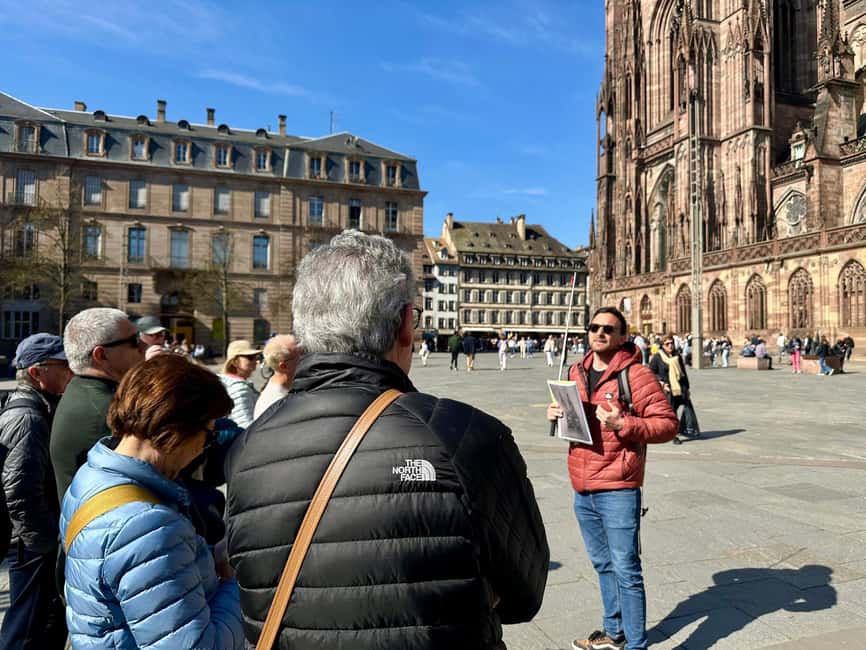
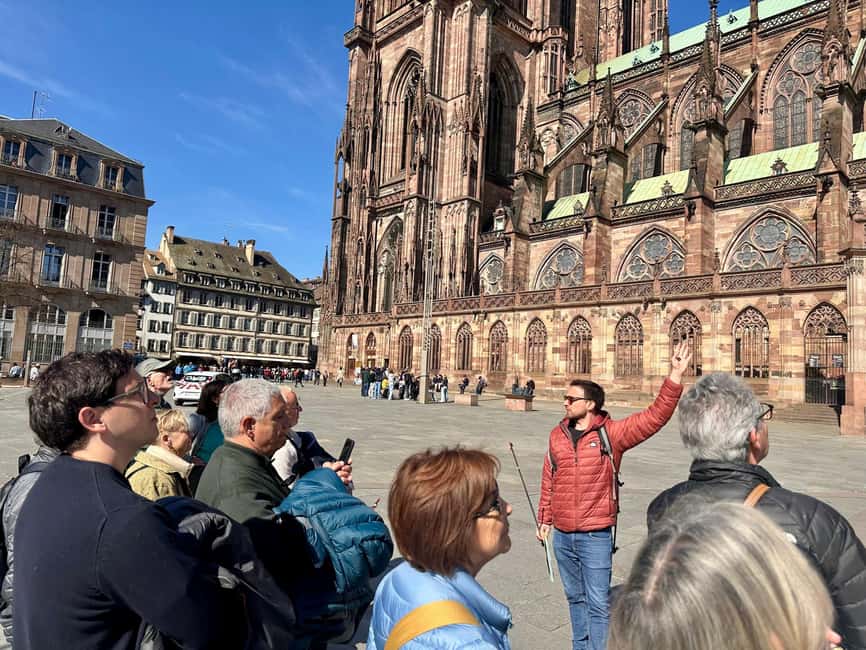
Next up is Notre-Dame de Strasbourg, and the tour gives this stop a smart chunk of time. The cathedral’s tower reaches about 142 meters, so even before you arrive, you’re pulled toward it visually. Once you’re there, the experience focuses on what you can actually see up close: medieval stained glass and the astronomical clock.
Here’s what makes this more than a photo stop. When light passes through those stained-glass windows, you get that multi-colored glow that makes the interior feel more like a living instrument than a static building. And then there’s the astronomical clock, which is described as a Renaissance-era masterpiece of precision. The key detail for your planning is that the clock spectacle happens at certain times of day, so if you time your visit well, you get that extra wow factor. If you don’t, you still benefit from having the clock explained in context.
A small consideration: cathedrals can be crowd-heavy around peak sightseeing hours. Your best move is to stay attentive to the guide’s instructions and not get stuck trying to get the perfect angle alone.
Rohan Palace and the power story behind the halls
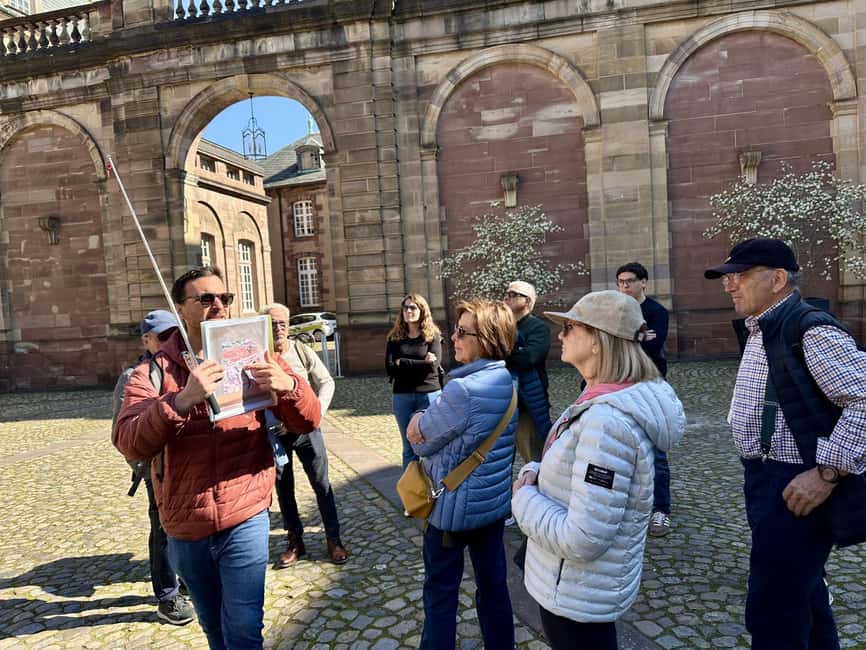
After Notre-Dame, the tour shifts from spiritual architecture to political and cultural influence with Palais Rohan. This is an 18th-century residence that once hosted princes and cardinals, so it’s not just a pretty facade. The guide’s job here is to connect the building to what Strasbourg represented over time.
You also get human history inside the big stone frame. The guide shares anecdotes involving figures like Marie Antoinette and Napoleon, showing how the palace sat in the orbit of European power. Even if you’ve read names in books before, this kind of storytelling turns them into something you can place on a map.
What I find valuable is how this stop supports the tour’s overall logic. You’re not bouncing around. You’re learning that Strasbourg’s identity was shaped by both faith and governance, and Rohan is where that balance becomes obvious.
Ponts Couverts: why the covered bridges were built
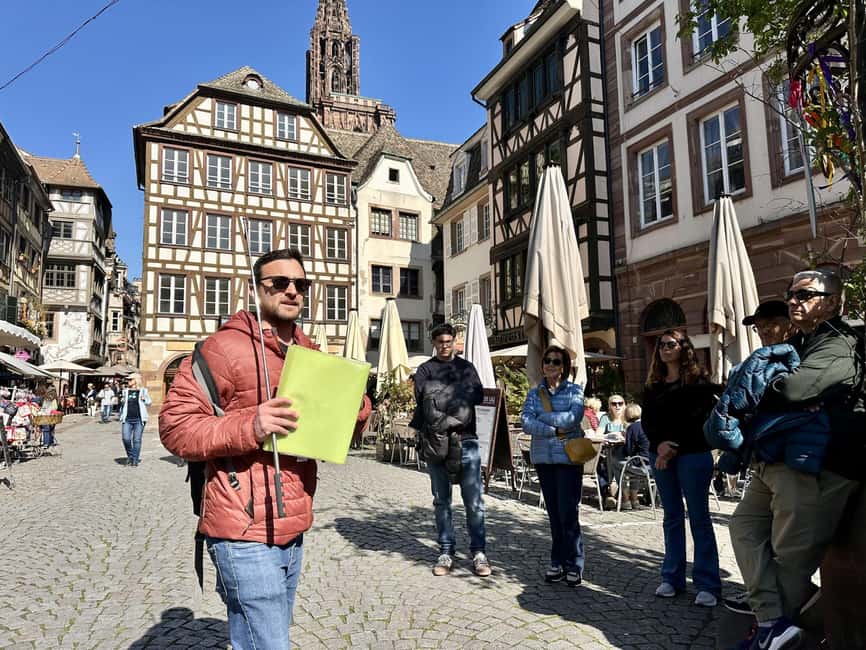
The Covered Bridges, known as Ponts Couverts, are one of those Strasbourg icons you recognize instantly in photos. But the tour’s angle is smart: it doesn’t treat them as scenery only. You learn that these medieval structures were once protected by wooden roofs and were part of the city’s defense system.
That framing changes how you see everything. You start noticing the defensive towers, the layout of the canals, and the way the bridges and waterwork supported Strasbourg’s protection and urban evolution. It’s a lesson in how practical engineering can also become beautiful in hindsight.
Photo tip: if the weather is damp (common enough in Alsace), move slowly. Stone by canals can be slick, and you’ll want your footing while you glance between towers, water, and bridge lines.
Within easy reach:
- Strasbourg: Euro Guided Tour by Segway
★ 4.7 · 808 reviews - Colmar, Medieval Village & Castle Small Group from Strasbourg
★ 5.0 · 769 reviews - 2-Hour Strasbourg Euro Tour by Segway
★ 5.0 · 642 reviews - Strasbourg Food Tour – A Taste of Tradition by Do Eat Better
★ 5.0 · 614 reviews
Gutenberg Square and the craft-market layers of old Strasbourg
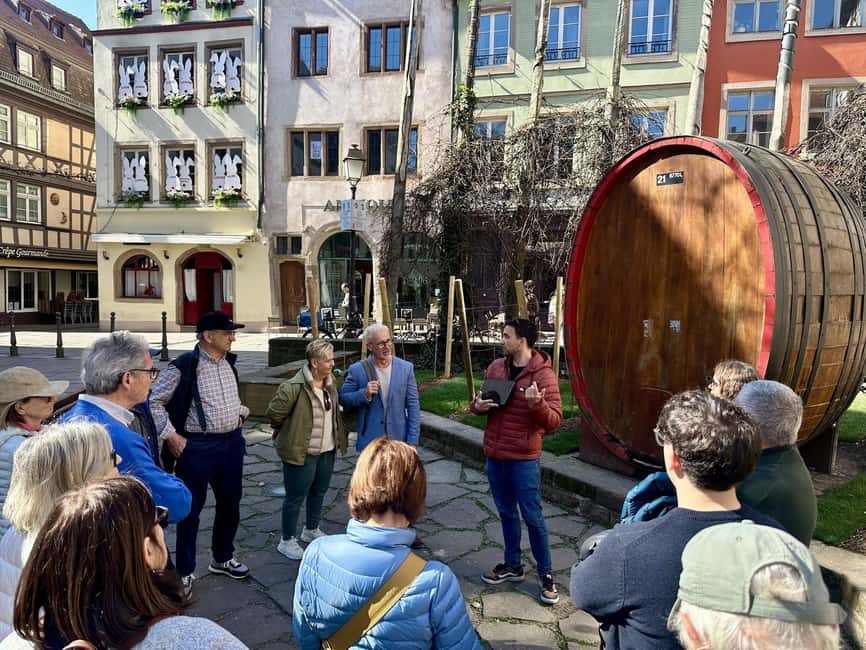
From there, the walk threads through several stops that add texture and help explain why Strasbourg’s old town developed the way it did. The tour includes L’ Ancienne Douane, Place des Tripiers, Place Gutenberg, and Église Saint-Thomas.
Here’s how to make these quick stops work for you.
- Place Gutenberg is positioned as the cultural and historical center, and the guide’s narration helps you connect the square to Strasbourg’s identity as a thinking, publishing, and intellectual hub.
- L’ Ancienne Douane points you toward the city’s trading past. When you understand it as customs and commerce space, the streets around it start to feel like parts of a bigger economic machine.
- Place des Tripiers is a reminder that old towns weren’t only about palaces and cathedrals. Markets and trades shaped daily life.
- Église Saint-Thomas rounds things out with another religious and architectural anchor, so the walk doesn’t become only civic and commercial.
And then there’s one extra theme woven through the whole route: the Tanners’ Quarter. Strasbourg’s old city identity traces back to artisanal crafts, and this part of the walk helps explain why certain streets feel specialized. You’re essentially learning how work shaped the neighborhood grid.
You won’t leave with a textbook map of medieval industry. But you will leave with a way to read the streets, which is what makes walking tours actually worth your time.
La Petite France: canals, half-timbered houses, and a calm finish
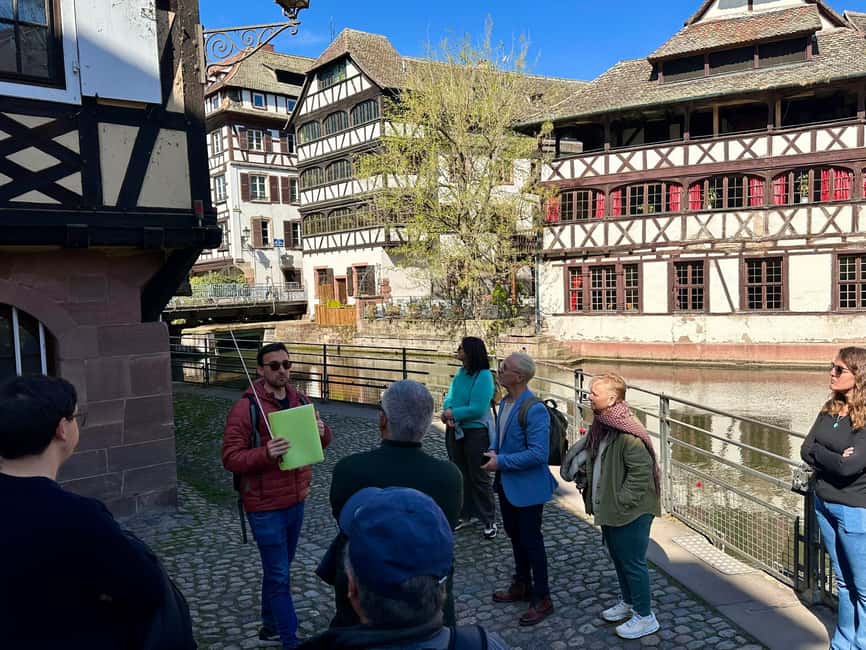
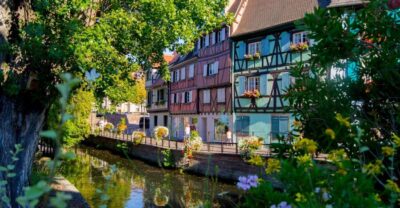
The finale is La Petite France, and this is where the tour delivers its strongest “slow down” payoff. This medieval neighborhood is known for canals, half-timbered houses, and traditional architecture. The tour describes it as a place linked to fishermen, tanners, and millers, so the area’s beauty doesn’t feel accidental.
What you’ll notice as you walk is the mix of romance and realism. Cobblestoned lanes and narrow streets encourage slow movement, while the canals bring a reflective calm that makes the neighborhood feel like it has its own tempo. The guide’s job is to help you see the details without rushing you past them, so you’re not just chasing postcards.
When the tour ends, you’re positioned in the heart of Petite France. That matters because you can keep going at your own pace immediately. Use the guidance and map you received to choose what to linger over, instead of guessing where to step next.
The sweet tasting and why the guide makes the difference
This tour includes a tasting of a typical Alsatian sweet, which might sound like a small bonus. But in practice, it helps you feel the region, not just study it. In at least some cases, the tasting has included things like gingerbread and cheese, which gives you a better sense of Alsace’s flavor mix.
More importantly, the guide role here is central. Many guides for this experience have been praised for weaving a narrative instead of tossing facts. Names you might encounter include Stefania, Leila, Maya, and Javier. The most consistent pattern across guide feedback is clear: they ask the group questions, answer queries, and keep a pace that feels manageable.
You also get a city map and recommendations for places to visit, which is exactly what you want after a short orientation. In other words, you finish the tour knowing how to turn the walk into a full day or an easy second day plan.
Timing, languages, and how to plan your two hours
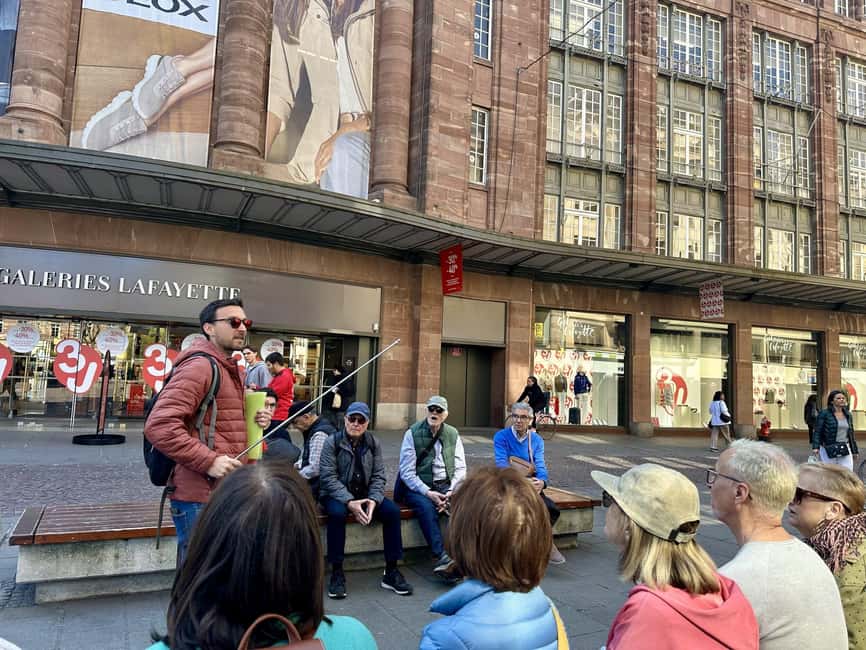
The duration is 2 hours, so you’ll want to treat it as an orientation sprint, not a slow wandering museum visit. The itinerary moves through major points like Notre-Dame, Rohan Palace, the covered bridges, and then ends in Petite France. That structure is ideal if you:
- want to see the must-do sights without researching every street
- like history explained in a logical walking flow
- plan to return later to the places you personally want more time in
Language options are Spanish and English, and the tour is led by a live guide. Some of the tour information may appear in its original language, but the main guide experience is available in those two languages, so you should be covered either way.
As for tools, at least one group mentioned headphones were used and were clear and comfortable. If you’re sensitive to sound or need easier listening, this is a plus. Still, the best planning move is simple: bring your questions, and let the guide steer you.
Price and value at $34 for a guided historic walkthrough
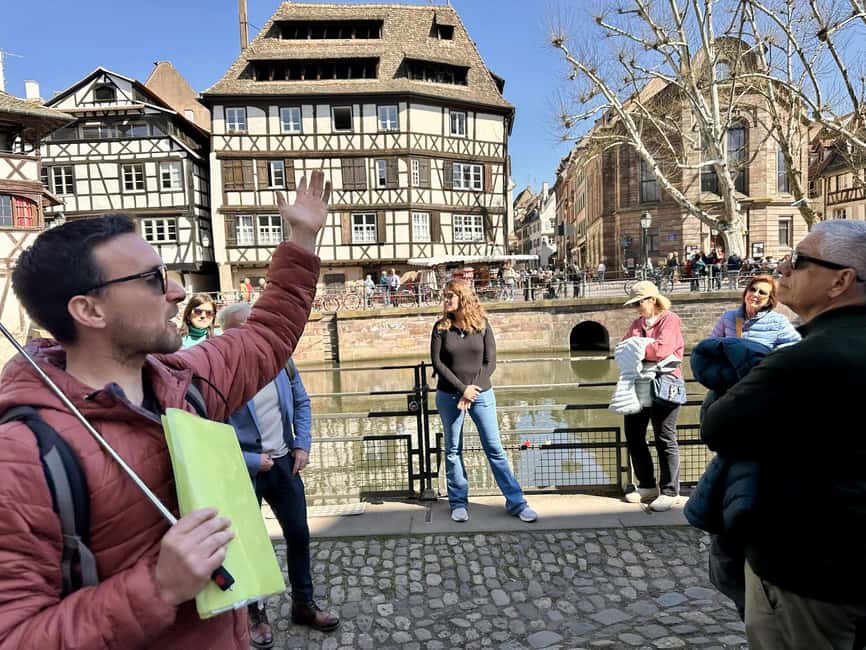
At $34 per person for about 2 hours, this tour sits in the sweet spot where the price is less about paying for entry fees and more about buying your time and clarity. You get:
- guided stops tied to major landmarks and neighborhoods
- a visit to Rohan Palace
- time in La Petite France
- a sweet tasting
- a map and recommendations
If you’re trying to do the highlights on your own, you can absolutely walk the route. But the value here is in the sequencing and the explanations. The guide helps you understand why Ponts Couverts are defended structures, why Rohan Palace mattered, and why Petite France is more than pretty canals.
Tip guidance is not included, so plan to tip the guide based on your satisfaction. And if you have any questions about the tasting or what you’ll see at each stop, ask early. Guides usually respond best when you’re engaged from the start.
Should you book this Strasbourg on Foot tour?
Book it if you want a high-impact introduction to Strasbourg that balances big-ticket architecture with the street-level charm of Petite France. It’s especially worth it if:
- it’s your first day in town
- you want a guided walk that helps you understand the city layout
- you like history that connects landmarks into one storyline
- you’d rather spend 2 hours with a guide than research a dozen stops
Skip it if you’re the type who needs long stays at a single sight, or if you already know Strasbourg well and just want free-form strolling. With only 2 hours, you’ll get a strong overview, not a slow, deep time budget.
If you’re deciding between “see the cathedral and hope for the best” versus “get the city’s logic,” this tour is the better choice. You’ll leave with both the images and the reasons behind them.
FAQ
How long is the Strasbourg on Foot tour?
It runs for 2 hours.
Where does the tour start?
The meeting point may vary depending on the option you book, including Place Kléber and an option at 14 Rue Mercière.
Which languages are available?
The live guide speaks Spanish and English.
What is included in the tour?
The tour includes a 2-hour guided tour, stops with guided context at major sights including Notre-Dame Cathedral and Rohan Palace, a Petite France neighborhood tour, a typical Alsatian sweet tasting, plus a city map and recommendations.
Does the tour include a visit inside Notre-Dame and Rohan Palace?
The tour includes a guided experience at Notre-Dame Cathedral and a visit to Rohan Palace.
Is cancellation or payment flexible?
You can cancel up to 24 hours in advance for a full refund, and there is a reserve now & pay later option (book now, pay later).
Newly listed around Strasbourg
- Strasbourg: Historic Center Walking Tour★ 4.7 · 88 reviews
- Strasbourg : Street-Art Tour★ 5.0 · 37 reviews
- Strasbourg: Private Walking Tour of the Historical Center★ 4.2 · 107 reviews
- Strasbourg: 2-Hour Gourmet Walking Tour★ 4.1 · 39 reviews
- Strasbourg: Private custom tour with a local guide★ 4.6 · 120 reviews
- Strasbourg : European District Walking Tour★ 5.0 · 95 reviews
- Strasbourg: Guided Walking Tour★ 4.7 · 127 reviews
- Strasbourg: 90-Minute Sightseeing Tour by Pedicab★ 4.9 · 85 reviews
Historical Tours, compared.
Louvre Museum Entry with History of Mona Lisa
Read our review →

Vieux Lyon Cultural & Historical Walking Guided Tour (English)
Read our review →

Toulouse Food & History Tour with a Chef (in English)
Read our review →
Small-Group Full-Day Tour of Côte de Nuits, Côte de Beaune Vineyards and Beaune Historical District
Read our review →
Browse the lists this tour appears in