
Reviewed · MONTMARTRE WALKING TOURS
The Secrets of Montmartre Walking Tour
Montmartre feels like a stage set. This walking tour makes it make sense with artist-linked stops and fast, funny street-level storytelling. I also like that it keeps you moving, not trapped in museums, so you get more streets per minute. One thing to plan for, though: there is uphill walking, so comfortable shoes matter.
I love how the route ties famous names to very specific corners of the neighborhood, from the glittery start at Moulin Rouge to the quieter, artsy lanes around Place du Tertre. You’ll see the big landmarks, sure, but the real payoff is how your guide connects the dots between painters, cabarets, and Paris legends. If you want quiet, minimal-street-noise sightseeing, this may feel a bit lively in the busiest areas.
In This Review
- Key Points You Should Know Before You Go
- Moulin Rouge to Blanche Street Start, Then Straight Into Montmartre
- Place du Tertre, Lapin Agile, and Sacré-Cœur Photos Without Waiting in Lines
- A quick reality check on the climb
- Dalida, Montmartre Vine, and the Amélie Café Moment
- La Maison Rose, Pigalle Energy, and Finding the Last Windmill Left Standing
- Red Light District Corners, Picasso’s Former Studio, and Legends That Sound Too Strange to Invent
- How the 2 Hours Actually Works: Pace, Photo Stops, and No Museums
- What I like about this format for first-timers
- What you should watch for
- Price and Value at About $33 Per Person
- Should You Book This Montmartre Walking Tour?
- FAQ
- Is the tour really 2 hours long?
- Where do I meet the guide?
- What sights are included on the route?
- Does the tour enter museums?
- Is this tour offered in English?
- Do children get free admission?
Key Points You Should Know Before You Go
- Moulin Rouge warm-up at the start: you begin near the can-can energy, then climb into the village feel of Montmartre
- Artist stories, not museum lectures: the tour stays outdoors and explains what you’re seeing as you walk
- Sacré-Cœur on a high note: you’ll reach the white-domed church that crowns the hill
- Pop culture stops that actually connect: Café des Deux Moulins (Amélie), La Maison Rose, and Dalida’s spot
- The last windmill in Paris: you’ll hunt down a rare, living remnant of Montmartre’s older days
- Two hours of focused walking: the pace stays efficient, with photo stops built in
Moulin Rouge to Blanche Street Start, Then Straight Into Montmartre
Your tour meets at Blanche metro station. Look for the guide wearing a red t-shirt and holding a red umbrella outside Starbucks across the street from the Moulin Rouge. Starting at this exact zone is smart because it frames Montmartre’s dual personality right away: spotlight life on the main drag, then the artist colony history just uphill.
The first stop is a photo moment by the Moulin Rouge area, with a quick feel for the famous façade and the can-can vibe that still defines this district’s reputation. After that, the walking starts to do what a brochure can’t. You move from performance-land into the winding neighborhood streets where you can sense why artists kept choosing Montmartre as a home base.
If you’re the type who gets bored when tours only recite dates, you’ll probably enjoy this format. It’s more like walking with a friend who keeps pointing out what matters and why. The guide doesn’t just say something happened, they show you where it would have happened, in the same air, on the same streets.
More city walks in Paris:
- Paris Top Sights Half Day Walking Tour with a Fun Guide
★ 5.0 · 2,893 reviews - Montmartre Hidden Gems and Scenic Highlights Walking Tour
★ 5.0 · 2,684 reviews - Montmartre Hill French Gourmet Food and Wine Tasting Walking Tour
★ 5.0 · 2,588 reviews
Place du Tertre, Lapin Agile, and Sacré-Cœur Photos Without Waiting in Lines
From the Moulin Rouge zone, you’ll work your way toward Place du Tertre, the classic Montmartre artists’ square. This is one of those spots where it’s easy to feel like you’re in a tourist magnet. The key is to stay curious. Your guide turns the “what are all these artists doing?” moment into a bigger story about why this hill became a magnet for painters and performers.
Then comes Lapin Agile, another photo stop that helps you picture how Montmartre’s nightlife and creativity fed each other. Even if you’ve heard of it before, the value here is in how your guide uses it as a clue. Montmartre wasn’t just scenic. It was also social, noisy, and full of artistic characters trading ideas.
After Lapin Agile, you’ll climb toward Sacré-Cœur, the white-domed church that sits at the top. Expect another photo stop here, not a long museum detour. Sacré-Cœur is visually dramatic, but the payoff on this tour is the explanation around the district’s legends and figures. You get the feeling that you’re not just looking at a church, you’re seeing the crown of a very particular neighborhood identity.
A quick reality check on the climb
This is an uphill walk. In practice, it can feel like a workout, and it’s best to go in prepared. Comfortable shoes are non-negotiable, and if you prefer slow walking, plan to match your guide’s pace rather than trying to beat it.
Dalida, Montmartre Vine, and the Amélie Café Moment
One of the smartest parts of this tour is the way it mixes classic art stories with pop culture references you’ll recognize. You’ll pass buste de Dalida for a photo stop at Place Dalida, a location tied to one of Paris’s famous gay icons. This isn’t just a name-drop. It helps explain how Montmartre became a stage not only for painters and cabarets, but also for people who mattered culturally.
Next, you’ll walk past Vigne du Clos Montmartre. A vineyard in Paris sounds like a gimmick until you realize it’s exactly the kind of local detail Montmartre keeps. It’s a reminder that the hill’s identity didn’t start with celebrity, it started with land use, work, and community.
Then you’ll hit Café des Deux Moulins, another photo stop. This is the one many people recognize from Amélie, and you’ll see why the scene stuck. The guide’s value here is connecting the café to the district’s long-running habit of turning ordinary street life into story.
If you love “I understand this place more now” moments, this is where it happens. You’re seeing Montmartre as a lived-in culture, not just a set of postcard angles.
More Montmartre climbs:
- Paris: Montmartre Highlights Walking Tour with a Local Guide
★ 4.9 · 2,318 reviews - Paris: Montmartre Cheese, Wine & Pastry Guided Walking Tour
★ 4.8 · 2,255 reviews - Paris: Sacré-Coeur and Montmartre Tour with Expert Guide
★ 4.1 · 1,027 reviews - Private Montmartre Food Tour with Wine, Cheese & Pastries
★ 5.0 · 1,027 reviews
La Maison Rose, Pigalle Energy, and Finding the Last Windmill Left Standing
As you keep moving, you’ll pass La Maison Rose and then reach Place Pigalle, both included as walking segments with photo time built in. La Maison Rose is one of those spots that looks like it was designed to be photographed, but the tour makes it more than a color splash. It’s another piece of the puzzle showing how Montmartre’s look shaped its reputation.
Then comes a truly distinctive highlight: the last windmill left standing in Paris. Montmartre’s windmills are part of the district’s older landscape, and seeing what remains gives the walk a satisfying sense of continuity. You’re not only chasing famous names. You’re also spotting traces of what the hill used to be before it became a cultural brand.
This is also where you’ll feel the neighborhood shift again. You start to notice how Montmartre’s streets can pull you between atmosphere types quickly, from creative squares to darker corners and back toward brightness. The guide’s job is to keep it coherent.
Red Light District Corners, Picasso’s Former Studio, and Legends That Sound Too Strange to Invent
One of the most memorable parts of Montmartre is that it doesn’t act politely. The district’s history includes glamour, grit, and stories that can sound almost myth-like.
On this walk, you’ll go through the area often associated with the Red Light District, then see Picasso’s former studio. The best part is that the tour treats Picasso’s connection as a practical explanation, not a trivia stop. It helps you understand why so many artists wanted to be nearby, because ideas, patrons, and nightlife were all part of the same ecosystem.
You’ll also hear the kind of legends you simply wouldn’t catch by wandering: stories tied to early religious figures in Paris, including a legend about the headless Saint Denis and the story connected to Paris’s first bishop. Montmartre guides tend to mix humor with folklore, and that blend is exactly why walking tours work here. You don’t need silence to absorb it. You need the street setting.
The tour also points toward famous painters connected to Montmartre, including Renoir, plus references like Bal au Moulin de la Galette. Even if you don’t carry an art textbook in your pocket, these references help you see the district as an origin point for images that later became famous far beyond the neighborhood.
And yes, the route keeps you passing spots connected to big names like Vincent Van Gogh, Toulouse Lautrec, Claude Monet, Pablo Picasso, and Salvador Dali, tying them back to why Montmartre worked for them. You’ll get a clearer sense of the district as a magnet for creativity across styles and eras, not just a single “one theme” neighborhood.
How the 2 Hours Actually Works: Pace, Photo Stops, and No Museums
The official duration is 2 hours, and the tour stays outdoor-focused. There are no museum entries, which keeps the pace tight and the narrative connected. That matters because museum stops often break the spell. In this case, you keep walking, keep hearing stories, and keep connecting sights to explanations while everything is still in front of you.
That said, don’t be surprised if the tour runs a little longer than the headline time. Some people report it can stretch closer to 2.5 to nearly 3 hours, depending on the group and what the guide chooses to emphasize.
There are also multiple photo stops built in, so you’re not forced to sprint. You’ll pause at the Moulin Rouge start area, Place du Tertre, Lapin Agile, Sacré-Cœur, Dalida’s bust, Café des Deux Moulins, and La Maison Rose, then you finish near Sacré-Cœur.
What I like about this format for first-timers
If you’re new to Paris and trying to decide what to do on a limited schedule, this is a good use of time. Montmartre is one of those neighborhoods where you can wander for hours and still miss the story. This tour gives you a guided framework fast, then you can return on your own with better context.
What you should watch for
The tour includes uphill sections, and it’s clearly not a sit-and-watch experience. If you have mobility limits or you’re sensitive to steep streets, plan carefully.
Price and Value at About $33 Per Person
At around $33 per person for a guided, 2-hour-plus street walk, you’re paying for two things: a guide who can translate Montmartre into story, and time saved. In cities like Paris, that combination is often the difference between a “cute walk” and a “now I get it” day.
The value is boosted by how many major landmarks and themed stops you pass without paying museum entry fees or wasting time in lines. You’ll hit famous areas like Sacré-Cœur, Moulin Rouge, and the Picasso connection points, while also getting specific local details like the vineyard and the last windmill.
Also, the guide can tailor the flow depending on what fits the group best. That matters if your group is more art-leaning, more photo-leaning, or just hungry for stories with personality.
If you compare this to paying for individual tickets or doing it self-guided with an audio app, the human element is the advantage. It’s not just “where to go,” it’s how to see it while you’re there.
Should You Book This Montmartre Walking Tour?
Book it if you want Montmartre to feel understandable quickly. This is especially good for first-timers who want a tight route, lots of recognizable stops, and stories that connect the artists to actual corners of the neighborhood.
Skip it or consider another option if you want minimal walking, quiet settings, or lots of time inside museums. This is a street tour. The vibe is Montmartre as a living district, and you’ll feel the hills.
One last practical tip: if you’re planning your day, try not to treat this as a “last-minute chill stroll.” It has a climb and a steady pace. Pair it with a relaxed meal afterward, ideally somewhere your guide suggests, so you can sink into the atmosphere instead of rushing out immediately.
FAQ
Is the tour really 2 hours long?
It’s listed as a 2-hour walking tour, but the exact time can vary depending on what your guide thinks is best for the group.
Where do I meet the guide?
Meet at Blanche metro station. Look for a guide wearing a red t-shirt and holding a red umbrella outside Starbucks across the street from the Moulin Rouge.
What sights are included on the route?
You’ll see Montmartre highlights including Moulin Rouge, Place du Tertre, Lapin Agile, Sacré-Cœur, Café des Deux Moulins, Picasso’s former studio, and the last windmill left standing in Paris, plus other stops like Place Pigalle, La Maison Rose, and Vigne du Clos Montmartre.
Does the tour enter museums?
No. The tour does not enter museums or specific sites, since that would add time and disrupt the flow of the storytelling.
Is this tour offered in English?
Yes, the tour is guided in English.
Do children get free admission?
Children under 13 go free with a valid ID.
Newly listed around Paris
- The voice of Montmartre is a must-see in Paris★ 3.8 · 19 reviews
- Top Private Cruises in Paris with Champagne + more surprises★ 5.0 · 309 reviews
- The Official Emily in Paris Montmartre Walking Tour★ 4.7 · 40 reviews
- The Paris Pass® Plus: 90+ Attractions including The Louvre★ 3.4 · 386 reviews
- The Official Emily in Paris Locations Walking Tour★ 4.9 · 383 reviews
- The Official Emily in Paris Macaron-Making Workshop★ 4.9 · 68 reviews
- The Official Emily in Paris Wine & Cheese with Butter Making★ 4.9 · 20 reviews
- The Official Emily in Paris Croissant-Making Workshop★ 4.9 · 85 reviews
Montmartre Walking Tours, compared.

Montmartre Hidden Gems and Scenic Highlights Walking Tour
Read our review →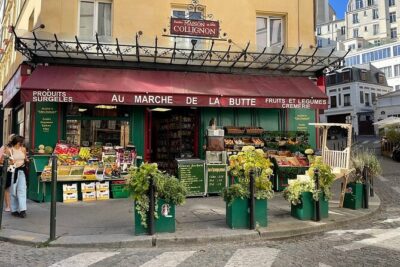
Montmartre Hill French Gourmet Food and Wine Tasting Walking Tour
Read our review →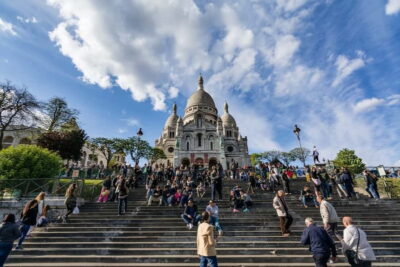
Montmartre Highlights Walking Tour with a Local Guide
Read our review →
Montmartre Cheese, Wine & Pastry Guided Walking Tour
Read our review →
Sacré-Coeur and Montmartre Tour with Expert Guide
Read our review →
Private Montmartre Food Tour with Wine, Cheese & Pastries
Read our review →
Paris Montmartre Food Tour – A Full French Meal by Do Eat Better
Read our review →
Browse the lists this tour appears in