
Reviewed · MUSEUMS
Ticket to Musée National du Sport
You can spend a full day chasing sports challenges. The Musée National du Sport is one of the largest collections of its kind, and I like how it’s built around hands-on themes like personal challenge and Olympic torches. One thing to consider, though: it is not a guided experience, so if you want someone to narrate the story, you may feel a bit on your own.
What also works for me is the freedom to go at your pace, then bounce between event types without feeling rushed. The museum’s biggest drawback is timing, because if you’re aiming for any extra activity on-site, parts of the schedule can be tighter than you expect.
In This Review
- Key things to know before you go
- Entering the Musée National du Sport: a museum that thinks like sport
- The Olympic torch moment you will want to catch early
- The 4 challenge stages: how to tour the museum in a smart order
- Personal challenge: athletics, cycling, swimming, skiing, riding
- One-on-one challenge: boxing, tennis, martial arts, fencing
- Collective challenge: football, rugby, handball, volleyball, basketball
- Challenges beyond the limits: extreme climbing, solo sailing, conquering the skies
- Temporary exhibitions: 500 m2 that keeps the museum from feeling static
- The stadium tour add-on, and why it can shape your day
- Ticket value: why this is a smart deal for one-day sport fans
- Rules that affect your visit (and how to plan around them)
- A balanced look at what you will love, and what might not click
- Who should book this museum ticket
- Should you book the Musée National du Sport ticket?
- FAQ
- FAQ
- How much is the Musée National du Sport ticket?
- How long should I plan to spend at the museum?
- Is this a guided tour with a guide?
- What is included with my ticket?
- Are children free to enter?
- Is the museum wheelchair accessible?
- Can I bring food, drinks, or use flash photography?
Key things to know before you go
- Olympic torch displays help you anchor the collection fast
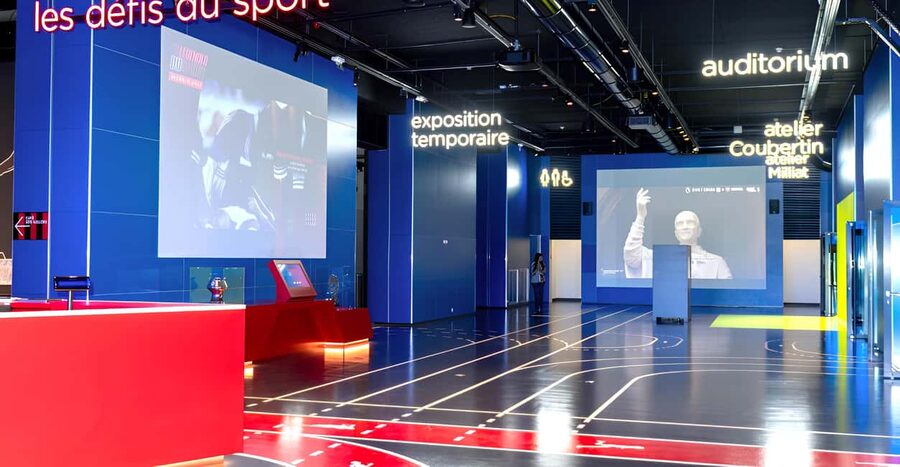
- 4 challenge stages (personal, one-on-one, collective, beyond limits) give the visit a clear structure
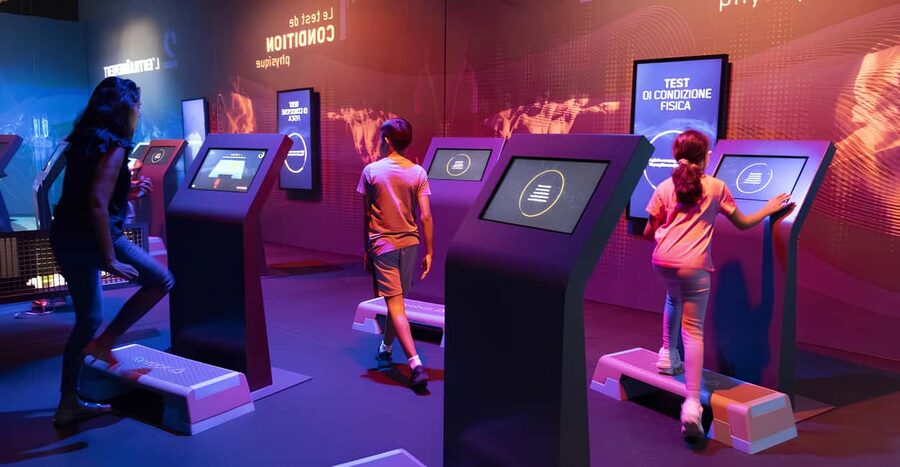
- Interactive sport themes turn the museum from look-and-leave into try-and-think
- 500 m2 of temporary exhibitions means you are not only seeing permanent highlights
- Wheelchair accessibility makes it easier to plan a comfortable day
- Self-guided format gives you control, but you will need to be your own guide
Entering the Musée National du Sport: a museum that thinks like sport
The Musée National du Sport is not trying to be a quiet, dusty hall of trophies. It feels more like a training plan for your brain. You walk in, then the museum gently pushes you to connect sports with the idea of challenge, effort, and progression.
This is also why I think it works well even if you are not a hardcore sports fan. The museum does not only show famous moments. It tries to show how sports are built, tested, and practiced. And because you can spend as long as you like, you can take breaks, reread labels, or linger at the displays that actually grab you.
One more practical note: this is a ticketed museum visit with entrance fees included, but it is not a guided tour. That means there is no bundled storyteller following your group. If you learn best with explanations, plan to read the exhibit text closely and use your phone to translate if you need it.
Other France bookings to consider
- Paris: Orsay Museum Entry Ticket
★ 4.7 · 25,647 reviews - Louvre Museum Masterpieces Guided Tour with Access
★ 4.5 · 12,023 reviews - Paris: Louvre Museum Entry Ticket With Host and River Cruise
★ 4.6 · 9,926 reviews
The Olympic torch moment you will want to catch early
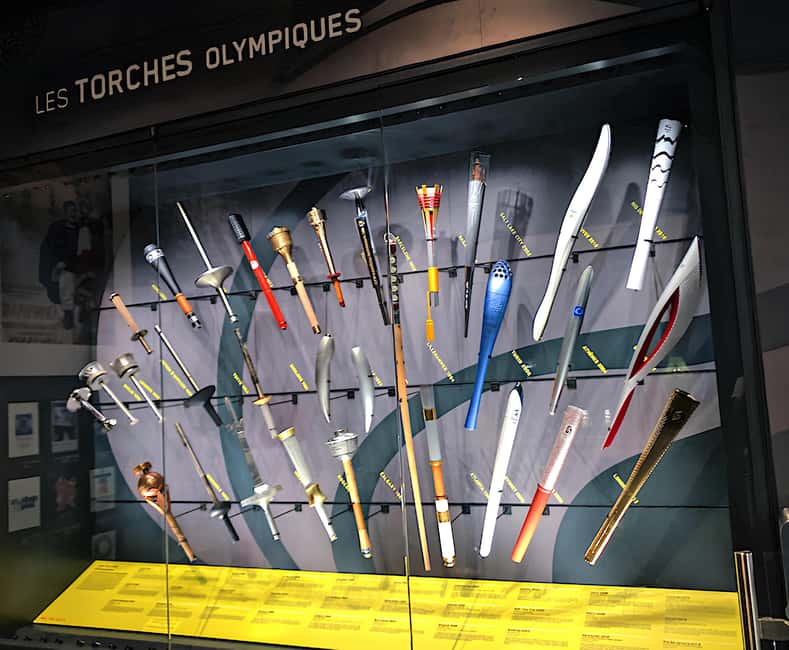
A standout for most people is the chance to see all the Olympic torches in the museum collection. Even if you only spend a few minutes here, it helps you get your bearings. It turns a big museum into something you can navigate emotionally, like you are stepping through Olympic history rather than wandering room to room.
I also like how this kind of anchor display makes the rest of the visit easier. Once you connect to the Olympics, the rest of the exhibits, especially the challenge-based ones, start to feel more coherent. You are not just seeing sports equipment. You are seeing the idea of striving toward a goal.
The 4 challenge stages: how to tour the museum in a smart order
The museum’s core concept is organized around challenge, laid out in four stages. The good news is that you can follow this structure like an itinerary, even though you are self-guided.
Personal challenge: athletics, cycling, swimming, skiing, riding
Start with personal challenge if you like exhibits that feel direct and skill-focused. This zone is about the relationship between the athlete and the activity, where you are measuring your own body, rhythm, and technique.
Why this stage matters: it sets expectations for the museum’s tone. You’ll notice the exhibits are designed to make you think about training, not just results. If you have kids, this is often a comfortable entry point because it feels straightforward. Pick the activities you recognize first, then branch from there.
Within easy reach:
- Paris: 1-Hour Seine Cruise departing from the Eiffel Tower
★ 4.4 · 77,472 reviews - Disneyland® Paris 1-Day Ticket
★ 4.6 · 49,412 reviews - Paris: Versailles Palace and Gardens Full Access Ticket
★ 4.6 · 41,579 reviews - Paris: Arc de Triomphe Rooftop Tickets
★ 4.6 · 34,264 reviews
One-on-one challenge: boxing, tennis, martial arts, fencing
Next comes one-on-one challenge, where the museum shifts from solo effort to direct confrontation. The theme here is timing, distance, tactics, and reaction.
Practical tip: when you move into this zone, slow down on any interactive parts. The concept is not only about sports as physical action, it is about decision-making. If you skim too quickly, you may miss the museum’s point about mental pressure and control.
Collective challenge: football, rugby, handball, volleyball, basketball
Now you get the team energy, collective challenge. This is where sports becomes social and strategic. Even if you do not follow these leagues closely, the museum format helps you understand why teamwork is its own kind of challenge.
This zone is also a nice midday stop because you can watch for displays that emphasize roles, coordination, and how teams adapt. If you are visiting with a mixed group, this is often the area where different ages and interests meet in the middle.
Challenges beyond the limits: extreme climbing, solo sailing, conquering the skies
Finally, challenges beyond the limits takes the museum into extreme territory. Think extreme climbing, solo sailing, and conquering the skies. This stage is about pushing past normal boundaries, where preparation, risk, and endurance become central.
Consideration: these exhibits can feel more conceptual than sports you can picture instantly. That is not bad, but it means you might want more time here if you like story and context, rather than just action. One review did hint that some parts can feel abstract, so if you tend to prefer concrete athletic history, give yourself extra minutes and read patiently.
Temporary exhibitions: 500 m2 that keeps the museum from feeling static
The Musée National du Sport includes over 500 m2 of temporary exhibitions. That is an important value point. A museum with only permanent galleries can start to feel repetitive on a longer visit. Temporary exhibits keep the museum tied to what is happening in sports right now, or at least in a current theme sense.
Since you can spend as much time as you like, you can treat temporary exhibits as your flexible time block. If a topic grabs you, park there for 30 to 60 minutes. If not, you can move back to the permanent challenge zones without feeling like you wasted your morning.
Also, the museum has rules on photos: flash photography is not allowed. So plan to rely on your eyes, and if you want photos, use your standard camera settings without flash.
The stadium tour add-on, and why it can shape your day
In the reviews, the stadium tour shows up as a favorite for many visitors. One person described it as the best part, and another noted that it was offered in French and English.
Here is the practical advice I would give you: treat the stadium portion like a timed bonus, not like an automatic guarantee. If your goal is stadium time plus a full museum circuit, I’d prioritize it early in the day and keep a little buffer.
Why timing matters: at least one review pointed out that the stadium part can close early. That kind of mismatch can turn a great plan into a rushed one. If you want to do everything, go when the museum is fresh, then build your pace from there.
If you miss the stadium tour, you still have plenty to do, because the museum’s challenge areas and temporary exhibitions can fill a full day easily.
Ticket value: why this is a smart deal for one-day sport fans
The ticket price is listed at $9 per person, and that is a rare kind of value for a museum day in the South of France. Even better, the museum offers free admission for children under 18, and it also lists free categories like disabled persons, Pass Education holders, unemployed persons, ICOM Members, journalists, Night of Museums, Heritage Days, and free access on the first Sunday of each month from October to March.
What that means for you: if your group includes teens or kids, the cost can drop dramatically. It also suggests the museum is meant for locals and families, not just people seeking a pricey attraction.
One review also matched the idea that the museum is affordable, with two adults paying a total around the 20 euro range. Put simply, you are not taking a big financial risk on a single day.
For families, I also like that the exhibits are described as suitable for children in at least one review. The museum uses sport categories in a way that can feel accessible, especially in the personal and collective zones.
Rules that affect your visit (and how to plan around them)
A museum day goes smoother when you respect the basics. At Musée National du Sport, food and drinks are not allowed, and flash photography is not allowed.
So how do you handle this practically?
- If you need a snack break, look for a plan outside the museum area, or check what’s available nearby before you go in.
- One review mentioned there is a small shop where you can buy drinks. That matters because it gives you a way to stay hydrated during your self-guided loop, even if you cannot bring your own.
Also, the museum is wheelchair accessible. That is not just a checkbox for me. It changes how you schedule. If you rely on ramps, slower pacing, or wider routes, you can plan to spend time where the exhibits interest you most.
A balanced look at what you will love, and what might not click
With a rating around 4.4 from 32 reviews, the overall signal is positive. The most praised elements are the museum’s variety, the structured approach to sport challenges, and the extra excitement around the stadium tour.
That said, there is at least one negative viewpoint that is worth listening to. One person felt there was not much to see in the museum itself and felt the stadium timing made the outing not worth it. Translation: if you show up expecting a big, guided tour experience, or you arrive late for any extra activity, you might feel disappointed.
How to avoid that: treat this as a self-guided museum with optional add-ons. If you give it the time it deserves and you build your schedule around any stadium program you want, the day tends to work.
Who should book this museum ticket
This is a good fit if you:
- Want a one-day, self-paced museum in the South of France focused on sport
- Like interactive themes and the idea of training, technique, and effort
- Are traveling with kids, especially if they enjoy sports categories
- Want an affordable museum day with real variety across disciplines
It may not be the best fit if you:
- Want a full guided narrative and you dislike reading labels
- Only care about a narrow set of sports and need a very specific format to stay engaged
- Are extremely time-sensitive, because the stadium portion, if available, can be time-limited
Should you book the Musée National du Sport ticket?
If you want a value-forward museum day that is structured around challenge and not just trophies, I think you should book it. The Olympic torch display is a great starting point, and the four challenge stages give you an easy mental map. Add in 500 m2 of temporary exhibitions, and you have enough variety to fill a full day without feeling repetitive.
I’d say book with one condition: plan your timing so you do not miss any stadium tour window you care about. If you do that, you’ll likely get the experience people rave about, not just a quick walk-through.
FAQ
FAQ
How much is the Musée National du Sport ticket?
The ticket is listed at $9 per person.
How long should I plan to spend at the museum?
The ticket is valid for 1 day, and you can spend as much time as you like inside the museum.
Is this a guided tour with a guide?
No. This is not a guided tour, and a guide is not included.
What is included with my ticket?
Your ticket includes the museum entrance fees.
Are children free to enter?
Yes. Children under 18 have free admission.
Is the museum wheelchair accessible?
Yes, the museum is wheelchair accessible.
Can I bring food, drinks, or use flash photography?
No. Food and drinks are not allowed, and flash photography is not allowed.
Newly listed around France
- Visit the lavender fields, the Gorges du Verdon and Moustiers.★ 5.0 · 17 reviews
- Provence small group half-day wine tour from Aix★ 4.5 · 18 reviews
- Monaco & the French Riviera – From AIX★ 4.5 · 20 reviews
- Picturesque Luberon – From AIX-EN-PROVENCE★ 5.0 · 55 reviews
- Luberon Market & Villages Day Trip from Aix-en-Provence★ 5.0 · 250 reviews
- Lunch in Provence: Discovering Local Flavors in Aix-en-Provence★ 5.0 · 38 reviews
- 5-Hours Lavender Fields Tour in Valensole from Aix-en-Provence★ 5.0 · 42 reviews
- Half day Wine Tour in Côtes de Provence Sainte-Victoire from Aix en Provence★ 5.0 · 27 reviews
Museums, compared.
Louvre Museum Masterpieces Guided Tour with Access
Read our review →
Louvre Museum Entry Ticket With Host and River Cruise
Read our review →
Les Invalides: Napoleon’s Tomb & Army Museum Entry
Read our review →
Musée de l’Orangerie Reserved Entrance Ticket
Read our review →
Louvre Museum – Exclusive Guided Tour (Entry Included)
Read our review →
Louvre Museum Hosted Entry and Mona Lisa Audioguide
Read our review →
Browse the lists this tour appears in