
Reviewed · FRANCE
Visit – immersion in the heart of the bee world!
Bees get personal here. This lively, interactive honey farm visit is built around a live hive opening, glass hives, and clear English explanations from beekeeper Bruno and Nadia, so you understand what’s going on inside the colony. I love the hands-on choices like trying the beekeeping outfit and uncapping a frame, and I love the tasting of 8 to 10 organic local honeys at the end. One catch: the experience needs good weather to run smoothly.
You’ll move through a route designed for your five senses, not a sit-and-watch presentation. You can smell the air in the hives, watch a simultaneous macro video, and learn how beekeepers identify bees and interpret what you’re seeing.
For about 1 hour 15 minutes and $13.80 per person, it’s also great value if you want something real and a little physical, not just a stop. It’s a private tour/activity, so your group stays together and you get more back-and-forth time.
In This Review
- Key things to look forward to
- L’Arc en Miel in Saint-Affrique: setting and tone
- What the 1 hour 15 minute schedule really feels like
- Opening the hive: glass hives, macro video, and the safety rhythm
- Smell, sounds, and the five-senses honey farm approach
- Hands-on moments: outfit test, beehive mounting, and uncapping honey
- Honey tasting: 8 to 10 organic honeys, and how to use your new ears and nose
- Price and value: $13.80 for real work, real tasting
- Who this tour is perfect for
- Who should think twice
- Should you book L’Arc en Miel?
- FAQ
- How long is the honey farm visit?
- Where does the tour start in Saint-Affrique?
- Is the tour offered in English?
- Is this a private tour?
- Does the visit run in any weather?
- Is the visit accessible for people with visual impairments or service animals?
Key things to look forward to
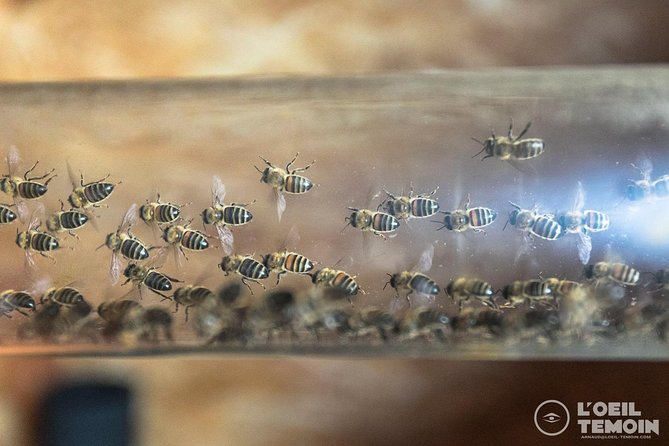
- Live hive opening with a safe, step-by-step approach
- Macro video shown at the same time as they work
- Five-senses route, including smelling hive air
- Hands-on beekeeping moments, outfit test, mounting a hive, or uncapping honey frames (with options)
- A serious honey tasting, typically 8 to 10 organic local honeys
- Bruno and Nadia’s style, friendly, funny, and taught without heavy jargon
L’Arc en Miel in Saint-Affrique: setting and tone
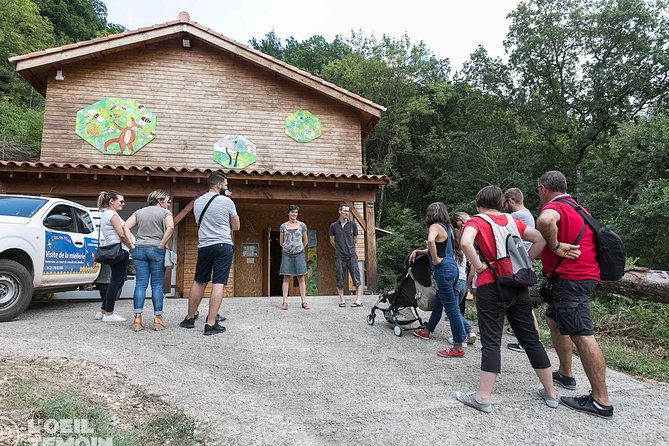
This visit takes place at L’Arc en Miel in Saint-Affrique, at 633 Mas de Rouby Chemin du, 12400 Saint-Affrique, France. The session starts and ends at the same meeting point, so you can plan your day without extra transit puzzles.
The vibe is part farm visit, part mini workshop. You’re not stuck behind glass the whole time. You get to ask questions, you get demonstrations, and you get tasting at the end, which is a smart way to turn learning into something memorable.
Because it’s a private tour, you’re not competing for attention in a crowd. That matters here, because beekeeping is all about small details and comfort level.
Elsewhere in France, also good:
- Paris: 1-Hour Seine Cruise departing from the Eiffel Tower
★ 4.4 · 77,472 reviews - Disneyland® Paris 1-Day Ticket
★ 4.6 · 49,412 reviews - Paris: Versailles Palace and Gardens Full Access Ticket
★ 4.6 · 41,579 reviews
What the 1 hour 15 minute schedule really feels like
The official duration is about 1 hour 15 minutes, and the flow is built in stages. Expect a short “welcome and safety” moment, then a guided walk through the honey farm’s working setups.
The route is organized around the colony. You’ll see how beekeepers open hives safely, how glass hives help you watch what would be harder to observe otherwise, and how macro video supports what you’re seeing close up. The pace is lively, not rushed, and it stays focused on bees and honey production.
Then you shift from observation to participation. The idea is simple: you learn by doing, even if you only do parts of the hands-on steps. The finishing touch is the tasting of multiple honeys, which ties the whole visit together.
Opening the hive: glass hives, macro video, and the safety rhythm
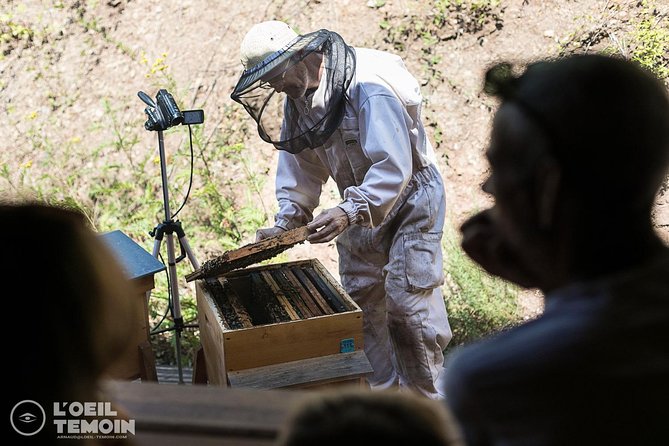
One of the biggest reasons to book this is how they handle the hive itself. You’re promised a safe opening of the hive, and the setup is designed so you can follow along visually while work happens in front of you.
They also use simultaneous macro video. That’s a practical add-on because it helps you connect the scale. From a few steps away, bees and frames can look like movement. Up close on a screen, you can actually pick out behaviors and patterns.
If you enjoy watching skilled craftspeople at work, this is the satisfying part. It’s not about scaring you. It’s about showing you how careful a beekeeper has to be, and how much knowledge is in something as normal as checking a frame.
A small consideration: if you don’t like close-up wildlife, this still may feel intense. You’ll be safe, but you’ll be near the action.
Smell, sounds, and the five-senses honey farm approach
This is marketed as a five-senses experience, and the route really leans into that. You’re encouraged to smell the air in and around the hives. It sounds unusual, but it makes sense as sensory training, because honey and wax carry distinct aromas and the hive environment has its own character.
You’ll also hear explanations about identifying types of bees and their roles in the colony. Sometimes the visit includes a highlight like a birth, which is dramatic in a gentle way, and a reminder that colonies are living systems, not just honey factories.
One more smart element is communication. You’ll be shown their mode of communication, so you start to notice that bees are not “just flying around.” You learn that colony life runs on signals, structure, and rhythm.
Within easy reach:
- Paris: Arc de Triomphe Rooftop Tickets
★ 4.6 · 34,264 reviews - Paris: Orsay Museum Entry Ticket
★ 4.7 · 25,647 reviews - Paris: Evening River Cruise with Music
★ 4.4 · 22,721 reviews - Paris: Eiffel Tower Entry Ticket with Optional Summit Access
★ 4.4 · 20,035 reviews
Hands-on moments: outfit test, beehive mounting, and uncapping honey
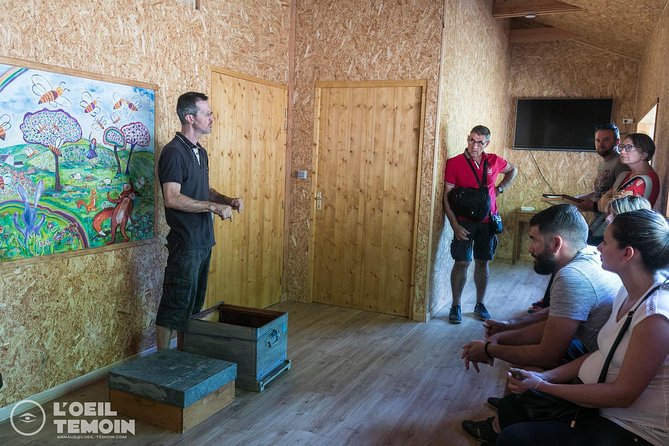
The hands-on part is where this visit turns from educational to genuinely fun. You can test the beekeeping outfit, which gives you a feel for how protective gear works and why it matters for both beekeeper and bees.
There are also choices around participating with the hive. Depending on how things are going at the time, you may be able to mount a beehive or uncap a honey frame yourself. Even if you’re standing back for some steps, you still benefit from watching how they work and then trying a small role.
This is also where you understand the “why” behind harvesting. You’re not just learning facts. You’re learning how careful timing and gentle technique protect the colony and still allow them to collect honey.
A heads-up: this is active. Wear clothes you’re comfortable moving in, and be ready for hands-on learning even if you’re not a gear person.
Honey tasting: 8 to 10 organic honeys, and how to use your new ears and nose
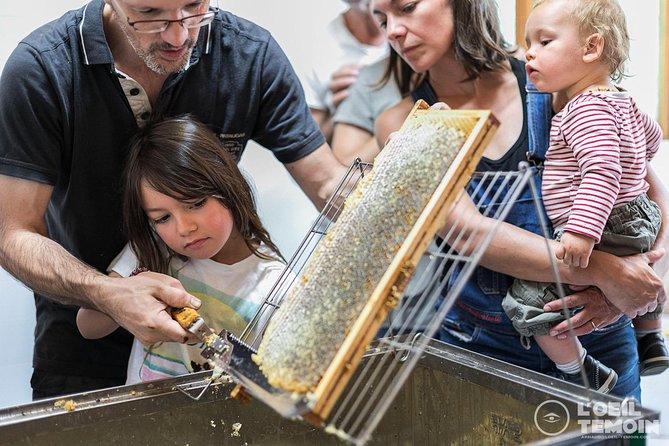
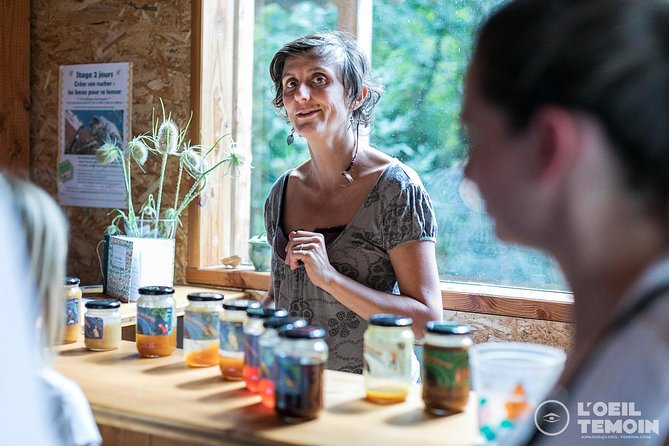
The tour ends with an introductory tasting session of 8 to 10 organic and local honeys. That’s a big part of the value, because it turns observation into your own comparisons.
They test sensitivity of taste buds, and the best way to get something out of the tasting is to slow down. Smell first, then taste, then try to notice texture and finish. Honey can change a lot from jar to jar, and the visit helps you understand why.
You’ll also learn to connect the flavor differences to beekeeping and local conditions in southern Aveyron. It’s not a lecture about the countryside. It’s honey you can taste, and a story you can follow.
If you’re curious about buying after, the farm shop is an option, but the experience itself doesn’t pressure you into it. The tasting is the centerpiece. And yes, it’s easy to end up buying a few jars if one flavor really hits your palate.
Price and value: $13.80 for real work, real tasting
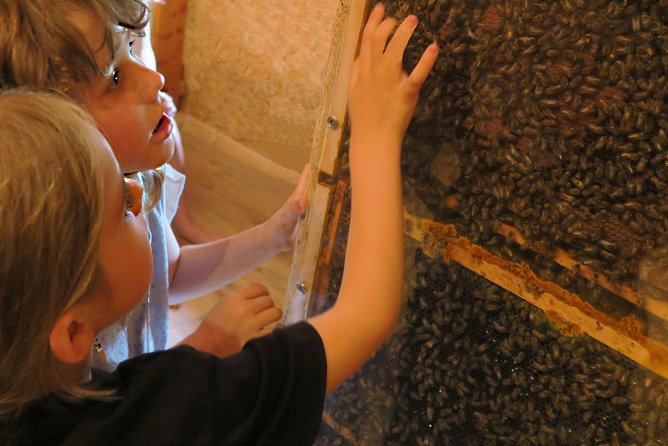
At $13.80 per person, this is one of those experiences that feels priced for accessibility rather than premium showmanship. You’re paying for a guided, hands-on visit that includes multiple hive elements and then a tasting of 8 to 10 honeys.
What makes the price feel fair is the bundle of experiences. You get:
- live hive opening, plus glass hives and macro video
- sensory training (including smelling hive air)
- hands-on beekeeping moments
- a structured tasting at the end
If you’re someone who likes food experiences that are tied to how it’s made, this is a strong choice. If you only want passive sightseeing, you may find it too hands-on.
Who this tour is perfect for
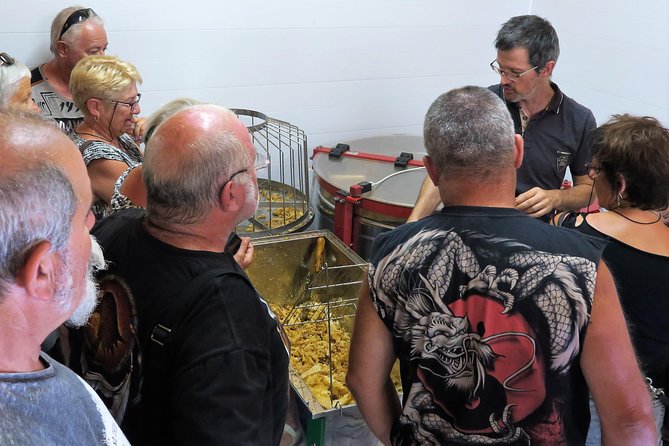
This is ideal if you want a small, human-scale experience. It fits well for couples, families with curious kids, and solo travelers who like asking questions.
It also works if you like learning without being talked down to. Bruno and Nadia explain in a fun, warm way, and the tone is practical instead of preachy. You’ll come away with less uncertainty about what bees do day to day.
If you have a deep interest in agriculture that respects living systems, the framing here will click. They focus on daily relationship with bees and agriculture that’s respectful of life.
Who should think twice
Consider skipping if you hate close-up insects or you struggle with active, outdoor learning. This is a working farm setting, and good weather is required.
Also, if you’re expecting a polished, museum-style presentation with lots of static displays, this is more hands-on and more “in the moment.” The charm is the practical work.
Should you book L’Arc en Miel?
I’d book it if you want a one-hour experience that actually changes what you understand about bees. The combination of live hive opening, sensory learning, and a tasting of 8 to 10 organic local honeys is exactly the kind of food-and-farm outing that feels like time well spent.
I’d skip or reschedule only if you strongly prefer indoor, passive attractions, or if you know your schedule is fragile when weather shifts. Otherwise, this is a fun, practical way to spend time in southern Aveyron, with Bruno and Nadia running the show in a style that makes you want to keep asking why.
FAQ
How long is the honey farm visit?
It lasts about 1 hour 15 minutes (approximately).
Where does the tour start in Saint-Affrique?
The meeting point is L’Arc en Miel, 633 Mas de Rouby Chemin du, 12400 Saint-Affrique, France. The activity ends back at the meeting point.
Is the tour offered in English?
Yes, it’s offered in English.
Is this a private tour?
Yes. It’s a private tour/activity, so only your group will participate.
Does the visit run in any weather?
The experience requires good weather. If it’s canceled due to poor weather, you’ll be offered a different date or a full refund.
Is the visit accessible for people with visual impairments or service animals?
Service animals are allowed. People who are blind or visually impaired benefit from a booklet in relief and in contrasting colors.
Newly listed around France
- Paris Orsay Museum and Rodin Museum Daily Combo Ticket★ 4.0 · 32 reviews
- Paris Pastry Tour – Croissants, Macarons & Iconic French Desserts★ 5.0 · 232 reviews
- Paris Orsay Museum with Optional Seine River Cruise Tickets★ 4.0 · 65 reviews
- Paris Orsay Museum Entry Ticket with Digital Audio Guide★ 3.5 · 93 reviews
- Paris Occult and the History of the Dark Arts Private Tour★ 5.0 · 17 reviews
- Île de la Cité Guided Tour & assistance Notre Dame entrance★ 5.0 · 22 reviews
- Notre Dame de Paris: Semi Private or Private Guided Tour Guide★ 5.0 · 30 reviews
- Paris Opera Garnier Private Tour★ 5.0 · 42 reviews