
Reviewed · BORDEAUX TOURS & ACTIVITIES
Bordeaux wines : tasting with 4 white wines and cheeses
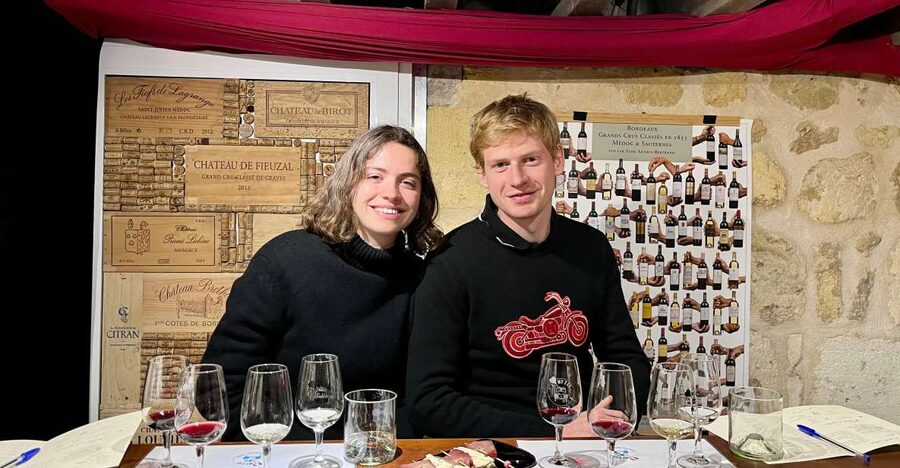
Bordeaux in one hour? Yes, and it starts with your nose. This small-group tasting in Bordeaux lets you get hands-on with four Bordeaux white wines and a cheese pairing, while guides explain the region’s big ideas in plain language. You’ll also get a take-home booklet so you can keep improving after the tasting.
I love how the session teaches the method, not just the menu. You practice a real tasting technique, including an aroma game that helps you spot fruit and other scents in the glass, and you get clear info on appellations, grape variety, and blends. I also like the relaxed, friendly pace, with Cécilia and Mathilde (plus the team, including Hugo) making it easy to ask questions and share what you actually enjoy.
One possible drawback: this is a white-wine experience built around four white tastings, so if you’re mainly after a big red lineup, you may want a different Bordeaux session.
In This Review
- Key highlights not to miss
- Four Bordeaux whites, one hour of useful tasting skills
- Where you meet in Bordeaux and how the session flows
- Meet Cécilia and Mathilde, and learn the tasting method that actually sticks
- Left Bank vs Right Bank dry whites, explained through your glass
- Cheese pairing: the practical reason it changes everything
- What the booklet and aroma game do for your next bottle
- Price and value: why $46 makes sense for what you get
- Who this tasting is best for (and who should pick something else)
- Should you book this Bordeaux white tasting?
Key highlights not to miss
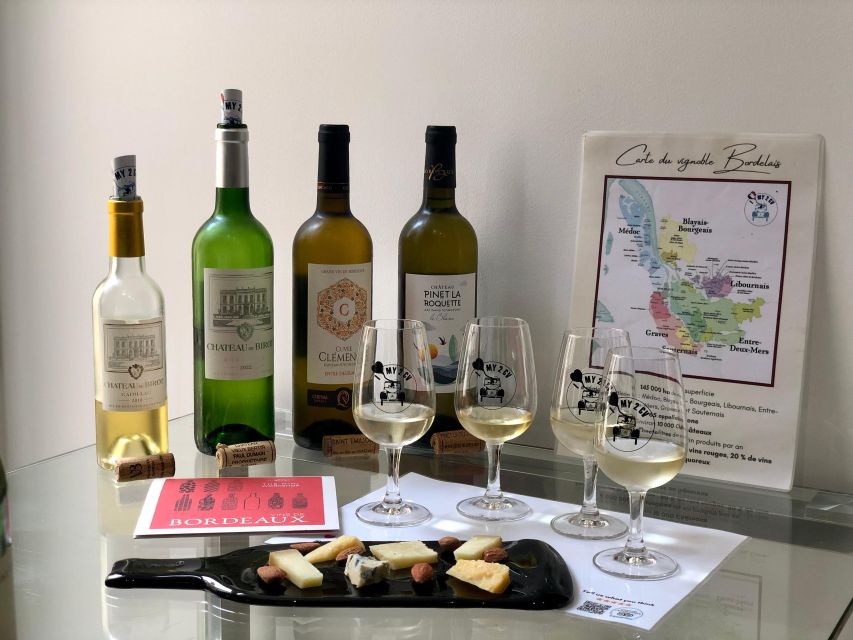
- Four white wines with a mystery bottle so you stay curious instead of just repeating the same style
- Left Bank and Right Bank dry whites to hear the Bordeaux logic behind the flavors
- A professional-style tasting method taught step by step, not as a lecture
- Cheese pairings that teach you how to taste food and wine together
- Aroma game practice to train your nose for fruit and subtle scents
- A booklet to bring home for extra practice with what you smelled and tasted
Four Bordeaux whites, one hour of useful tasting skills
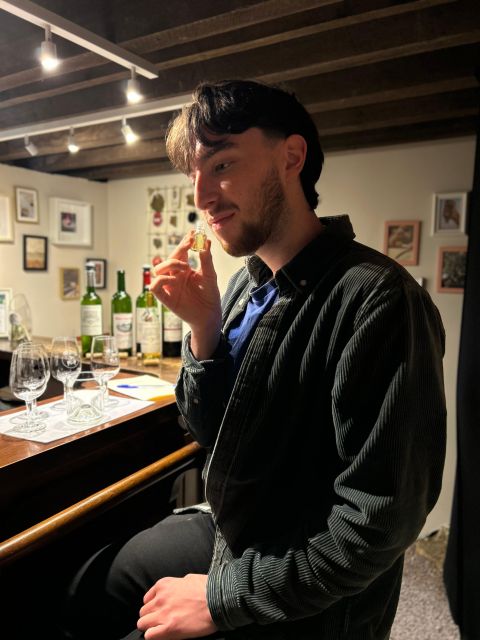
This is a very focused tasting. You’re not sitting through a long, formal seminar. You’re tasting four white Bordeaux wines (in a 75-minute tasting that fits into a 1-hour experience slot) and learning how to make sense of what you smell and taste.
The format is built for real learning. Guides walk you through the “why” behind what you’re tasting: appellations, grape variety, and the way Bordeaux blends change the final glass. That matters because Bordeaux whites can feel confusing if you only know names. Once you understand how the region thinks, you can taste less randomly and more deliberately.
The vibe is also practical. The group is limited to 6 people, so you get time to ask questions and compare notes without feeling like you’re being rushed. If you’re the kind of person who likes to try, then reflect, then try again, you’ll get a lot out of this.
Other Bordeaux bookings to consider
- Bordeaux: Cité du Vin Entry Ticket and Wine Tasting
★ 4.6 · 3,885 reviews - From Bordeaux: Afternoon Saint-Emilion Wine Tasting & snack
★ 4.8 · 1,581 reviews - Medoc or Saint Emilion Wine Tasting and Chateau from Bordeaux
★ 5.0 · 1,415 reviews
Where you meet in Bordeaux and how the session flows
The meeting point is 25 Av. Thiers. When you arrive, you call or ring the I love sign. No hotel pickup is included, so you’ll want to plan to reach the address on your own.
Once you’re there, the timing stays tight and easy. The tasting itself runs about 75 minutes, and the guides keep it flowing from one wine to the next. You’ll also have water during the experience, which is a small detail that makes a big difference when you’re tasting multiple pours.
One comfort note: tastings can happen in different spots depending on conditions. In good weather, you may taste on a private patio. Otherwise, the team uses the cool of a cellar or a specially equipped tasting room. That flexibility keeps the experience comfortable year-round, not just in perfect weather.
At the end, you can buy the wines you tasted in the cellar. It’s not a hard sell, it’s more like a “take this learning home with you” option.
Meet Cécilia and Mathilde, and learn the tasting method that actually sticks
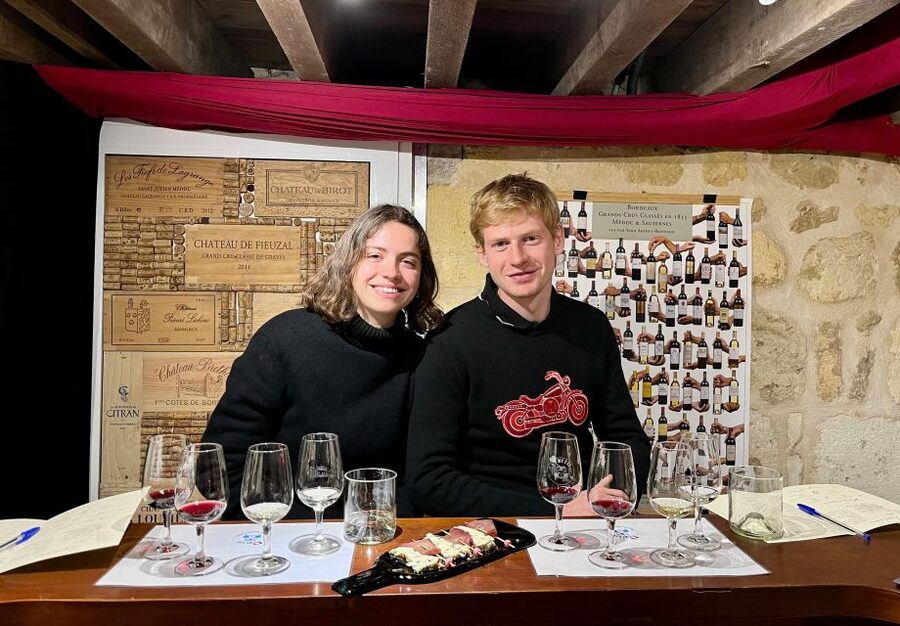
Cécilia and Mathilde lead the experience, and they have training from the Université du Vin. That shows up in how they teach: clear steps, smart pacing, and a focus on senses instead of wine jargon.
Here’s what you’ll get in practice:
- You learn how to approach the glass in stages, so you don’t just drink and hope for the best.
- You train your nose to catch more than one obvious smell.
- You learn how aromas, texture, and flavor work together, so you can describe what you taste with more confidence.
This is also where the aroma game shines. The “What Are You Smelling” style challenge turns the tasting from passive to active. You start realizing that your nose is already doing most of the work, you just need a system to notice what it’s picking up. One of the best outcomes of that aroma training is that you stop saying generic things like fruity or floral, and start identifying more specific cues.
And the tone stays friendly. People can bring their preferences, and the guide can shape the tasting to what you like. So you’ll get a better experience whether you’re new to Bordeaux or you already have opinions about dry whites.
Left Bank vs Right Bank dry whites, explained through your glass
Bordeaux is one region, but it doesn’t taste like one thing. The dry white lineup includes wines from both the Left Bank and the Right Bank (as described for the tastings), and that contrast is the fastest way to understand why.
Instead of treating geography like trivia, the guide uses it as a tasting tool:
- You’ll taste and compare.
- Then you’ll connect what you tasted to the grape choice and blend logic.
- After that, the guide ties it back to appellations, so the next glass you encounter makes more sense.
In Bordeaux, blend and terroir are part of the language. Once you learn the basic structure, you can taste with context. You stop seeing every white as random and start hearing the “accent” behind the wine style.
You might also encounter a mystery wine, which is a fun way to keep the session moving. Even if you think you’ve figured out what you like, a blind-ish pour pushes you to rely on smelling and tasting method, not name recognition.
If you’re curious about how professionals notice differences, this is a good place to start, because the teaching centers on what you can actually detect.
Within easy reach:
- Bordeaux: River Garonne Cruise with Glass of Wine and Canelé
★ 4.5 · 3,630 reviews - Saint Emilion Day Trip with Sightseeing Tour & Wine Tastings from Bordeaux
★ 5.0 · 1,120 reviews - Bordeaux: Guided Walking Tour
★ 4.4 · 1,038 reviews - Saint Emilion Half-Day Trip with Wine Tasting & Winery Visit from Bordeaux
★ 4.5 · 1,034 reviews
Cheese pairing: the practical reason it changes everything
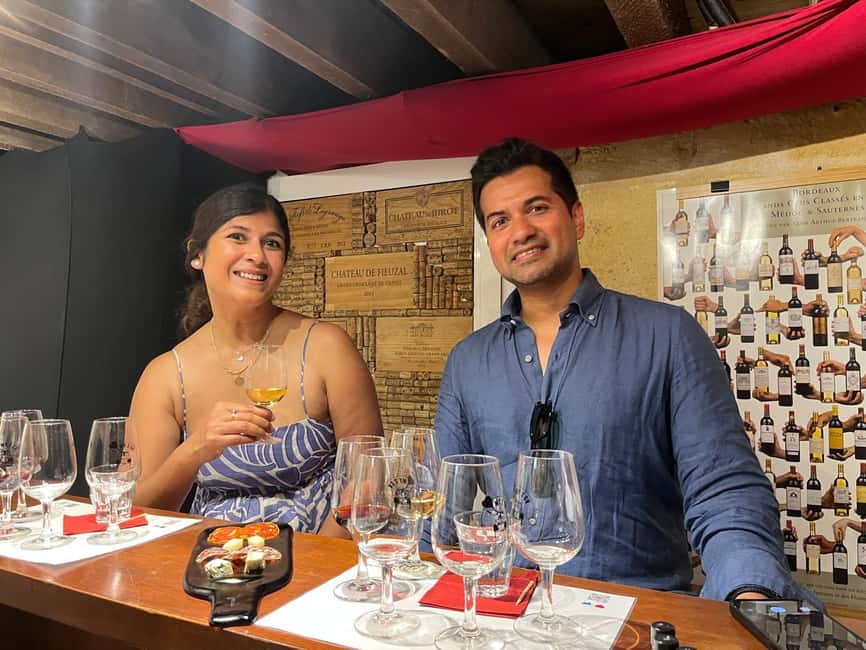
This experience pairs your wine with a selection of cheese. That sounds like a simple add-on, but it’s one of the smartest ways to learn.
Wine and cheese work because of balance. If you taste wine alone, it’s easy to judge it by smell and sweetness or by how it lands at first sip. But when cheese enters the picture, you learn how:
- salt can sharpen flavor
- fat can soften acidity
- texture can affect the way aromas show up
Guides don’t just say “try this cheese.” They help you understand why a pairing can turn a wine from pleasant to memorable, or from slightly flat to more complex.
The best kind of tasting lesson is the one you can reuse at home. After this, you’ll be able to recreate the logic even if your next cheese board is different. You’ll know what to pay attention to: salt level, creaminess, and how the wine’s acidity behaves.
If you’re the kind of eater who likes to connect food and drink, this pairing is one of the main reasons the session feels worth your time.
What the booklet and aroma game do for your next bottle
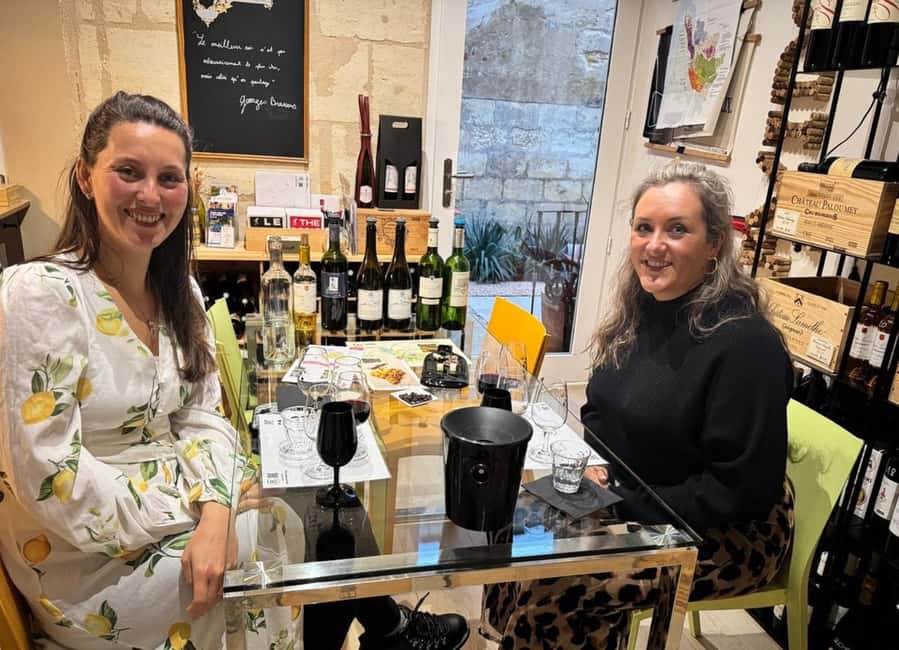
A tasting is fun, but it’s temporary unless you practice. That’s why the included booklet matters. It accompanies you home so you can keep working on the method you practiced in the room.
The goal is simple: you should be able to taste again later and feel more in control. With a system, every bottle teaches you something instead of just offering a one-time experience.
The aroma game also gives you a workout you can repeat. You’ll likely leave thinking differently about your senses. Instead of trying to identify a single smell, you’ll learn to look for a set of cues, then describe how they move from aroma to flavor to finish.
You’ll also walk away with a clearer sense of what to ask for next. Not just “more Bordeaux,” but more of the style you liked, whether that means drier, fresher, more aromatic, or something that pairs well with cheese.
Price and value: why $46 makes sense for what you get
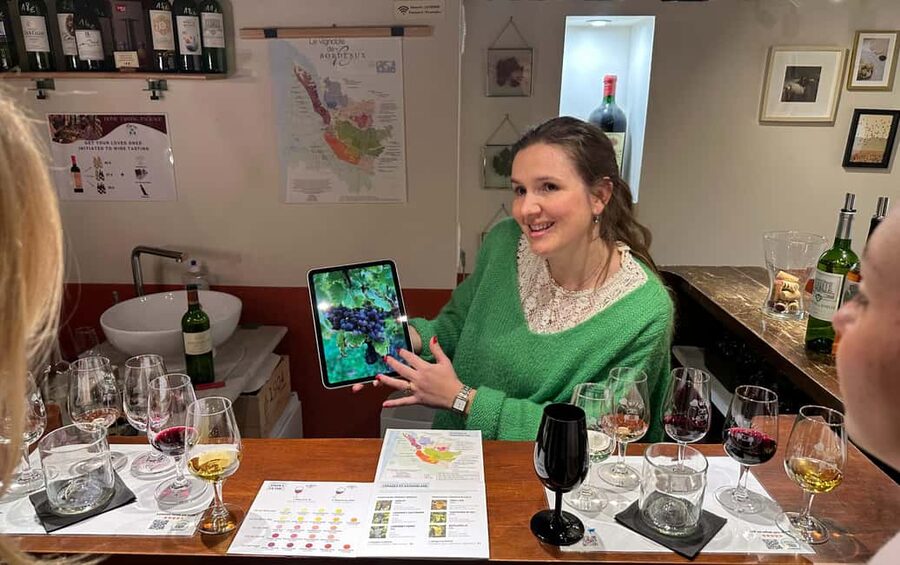
At $46 per person, this is not a cheap tasting, but it’s also not the kind of spending that feels wasteful if you actually want to learn.
Here’s the value math that matters:
- Four white wines are included, which is the main reason the price feels fair.
- You also get cheese pairing, water, and a guide-led lesson.
- The booklet helps turn the experience into skill, not just entertainment.
You’re paying for coaching. That’s the difference between a random tasting and a guided one that teaches technique. In a small group setting, the guide can also respond to your tastes, which makes the learning feel personal instead of generic.
If you’re traveling through Bordeaux and want a one-hour activity that upgrades how you taste for the rest of the trip, this price can be a smart trade.
Who this tasting is best for (and who should pick something else)
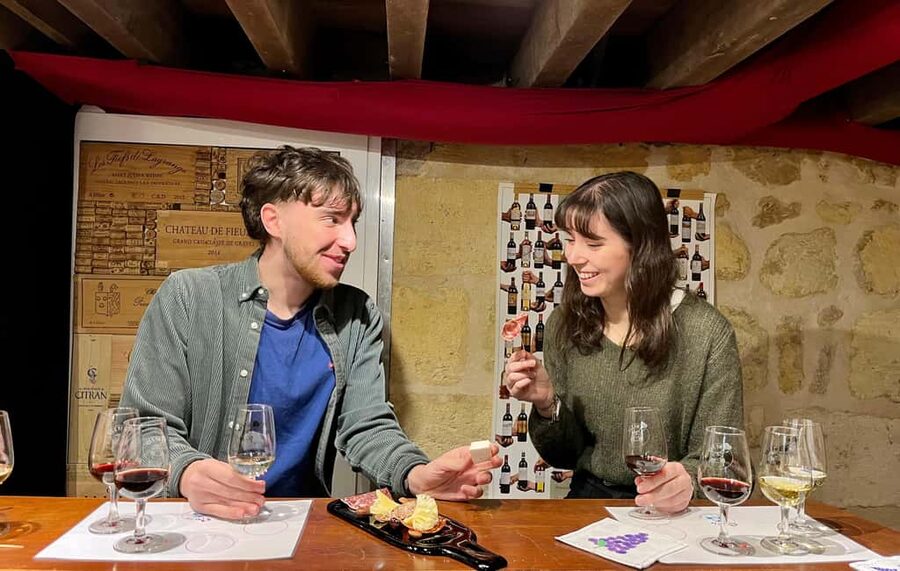
This session fits best if you:
- want to learn wine tasting in a structured, friendly way
- like dry whites and want to understand Bordeaux style differences
- enjoy cheese and want to connect it to what you taste
- prefer small groups over big crowds
It’s also a good pick for people who get intimidated by wine. The method-first approach makes the whole thing less about memorizing and more about sensing.
One caution on suitability: this experience is not suitable for people with mobility impairments, so plan accordingly.
And if your main goal is Bordeaux reds, this one may feel too white-focused, since the tastings are built around four white wines.
Should you book this Bordeaux white tasting?
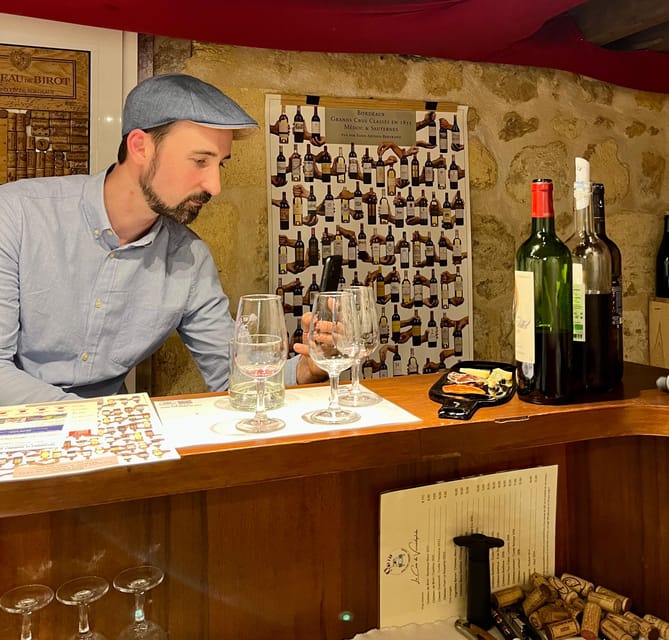
Book it if you want a small, high-learning tasting that’s designed to make you better at wine. The combination of guided tasting technique, a strong aroma practice, and cheese pairing gives you real takeaways you can use the next time you shop or dine.
Skip it or consider a different format if you’re mainly after red wines, or if mobility access is a concern for your group.
If you’re deciding on just one wine activity in Bordeaux and you want something you’ll remember for how it changes your tasting, this one is an easy yes.
Newly listed around Bordeaux
- Bordeaux: St-Emilion Vineyards e-Bike Tour with Wine & Lunch★ 4.9 · 181 reviews
- The essential in Bordeaux, private tour with a local★ 4.9 · 48 reviews
- The Best of Bordeaux Walking Tour + 1 Glass of Wine★ 4.7 · 29 reviews
- Bordeaux: St. Emilion Day Trip with Wine Tasting and Lunch★ 4.9 · 251 reviews
- From Bordeaux: Saint-Emilion Wine Tasting Tour★ 4.8 · 24 reviews
- Saint Emilion Wine and Bike Tour★ 4.9 · 22 reviews
- Saint-Emilion : half-day wine-tour into classified estates★ 4.7 · 22 reviews
- No Diet Club : Bordeaux Food Tour in Les Chartrons !★ 4.9 · 77 reviews
Bordeaux Tours & Activities, compared.

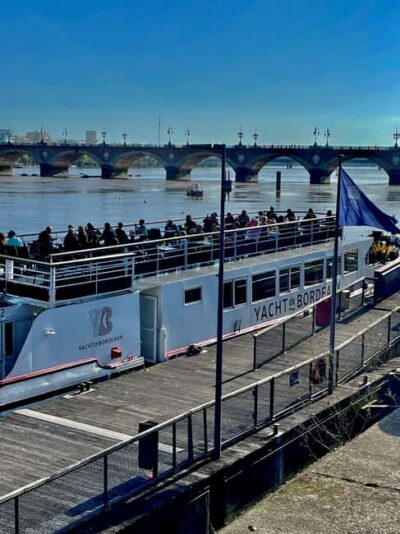
River Garonne Cruise with Glass of Wine and Canelé
Read our review →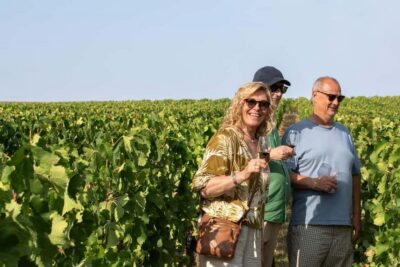
Afternoon Saint-Emilion Wine Tasting & snack
Read our review →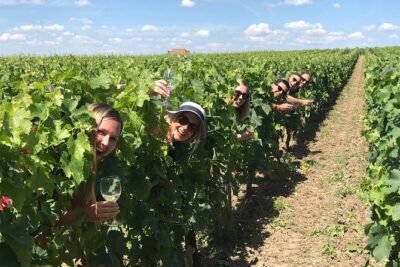
Medoc or Saint Emilion Wine Tasting and Chateau from Bordeaux
Read our review →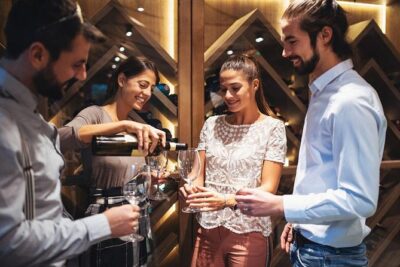
Saint Emilion Day Trip with Sightseeing Tour & Wine Tastings from Bordeaux
Read our review →
Saint Emilion Half-Day Trip with Wine Tasting & Winery Visit from Bordeaux
Read our review →
Browse the lists this tour appears in