
Reviewed · CITY TOURS
Marseille: Essential Guided Walking Tour of the City
Marseille makes sense on foot. This essential guided walk turns a few city blocks into a 2,600-year story, starting at La Major Cathedral and weaving through Le Panier’s hillside streets. I especially love how Charles connects architecture to real moments in Marseille’s past, from Greek and Roman roots to later centuries you can still feel around the harbor.
One heads-up: it’s a 5 kilometer walk in about 150 minutes. You will be on your feet the whole time, so comfortable shoes and water matter, and it is not suitable for wheelchair users.
In This Review
- Key moments you will actually remember
- Starting at La Major Cathedral, then letting Marseille explain itself
- Le Panier hillside streets and the calm of Windmill Hill
- Rue de la République and Cannebière, where the city shows its daily face
- Vieux Port and Forts Saint-Jean and Saint-Nicolas, maritime power in plain sight
- Saint Victor’s Abbey, Roman architecture that feels close up
- Palais du Pharo at Le Pharo, a seaside finish with royal connections
- How $41 turns into real value for a short Marseille visit
- Who should book this walk, and who might skip it
- Book it if you want Marseille’s story on your first afternoon
- FAQ
- Where do I meet the guide?
- How long is the walking tour?
- How much walking is involved?
- How big is the group?
- What languages are available?
- Is the tour suitable for wheelchair users?
- What should I bring?
- What is included, and what is not?
Key moments you will actually remember
- Meet Charles at La Major and get a clear sense of where everything fits
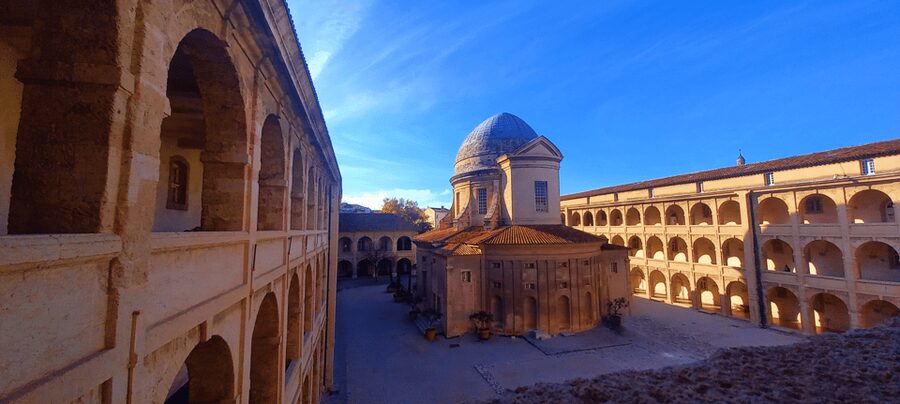
- Le Panier on the hillside, with street art, Vieille Charité, and Windmill Hill calm
- Old Port, forts, and working-harbor views, including Forts Saint-Jean and Saint-Nicolas
- Saint Victor’s Abbey, with Roman architecture highlights and strong storytelling
- Cannebière street energy, with galleries, workshops, cafés, and bistros lining the route
- Le Pharo and Palais du Pharo terraces, with a royal link to Napoleon III and Empress Eugénie
Starting at La Major Cathedral, then letting Marseille explain itself
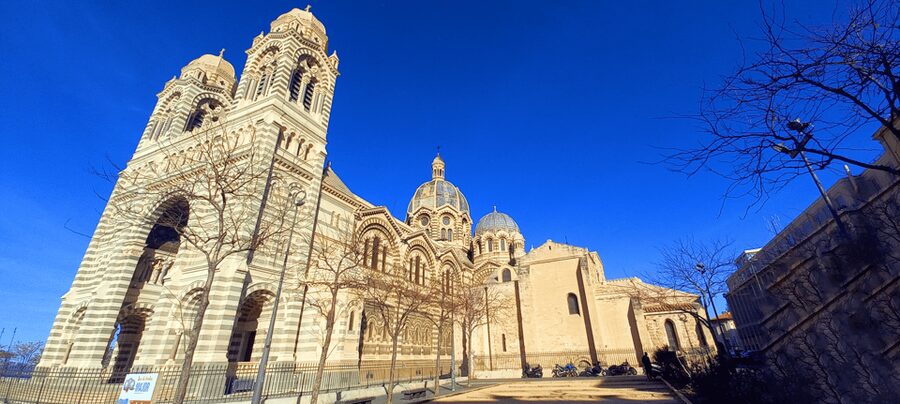
Your walk begins in front of Cathédrale Basilique Sainte-Marie-Majeure, often called La Major, a dramatic mix of Neo-Byzantine and Romanesque style. When you see it in person, the size and shapes make it easier to understand why Marseille’s history feels layered instead of linear.
This is also where Charles sets the tone. He is bilingual (French and English), local, and quick with humor, so the facts do not feel like a lecture. You start with the big picture, then you get to watch the city unfold in smaller, human-scale moments.
One practical thing I like here: you are orienting yourself early, so later stops make sense instead of feeling random.
More city walks in Marseille:
- Marseille: No-Diet Club Local Food Tasting and Walking Tour
★ 4.8 · 275 reviews - Marseille: Half-Day City Highlights Guided Walking Tour
★ 5.0 · 273 reviews - Marseille: Walking Food Tour with Full Meal
★ 4.7 · 137 reviews
Le Panier hillside streets and the calm of Windmill Hill
Le Panier is one of those places where you instantly understand why people fall for Marseille. The neighborhood sits up on a hillside with views toward the Mediterranean and the Old Port, so the walk gives you perspective as well as scenery.
You spend real time here, not just a quick look. Charles guides you through older lanes and lesser-seen corners, pointing out street art murals and the kinds of details you would miss if you were strolling alone. You also pass by Vieille Charité hospital and the calm area around Windmill Hill, which is a nice change of pace from the busier waterfront energy.
Then there is Church of Accoules, a stop that helps you feel the depth of the neighborhood beyond the walls covered in paint. If you like neighborhoods with character, this is where you get it.
My tip: bring sunglasses and expect uneven ground. Even when the pace is comfortable, older streets can be slightly rough.
Rue de la République and Cannebière, where the city shows its daily face
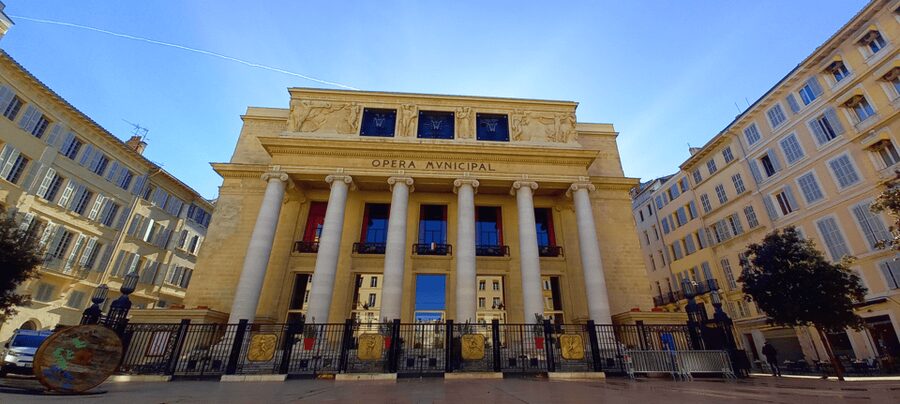
From the older lanes, the route shifts into Marseille’s more public, everyday rhythm. Rue de la République is part of the city’s main urban fabric, and it is an easy way to compare older Marseille with more modern street life.
As you move toward Cannebière, you get the same lesson, just louder. Cannebière is the lively spine of the downtown area, with galleries, workshops, boutiques, cafés, bistros, and restaurants along the way. This is the section that makes the tour feel practical, because it shows you where people actually spend time when they are not touring.
If you are trying to plan the rest of your trip, this is a useful stretch to pay attention. The “where should I go next” feeling clicks here.
Vieux Port and Forts Saint-Jean and Saint-Nicolas, maritime power in plain sight
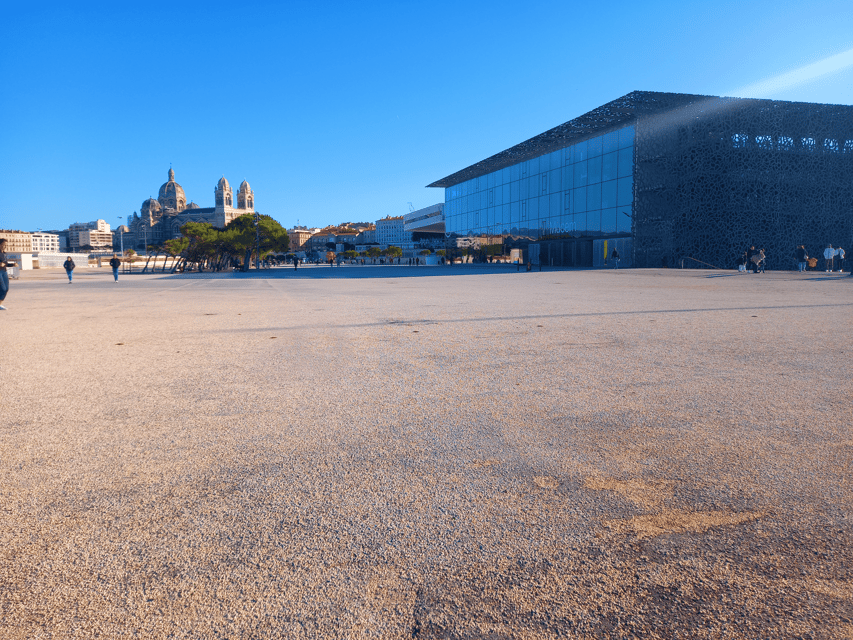
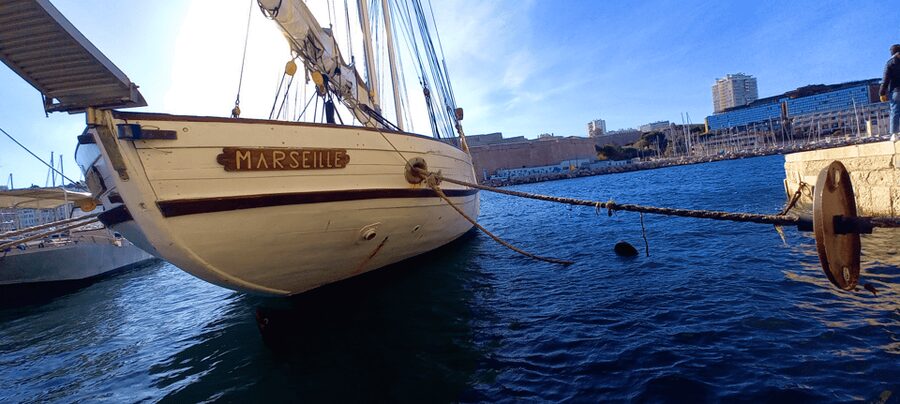
You reach the Old Port area and it changes your mood fast. The harbor is guarded by Forts Saint-Jean and Saint-Nicolas, and simply seeing them frames Marseille as a city built around maritime power, not just tourism.
Charles ties the waterfront to the long arc of Marseille’s influence and control, including how Roman presence shaped the region and how the Roman Empire left marks you can still recognize. Then, at the docks, the story turns more serious. You learn about Marseille’s rich but tragic World War II history, and the contrast gives the harbor more weight than a postcard view.
This is one of the best parts of the tour if you want context. You are not just staring at boats and yachts in bright water, you are learning why this port mattered, and why it still matters.
Good to know: the Old Port is active. Give yourself a moment at viewpoints to look, then keep walking. The pace is steady, but it is not a “stand and stare for an hour” kind of tour.
Other Marseille bookings to consider
- Marseille: Private Walking Tour with a Local
★ 4.4 · 113 reviews - Marseille: Foodie Walking Tour of the Cours Julien District
★ 4.9 · 112 reviews - Guided Walk in beautiful and hidden neighborhoods
★ 4.9 · 67 reviews - Marseille: Walking Tour with Local Guide
★ 4.9 · 50 reviews
Saint Victor’s Abbey, Roman architecture that feels close up
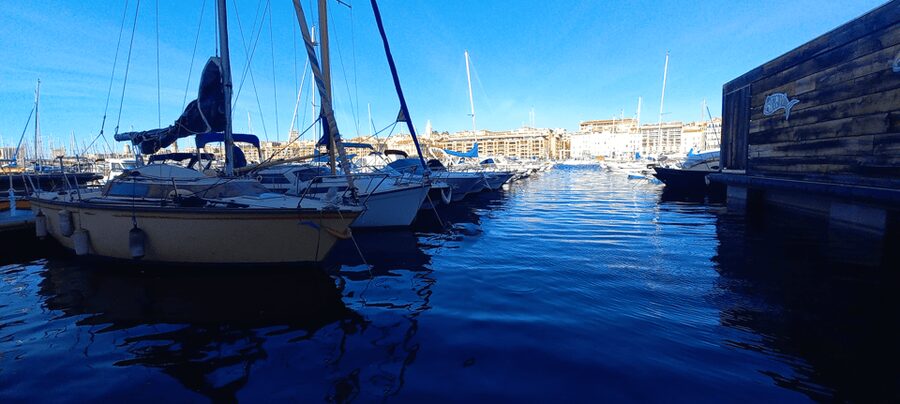
Saint Victor’s Abbey is a highlight for a reason. Up close, the Roman architecture shows how durable Marseille’s built heritage can be. Charles uses the stop to bring earlier eras into focus, connecting what you saw at La Major and in Le Panier to the heavier stone story of Saint Victor.
There is also a longer scenic moment along the way, plus a break that lets you reset. That pause matters because Marseille weather and walking comfort can change quickly. It also gives you time to take photos without rushing.
One practical note: since you are outside a lot, this is not the tour to ignore the forecast. If it is hot or sunny, plan to take shade and hydrate like it is part of the itinerary.
Palais du Pharo at Le Pharo, a seaside finish with royal connections
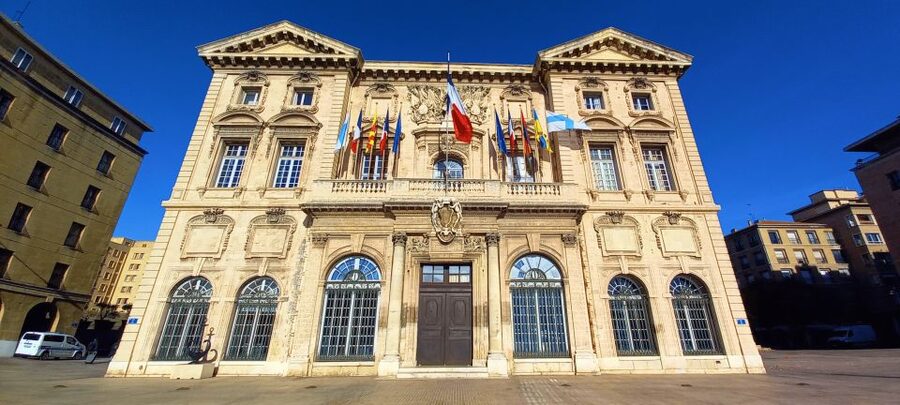
The tour ends with a strong visual payoff at Le Pharo. You get the ornate façade and sweeping terraces, plus views that help you appreciate Marseille’s geography at a glance. It is the kind of finale where the route you just walked starts making even more sense, because the city’s layout becomes visible all at once.
Charles also points out that Palais du Pharo was built in the mid-19th century by Emperor Napoleon III for Empress Eugénie. That detail is more than trivia. It explains why this area feels so intentional and ceremonial, even while it is still a working seaside district.
Before you finish, you have already worked your way through port life, old neighborhood lanes, and Roman-era architecture. By the time you reach the terraces, you are not just seeing a view. You are recognizing the city’s “why” behind the “what.”
Depending on the format you’re placed in, the drop-off is at one of two locations, Old Port of Marseille or Palais du Pharo.
How $41 turns into real value for a short Marseille visit
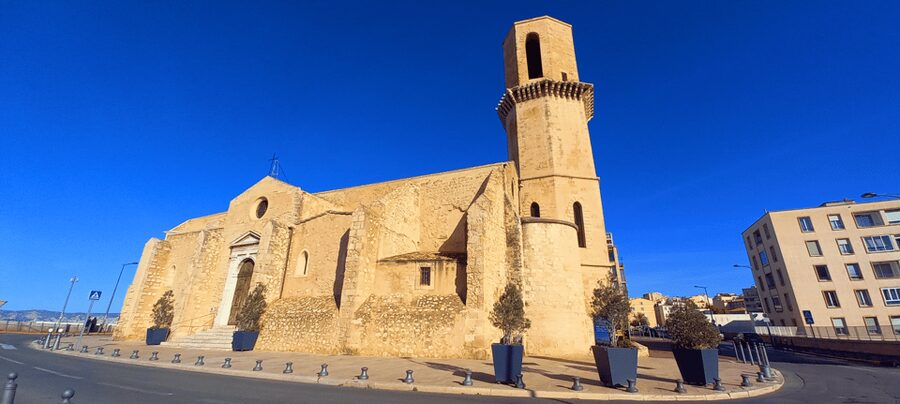
At about $41, this tour is good value because it compresses a lot of Marseille into one guided route. You are getting an overview of the city’s major eras, plus practical direction through the streets that matter most for first-time planning.
The small group size helps the value stay human. With a limit of 8 participants, Charles can keep a pace that works for the group and answer questions without turning it into a one-way lecture. In several accounts, people mention his humor and the way he explains history clearly, even when the topics get heavy.
And because you walk around key areas instead of taking a bus from stop to stop, you also leave with mental maps. That matters in Marseille, where neighborhoods can feel like different cities.
Who should book this walk, and who might skip it
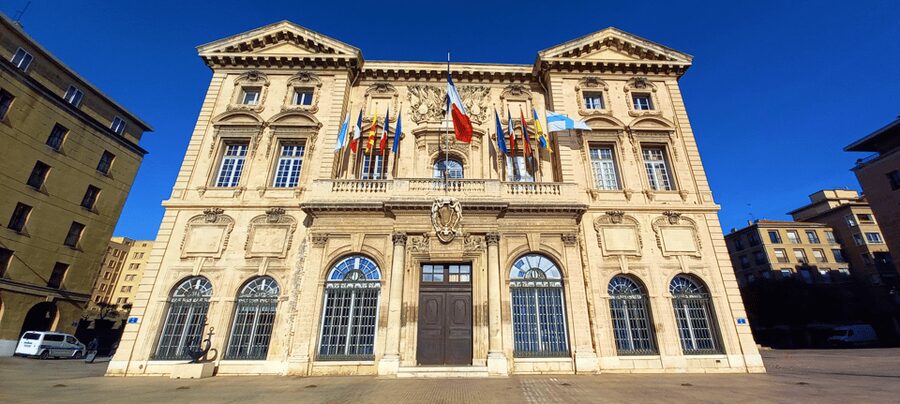
Book this tour if:
- It’s your first trip to Marseille and you want the city to “click” fast
- You like history that connects to streets, buildings, and waterfront viewpoints
- You want a local guide who talks in plain English and French, with humor
You might skip or choose a different format if:
- You do not want a continuous walk. This one covers about 5 kilometers in 150 minutes.
- You need wheelchair accessibility, since it is not suitable for wheelchair users.
Book it if you want Marseille’s story on your first afternoon
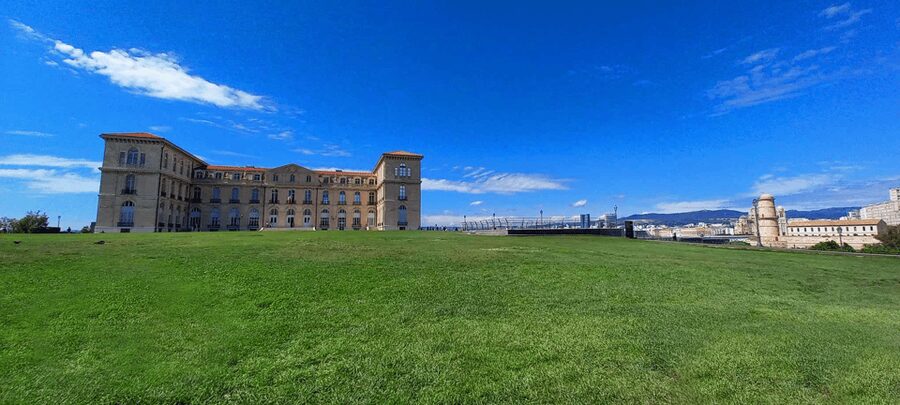
If you want an efficient, high-impact introduction to Marseille, this tour is a strong choice. The guide makes the route feel connected, from La Major to Le Panier, then down to the harbor and finishing at Le Pharo. You get both atmosphere and context, and you come away knowing where to go next.
If you are flexible, take advantage of the option to reserve and pay later. And if plans change, free cancellation is available up to 24 hours in advance.
FAQ
Where do I meet the guide?
Meet your guide in front of La Major Cathedral in Marseille. The guide will be wearing a white cap.
How long is the walking tour?
The tour lasts about 150 minutes.
How much walking is involved?
The tour covers a 5 kilometer route.
How big is the group?
The group is small, limited to 8 participants.
What languages are available?
The live guide offers French and English.
Is the tour suitable for wheelchair users?
No, it is not suitable for wheelchair users.
What should I bring?
Bring comfortable shoes, sunglasses, food and drinks, and water. Also dress in comfortable clothes appropriate for the weather.
What is included, and what is not?
The tour includes the guide and the walking tour. Food and drinks are not included.
Newly listed around Marseille
- Marseille: Frioul Islands Sunset Cruise with Cocktail Dinner★ 4.9 · 300 reviews
- Marseille: stand-up paddle tour – discover the calanques★ 4.7 · 33 reviews
- Calanques National Park Snorkel and Scuba Dive★ 4.8 · 27 reviews
- Marseille: Calanques Shore Excursion Electric Bike Day Tour★ 4.7 · 38 reviews
- From Marseille: Calanques National Park E-Mountain Bike Tour★ 4.7 · 123 reviews
- Marseille: Foodie Walking Tour of the Cours Julien District★ 4.9 · 112 reviews
- Marseilles: Private Custom Tour with a Local Guide★ 4.5 · 97 reviews
- Marseille: Urban Hiking Tour with a Local Guide★ 4.9 · 198 reviews
City Tours, compared.

Eiffel Tower Summit Option with Seine River Cruise and City Tour
Read our review →
Paris in a Day: Louvre or Orsay, Eiffel Tower, City Walk & Cruise
Read our review →
Lyon City Hop-on Hop-off Sightseeing Bus Tour
Read our review →
Eiffel Tower Hosted Tour, Seine Cruise and City Tour
Read our review →
Paris City Center Free Walking Tour (Tip-Based)
Read our review →
Golf Cart in Paris – Private Guided City Tour – Pickup Included
Read our review →Browse the lists this tour appears in