
Reviewed · MONTMARTRE WALKING TOURS
Montmartre Walking Tour: A Journey Through Art and History
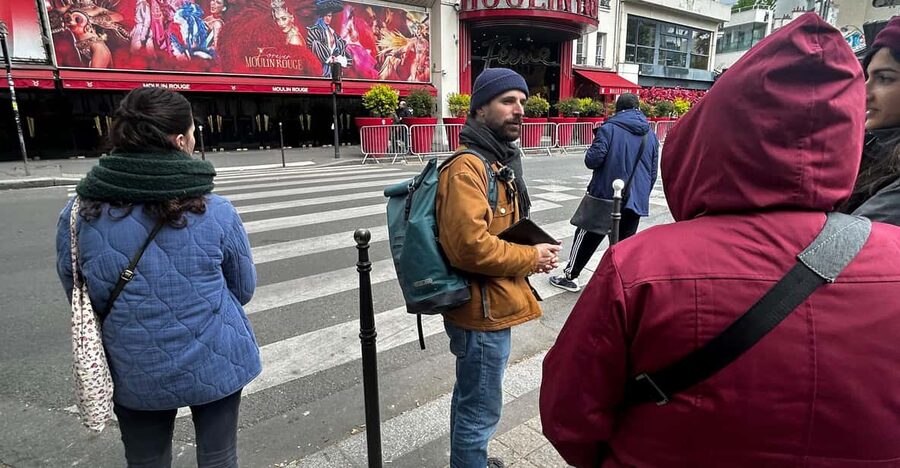
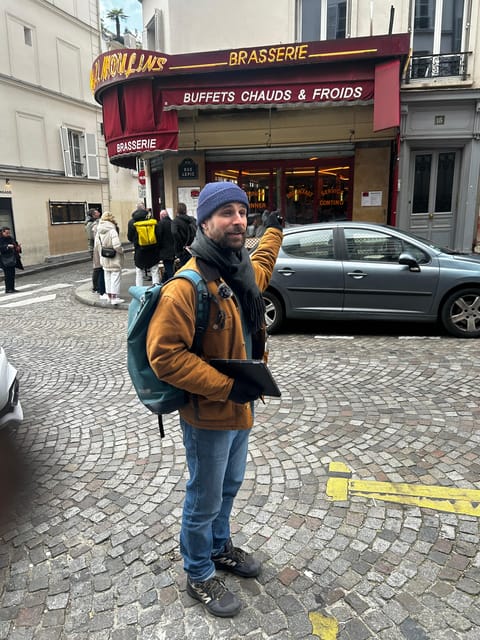
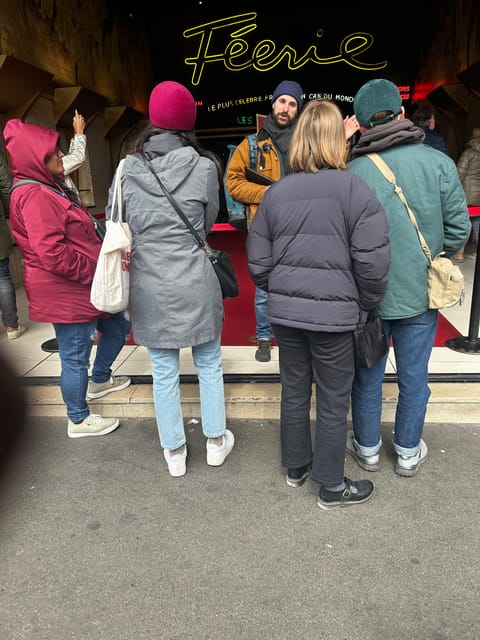
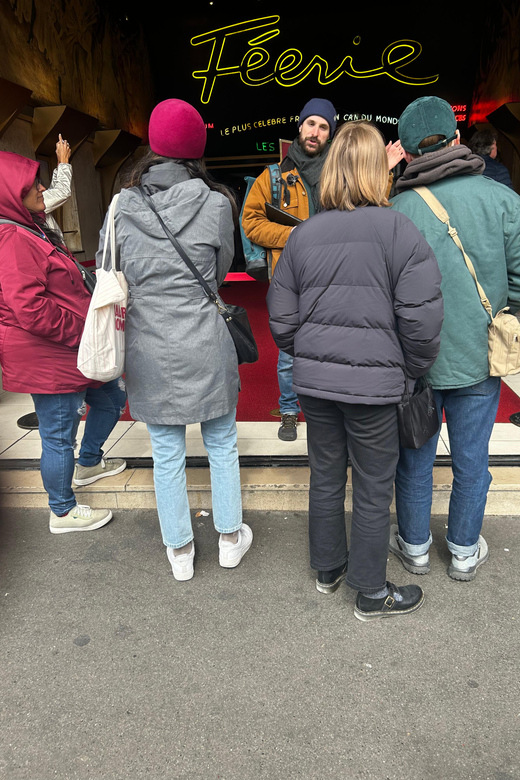
Montmartre feels different after this walk. I like the small groups (max ten) and the guide uses a tablet with picture support, so the art and history click quickly. You’ll move through Montmartre with clear stops, photo moments, and story beats that actually connect.
One thing to plan for: this is a walk up and around Paris’ biggest hill. If you want a flat, sit-down sightseeing day, this 160-minute route may feel like work, even though it’s well paced.
In This Review
- Key things I’d watch for on this Montmartre tour
- From Place Blanche to Moulin Rouge, you start with context fast
- The secret stop and Le Bateau-Lavoir: where the stories get specific
- Windmills, viewpoints, and the rhythm of photo pauses
- La Maison Rose and the vineyard: Montmartre’s odd details with purpose
- Musee de Montmartre and Sacre-Coeur: the walk turns from street scenes to big symbols
- Why the tablet + small group format makes this tour better value
- Price and timing: what $34 buys in real-world terms
- Walking itinerary breakdown, in the order you’ll feel it
- What to know before you go: shoes, weather, and recording rules
- Who should book this Montmartre tour, and who should skip it
- Should you book this Montmartre walking tour?
Key things I’d watch for on this Montmartre tour
- Small group cap of ten, which keeps questions and back-and-forth conversation going
- Tablet storytelling with pictures, so you can match what you see on the street to the art being discussed
- Arthur’s English and delivery, with friendly, caring guidance and lots of enthusiasm
- Artists like Picasso and Van Gogh used as your street map, linking major names to real locations on the hill
- Photo stops at viewpoints and monuments, giving your eyes a break while still keeping momentum
- No selling pressure, the tour is about walking and learning, not shopping
From Place Blanche to Moulin Rouge, you start with context fast
The tour meets at 3 Place Blanche, right outside a Five Guys. If you like arriving a little early, do it, because Montmartre is already busy around the meeting point and it’s easier to find your group before you head upward.
The first minutes matter here. You’re not just being dropped into the sights, you’re being given a framework for what you’re about to see: Montmartre is where art, religion, and politics mingle, and the hill’s steep streets helped artists and performers thrive. The route is designed for a steady pace across 160 minutes, not a sprint with random facts.
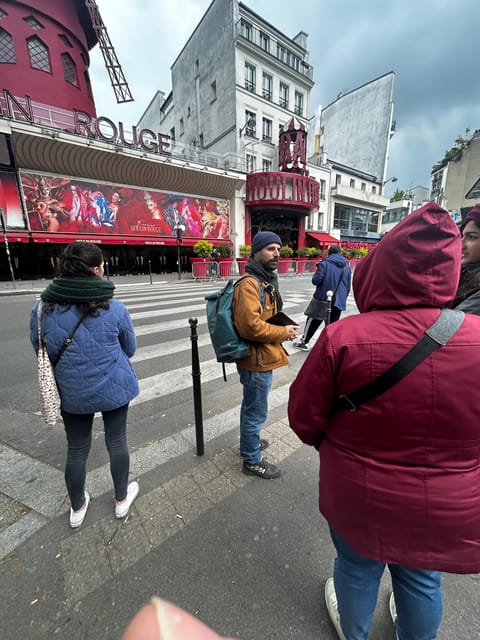
Then you hit Moulin Rouge as your first big anchor. You’ll do a guided stop with a photo moment, and the goal is to understand why this area kept pulling people in. Think of it as the neighborhood’s stage lights: the famous cabaret name is the shortcut that tells you what kind of energy Montmartre carried at the turn of the 20th century.
Practical note: early stops are usually where you’ll feel the most benefit from the tablet visuals. Seeing pictures alongside street corners helps you avoid the common problem of staring at landmarks with no story attached.
More city walks in Paris:
- Paris Top Sights Half Day Walking Tour with a Fun Guide
★ 5.0 · 2,893 reviews - Montmartre Hidden Gems and Scenic Highlights Walking Tour
★ 5.0 · 2,684 reviews - Montmartre Hill French Gourmet Food and Wine Tasting Walking Tour
★ 5.0 · 2,588 reviews
The secret stop and Le Bateau-Lavoir: where the stories get specific
After Moulin Rouge, you’ll move into less obvious streets. There’s a secret stop built into the walk, with a guided segment that lasts about 20 minutes. That length signals the intent: this isn’t a quick drive-by, it’s a proper story stop where your guide can connect themes, buildings, and famous artist lives to what you’re seeing right then.
This is one reason the tour works even if you’ve been to Montmartre before. Instead of repeating the usual postcard route, you’re nudged onto quieter paths. You’ll still get the famous landmarks later, but you earn them by first learning how Montmartre’s art scene shaped the neighborhood.
Next comes Le Bateau-Lavoir, another guided stop with sightseeing time. What I like about including a place like this is that it helps you understand Montmartre beyond its single famous image. You’re shown how creative life on the hill was built through real spaces and routines, not just myth and marketing.
Also, the guide’s style makes a difference. The content is illustrated through pictures on a tablet, and that format keeps the story clear while you’re walking. You don’t have to constantly look down at a phone map to follow along, because the guide is explaining what you’re seeing in real time.
From my perspective, Le Bateau-Lavoir is the part where the tour starts to feel like an art class outside. The focus shifts from landmark recognition to meaning: why artists stayed, how the neighborhood helped shape their work, and how Montmartre’s identity grew around the people who lived and worked there.
Windmills, viewpoints, and the rhythm of photo pauses
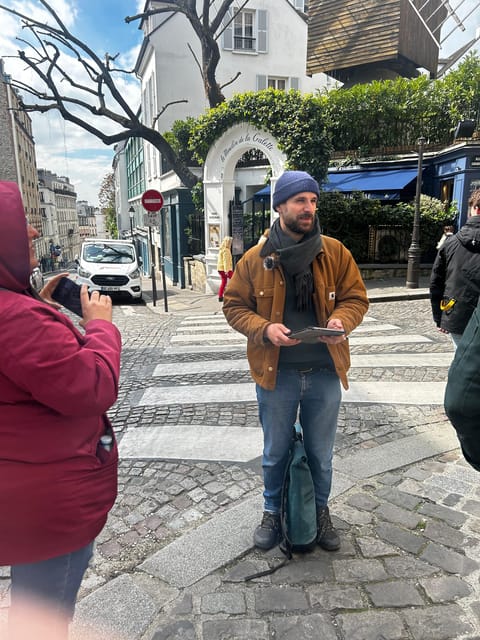
You’ll get a windmills photo stop next, with both guided and sightseeing time. Montmartre’s windmill imagery is part of why the hill is instantly recognizable, but on this tour it’s used as a visual clue. You’re meant to connect the hill’s look to the feeling that drew artists and writers into these streets.
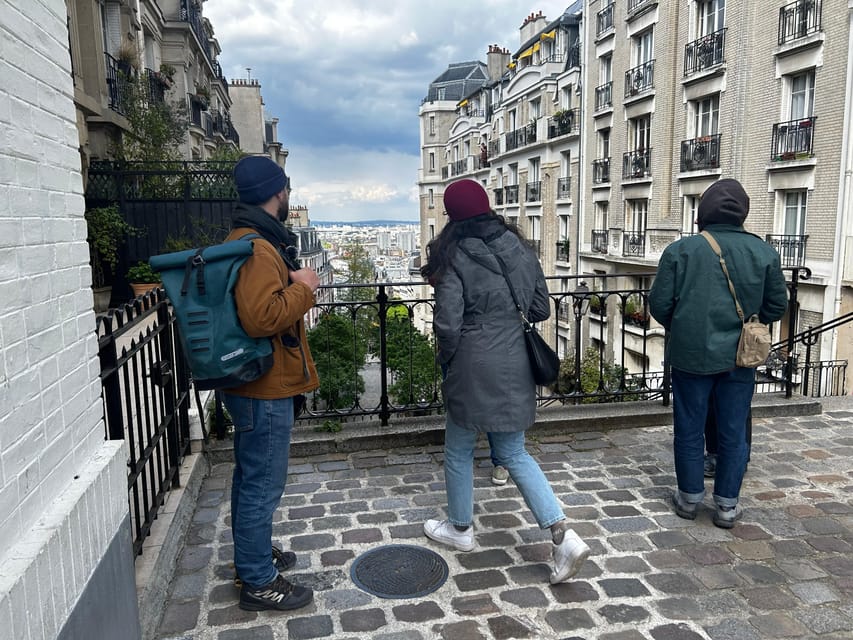
Then it’s straight into viewpoints, including one photo moment that takes just a few minutes. These short stops are smart. They give you a breather before the next uphill stretch, and they also reset your eyes so you can understand what you’re seeing from above.
I found these quick viewpoint pauses helpful because they break the walk into “watch” moments. You get time to look, take photos if you want, and then return to hearing the next part of the story with fresh attention.
Montmartre can be a place where the sightseeing gets blurry if you do it alone. With a guide, the viewpoint stops become checkpoints. You’re learning the hill’s geometry and where the neighborhood places you in the bigger Paris picture.
La Maison Rose and the vineyard: Montmartre’s odd details with purpose
After the mid-route viewpoints, you’ll visit La Maison Rose. Expect a photo stop plus guided commentary. The point of this stop is not just to see a recognizable building. It’s to show how Montmartre’s look, textures, and small contrasts mattered in the artist imagination.
This part of the tour also helps you appreciate how Montmartre’s fame hides its variety. You’ll walk through streets that feel like they belong to a specific mood, and the stories make that mood make sense. The tour’s research-backed approach shows up here, because the guide ties the scene to bigger themes like artistic life and community identity.
Then comes the vineyard stop, with guided and sightseeing time that’s short but meaningful. A vineyard on a city hill sounds like a postcard detail, but it actually reinforces the tour’s bigger message: Montmartre wasn’t just a backdrop for art. It had everyday life, strange land uses, and a sense of place that artists could respond to.
One of the tour’s best qualities, based on what I learned from how the guide teaches, is the attention to more than the obvious big names. You’ll hear about celebrated artists like Picasso and Van Gogh, and you’ll also be shown that the neighborhood story is bigger than the men whose names became famous later.
More Montmartre climbs:
- Paris: Montmartre Highlights Walking Tour with a Local Guide
★ 4.9 · 2,318 reviews - Paris: Montmartre Cheese, Wine & Pastry Guided Walking Tour
★ 4.8 · 2,255 reviews - The Secrets of Montmartre Walking Tour
★ 4.8 · 1,258 reviews - Private Montmartre Food Tour with Wine, Cheese & Pastries
★ 5.0 · 1,027 reviews
Musee de Montmartre and Sacre-Coeur: the walk turns from street scenes to big symbols
The route then takes you to Musee de Montmartre for a guided stop. This segment is about 15 minutes. It’s long enough to orient you, but not so long that it turns the tour into a museum slog. The value is in using the museum as a way to “zoom out” from the streets you just walked.
This is where you start seeing the neighborhood as a system, not a set of buildings. Religion sits in the middle of the hill’s identity, while art and politics keep pushing the neighborhood’s character in different directions. By the time you reach the museum stop, you’re ready for the bigger symbolic ending.
Finally, you arrive at Sacre-Coeur Basilica. You’ll have a photo stop and guided tour time of about 20 minutes here. This is the iconic finish that makes your earlier street walk feel earned. You understand why the basilica matters in Montmartre’s story, not just that it’s a landmark.
And you’re not stuck standing in one spot. The tour is built around movement and changing views, ending with the grand, recognizable payoff.
When you finish, the tour ends at 35 Rue du Chevalier de la Barre, 75018 Paris. That exit matters because it drops you back into the neighborhood rather than depositing you miles away from where you want to keep exploring.
Why the tablet + small group format makes this tour better value
At $34 per person, you want more than a “walk and listen” experience. The smartest part here is the combination of small-group limit (ten people) and picture-supported storytelling on a tablet.
With a group this size, you don’t disappear into the back of a crowd. You can actually ask questions, and your guide can respond without needing to reset the entire group every time. That matters a lot on a hill neighborhood, where people often get spread out just trying to keep their footing.
The guide is also the kind that uses pictures well. Instead of throwing art history at you like a lecture, the visuals help you connect street corners and facades to what the guide is describing. It turns “I’m looking at a building” into “I know why this building appears in the artist story.”
I also like that the guide’s research shows up in the balance of topics. The tour is built to connect art and history, but it doesn’t ignore the neighborhood’s political and religious angles. And from what I saw in how the guide teaches, there’s a clear effort to broaden the usual art-history lens, including more attention to women artists who supported or influenced the better-known names.
If your past tour experiences felt too generic, this one is structured to avoid that. You’re not repeating a script that could apply to any city. You’re getting a route built for Montmartre specifically.
Price and timing: what $34 buys in real-world terms
Let’s do the value math. At $34 for 160 minutes, you’re paying for a guide, a focused route, and time with tablet-based storytelling that helps you process what you’re seeing. For Paris walking tours, that’s a fair price point, especially because it’s capped at ten participants.
The length is also a sweet spot. Two and a half hours is enough time to move through key areas, hit big icons like Moulin Rouge and Sacre-Coeur, and still spend real minutes on less obvious stops like Le Bateau-Lavoir and the “secret stop.” You won’t feel like you just walked in circles, even though Montmartre’s streets naturally curve and climb.
Also, there’s no sales pressure. The tour explicitly notes that nothing you visit is about selling you something. That keeps the experience clean. Your time goes to learning, not to detours into shops.
One practical downside to price value: since it’s a walking tour, it only works if you’re comfortable on your feet. Bring comfortable shoes. If you show up in flimsy footwear, you’ll pay for it with fatigue, not with fun.
Walking itinerary breakdown, in the order you’ll feel it
Here’s how the route typically unfolds, and why each step matters:
1) Starting at Place Blanche (3 Pl. Blanche)
You begin at a clear landmark meeting point, outside Five Guys. Early orientation helps you understand Montmartre’s big picture before you start climbing.
2) Moulin Rouge (photo stop plus guided tour, about 20 minutes)
A recognizable starting anchor. It gives context for the neighborhood’s performance side and its pull on creative people.
3) Secret stop (guided, about 20 minutes)
A longer storytelling moment in a quieter space. This is where the tour earns its “more than the crowd” promise.
4) Viewpoint (photo stop, about 5 minutes)
Short reset for your eyes and your legs. Helps you orient yourself on the hill.
5) Le Bateau-Lavoir (guided plus sightseeing, about 20 minutes)
A guided stop that connects the neighborhood’s artist life to specific streets you can stand on.
6) Windmills (photo stop plus guided/sightseeing, about 5 minutes)
A visual cue to connect Montmartre’s iconic look to the stories being told.
7) Viewpoint (photo stop, about 5 minutes)
Another orientation moment. You get a chance to see the neighborhood from a different angle before continuing.
8) La Maison Rose (photo stop plus guided, about a stop’s worth of time)
A signature visual, used as a gateway to the neighborhood’s character and identity.
9) Vineyard (guided plus sightseeing, about 5 minutes)
A surprising detail that reinforces Montmartre as lived-in place, not only a stage set.
10) Musee de Montmartre (guided, about 15 minutes)
Zooms out from the streets, tying the neighborhood’s themes together in a shorter museum-style segment.
11) Viewpoint (photo stop, about 5 minutes)
Final quick orientation. Helps you appreciate what you just learned before the grand ending.
12) Sacre-Coeur Basilica (photo stop plus guided, about 20 minutes)
The iconic payoff, with story context so it feels connected to the art you heard earlier.
13) Finish at 35 Rue du Chevalier de la Barre
You end in the neighborhood, ready to keep exploring without a forced detour.
What to know before you go: shoes, weather, and recording rules
Montmartre runs colder than the rest of the city, so plan for that. Bring warm clothes if it’s cold, and if rain is in the forecast, pack an umbrella or rain coat. Water can be handy in warmer conditions, and there’s a supermarket near the meeting point.
The practical instruction is simple: you won’t need much beyond your feet and ears. Comfortable shoes are non-negotiable because you’re on a hill and you’ll be walking for about 160 minutes.
One important rule: video recording and audio recording are not allowed. You can still take photos during photo stops, but the guide wants you listening and present, not filming the whole time.
There’s also a limit on who this is best for. It’s wheelchair accessible, but it is not suitable for children under 10, and people over 80 are advised not to book.
If you’re sensitive to crowds, you’ll like the route choice. The tour includes paths that help you get away from the busiest tourist flow, while still hitting the major landmarks.
Who should book this Montmartre tour, and who should skip it
This tour is a strong fit if you want Montmartre with story structure. It works well for families, and it also suits lonely travelers who want a friendly, caring guide and a group small enough to talk like humans.
Book it if you care about how art connects to real places. You’ll walk in the footsteps of famous names like Picasso and Van Gogh who lived in the area around the end of the 19th century and beginning of the 20th century, and you’ll hear how the neighborhood shaped their lives and work.
Skip it if:
- You need an easy, flat stroll. Montmartre is a hill, and you’ll be walking for 2.5 hours.
- You fall into the tour’s age limits (children under 10, people over 80).
- You plan to record audio or video, because that’s not allowed.
Should you book this Montmartre walking tour?
If you want Moulin Rouge and Sacre-Coeur, but you also want actual art-and-history context instead of a checklist, I think this is a smart pick. The best reason is the combination of small group size and Arthur’s tablet-supported storytelling, which makes Montmartre’s history feel attached to the street under your feet.
At $34, the value is strongest when you like guided structure. If you’re the type who enjoys asking questions, spotting details, and learning why famous places matter, this tour is likely to hit your sweet spot. If you’d rather roam totally on your own with no schedule, you might prefer a self-guided route instead.
My vote: book it if you want Montmartre to make sense, fast, with a friendly guide and no sales pressure.
More Historical Tours in Paris
- Paris: Dark History and Ghostly Guided Walking Tour
★ 4.7 · 1,000 reviews - Paris: Le Marais & Montmartre Jewish History Walking Tour
★ 4.8 · 170 reviews - Explore the Marais: History, Art & Local Culture
★ 4.6 · 105 reviews - Historic Paris Walking Tour in English
★ 4.9 · 78 reviews
Newly listed around Paris
- The voice of Montmartre is a must-see in Paris★ 3.8 · 19 reviews
- Top Private Cruises in Paris with Champagne + more surprises★ 5.0 · 309 reviews
- The Official Emily in Paris Montmartre Walking Tour★ 4.7 · 40 reviews
- The Paris Pass® Plus: 90+ Attractions including The Louvre★ 3.4 · 386 reviews
- The Official Emily in Paris Locations Walking Tour★ 4.9 · 383 reviews
- The Official Emily in Paris Macaron-Making Workshop★ 4.9 · 68 reviews
- The Official Emily in Paris Wine & Cheese with Butter Making★ 4.9 · 20 reviews
- The Official Emily in Paris Croissant-Making Workshop★ 4.9 · 85 reviews
Montmartre Walking Tours, compared.

Montmartre Hidden Gems and Scenic Highlights Walking Tour
Read our review →
Montmartre Hill French Gourmet Food and Wine Tasting Walking Tour
Read our review →
Montmartre Highlights Walking Tour with a Local Guide
Read our review →
Montmartre Cheese, Wine & Pastry Guided Walking Tour
Read our review →
Sacré-Coeur and Montmartre Tour with Expert Guide
Read our review →
Private Montmartre Food Tour with Wine, Cheese & Pastries
Read our review →
Paris Montmartre Food Tour – A Full French Meal by Do Eat Better
Read our review →Browse the lists this tour appears in