
Reviewed · CITY TOURS
Paris: 2-Hour Passages Private City Tour in German
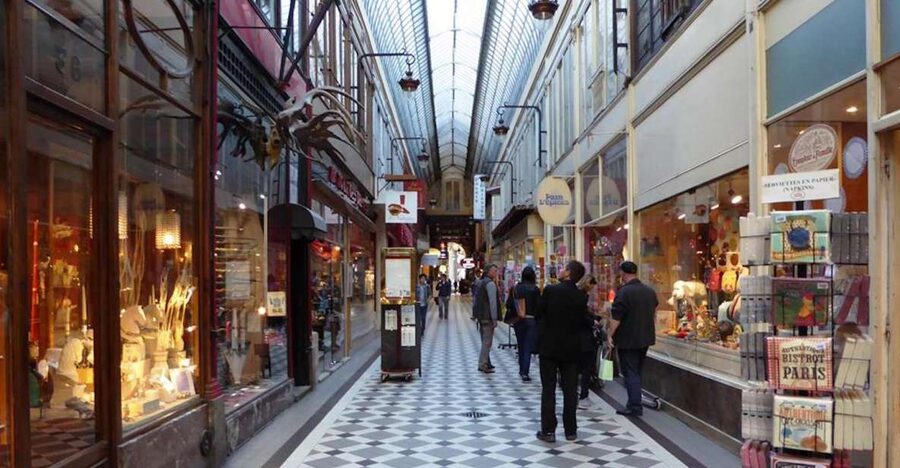
Paris’s passages are where the city gets quiet, clever, and oddly romantic. I like that this private loop takes you past places most people miss because they are literally hard to spot on your own. It is also a great way to see Paris as it was heading into the 19th century, when things were dirtier, rougher, and people needed practical answers.
Two things I really liked: first, the 19th-century feel. Your guide explains how these passages started as a response to the period, not as the shopping arcades you might picture today. Second, the pacing is spot-on for a short visit, and the guide gives you lots of connections, not just stop-and-photo stuff.
The main drawback to consider is language and style: it is a German-only tour, so you will want comfortable German or a willingness to keep up just through context. Also, there is no hotel pick-up, so you should be ready to start at the Metro.
In This Review
- Key things to know before you go
- Meeting at Le Peletier, then slipping into Paris’s secret layer
- Passage Verdeau: the practical answer behind the romance
- Passage Jouffroy: where details make you feel transported
- Passage des Panoramas and the Grands Boulevards link
- Palais-Royal quarter and ending at Palais-Royal
- What makes these passages special, and why the tour works
- German-only, private pacing, and what 2 hours buys you
- Price and value at $94, plus what you should budget
- Who should book this Paris passages tour?
- Should you book this tour?
- FAQ
- Is this tour in German?
- Where do I meet the guide?
- How long is the tour?
- Which days does the tour run?
- What is included in the price?
- Is hotel pick-up included?
- How much does it cost?
- FAQ
- Can I cancel for a refund?
- What if I want to book now and pay later?
- What other costs should I plan for?
Key things to know before you go
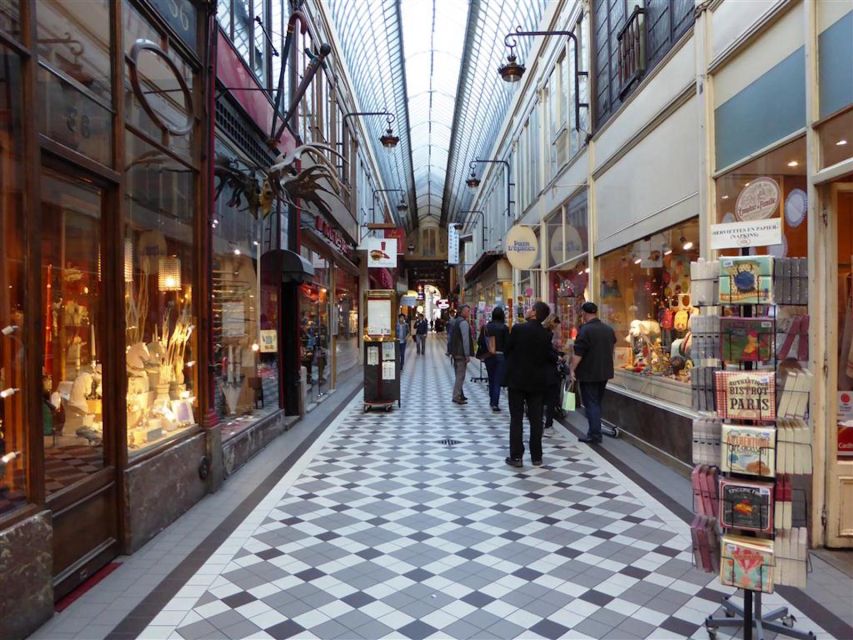
- Hidden passages, not a standard sightseeing shortcut: you are guided through spaces you would likely miss without local help
- 19th-century context is part of the walk: these were practical solutions to the city as it was
- Three landmark passages in one tight route: Passage Verdeau, Passage Jouffroy, and Passage des Panoramas
- Palais-Royal fits the story: you end in a district that ties the whole feeling together
- German-speaking guides who share connections: Solene is one example of the friendly, detail-forward guidance you can expect
Meeting at Le Peletier, then slipping into Paris’s secret layer
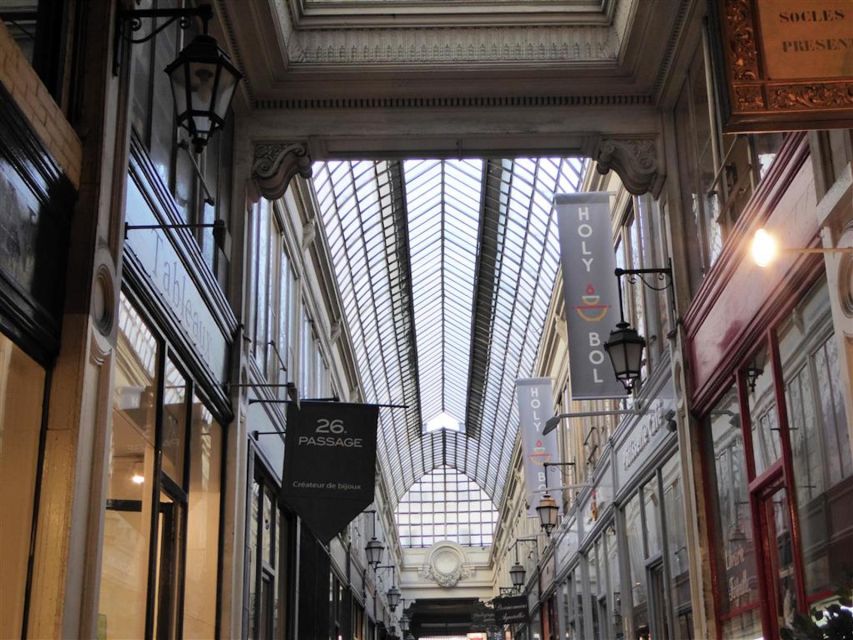
The tour starts at Metro station Le Peletier (Line 7). You will look for your guide with a HelpTourists bag. I like starting here because it is central and easy to reach by Metro, and it also helps you get your bearings fast before the route turns into something more surprising.
From the first minutes, the tone is clear: this is not a checklist tour. It is about place, mood, and why these passages ended up where they did. That matters because the passages are not obvious by design. Their name fits the reality. They are tucked in the heart of Paris, a bit hidden, and you generally do not stumble upon them unless you know to look.
One other small detail I appreciate is the “private group” setup. It usually means you can move with your guide at a human pace, ask questions, and actually listen. And with a 2-hour time window, you are not committing to a half day either. It is a smart add-on if you are already doing bigger museum blocks or long neighborhood walks.
Other Paris bookings to consider
- Paris: 1-Hour Seine Cruise departing from the Eiffel Tower
★ 4.4 · 77,472 reviews - Disneyland® Paris 1-Day Ticket
★ 4.6 · 49,412 reviews - Paris: Versailles Palace and Gardens Full Access Ticket
★ 4.6 · 41,579 reviews
Passage Verdeau: the practical answer behind the romance
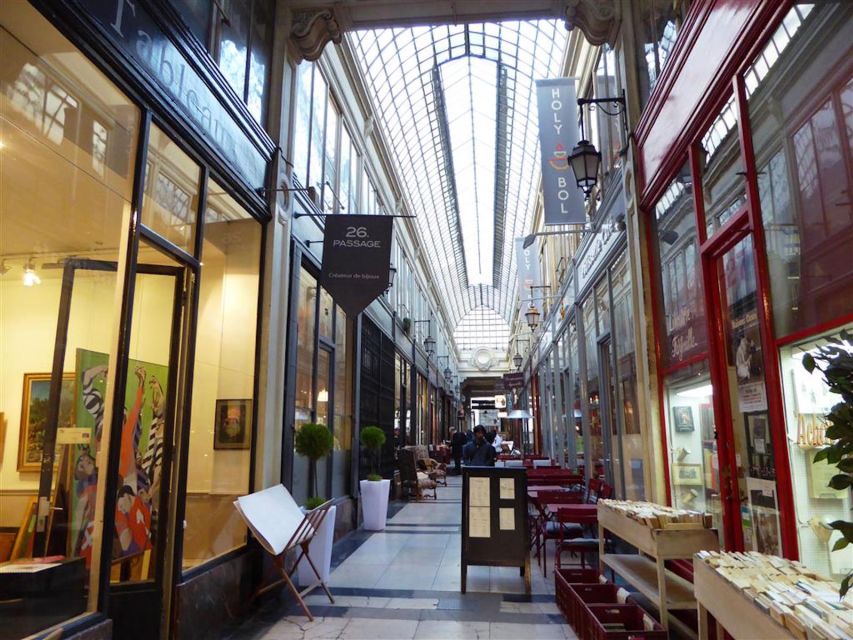
The first passage on the walk is Passage Verdeau. This stop is where the tour’s theme kicks in. You get the idea that the passages were not invented for fun shopping windows, at least not in the way they are often pictured now. Instead, they were shaped by the conditions of Paris in the early 19th century. The city was dirtier and messier than most people imagine, and the passages worked as a cleaner, more sheltered alternative.
I like that the guide frames it like cause and effect. You hear why people would want covered passages, and you start noticing the design as you walk. The goal is not just to see a neat corridor. It is to understand why such spaces made sense then, and why that makes them feel slightly magical now.
A tip for you here: treat this like a slow warm-up stop. When you step into a passage, look up and pay attention to how the space channels light and movement. Even if you love big sights, this is where Paris gets subtle. Passage Verdeau is a good place to learn what to look for so the next passages land even better.
Passage Jouffroy: where details make you feel transported
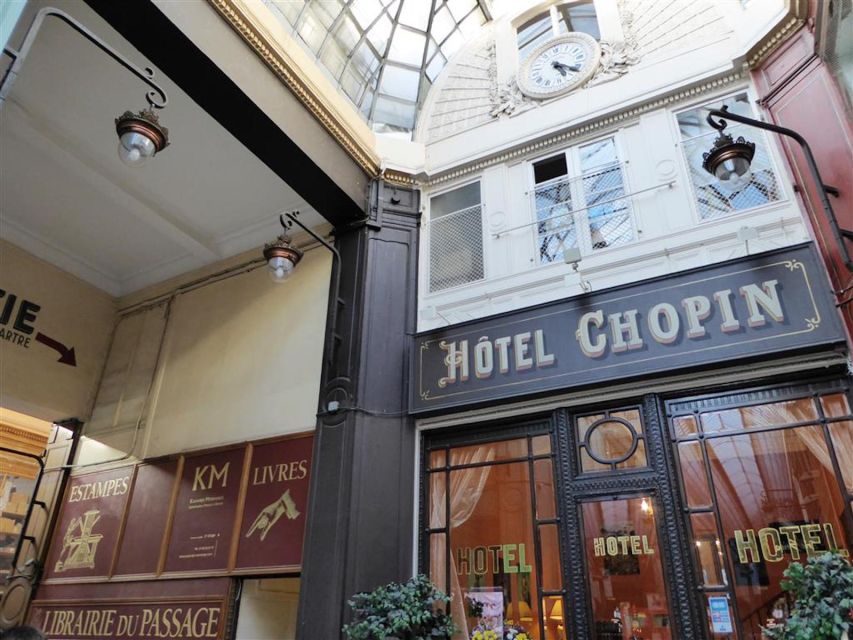
Next comes Passage Jouffroy, and this is where the tour leans hard into atmosphere. The passages have that “time capsule” effect. Not because they look like a movie set, but because the scale and the feel do something your open-air streets cannot. You start to sense 19th-century Paris as a lived environment, not just a name on a timeline.
This is also a stop that rewards attention. The guide ties things together and shares explanations that help you connect the architecture to the period. That “many interesting details and context” is part of why this tour has such strong feedback overall, including high marks for being very informative and giving Paris from another side.
One consideration for you: with only two hours, the tour moves at a steady pace. That means you should put away the phone for a minute sometimes and let the guide’s descriptions land. If you constantly pause to frame photos, you may miss the story thread that makes the passages worth more than postcard scenery.
Passage des Panoramas and the Grands Boulevards link
After Jouffroy, you reach Passage des Panoramas, and then the walk shifts toward the Grands Boulevards area before heading to the final neighborhood. I like this transition because it gives you a reality check. The passages can feel like a small world. Then the route reconnects with the wider Paris street system, so you understand what you were stepping out of and back into.
The tour explains why the passages were only “in vogue” for a shorter time. That point matters because it stops the whole experience from turning into pure nostalgia. These spaces existed for a reason and fit a specific moment, then the city’s needs and shopping patterns shifted. When you understand that, you appreciate why the passages feel slightly unexpected in today’s Paris.
At the Grands Boulevards stop, you also get an easier sense of scale. You are not just walking in tight corridors. You are moving through a bigger urban rhythm. That is helpful if you are someone who likes context, not just interiors.
If you want to get the most out of this section, do this simple thing: while you are in the open streets nearby, think back to what you felt inside the passages, sheltered and quieter. The contrast is the lesson.
Within easy reach:
- Paris: Arc de Triomphe Rooftop Tickets
★ 4.6 · 34,264 reviews - Paris: Orsay Museum Entry Ticket
★ 4.7 · 25,647 reviews - Paris: Evening River Cruise with Music
★ 4.4 · 22,721 reviews - Paris: Eiffel Tower Entry Ticket with Optional Summit Access
★ 4.4 · 20,035 reviews
Palais-Royal quarter and ending at Palais-Royal
The final stretch takes you into the Palais-Royal quarter and ends at Palais-Royal. Ending here is a smart choice because the whole passage story clicks into place with the surrounding area. You get a closing feeling that is less “corridor only” and more “Paris in a pocket,” with a sense of where people would have wandered and gathered.
This is also the part where the tour becomes easy to remember. Three passages can blur together, but the walk’s ending gives you a named destination you can return to on your own later. That is a practical kind of value. You finish with a spot you can navigate from easily, instead of just wandering off with no anchor point.
If you are planning the rest of your day, you can pair this with nearby sightseeing without stress. Even though the tour itself is only two hours, it changes how you will look at the central city afterward. The passages are now part of your mental map, not a forgotten curiosity.
What makes these passages special, and why the tour works
The heart of this experience is the idea that hidden passages are not just cute architecture. They were a real response to real conditions. The tour describes Paris as a dirty city in that era, then explains how passages offered a practical solution. In other words, these corridors were built to make daily life easier.
That is why I think the tour hits for so many people: it gives you a story you can see. You are not only walking through “hidden places.” You are learning the logic behind them. And because the passages are tucked away and hard to find quickly, the guide’s guidance is not just helpful, it is essential.
The other big strength is the guide approach. This is a group of sympathetic German guides who know Paris inside out, and the focus is on showing Paris with its most beautiful, exciting, and extraordinary sides. You get the feeling of someone sharing their own city, not reciting generic facts. The high rating of 4.9 across 30 reviews reflects that kind of value, including praise for the atmosphere, the information quality, and the perfect length.
I will also say this in plain terms: if you like walking, you will enjoy this. If you want big set pieces only, you might find it smaller in scale. But the tour is not trying to compete with cathedrals. It is trying to show you another Paris, the one that works in tight spaces and quiet corners.
German-only, private pacing, and what 2 hours buys you
This is a private tour conducted in German. That affects everything: the content depth, the speed, and how much you can ask and understand. If your German is solid, you will likely love how the guide explains the connections and the reasons behind the passages. If your German is beginner-level, you might still enjoy the visuals and pacing, but you will want to rely on context and body language more.
The duration is 2 hours, and that is genuinely useful. Paris can swallow your time. Two hours is long enough to visit multiple passages and grasp the theme, but short enough that you can still enjoy the rest of your day without feeling rushed all evening.
Your route is also structured so you do not waste time. You cover the key passage stops, then move into Grands Boulevards and finish at Palais-Royal. For you, that means less wandering and more guided interpretation. You will leave with a clear sense of what these passages are, and where they fit into central Paris.
Also, the tour runs Monday to Saturday. Plan your schedule around that, especially if you are visiting on a Sunday when it may not operate.
Price and value at $94, plus what you should budget
The price is $94 per person for a 2-hour private city tour in German. Here is how I think about value at this price point. You are paying for three things: a local guide, private pacing, and an experience that is hard to reproduce alone because the passages are easy to miss and not obvious to navigate quickly.
What is not included is also important for your budget. Tips are not included. Entrance fees are not included. Food is not included. And there is no pick-up from your hotel, so you start at the Metro meeting point.
One more booking note that can matter: you get free cancellation up to 24 hours in advance for a full refund, and there is a reserve now, pay later option. That flexibility can reduce stress if your Paris plans are still moving around.
For whom is this a strong buy? If you want a guided look at lesser-known Paris spaces and you enjoy explanations, the cost makes sense. If you prefer free self-guided wandering and you do not want to pay for language-based guidance, you might feel limited. But for many people, this is exactly the kind of focused, high-quality walk that turns a short trip into a richer one.
Who should book this Paris passages tour?
This tour fits best if you want something that most people skip. If you enjoy architecture at street level, small-scale Paris spaces, and stories tied to everyday life, you will get a lot out of it.
It is also a good fit for German speakers who want a guided city walk with clear explanations, not just a few facts tossed out. The private format and the guide’s detail level matter here, especially if you like asking questions or hearing connections.
If you are short on time, the 2-hour duration is perfect as a mid-day break or a thoughtful add-on before dinner. And if you want a Paris experience that does not feel like standing in the same tourist line loop, these passages will give you that change of pace.
If you do not speak German, you can still enjoy the visual side, but the main value is the explanation. So in that case, consider whether German-only guidance works for you.
Should you book this tour?
Yes, if you want a guided walk through hidden Paris passages with a clear 19th-century story, this is an easy “go” for your schedule. The structure is tight, the tour includes the key passage stops and a strong ending at Palais-Royal, and the guide quality seems consistently high based on the strong rating.
Book it if you like being shown how and why, not just where. Skip it if you only want landmark-size monuments or if a German-only experience would frustrate you. If you can handle the language and you like walking in quieter spaces, you should enjoy this a lot.
FAQ
Is this tour in German?
Yes. The tour is described as a private city tour in German, with a German-speaking guide.
Where do I meet the guide?
Meet at Metro station Le Peletier (Line 7). Look for your guide with a HelpTourists bag.
How long is the tour?
The duration is 2 hours.
Which days does the tour run?
It runs from Monday to Saturday.
What is included in the price?
Included is a 2-hour private city tour in German with a German-speaking guide.
Is hotel pick-up included?
No. Pick-up from your hotel is not included.
How much does it cost?
The price is $94 per person.
FAQ
Can I cancel for a refund?
Yes. You can cancel up to 24 hours in advance for a full refund.
What if I want to book now and pay later?
There is a reserve now and pay later option, so you can book your spot and pay nothing today.
What other costs should I plan for?
Tips, entrance fees, and food are not included.
Newly listed around Paris
- The voice of Montmartre is a must-see in Paris★ 3.8 · 19 reviews
- Top Private Cruises in Paris with Champagne + more surprises★ 5.0 · 309 reviews
- The Official Emily in Paris Montmartre Walking Tour★ 4.7 · 40 reviews
- The Paris Pass® Plus: 90+ Attractions including The Louvre★ 3.4 · 386 reviews
- The Official Emily in Paris Locations Walking Tour★ 4.9 · 383 reviews
- The Official Emily in Paris Macaron-Making Workshop★ 4.9 · 68 reviews
- The Official Emily in Paris Wine & Cheese with Butter Making★ 4.9 · 20 reviews
- The Official Emily in Paris Croissant-Making Workshop★ 4.9 · 85 reviews
City Tours, compared.
Eiffel Tower Summit Option with Seine River Cruise and City Tour
Read our review →
Paris in a Day: Louvre or Orsay, Eiffel Tower, City Walk & Cruise
Read our review →
Lyon City Hop-on Hop-off Sightseeing Bus Tour
Read our review →
Eiffel Tower Hosted Tour, Seine Cruise and City Tour
Read our review →
Paris City Center Free Walking Tour (Tip-Based)
Read our review →
Golf Cart in Paris – Private Guided City Tour – Pickup Included
Read our review →Browse the lists this tour appears in