
Reviewed · WORKSHOPS
Paris: Baguette and French Breads Class
A first crack at French bread can feel intimidating. This 4-hour Paris baguette class breaks it into clear steps, from basic ingredients to oven-ready loaves, then lets you taste the results.
You’ll leave with a bag full of your creations, plus the kind of practical know-how you can actually use at home. And yes, you will learn the Parisian way, not just the romance.
What I like most is the small group setup, limited to 8 people, which keeps the class interactive. I also love that you make multiple breads from scratch, typically including baguettes, brioche, and ciabatta, and then get to eat together at the end.
One possible drawback: if you prefer constant, every-minute hands-on involvement, you may want a bit more visibility into things like the dough mixing and oven baking, since the class works in a small-group rhythm and some steps can be shared between pairs.
In This Review
- Key things to know before you go
- The 4-hour Paris bread class built around real technique
- Mixing dough: the step where French bread either works or doesn’t
- Proofing, deflating, and shaping: where Paris technique shows up
- Proof, then sign the bread: an aesthetic step with purpose
- Baking in real conditions: heat, time, and humidity
- Tasting together: your baguette and brioche with a proper finish
- Leaving with a bag of French breads to share
- Small group and English instruction, including the Florence factor
- Price and value for a $175 per person class
- Who should book this Paris baguette and French breads class
- Should you book this Paris bread class
- FAQ
- How long is the Paris baguette and French breads class?
- What is the price per person?
- How big is the group?
- Is the class taught in English?
- What breads will I make during the class?
- What ingredients do you use to start the dough?
- Do I get to take the bread home?
- What happens at the tasting?
- Is the class cooking-focused?
- Is there free cancellation?
Key things to know before you go
- Four-ingredient foundation: flour, water, salt, and yeast, so you learn the base before variations
- Shaping is the lesson: baguette tension, brioche rolling, and different techniques for different breads
- Scoring or signing matters: the instructor guides how to proof and sign bread so it bakes successfully
- Baking variables are real: temperature, time, and humidity all affect what comes out of the oven
- You take home your work: a bag full of breads to share or eat later
- English instruction in a tight group: limited to 8 participants, with an instructor who teaches step-by-step
The 4-hour Paris bread class built around real technique
French bread is famous for a reason, but the magic is not mystical. It is repeatable technique plus timing. In this class, you move through the core stages that make French loaves work, starting with the basics and ending with breads you can actually slice and enjoy.
You start by working with the four ingredients that form the backbone of your dough: flour, water, salt, yeast. From there, the class shows you how small choices change the outcome. You do not just learn what to do. You learn why those steps matter.
It runs 4 hours, which is enough time to experience the whole bread cycle without feeling rushed. The class also stays small, capped at 8 participants, so you get guidance from the English instructor throughout the process.
Other Paris bookings to consider
- Paris: 1-Hour Seine Cruise departing from the Eiffel Tower
★ 4.4 · 77,472 reviews - Disneyland® Paris 1-Day Ticket
★ 4.6 · 49,412 reviews - Paris: Versailles Palace and Gardens Full Access Ticket
★ 4.6 · 41,579 reviews
Mixing dough: the step where French bread either works or doesn’t
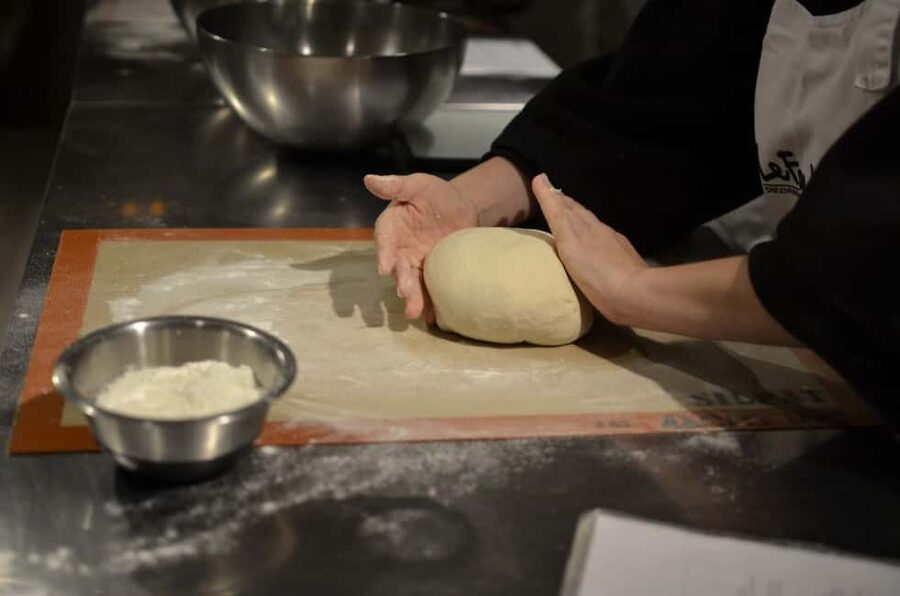
The dough stage is where most home bakers run into trouble, because bread making is part math and part feel. Here, the structure helps: first measure everything, then mix your doughs, then learn what to look for as you go.
You’ll be taught that understanding what you are aiming for while mixing is important. That is not just a throwaway line. Dough consistency affects fermentation, shaping, and oven spring. So your early lessons are really your safety net for later steps.
You also learn that dough is a flexible starting point. Add a little butter or oil and you can go in a different direction. That concept is useful for you later, if you decide to experiment beyond the breads made in class.
Proofing, deflating, and shaping: where Paris technique shows up
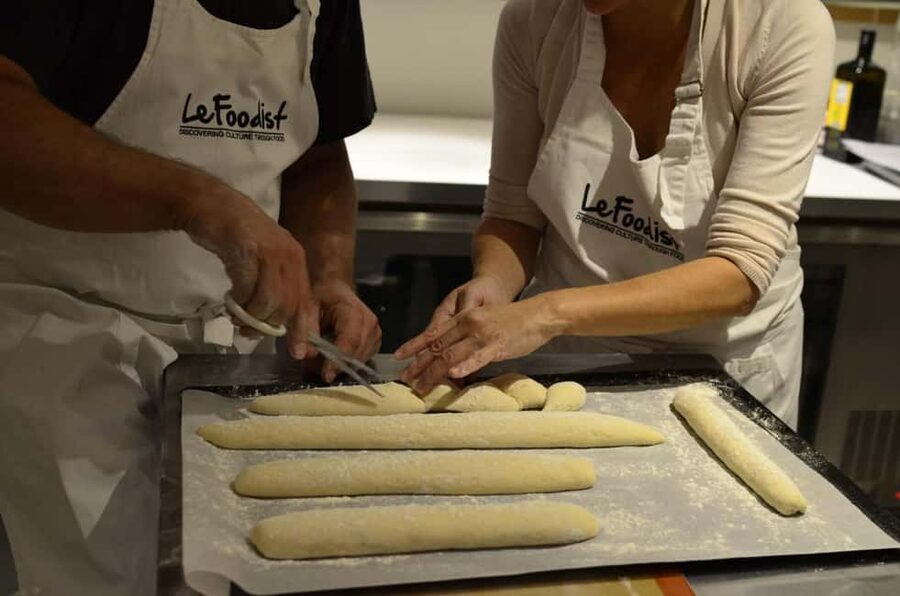
After mixing comes proofing, where dough rises and develops character. Then you deflate and shape. The course treats these as separate skills, each with its own technique, instead of one vague “let it rise” instruction.
For baguettes, tension is critical. You will learn that shaping is not only about form, it is about how the dough surface holds and stretches. A baguette shape is a skill, and tension helps it bake the way you expect.
For brioche, the technique changes. Instead of tension-focused shaping, you’ll learn to roll. That difference matters because brioche is not just “another bread.” Its dough handling and final texture are different, and the class makes you experience that contrast.
Ciabatta also shows up in the typical breads made, and the takeaway is that each loaf has its own rules. If you try to shape everything like a baguette at home, you’ll usually get a frustrating result. This class trains you to respect the differences.
Proof, then sign the bread: an aesthetic step with purpose
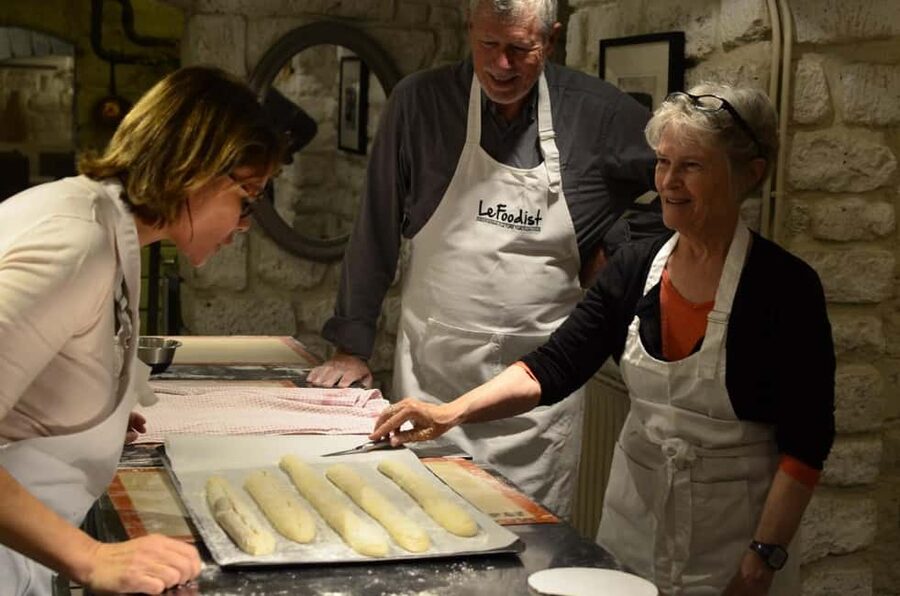
Right before baking, you do something that feels artistic: you proof the bread again and sign it. Your instructor guides you through it, and the lesson is practical, not just decorative.
In French bread, scoring or signing affects how the loaf opens in the oven. The class emphasizes that it is both aesthetically important and critical to successful baking. In other words, you are not drawing for looks. You are giving the loaf direction.
This is also a great moment to slow down and pay attention. If you want to bake on your own later, this is the kind of step that you will remember because you can see the result immediately after baking.
Within easy reach:
- Paris: Arc de Triomphe Rooftop Tickets
★ 4.6 · 34,264 reviews - Paris: Orsay Museum Entry Ticket
★ 4.7 · 25,647 reviews - Paris: Evening River Cruise with Music
★ 4.4 · 22,721 reviews - Paris: Eiffel Tower Entry Ticket with Optional Summit Access
★ 4.4 · 20,035 reviews
Baking in real conditions: heat, time, and humidity
Once the bread goes in the oven, the class shifts from technique to variables. Temperature, time, and humidity all impact the final result. That is a key lesson because ovens can behave differently depending on conditions.
You taste the breads after baking, and that is where the theory lands. Each bread can be tasted with different pairings, like delicious French cheese or jam. The class also includes a fun idea for using bread beyond eating plain, like making cooking bread as a Pain Perdu.
This matters for value. Many cooking classes teach a recipe. This one helps you understand the levers that change outcomes, so you are less likely to feel stuck when you recreate the process at home.
Tasting together: your baguette and brioche with a proper finish
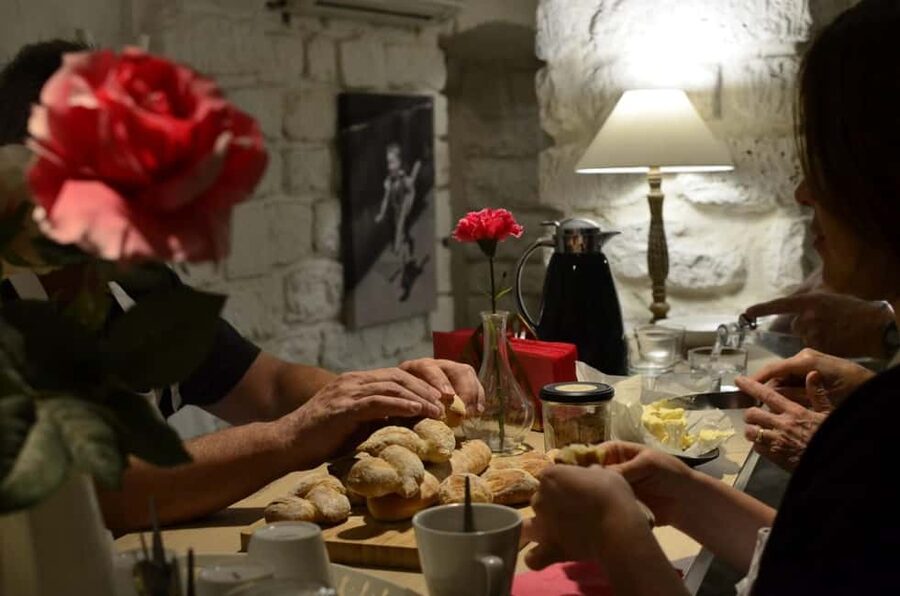
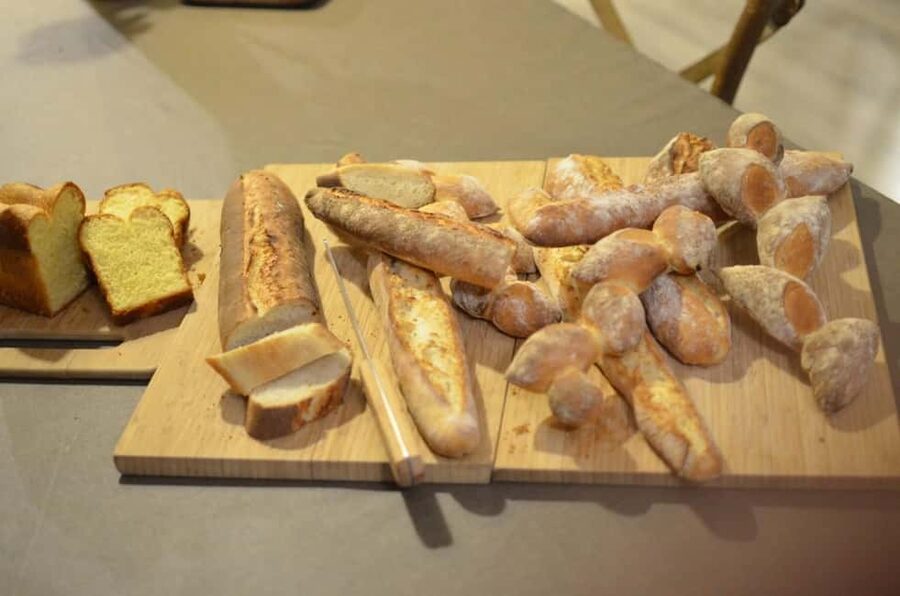
At the end, you sit together and enjoy what you made. In one praised version of the experience, the class includes tasting with butter, cheese, and wine, which turns the session into a real meal, not a rushed photo-op.
That shared table is also part of why this class works well for small groups. You get the satisfaction of finishing something substantial, and you learn from what your neighbors pulled off too. It becomes a lived “wow, we did it” moment, without pretending bread is effortless.
And because the breads are made from scratch during the class, the tasting feels earned. You are not sampling store-bought slices and hoping for the best. You are eating your own work.
Leaving with a bag of French breads to share
You will leave with a bag full of your creations. That is one of the biggest practical wins here.
If you are traveling, it gives you a take-home souvenir that also functions as food. It is easy to share with friends or bring along for a picnic later in the day. And if you plan to stay in one place for a bit, you can pace the eating instead of trying to finish everything immediately.
Pro tip for your next meal planning: bread is best eaten fresh, so decide whether you will store pieces, reheat portions, or eat right away before you walk out the door.
Small group and English instruction, including the Florence factor
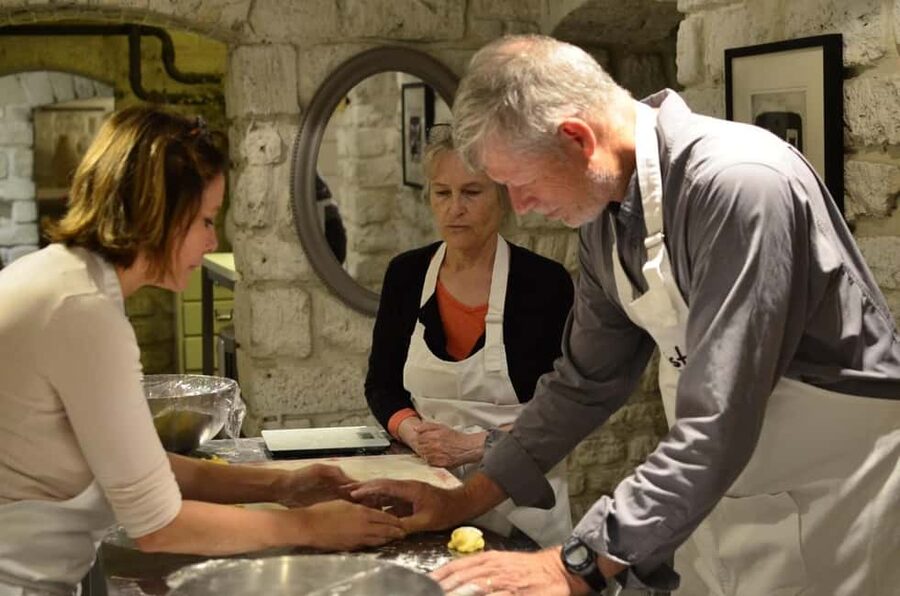
The class is limited to 8 participants, and it works in a close setup where you often work in pairs. That small-group format is repeatedly praised because it keeps the instructor close and the feedback timely.
One instructor name you may hear mentioned in the course experience is Florence, who has been described as a great teacher who demonstrates skills first, then helps you achieve great results. That teaching style is exactly what you want for bread, because doing it once correctly is helpful, but doing it confidently after explanation is what makes the class worth it.
That said, there is a realistic consideration. Some people want more direct hands-on time for every single step, including closely watching dough mixing and the exact bakes in the oven, plus clearer identification of which baked loaf belongs to which pair. If that is your preference, you might want to arrive with the mindset of learning by doing, plus asking questions as the class moves through stations.
Price and value for a $175 per person class
At $175 per person for 4 hours, this is not a casual add-on. But it is also not overpriced for what you get, if you like hands-on learning that produces edible results.
Here is what you are paying for:
- Expert-led instruction in English
- Small group size (limited to 8), which usually means more attention than a big class
- Multiple breads made from scratch, including baguette, brioche, and ciabatta in the typical experience
- Tasting at the end with pairings like cheese and jam, and in some versions, butter, cheese, and wine
- A take-home bag of breads, which adds real value versus a class that only gives recipes
The best way to judge value is simple: you are buying time with an instructor plus a meaningful end product. If you love cooking, you will likely feel the price as fair. If you are only looking for a quick activity for photos, you may find it heavy on craft and learning.
Who should book this Paris baguette and French breads class
This class fits best if you:
- Want to learn bread steps in a structured way, not just follow a vague recipe
- Enjoy technique-focused cooking, especially mixing, proofing, shaping, and baking
- Like the idea of leaving with food you can share immediately
- Prefer small-group instruction in English
It is also a strong choice for couples or friends who like cooking together, since the class is tight and practical. Solo travelers can do well too, as long as you’re comfortable working with a pair setup and sharing the final table.
If you are the type who likes to master every micro-step in full view, bring that desire into the lesson. Ask questions, and pay attention during demonstration so you can compare it to your own dough.
Should you book this Paris bread class
I think it is a great booking for the right traveler. If you want an English-taught bread lesson that teaches real technique, stays in a small group, and ends with both tasting and a take-home bag, this is exactly that kind of experience.
Book it if bread making interests you and you want to walk away with more than a memory. You’ll get the full rhythm, from mixing through proofing, shaping, signing, baking, and tasting.
Skip it only if you want a slow, fully individualized coaching session where every loaf and every moment is watched closely by you alone. In this format, you learn by doing in a group structure, which is usually a win, but it is not designed for total one-on-one control.
FAQ
How long is the Paris baguette and French breads class?
The class lasts 4 hours.
What is the price per person?
The price is $175 per person.
How big is the group?
It is a small group, limited to 8 participants.
Is the class taught in English?
Yes, the instructor teaches in English.
What breads will I make during the class?
You’ll make baguette-style bread and other French breads. The class description and common versions include baguettes, brioche, and ciabatta from scratch.
What ingredients do you use to start the dough?
The class begins with four ingredients: flour, water, salt, and yeast.
Do I get to take the bread home?
Yes. You leave with a bag full of your creations.
What happens at the tasting?
You taste your breads at the end, and the breads can be enjoyed with options such as French cheese, jam, and ideas like Pain Perdu using the bread.
Is the class cooking-focused?
Yes. A cooking class is included.
Is there free cancellation?
Free cancellation is available up to 24 hours in advance for a full refund.
Newly listed around Paris
- The voice of Montmartre is a must-see in Paris★ 3.8 · 19 reviews
- Top Private Cruises in Paris with Champagne + more surprises★ 5.0 · 309 reviews
- The Official Emily in Paris Montmartre Walking Tour★ 4.7 · 40 reviews
- The Paris Pass® Plus: 90+ Attractions including The Louvre★ 3.4 · 386 reviews
- The Official Emily in Paris Locations Walking Tour★ 4.9 · 383 reviews
- The Official Emily in Paris Macaron-Making Workshop★ 4.9 · 68 reviews
- The Official Emily in Paris Wine & Cheese with Butter Making★ 4.9 · 20 reviews
- The Official Emily in Paris Croissant-Making Workshop★ 4.9 · 85 reviews
Workshops, compared.

Paris Cooking Class and Lunch with Wine plus Market Visit Option
Read our review →
Molinard Parfums Nice: Discovery Perfume Workshop
Read our review →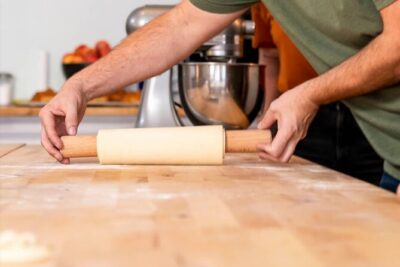
Paris Croissant Small-Group Baking Class with a Chef
Read our review →
Fragonard Eze: Perfume Making Class and Factory Tour
Read our review →

Molinard Parfums Grasse: Classic 1-Hour Perfume Workshop
Read our review →Browse the lists this tour appears in