
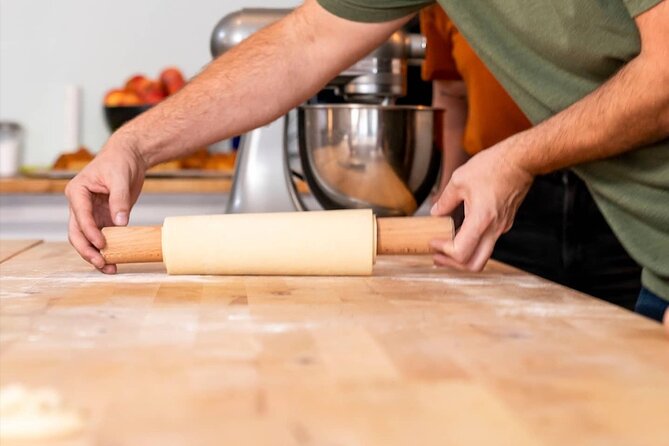
Reviewed · MACARON BAKING CLASSES
Paris Croissant Small-Group Baking Class with a Chef
Your Paris croissant lesson starts with butter. I love the hands-on coaching as you knead, shape, and work the dough, and I love the small group size that makes it easier to get help fast. You make a classic croissant, plus pains au chocolat and pain au raisin, with hot and cold drinks during the class. One thing to consider: it is a fixed 2.5-hour block, so you will want to plan your day tightly, and in rare cases a chef can be unavailable.
This workshop runs from a fully equipped pastry studio in the 3rd arrondissement, right by Place des Vosges. You’ll meet your instructor, get aprons and tools, and then follow step-by-step guidance through dough, shaping, baking, and finally eating.
Feedback on the teaching style is consistently strong, with instructor names like Clara, Prisca, Milly, Rosalie, Lizzy, and Chef Felix showing up in the experience notes. The class is offered in English, and you leave with an illustrated recipe booklet so you can try again at home without guessing.
In This Review
- Key Things I’d Book For
- Entering The Pastry Studio Near Place des Vosges
- Chef-Led Small-Group Instruction You Can Actually Keep Up With
- From Dough to Lamination: What the Hands-On Technique Teaches You
- Croissant to Croissant: A Step-By-Step Flow That Builds Confidence
- Pain au Chocolat and Pain au Raisin: Two Classics, Same Technique Mindset
- What You Get to Eat, Take Home, and Reuse
- Price and Value: Why $157.21 Feels Fair for What You Actually Get
- Who This Class Best Fits, From Kids to Serious Bakers
- A Practical Reality Check Before Booking
- Should You Book This Croissant Baking Class in Paris?
Key Things I’d Book For
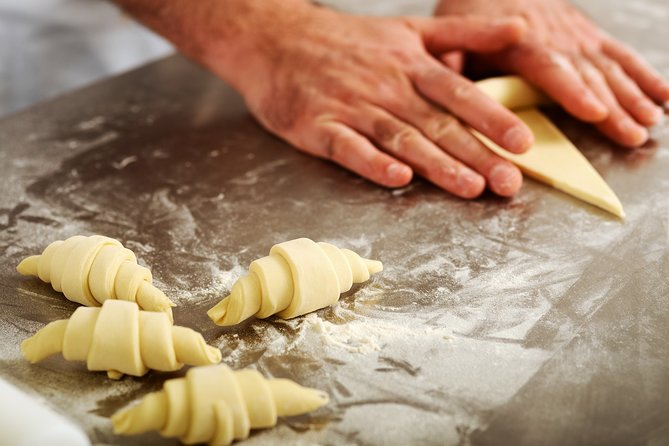
- Marais-area studio setting near Place des Vosges, so you are combining a practical class with a classic Paris neighborhood walk.
- Small group, real instruction, often described around 8 people, plus the chance to ask questions while you work.
- Hands-on dough work, including shaping and the butter technique used for laminated pastries.
- Three iconic bakes in one session: croissant, pain au chocolat, and pain au raisin.
- Hot and cold drinks plus tasting, and you take your baked pastries with you.
Entering The Pastry Studio Near Place des Vosges
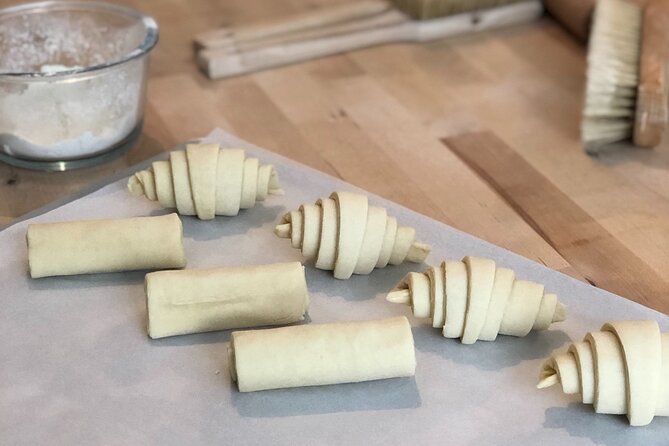
The meeting point is at 7 Rue de Béarn, 75003 Paris, and the experience ends back there. That matters because you do not burn time hunting across town after baking. Instead, you get dropped in the middle of a walkable area.
This spot is very convenient for pairing with other Marais moments. Place des Vosges is close by, and the neighborhood layout makes it easy to wander before or after your class. You’ll also find it is near public transportation, which helps if you are already juggling lines, transfers, and schedules.
The workshop itself happens inside a fully equipped pastry studio. That is a big deal, because croissant-making is not something you can do comfortably in a random shared kitchen space. You need tools, clean workspace, and a setup where the instructor can show technique while you mirror the steps. In this format, the studio is doing the heavy lifting so you can focus on learning.
More Cooking Classes in Paris
- Paris Cooking Class and Lunch with Wine plus Market Visit Option
★ 5.0 · 1,024 reviews - Paris: French Croissant Baking Class with a Chef
★ 4.9 · 712 reviews - Paris Cooking Class: Learn How to Make Macarons
★ 5.0 · 634 reviews
Chef-Led Small-Group Instruction You Can Actually Keep Up With
A big reason this class works for most people is the size. The workshop is described as limited to only eight participants, while the overall maximum listed for the activity is 12. Either way, the point is the same: you are not stuck watching from the edge of the room.
In practical terms, you want two things during a baking class. First, you need time to work your own dough. Second, you need quick feedback when something looks off. That is what the small-group setup enables, and it is why you see repeated praise for patient, clear teaching.
In the feedback, different instructors show up, like Clara and Prisca, along with names such as Milly, Rosalie, and Chef Felix. Across those notes, a common theme is communication that stays understandable in English, plus explanations that include the why, not just the what. That makes it easier to repeat the method later, instead of only memorizing steps.
You also get a very concrete start to the session. You’ll receive aprons and utensils before you begin kneading and shaping. That removes the stress of arriving and figuring out what to bring. It also keeps the class moving, because everyone starts ready.
And yes, the class includes hot and cold drinks throughout. That sounds simple, but in a flour-and-yeast session it helps a lot. You are working with your hands for the whole time, so it’s nice to have a steady reset while you wait for timing steps.
From Dough to Lamination: What the Hands-On Technique Teaches You
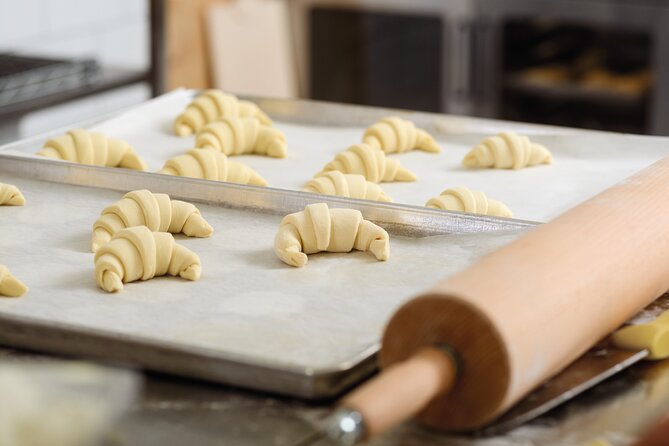
You start with a classic croissant. The process is step-by-step, and you are not just observing. You’ll knead, shape, and work the dough, then move it toward baking.
One of the most valuable parts of a croissant class is learning the feel. Croissant dough is forgiving in some ways and picky in others. If the dough is handled in the wrong way at the wrong time, you can end up with pastries that taste fine but do not deliver that signature flaky structure.
This class targets those moments directly. You get hands-on practice with the dough and butter technique that turns ordinary bread dough into laminated layers. In feedback, people call out the chance to laminate the dough with the butter, not just watch it happen. That is exactly the kind of learning you want, because croissants are a technique pastry. You cannot fake lamination with guesswork.
You also get guided shaping and baking. Shaping is where you start to see whether your dough is behaving. Baking is where timing matters and the transformation becomes visible. When the instructor walks you through these steps while you’re doing them, it reduces the most common home-baker frustrations like uneven results, weak structure, or inconsistent browning.
A small drawback here is also worth saying out loud. Croissants are not a quick bread. Even in a short class, you are dealing with dough handling and technique. That means you are learning the method, but you are not leaving with a shortcut. If you are hoping to master croissants in one evening without practicing again, you might feel a little disappointed. The flip side is that you will leave with a repeatable process and a recipe booklet that helps you keep the steps straight.
Croissant to Croissant: A Step-By-Step Flow That Builds Confidence
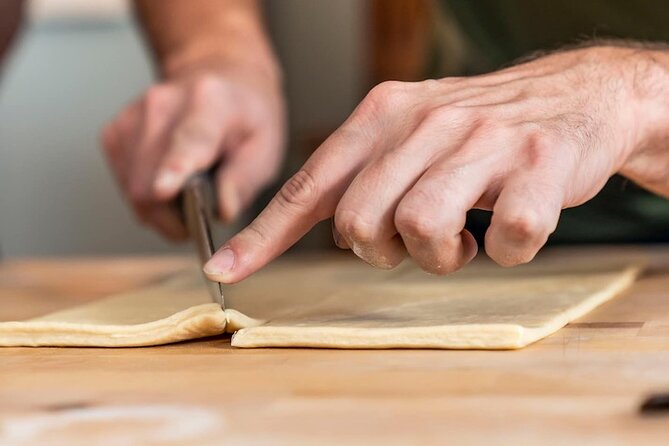
The class is organized so you move from one pastry to the next. You begin with the croissant, then transition into pains au chocolat and pain au raisin. That sequencing is smart for your learning curve.
Croissant dough teaches your baseline technique. Once you understand the rhythm of working the dough, you can apply similar handling while focusing on different filling and shaping styles. That is why doing multiple items in one class tends to stick better. Your brain stops treating croissants as a one-off mystery and starts treating them as part of a family of pastries.
At the studio, you’ll work through the steps with your instructor watching. That matters because croissant-making can look right while being wrong underneath. Small cues, like dough texture and how the layers behave during shaping, are not obvious unless someone points them out while you are actively working.
This is where the small group size really pays off. When you are making lamination-based pastries, you cannot wait until the end for help. You need correction while you still have time to adjust. Multiple instructors in the feedback are praised for being patient and helpful, especially when people had questions mid-process.
So if you are a first-timer, you get a guided path. If you are more experienced, you still get value because you can compare your approach to the technique your chef is teaching. Either way, you leave with confidence that comes from doing the steps yourself.
More macaron classes in Paris:
- Paris: Montmartre Cheese, Wine & Pastry Guided Walking Tour
★ 4.8 · 2,255 reviews - Paris: Macaron Class at Galeries Lafayette
★ 4.2 · 1,196 reviews - Paris: French Macaron Culinary Class with a Chef
★ 4.9 · 591 reviews - Saint-Germain: Gourmet Chocolate & Pastry Walking Food Tour
★ 4.8 · 495 reviews
Pain au Chocolat and Pain au Raisin: Two Classics, Same Technique Mindset
After the croissant, you make two other French favorites in the same workshop. The menu focus is clearly set: pain au chocolat and pain au raisin.
This part is not just about variety. It’s about understanding how a shared dough base can become different pastries through filling and shaping choices.
Pain au chocolat is especially popular because it feels familiar to almost everyone. Chocolate in a layered pastry is a crowd-pleaser, but the pastry still has to perform. Your job is to get the layers right and then position and seal the filling so you do not end up with leaks or uneven structure.
Pain au raisin adds a different flavor profile and slightly different handling needs. Raisin pastries are all about balance. Too wet and the dough can get heavy. Too dry and the filling does not integrate nicely. In this class, you get instruction and shaping guidance, so you are learning the method while producing an end result you can taste immediately.
There is also a practical benefit to doing both fillings the same day. You can compare textures and baking outcomes side by side. That is useful when you later try to replicate the process at home. You will remember not just the croissant, but how the dough behaved with different inserts.
The class includes tasting at the end. After the pastries come out of the oven, you snack on what you made. Then you take away the rest. In the feedback, people often describe leaving with multiple pastries per person, which is part of what makes this feel like more than a demo. You are producing real food, not just learning.
What You Get to Eat, Take Home, and Reuse
This is one of those rare cooking experiences where the value shows up twice: during the session and again after.
During the workshop, you get:
- Hot and cold beverages throughout
- Baking results you can taste at the end
- Taking away all produced pastries
At the finish, you also get a free illustrated booklet with recipes. That booklet is a big deal for croissants and laminated pastries. Without it, you are left trying to remember timing and shaping details. With it, you can recreate the steps with fewer gaps, which is how this class turns into an actual skill rather than a one-time treat.
In feedback, people keep talking about the ability to repeat at home successfully. That usually comes from two things: clear hands-on instruction in the studio, and a written recipe you can follow without translating your memory into baking guesswork.
So if you are the type of traveler who wants something useful for later, this format delivers. You leave with pastries in hand and a method you can revisit.
Price and Value: Why $157.21 Feels Fair for What You Actually Get
The price is $157.21 per person for about 2 hours 30 minutes. On paper, that can look like a splurge if you only compare it to buying pastries.
But in practice, you are paying for:
- A chef-led workshop
- Small-group attention (often described around eight people)
- Ingredient and baking supplies included
- Hot and cold drinks during the class
- Tasting during the session
- Take-away pastries
- An illustrated recipe booklet
When you add up the items, the class is not just paying for the instructor’s time. It is paying for the entire learning setup: studio tools, supplies, baking environment, and the guidance to help you not waste materials.
It also helps that feedback on quality is very strong, with a 4.9 rating and 96% recommendation. You do not see that kind of consistency in every cooking class, especially one that involves technical work like laminated dough.
One more value angle: the timing. A 2.5-hour block gives you a structured activity that is easier to fit into a Paris itinerary than a half-day excursion. If you have limited days, this can be a high-impact choice.
Who This Class Best Fits, From Kids to Serious Bakers
This is a strong pick for families, couples, and solo travelers who want a hands-on skill. In feedback, you see kids included, including a seven-year-old who did well with instruction. You also see teenagers and parent-child groups described as enjoying the class for the learning plus the food payoff.
For new bakers, the biggest plus is that you are not left alone with a chaotic recipe. You have a chef explaining steps, and the group size supports asking questions while you work. That lowers the chance you feel lost.
For more experienced bakers, you might appreciate the focus on technique and the chance to compare your approach to a chef-led method. In feedback, people point out that the class works for experienced and new bakers alike.
If your travel style is mostly walking, museums, and café stops, this class gives you a different kind of Paris souvenir. Not another photo. A skill and a box of pastries.
A Practical Reality Check Before Booking
A few practical points will help you get the most out of it.
First, plan your time. The class runs for about 2 hours 30 minutes, and it is a single-session format. That means you should not stack it too tightly with another activity that depends on perfect timing.
Second, expect demand. This experience is booked on average 43 days in advance. If you travel in busy months or during weekends, booking earlier is the smart move.
Third, there is one rare risk you should be aware of. In the feedback, there is at least one case where the class was cancelled on the day due to unexpected chef unavailability for health reasons. The provider explanation was that the pastry chef could not work. The takeaway for you is simple: even with a great track record, keep your day flexible enough to absorb a change.
If you can handle that kind of uncertainty, the upside is huge: you get technique instruction, multiple pastries, and a take-home recipe in one go.
Should You Book This Croissant Baking Class in Paris?
If you want a hands-on Paris experience that produces something you can eat and repeat, I’d book it. The value is strong because the class is not just watching a chef. You are making croissants and two more classic pastries, with drinks, tasting, take-away pastries, and an illustrated booklet to help you practice later.
It’s especially worth it if you care about learning technique. Croissants are hard to teach yourself cleanly. This class gives you step-by-step guidance in a small group, which is exactly how you reduce the guesswork.
If you cannot risk a last-minute change on your schedule, then you should think twice and keep backup options nearby. But if you are planning a flexible day in the Marais area, this is a fun, practical way to turn Paris butter and dough knowledge into a skill you can use at home.
Newly listed around Paris
- The voice of Montmartre is a must-see in Paris★ 3.8 · 19 reviews
- Top Private Cruises in Paris with Champagne + more surprises★ 5.0 · 309 reviews
- The Official Emily in Paris Montmartre Walking Tour★ 4.7 · 40 reviews
- The Paris Pass® Plus: 90+ Attractions including The Louvre★ 3.4 · 386 reviews
- The Official Emily in Paris Locations Walking Tour★ 4.9 · 383 reviews
- The Official Emily in Paris Macaron-Making Workshop★ 4.9 · 68 reviews
- The Official Emily in Paris Wine & Cheese with Butter Making★ 4.9 · 20 reviews
- The Official Emily in Paris Croissant-Making Workshop★ 4.9 · 85 reviews
Macaron Baking Classes, compared.
Montmartre Cheese, Wine & Pastry Guided Walking Tour
Read our review →

Saint-Germain: Gourmet Chocolate & Pastry Walking Food Tour
Read our review →

Seine Cruise and Macaron Tasting by the Eiffel Tower
Read our review →
Browse the lists this tour appears in