
Reviewed · FRENCH FOOD TOURS
Paris: French Macaron Culinary Class with a Chef
Macarons feel magical, until you learn the trick. This class is interesting because it goes step by step from meringue to the filled sandwich, with clear goals you can actually see, a crisp outer shell and a soft center. I like the small group setup because you get hands-on feedback, not a spectator vibe, and I really like that the instructor focuses on the parts that make or break macarons. One possible drawback: if you already bake macarons regularly and want advanced troubleshooting, you may wish for more depth than a beginner-to-intermediate workshop.
You’ll start at the Maison Fleuret School and work with an English instructor, with support from chefs who sound like real teachers, not just hosts. I especially like the friendly feel, where you can chat with your group while you’re piping, filling, and figuring things out. If you’re traveling with teens or kids, that relaxed, guided energy is a big plus, and several instructors mentioned in class feedback are praised for being encouraging with younger students.
Just know the meeting point can be a little picky. You meet at a grey door in front of the school at your reservation time, so arrive a few minutes early and keep an eye out for any day-of updates. No hotel pickup is included, so plan your own short hop to the workshop.
In This Review
- Key things to know before you go
- Where the class starts: Maison Fleuret, the grey door, and a small kitchen feel
- Meringue practice with a chef: the part that decides your macaron texture
- Ganache-making and filling: learning flavor balance, not just sweetness
- Building the macaron you can recognize: crisp shell and soft center
- What you’ll take home: the box, the flavors, and how to keep them intact
- How the class feels: friendly, hands-on, and geared for real participation
- Practical value: why this is a good use of your Paris time
- Who should book this macaron class, and who might skip it
- Should you book this French macaron class in Paris?
- FAQ
- How long is the French macaron culinary class?
- Where do I meet for the workshop?
- Is the class taught in English?
- Is hotel pickup included?
- How many people are in the group?
- Do I take macarons home?
Key things to know before you go
- Maison Fleuret School is your starting point, with a clear meeting signal in front of the grey door
- Small group, up to 6 people means the chef can correct your technique while you’re still making it
- Meringue first, then ganache so you learn both the shell and the flavor you’ll taste in the end
- Crisp shell, soft center is the core outcome, not just pretty shapes
- Color and flavor choices make the class more personal, and multi-color results show up in feedback
- A take-home box lets you enjoy your macarons after class, if you pack them well
Where the class starts: Maison Fleuret, the grey door, and a small kitchen feel
This experience begins at the Maison Fleuret School in Ile-de-France. You meet at the time on your reservation, in front of the grey door. That sounds simple, but it matters, because the class is only 150 minutes. You do not want to lose time hunting for the right entrance or arriving late and watching others start without you.
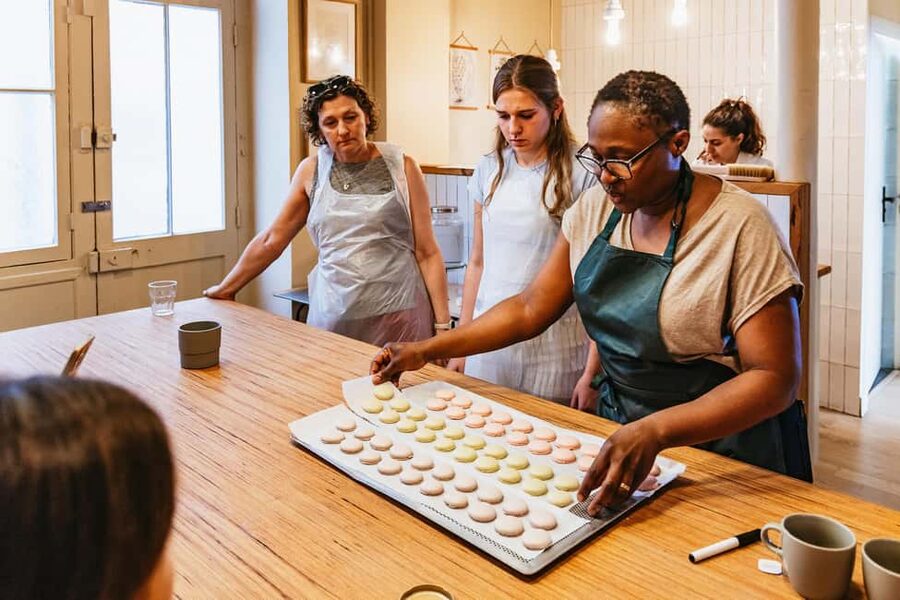
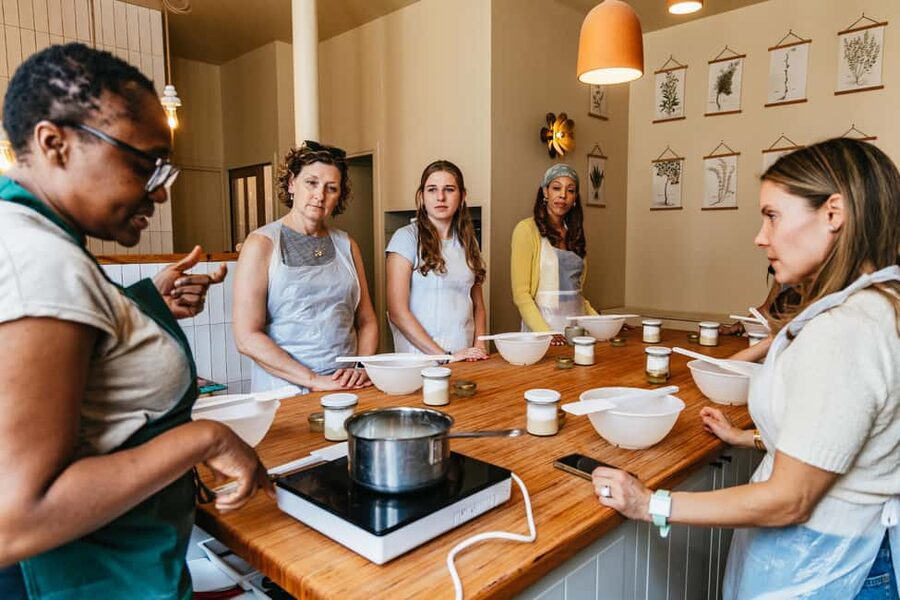
The kitchen setting is part of the appeal. With a small group limited to 6 participants, you’re not squeezed into a classroom where you only see hands and not learn the rhythm. I like that the workshop format fits how macarons actually work: precision, timing, and small adjustments. When the chef can see what’s in front of you, you get corrections in the moment.
Also, the class is taught in English. That’s huge if your French is rusty. Feedback specifically notes bilingual support from some guides, like Delphine, which helps the whole group stay aligned, especially when one person is asking a question and others want to understand the same point.
No hotel pickup is included. That’s not a deal breaker, but it does mean your success depends on your local transit plan. If you like walking to food spots and keeping your schedule flexible, you’ll likely find this easy. If you hate navigating on your own, build in extra buffer time so you’re not rushed.
More food rounds in Paris:
- Authentic Parisian Gourmet Food Tour with 10 Local Dishes & Wines
★ 5.0 · 4,754 reviews - Devour Paris Ultimate Food Tour
★ 5.0 · 2,087 reviews - Private Montmartre Food Tour with Wine, Cheese & Pastries
★ 5.0 · 1,027 reviews
Meringue practice with a chef: the part that decides your macaron texture
The first big skill is the meringue. The whole class is structured around learning how to perfect it, because a macaron shell is only as good as the base batter and the way the meringue gets worked. You’ll be guided through the process until you understand what the texture should look and feel like.
This matters because macarons are famous for failing in the most frustrating way. One batch can look fine and still not develop the crisp shell you’re aiming for, or the center can turn out off in texture. In this class, the chef coaching targets that exact outcome: you’re not just making something sweet, you’re training your technique toward a specific result.
What I like most here is the teaching style described in feedback. Instructors such as Alice and Delphine are singled out for being upbeat, organized, and good at explaining steps. Others like Matteo and Christian are praised for being patient and detail oriented, and that combination is what you want in a hands-on pastry lesson.
You’ll get tips you can actually use later at home, not vague encouragement. Many comments highlight that participants left feeling more confident making macarons again, even if they’d tried before and had failures. That tells me the class targets common bottlenecks, like getting the meringue right and learning how to recover when your batch is slightly off.
Ganache-making and filling: learning flavor balance, not just sweetness
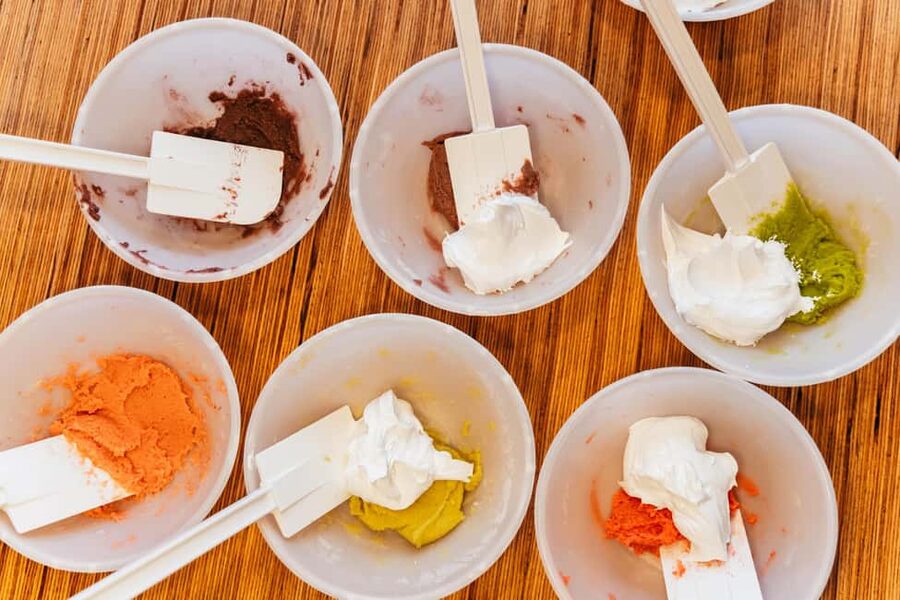
After you tackle the meringue, the class moves into ganache-making techniques. Ganache sounds simple, but it’s where flavor quality and texture show up fast. Too thick or too loose can change how the sandwich holds together, and the wrong balance can overpower the delicate shell.
This is also where your class becomes more personal. Some feedback mentions choosing flavors and even colors, with multi-colored macarons showing up as a fun result. When the filling is part of the lesson, you’re learning more than a single recipe. You’re learning how to build a filling that matches the shell’s delicate nature.
Instructors like Amélie (spelled Amalie or Amélie in feedback) are noted for being helpful and humorous, which sounds small until you’re standing over mixing bowls and trying to figure out a texture. A relaxed vibe keeps the pressure low, and that helps you focus on precision.
In a class like this, the ganache section is also a lesson in patience. You’re not just following steps, you’re learning what the mixture should do and how it should behave. That’s why a chef-led workshop is more valuable than a YouTube-only attempt. You can ask why it’s happening, then adjust immediately.
Building the macaron you can recognize: crisp shell and soft center
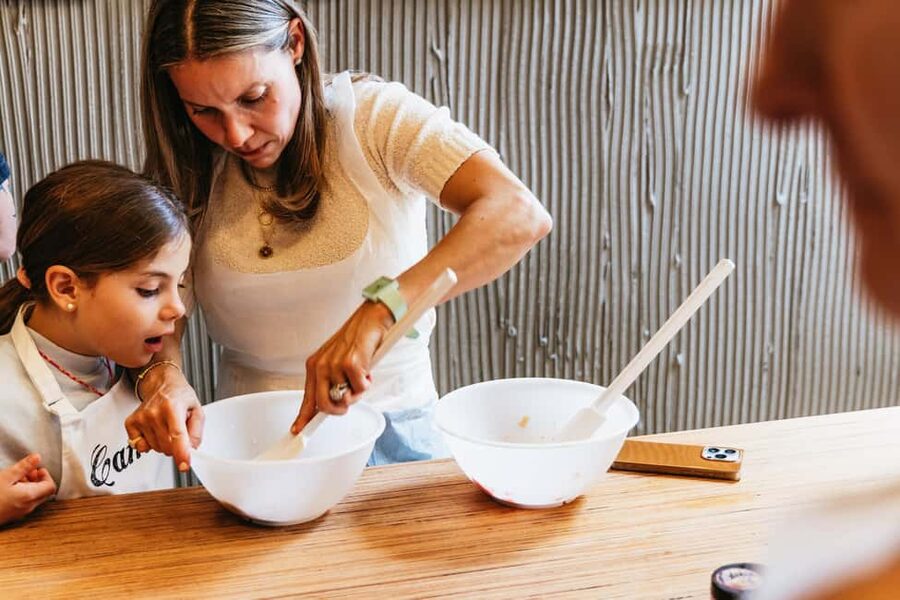
The goal is clear: a pastry with a crispy outer layer and a soft, tasty center. That sounds like a description, but in practice it means the chef is guiding you through the technique that makes the shell set with the right texture while the filling and interior stay tender.
You practice the full macaron assembly, and you leave knowing what the finished cookie is supposed to feel like. That might sound obvious, but it’s actually rare. Many classes teach baking as a sequence of actions, not an outcome you can evaluate. Here, the outcome is repeatedly emphasized, and the chef helps you aim at it.
One practical advantage of a small group of six is speed of feedback. If your batter looks slightly different, or you’re handling it in a way that could affect texture, you’re more likely to catch it early. Some feedback even mentions that the class can run a bit differently than the stated length, finishing closer to 1 hour 45 minutes for at least one group. That’s another reason arriving on time helps, because the pacing is built around getting you to a confident final result.
If you want a class that produces macarons that look like macarons, not just baked meringue cookies, this one is tuned for that. The best comments focus on how participants were surprised by the final quality, including people who had previously tried at home and had failures.
Within easy reach:
- Paris: 1-Hour Seine Cruise departing from the Eiffel Tower
★ 4.4 · 77,472 reviews - Disneyland® Paris 1-Day Ticket
★ 4.6 · 49,412 reviews - Paris: Versailles Palace and Gardens Full Access Ticket
★ 4.6 · 41,579 reviews - Paris: Arc de Triomphe Rooftop Tickets
★ 4.6 · 34,264 reviews
What you’ll take home: the box, the flavors, and how to keep them intact
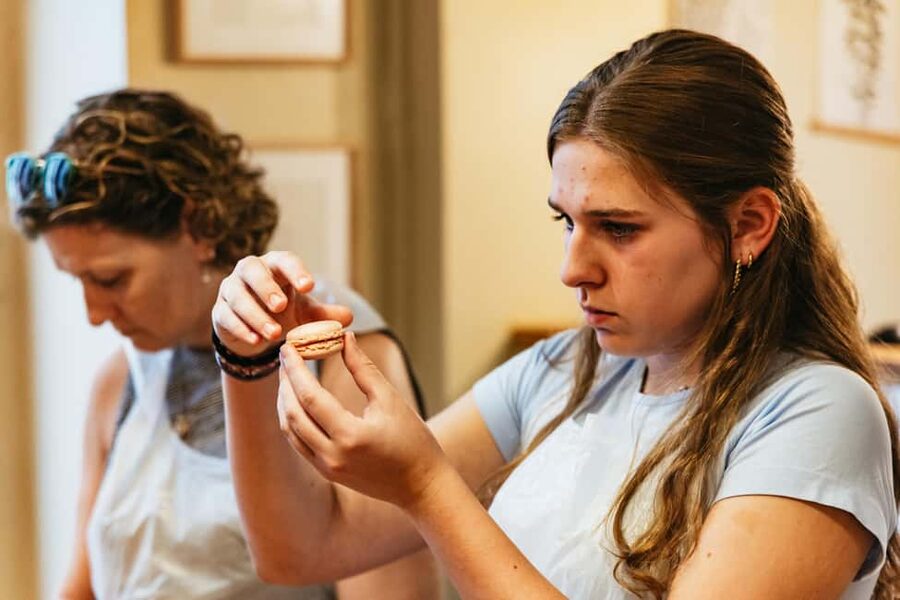
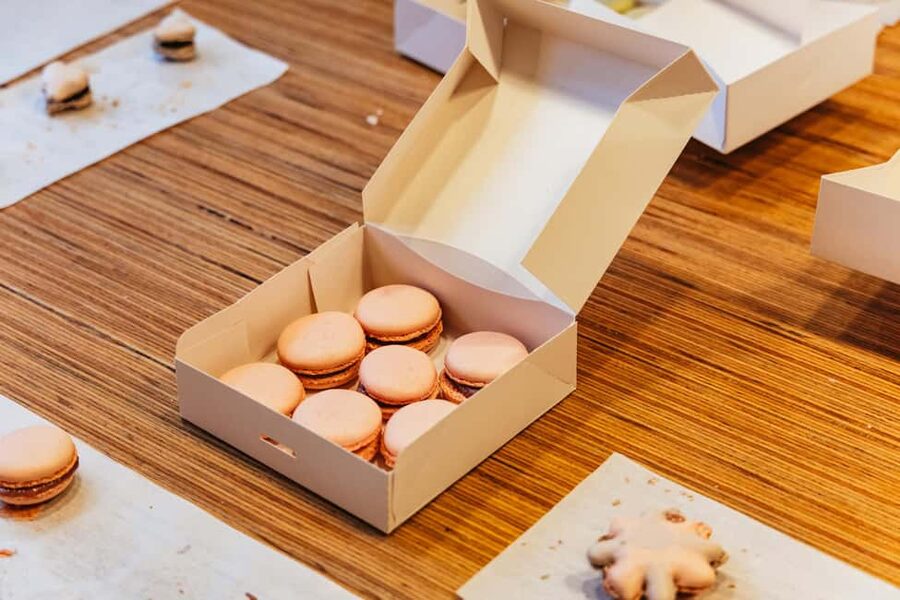
At the end of the lesson, you receive a box of the macarons you crafted. That’s not just a souvenir. It’s the whole point of bringing you from technique to a real, shareable result.
A take-home box is also practical for travel. Several people mention transporting their macarons after class. One comment notes getting them back to the UK without the box collapsing, and another points out that macarons can melt in hot weather. So if you’re doing this on a day you’ll be walking around town, think about your weather and your timing.
My advice is simple: keep the box closed, protect it from heat, and try to eat them sooner rather than later. The filling is delicate, and macarons are not designed for a long bake-sale ride under a hot sun.
The box also lets you turn the class into an easy evening plan. You can taste what you learned right away, then show friends later, which makes the 150 minutes feel even more worthwhile.
How the class feels: friendly, hands-on, and geared for real participation
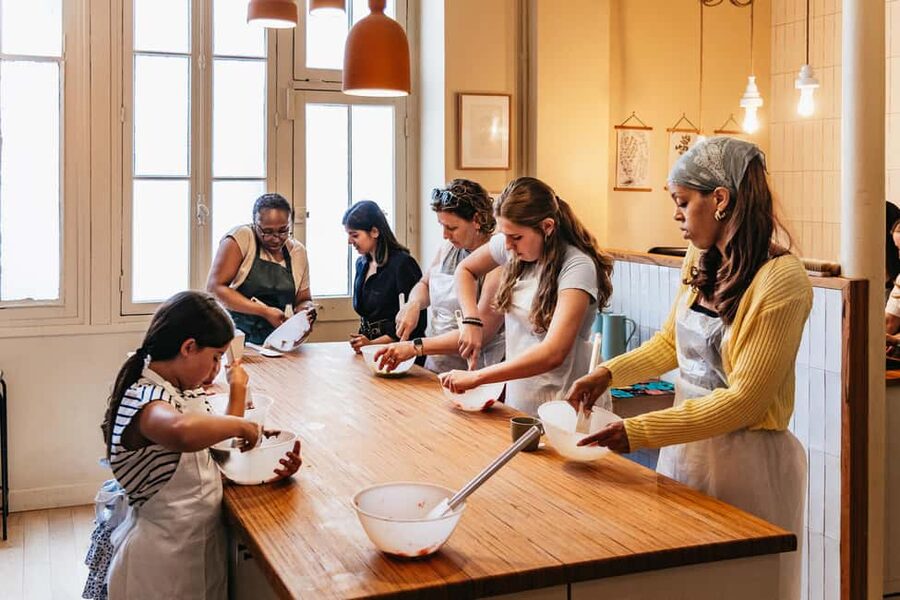
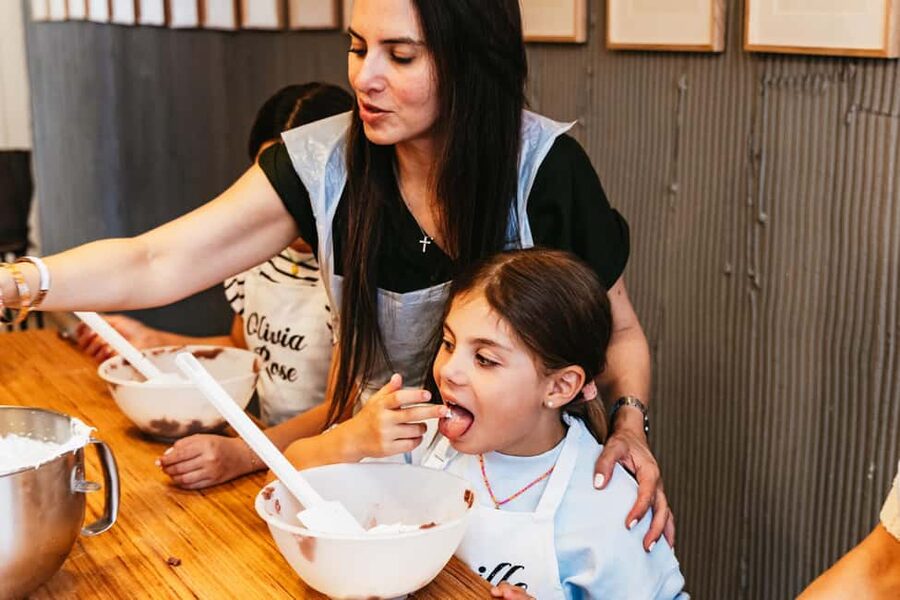
This workshop isn’t a stiff demonstration. It’s designed for interaction. People describe instructors who are upbeat and encouraging, and several mention that kids were involved without losing adults in the process. If you’re traveling as a family, that matters because you want everyone to have something to do, not just watch.
Feedback names several instructors, including Delphine, Alice, Amélie, Matteo, Christian, Matthieu, William, and Felix. The important pattern is consistent: chefs are described as organized, helpful when you’re stuck, and focused on making you succeed. That’s especially useful if you are nervous about baking, or if you’ve tried macarons before and they didn’t work.
One caution from feedback: there’s at least one note saying that for more advanced information, the class may not be enough. So if you’re already deep into macaron research and want advanced science, you might want to look for a higher-level workshop. For most people, though, the structure sounds like exactly what you need to go from anxious to competent.
Practical value: why this is a good use of your Paris time
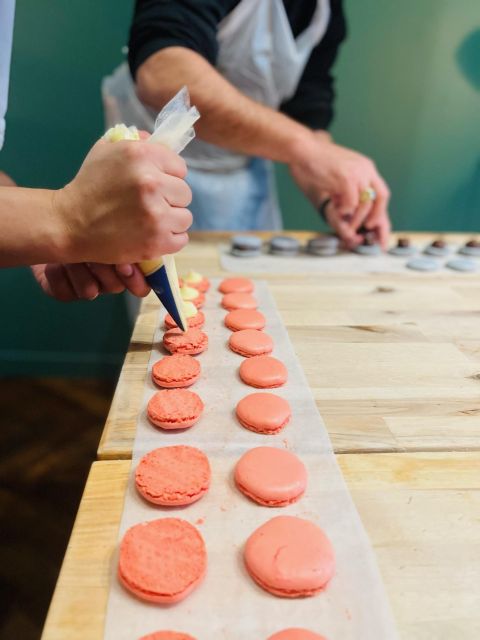
Let’s talk value in real terms. You’re paying for chef time, a small group, and a guided path to an outcome you can actually eat later. In a city full of food tours, that combination is rare. You’re not only learning facts about French pastry. You’re practicing the technique that creates the texture.
The small group size is the big reason this tends to feel worth it. Up to 6 participants means fewer people to share the same chef attention. That usually translates to better results, and it lines up with the most praised aspect in the feedback: participants repeatedly mention how well organized and hands-on the classes feel.
Included elements are straightforward: you get the macaron cooking class, the chef instructor, and the box of macarons. Not included is hotel pickup and drop-off, so you supply your own transport. If you’re comfortable navigating Paris and using transit or walking, that’s fine. If you prefer door-to-door planning, factor in the time it takes you to reach Maison Fleuret School.
Also, the lesson is in English. That reduces the friction of asking questions. When you can understand the explanation instantly, you correct faster and you make fewer mistakes that take time to fix.
Who should book this macaron class, and who might skip it
This class is a strong match if you:
- want an entertaining, hands-on food activity in Paris
- are a beginner or intermediate baker who wants clear technique
- are traveling with teens or kids and want everyone to participate
- like taking home something you made, not just something you tasted
It may be less ideal if you:
- already bake macarons regularly and want advanced troubleshooting or deeper theory
- hate self-guided transportation, since there’s no hotel pickup
Wheelchair accessibility is listed, which is helpful to note upfront. And because the group is small, the session likely stays organized and easier to manage than larger classes.
If your trip has limited time, this is still one of the easiest ways to get a “Paris food” memory that you can eat later. You’re also learning a pastry that feels fancy but is teachable when the pacing and coaching are right.
Should you book this French macaron class in Paris?
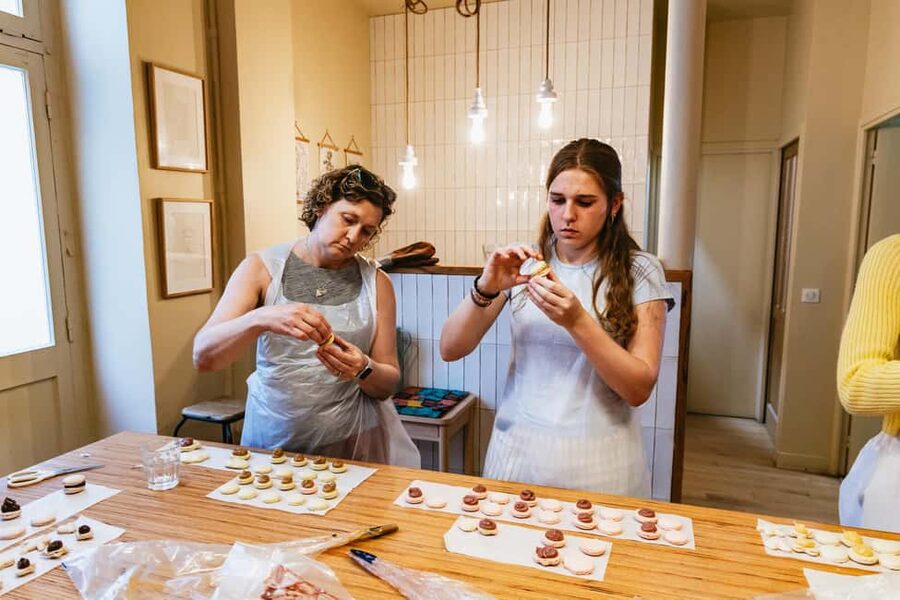
If you want a friendly, chef-led workshop with real results, I’d book it. The strongest reason is simple: you’re aiming at a specific texture outcome, crisp shell plus soft center, and you get coaching toward that goal. The take-home box makes it feel like more than a class, it becomes part of your trip.
Book it especially if you’ve ever been intimidated by macarons. Feedback shows many people left with the confidence to try again at home, even after prior fails. And if you’re traveling with family, the small group format plus patient instruction is a recipe for a good time.
If you’re an advanced baker, consider whether you want a higher-level technical class. For most visitors, though, this hits a sweet spot: practical technique, English support, and a delicious payoff you can share right after.
FAQ
How long is the French macaron culinary class?
The class lasts 150 minutes.
Where do I meet for the workshop?
Meet at the time of your reservation, in front of the grey door.
Is the class taught in English?
Yes, the instructor teaches in English.
Is hotel pickup included?
No, hotel pickup and drop-off are not included.
How many people are in the group?
The class is a small group, limited to 6 participants.
Do I take macarons home?
Yes, at the end of the lesson you receive a box of macarons that were carefully crafted during the workshop.
More Macaron Classes in Paris
- Paris: Montmartre Cheese, Wine & Pastry Guided Walking Tour
★ 4.8 · 2,255 reviews - Paris: Macaron Class at Galeries Lafayette
★ 4.2 · 1,196 reviews - Paris Croissant Small-Group Baking Class with a Chef
★ 5.0 · 910 reviews - Paris: French Croissant Baking Class with a Chef
★ 4.9 · 712 reviews
Newly listed around Paris
- The voice of Montmartre is a must-see in Paris★ 3.8 · 19 reviews
- Top Private Cruises in Paris with Champagne + more surprises★ 5.0 · 309 reviews
- The Official Emily in Paris Montmartre Walking Tour★ 4.7 · 40 reviews
- The Paris Pass® Plus: 90+ Attractions including The Louvre★ 3.4 · 386 reviews
- The Official Emily in Paris Locations Walking Tour★ 4.9 · 383 reviews
- The Official Emily in Paris Macaron-Making Workshop★ 4.9 · 68 reviews
- The Official Emily in Paris Wine & Cheese with Butter Making★ 4.9 · 20 reviews
- The Official Emily in Paris Croissant-Making Workshop★ 4.9 · 85 reviews
French Food Tours, compared.
Authentic Parisian Gourmet Food Tour with 10 Local Dishes & Wines
Read our review →

Private Montmartre Food Tour with Wine, Cheese & Pastries
Read our review →
Paris Le Marais Food Tour With 10+ Tastings, Cheese, Wine & More
Read our review →
Paris French Sweets Tasting Tour with Pastries and Chocolates
Read our review →
Paris Le Marais District Original Food and Wine Tasting Tour
Read our review →
Paris Montmartre Food Tour – A Full French Meal by Do Eat Better
Read our review →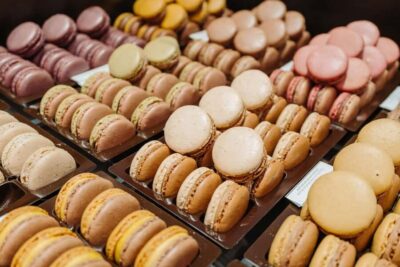
Paris Culinary Tour: 11 Tastings & 2 Wines in Le Marais
Read our review →Browse the lists this tour appears in