
Reviewed · MACARON BAKING CLASSES
Paris: French Croissant Baking Class with a Chef
Butter, folds, and confidence in 150 minutes. This French croissant baking class at Maison Fleuret in Paris is interesting because it turns laminated dough into a step-by-step skill you can actually repeat. You work in a real pastry-school setting on the Left Bank, with English instruction and focused coaching.
Two things I really like: the small group size (up to 8), which keeps the pace friendly and lets the chef correct what you are doing, and the fact that you make croissants you can take home, so the experience keeps paying off after you leave. The learning is practical, but the payoff is edible, too.
The one drawback to consider is price. At $159 per person, it is not a cheap activity, so you will get the best value if you truly want the technique, not just the tasting.
In This Review
- Key points before you go
- First, the simple truth about croissants in Paris
- Meeting at Rue des 3 Portes, then heading into the pastry school
- The 150 minute class flow, paced for real learning
- Laminated dough technique: what you are really learning
- Croissants plus: chocolate croissants and chocolate snails
- The croissant story and why Parisians embraced it
- The chefs and how step-by-step teaching shows up in results
- What you take home, and how to use it right away
- Price and value: is $159 worth it?
- Who this croissant class is best for
- What can go wrong, and how to plan around it
- Should you book this French croissant baking class in Paris?
- FAQ
- Where is the class meeting point?
- Where does the class take place?
- How long is the French croissant baking class?
- How much does the class cost?
- What is included in the ticket price?
- Is hotel pickup or drop-off included?
- Is the instruction offered in English?
- How large is the group?
- Is the venue wheelchair accessible?
- What is the cancellation policy?
Key points before you go
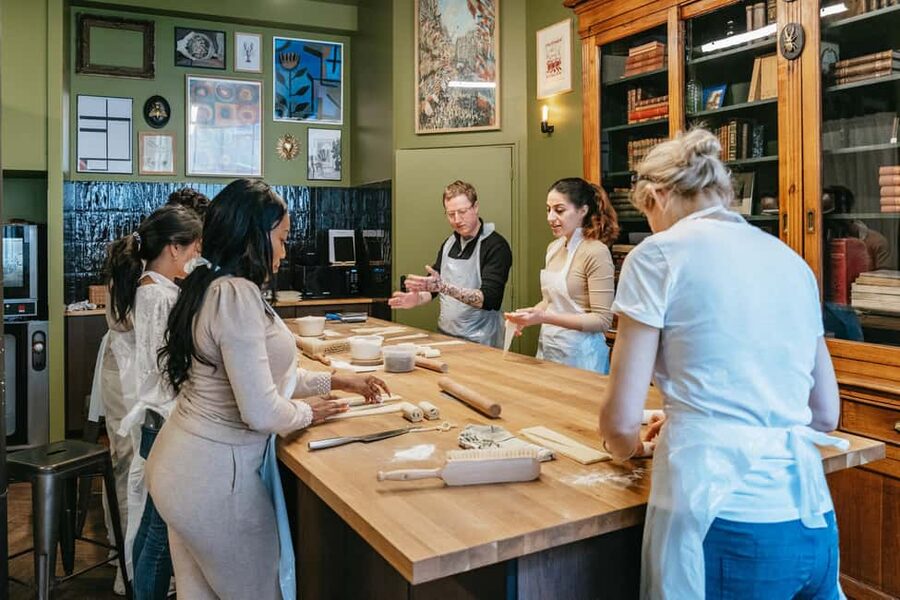
- Maison Fleuret studio setting on the Left Bank, made for serious pastry work
- Small group cap of 8, so you get hands-on attention
- Laminated dough fundamentals you can use at home, not just a demo
- Classic and chocolate styles including chocolate croissants and chocolate snails
- English instruction with a professional chef instructor
- Take-home results, meaning you can plan real breakfasts around what you bake
First, the simple truth about croissants in Paris
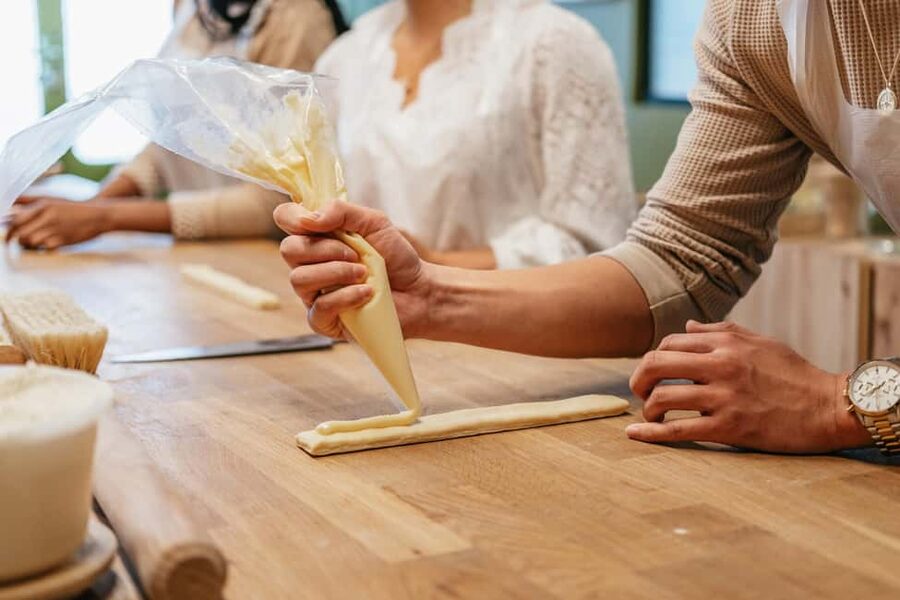
Croissants in Paris are good on day one. Learning to make them is what makes them good on day ten. This class focuses on the “how,” not just the “wow,” so you leave with the method behind the flake, the crackle, and the buttery layers.
Also, croissant dough is one of those things that feels intimidating until you watch it done properly once. In this 150 minute format, the chef instructor keeps you moving through the process so you can build muscle memory, not guesswork.
More Cooking Classes in Paris
- Paris Cooking Class and Lunch with Wine plus Market Visit Option
★ 5.0 · 1,024 reviews - Paris Croissant Small-Group Baking Class with a Chef
★ 5.0 · 910 reviews - Paris Cooking Class: Learn How to Make Macarons
★ 5.0 · 634 reviews
Meeting at Rue des 3 Portes, then heading into the pastry school
Your start point is 3 Rue des 3 Portes. From there, you move to Maison Fleuret Ateliers Parisiens, in Paris’ Left Bank area, and the experience stays centered there, returning you to the same meeting point afterward.
Why that matters: you are not losing half your morning to transit logistics. Even if your day already includes Notre Dame area wandering, this class works as a “one location, one mission” plan.
One more thing to know for planning: there is no hotel pickup or drop-off, so you should build in time to reach the meeting address by metro or on foot.
The 150 minute class flow, paced for real learning
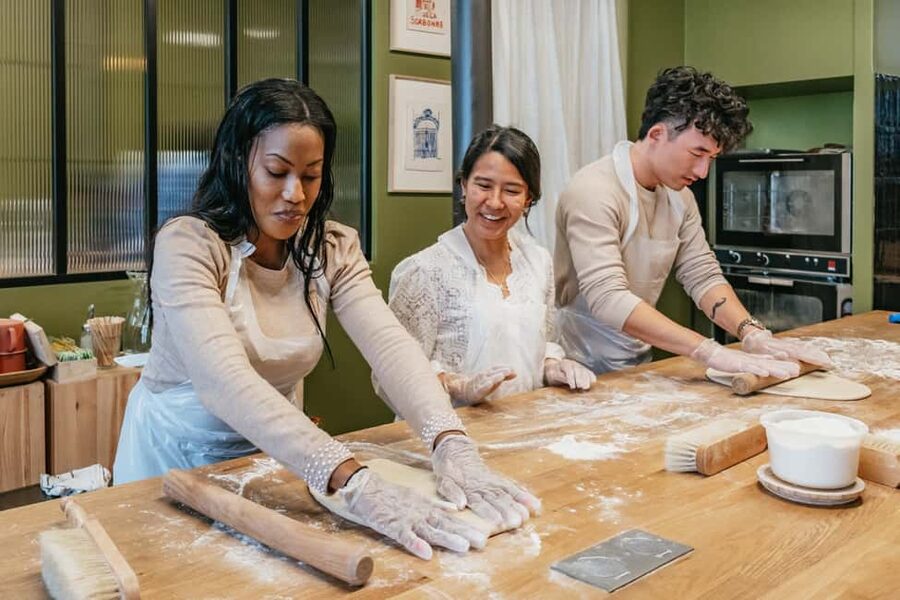
You get 150 minutes, and the session is structured like a real workshop: you do the dough steps yourself, under guidance, rather than only watching. The class is designed to refine technique and give you a repeatable baseline, even if you have never worked with laminated dough before.
Here is what you can expect during the time block, in the order it usually “clicks” for people:
- You start with the buttery puff pastry basics that form the croissant structure.
- You practice the motions that lead to layers, including how the dough is handled and folded.
- You learn how to shape and bake so you get that classic crisp texture and airy interior.
- You also cover chocolate variations, so you do not leave with only one item in your head.
The time matters because croissant dough is not just complicated, it is timing-sensitive. A short, rushed class usually fails right where the method needs patience. A 2.5 hour window is long enough to teach technique and still get to the finish.
Laminated dough technique: what you are really learning
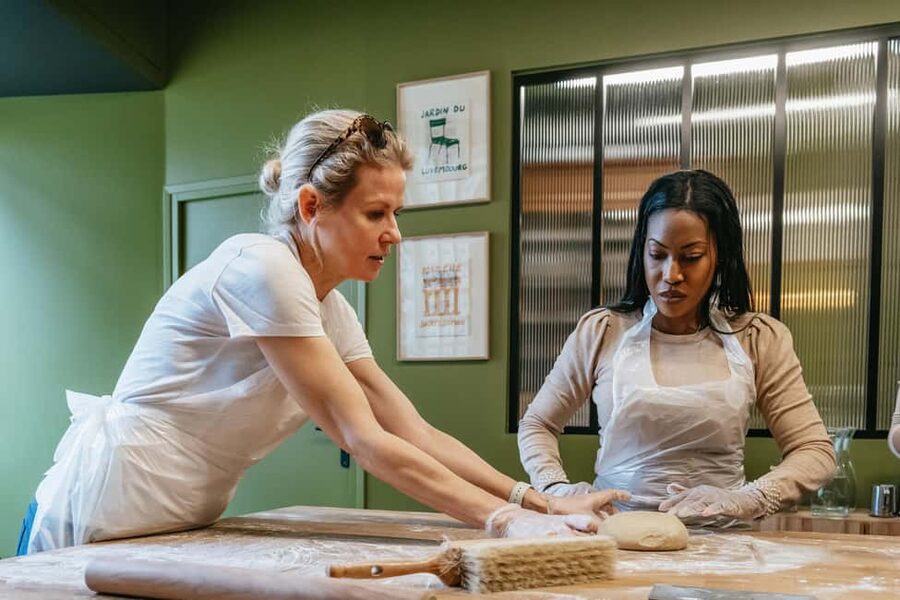
The magic of a croissant is laminated dough. That is a fancy phrase for a simple idea: layers made on purpose, then baked into separate sheets. This is the skill that turns croissants from “pretty bakery items” into a home baking project you can control.
In this class, you are guided through the practical parts, like:
- handling dough so it stays workable
- building layers through folding technique
- aiming for the texture you want before baking, not after
What you should expect to feel: a big improvement in confidence once you understand the logic behind the folds. Croissants become less about luck and more about process.
And since the group is capped at 8 participants, your chef instructor can notice when your dough needs correction. That kind of feedback is hard to get in a bigger class.
More macaron classes in Paris:
- Paris: Montmartre Cheese, Wine & Pastry Guided Walking Tour
★ 4.8 · 2,255 reviews - Paris: Macaron Class at Galeries Lafayette
★ 4.2 · 1,196 reviews - Paris: French Macaron Culinary Class with a Chef
★ 4.9 · 591 reviews - Saint-Germain: Gourmet Chocolate & Pastry Walking Food Tour
★ 4.8 · 495 reviews
Croissants plus: chocolate croissants and chocolate snails
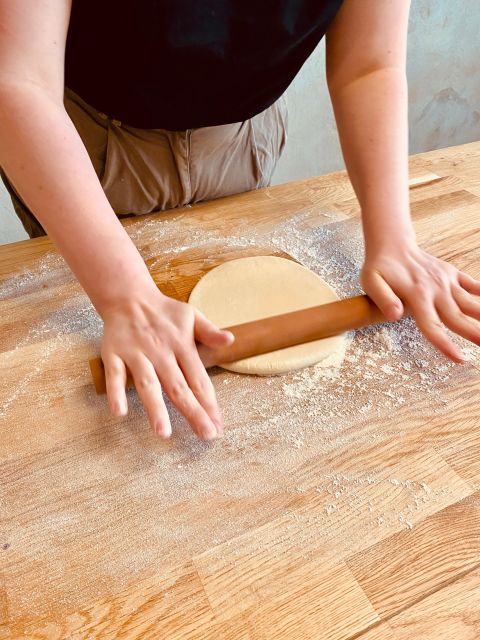
A lot of croissant classes stop at the classic shape. This one adds variety, and that is a big deal for how useful your new skills are at home.
You will also work on:
- chocolate croissants
- chocolate snails (a spiral-style pastry)
This matters because the same laminated dough concept applies, but shaping and filling routines change. Learning both helps you avoid the common mistake of thinking you only know one “croissant trick.” If you want a wider bakery-style menu using the same dough, this class gives you that.
Also, chocolate pastries are an easy win for motivation. When your kitchen skills are new, you want at least one result that tastes great quickly. Chocolate items make that happen.
The croissant story and why Parisians embraced it
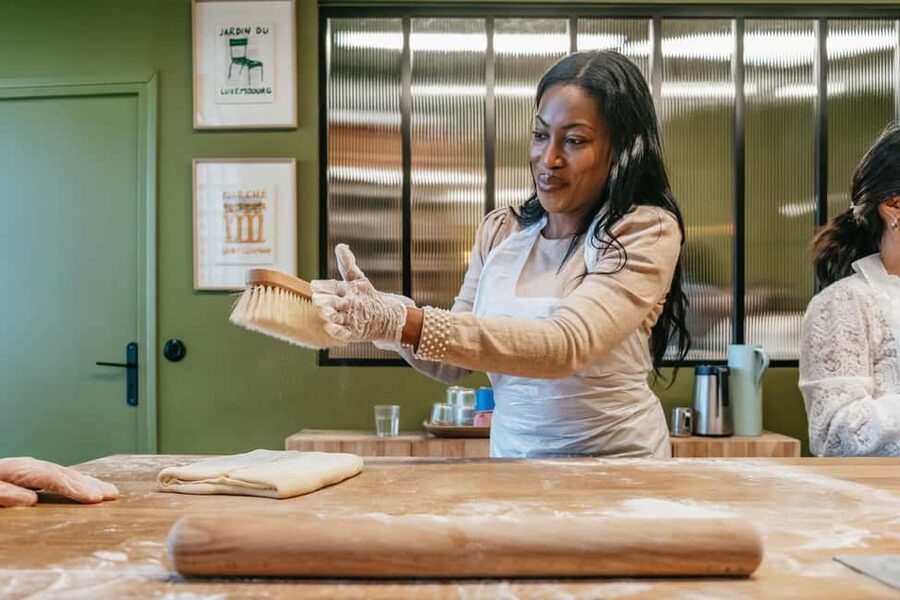
You also get some context on the croissant’s rise. The class covers how croissants gained popularity with Parisians and the French in the early 20th century, which helps make the whole experience feel tied to the city, not just the oven.
Why it is worth including: food history gives you better taste memory. Once you understand the timeline and the local adoption, you appreciate the croissant as a Paris specialty with a story, not just a generic pastry.
It also fits the class theme of French gastronomy as an everyday art of living, where technique and pleasure go together.
The chefs and how step-by-step teaching shows up in results
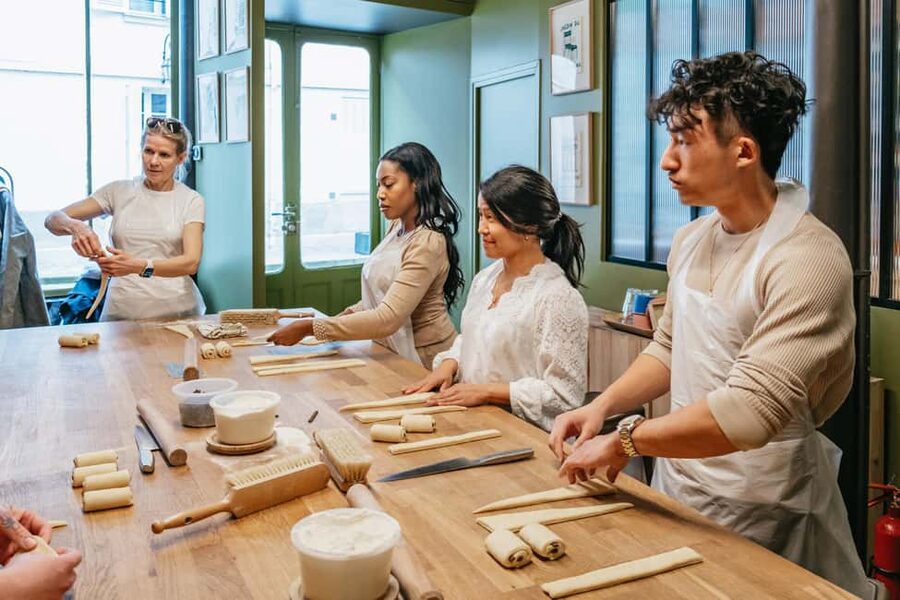
Chef-led instruction is a major part of the value here. The class is run by a chef instructor in English, and the coaching style is clearly built for real beginners as well as people with some kitchen experience.
From the variety of past instructors’ names you might encounter at Maison Fleuret, you can expect professionals who take the craft seriously and still keep the session fun, like Chef Felix, Chef Guillaume, Chef Erika, Chef Alice, Chef Lauren, Chef Leslie, Chef Ines, and Chef Ke. Your exact instructor depends on your date, but the consistent point is hands-on teaching with a professional pastry mindset.
Practical takeaway: if you learn better by doing, you will like how this class is set up. And if you learn better by correction, the small group size helps the chef spot issues early.
What you take home, and how to use it right away
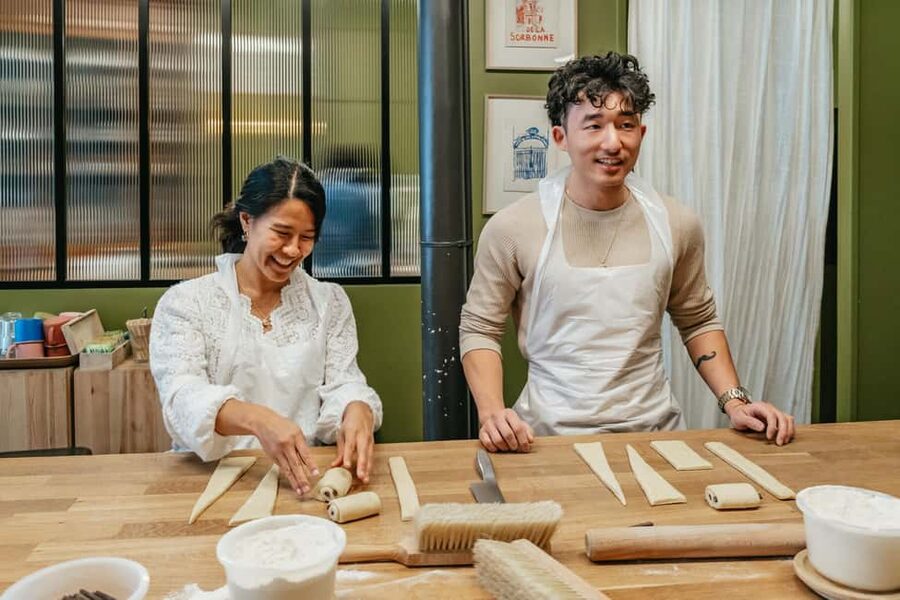
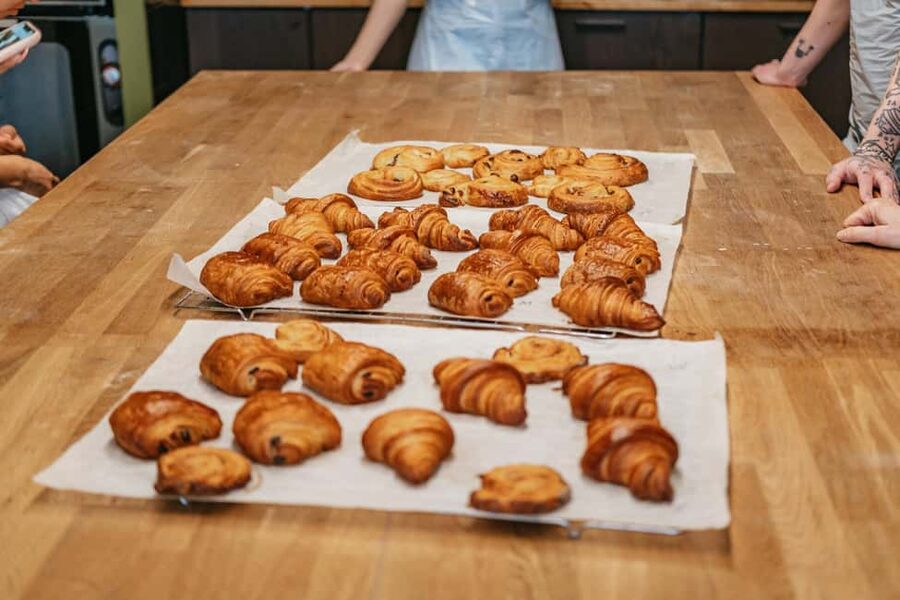
The big win is that you leave with the croissants you made. That means you can plan a few high-quality breakfasts and snacks without immediately needing to bake again.
This also helps you avoid a common problem with home cooking classes: the “I learned it, now what?” gap. When you have fresh results in hand, you can compare your next attempts to a real benchmark.
Two timing tips for your vacation:
- If you bake early in your trip, you can turn croissants into breakfast for multiple days.
- Pair the class with light plans afterward, because laminated dough can be a heavy brain task, even though the fun factor is high.
Price and value: is $159 worth it?
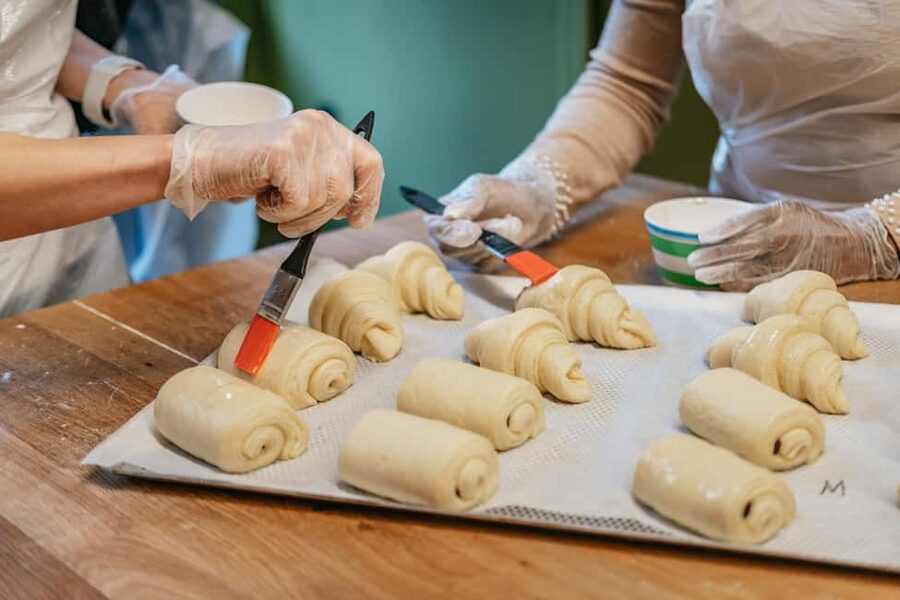
At $159 per person, this is a premium activity. It is not competing with supermarket croissants or basic cooking classes that focus on sauces.
So when does it feel worth it?
- When you want the actual technique of laminated dough, not just a pastry lesson with minimal practice.
- When you care about the take-home factor. The food you make has real value because it is fresh and made by you.
- When you value small-group attention. A cap of 8 participants means you get more direct feedback than you would in a larger workshop.
When might it feel steep?
- If you only want a quick pastry experience and are fine buying croissants instead of learning the process.
- If you are expecting a low-cost “filling activity.” This is more like a short professional workshop.
In other words, treat it like a skill purchase. The better croissants you can make at home, the more the price starts to make sense.
Who this croissant class is best for
This works especially well for:
- first-timers who want clear instruction and a chance to do the steps themselves
- people traveling in pairs or small groups who enjoy hands-on activities
- anyone who loves pastries but wants a deeper reason behind the texture
It can also be a great family activity for older teens, since the class is designed for hands-on baking rather than just watching food prep happen.
If you dislike butter, you might not love this. The class is all about buttery dough and layered pastry logic, so the theme is not subtle.
What can go wrong, and how to plan around it
A good class should run smoothly, and this one is designed to be well organized. Still, here are the realistic considerations to plan for:
- Expect a focused hands-on session. If you arrive frazzled, it can take you a little time to get into dough mode.
- Since there is no hotel pickup, build your route to 3 Rue des 3 Portes with a little buffer.
- Some people prefer having a drink set up during the class. If that is important to you, bring a small plan for your hydration needs so you do not feel uncomfortable.
Should you book this French croissant baking class in Paris?
If you want the real technique behind Paris croissants, I would book it. This class is built for hands-on learning, with a chef instructor, English guidance, and a small group size that makes corrections possible. The take-home pastries mean the experience does not end when class ends.
Skip it if you only want a casual pastry tasting or you are not interested in laminated dough at all. At $159, the value comes from learning what to do next at home.
If you do book, aim to keep your schedule light for the rest of the day, so you can enjoy your fresh bakes without turning your kitchen day into your whole travel day. Also, reach the meeting point early enough to feel calm. Croissant success starts before the dough even touches the table.
FAQ
Where is the class meeting point?
The class meets at 3 Rue des 3 Portes in Paris.
Where does the class take place?
The workshop takes place in the Maison Fleuret space on the Left Bank of Paris, at the Maison Fleuret Ateliers Parisiens location.
How long is the French croissant baking class?
The experience lasts 150 minutes.
How much does the class cost?
The price is $159 per person.
What is included in the ticket price?
The ticket includes the cooking class, cooking equipment, and a chef instructor.
Is hotel pickup or drop-off included?
No, hotel pickup and drop-off are not included.
Is the instruction offered in English?
Yes, the instructor provides instruction in English.
How large is the group?
It is a small group limited to 8 participants.
Is the venue wheelchair accessible?
Yes, the activity is wheelchair accessible.
What is the cancellation policy?
You can cancel up to 24 hours in advance for a full refund.
Newly listed around Paris
- The voice of Montmartre is a must-see in Paris★ 3.8 · 19 reviews
- Top Private Cruises in Paris with Champagne + more surprises★ 5.0 · 309 reviews
- The Official Emily in Paris Montmartre Walking Tour★ 4.7 · 40 reviews
- The Paris Pass® Plus: 90+ Attractions including The Louvre★ 3.4 · 386 reviews
- The Official Emily in Paris Locations Walking Tour★ 4.9 · 383 reviews
- The Official Emily in Paris Macaron-Making Workshop★ 4.9 · 68 reviews
- The Official Emily in Paris Wine & Cheese with Butter Making★ 4.9 · 20 reviews
- The Official Emily in Paris Croissant-Making Workshop★ 4.9 · 85 reviews
Macaron Baking Classes, compared.
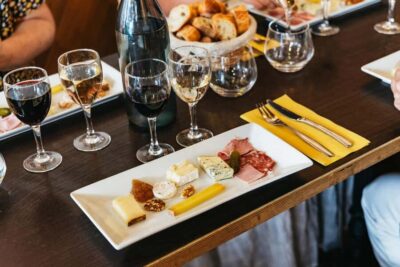
Montmartre Cheese, Wine & Pastry Guided Walking Tour
Read our review →
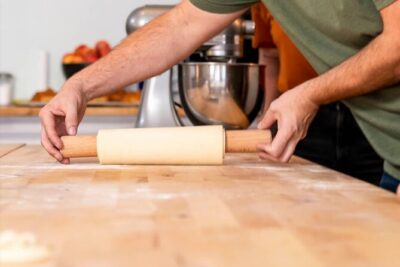
Paris Croissant Small-Group Baking Class with a Chef
Read our review →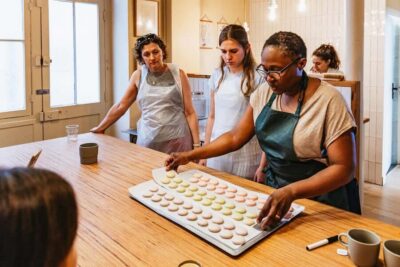
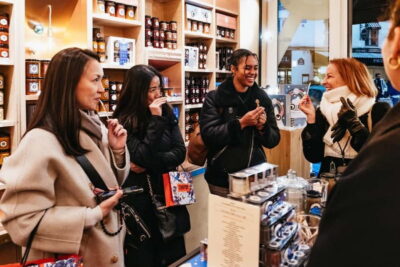
Saint-Germain: Gourmet Chocolate & Pastry Walking Food Tour
Read our review →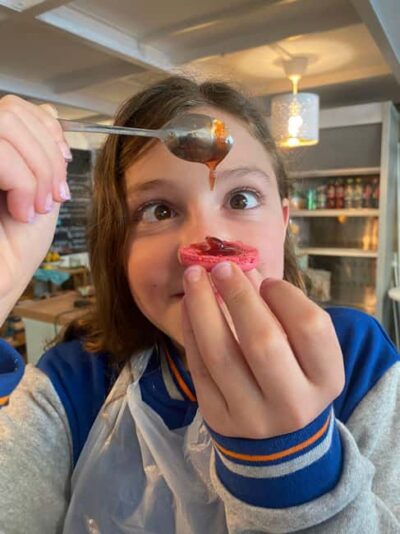

Seine Cruise and Macaron Tasting by the Eiffel Tower
Read our review →
Browse the lists this tour appears in