
Reviewed · CITY TOURS
Paris: Explore the City of Light on a Magical Walking Tour
Paris by foot, with stories that click. This walking tour strings together the Seine River viewpoints, Gothic Notre Dame moments, and key political and cultural stops in a tight 150 minutes.
I especially like how you get context as you walk, not just photos. And you also get practical orientation plus insider tips on where to eat, drink, and explore, so the tour helps you enjoy the rest of your day more smoothly.
One thing to consider: there is at least one negative booking report about the guide not showing at the meeting point, so make a habit of arriving a bit early and double-checking the meeting details before you start.
In This Review
- Key things you will notice on this Paris walking tour
- Where the tour starts, and why Place Saint-Michel matters
- The Seine River stretch: views that set the tone fast
- Notre Dame de Paris: Gothic beauty plus the political story behind it
- Louvre Museum from the riverbank: the big picture first
- Palais de Justice: where legal history shows up in stone
- Institut de France and École des Beaux-Arts: art and intellect in the same walk
- Price and timing: why $4.71 can be a surprisingly smart deal
- Included guide tips: the part that keeps paying off after the walk
- How to prepare so the walk feels easy, not tiring
- Ratings and the one caution worth taking seriously
- Should you book this Paris Magical Walking Tour with Sandemans Tours?
- FAQ
- Where does the tour start?
- How long is the walking tour?
- What landmarks are included?
- Is the tour offered in English and Spanish?
- Are entrance fees for paid attractions included?
- What should I bring?
- Is the tour wheelchair accessible, and can I get a refund if plans change?
Key things you will notice on this Paris walking tour
- Place Saint-Michel start point: easy to find, right where the old city feels alive.
- Seine River walk for big views: you see Paris unfolding without rushing through crowds on transit.
- Notre Dame de Paris focus: you get to appreciate the cathedral’s scale and style, guided and explained.
- Louvre from the riverbank angle: you get the grandeur first, before you decide if you want museum time later.
- Palais de Justice and power buildings: legal and political history show up in architecture, not just dates.
- Institut de France and École des Beaux-Arts: art and intellectual life, not only monuments.
Where the tour starts, and why Place Saint-Michel matters
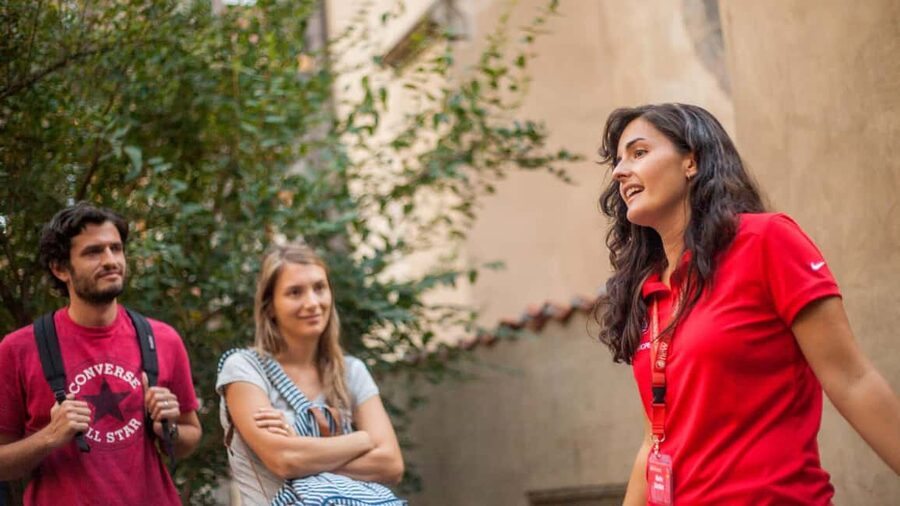
This tour begins at the Fountain on Place Saint-Michel, a great choice because it puts you in the thick of central Paris right away. You are not waiting around for a bus or metro transfer. You step into the city and start walking while your bearings are still being formed.
Place Saint-Michel also helps with pacing. If you are short on time, you get an early taste of the river area, then you move directly into the sights people usually try to visit in separate trips. I like that the route is built around classic landmarks, but the walk itself is the connector.
Because the whole experience lasts about 150 minutes, you should treat it like a guided “greatest hits with context” session. You will cover ground on foot, so comfortable shoes are not optional. And since this is a guided walk, you will also spend less time trying to figure out where to go next.
More city walks in Paris:
- Paris Top Sights Half Day Walking Tour with a Fun Guide
★ 5.0 · 2,893 reviews - Montmartre Hidden Gems and Scenic Highlights Walking Tour
★ 5.0 · 2,684 reviews - Montmartre Hill French Gourmet Food and Wine Tasting Walking Tour
★ 5.0 · 2,588 reviews
The Seine River stretch: views that set the tone fast
After starting at Saint-Michel, you walk along the banks of the River Seine for about 25 minutes. This section is the payoff for people who like Paris not only as monuments, but as atmosphere.
You will get long sightlines, river curves, and the feeling that Paris is designed for wandering. The Seine is also a natural “timeline.” As you move, you pass by buildings that represent different eras, and the guide’s stories help you connect what you see to what it means.
One practical thing you will appreciate here: the walk slows down decision-making. When the river is in front of you, the city feels more navigable. You stop thinking only about tickets and you start thinking about how the landmarks relate to each other.
If you are the type who takes photos constantly, the Seine walk is where you will want to pause and capture angles. If you are not, you can still watch the light and movement on the water and let it do the entertaining.
Notre Dame de Paris: Gothic beauty plus the political story behind it
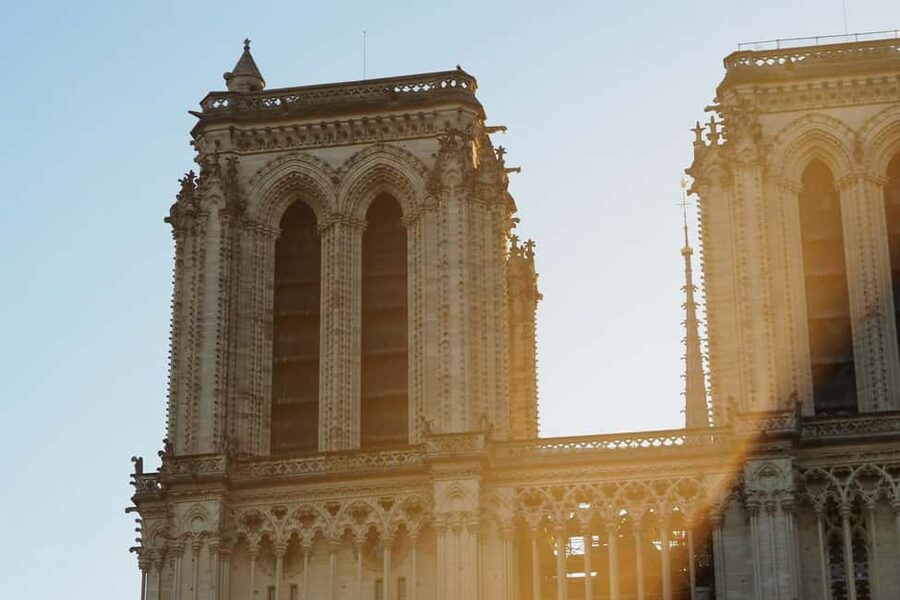
Next up is Notre Dame Cathedral for a guided segment. Even if you have seen images before, being near the cathedral changes the scale. It looks less like a postcard and more like a structure that has shaped how people imagined Paris for centuries.
The tour’s angle here is important. It is not only about architecture. You also hear how Paris evolved through periods of power, conflict, and revolution, and how those changes shaped the city’s character. That kind of framing can turn a building you already recognize into something you understand.
A helpful way to think about this stop is as a “anchor point” for the rest of the walk. Once Notre Dame is in your head, the later civic buildings make more sense. You start noticing how different kinds of authority were displayed in stone.
Time is tight, so do not expect a full, slow visit with every detail at arm’s length. If you want to go deeper, you can always plan a return visit. But as part of a 150-minute overview, this stop gives you the emotional and historical reference point you need.
Louvre Museum from the riverbank: the big picture first
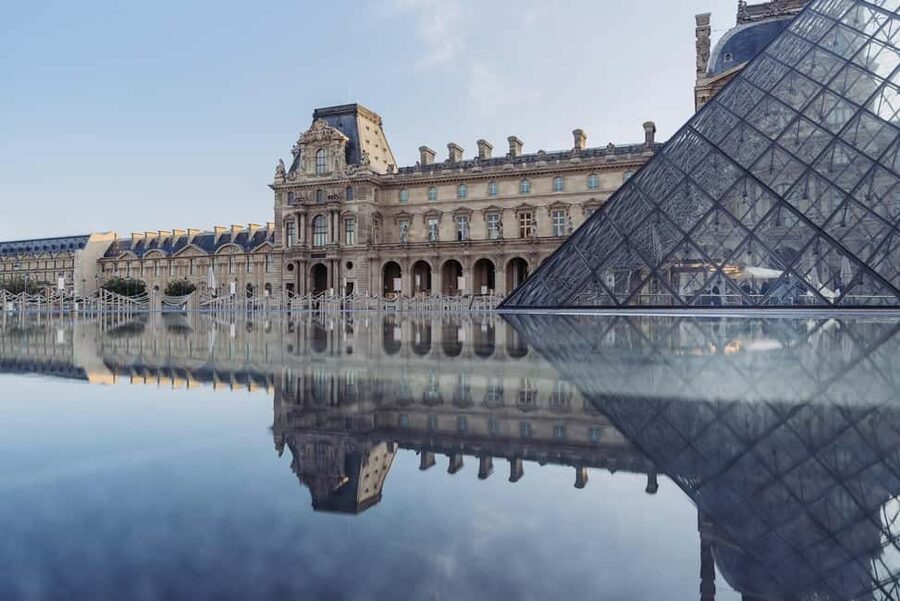
Then you head to the Louvre Museum for another guided segment. What I like about this approach is the sequence. You see the Louvre in context, from the river-side view, before you decide how you want to spend time inside.
The Louvre is famously overwhelming once you step into the museum. By contrast, a riverbank view helps you get oriented. You notice the setting, the scale of the complex, and the fact that it is not just “a museum,” it is a major piece of Parisian identity.
The guide’s historical storytelling also matters here. The Louvre connects to power, art patronage, and the shifts in who held influence at different points in French history. When you hear that framing while standing outside with the river nearby, the names and eras start sticking to the architecture.
If you are aiming for maximum art time, plan paid museum entry after the tour on a separate trip. If you are aiming for a high-impact orientation, this stop hits the sweet spot. Either way, you leave with a clearer sense of what the Louvre represents.
Other Paris bookings to consider
- Paris: Montmartre Highlights Walking Tour with a Local Guide
★ 4.9 · 2,318 reviews - Paris Île de la Cité and Notre-Dame Walking Tour With Crypt
★ 5.0 · 2,272 reviews - Paris: Montmartre Cheese, Wine & Pastry Guided Walking Tour
★ 4.8 · 2,255 reviews - Paris in a Day: Louvre or Orsay, Eiffel Tower, City Walk & Cruise
★ 5.0 · 1,956 reviews
Palais de Justice: where legal history shows up in stone
The tour continues past Palais de Justice. This is a stop that many people skip because it does not scream “tourist landmark” the way Notre Dame or the Eiffel Tower does. But it is exactly the kind of civic building that makes a city feel real.
You will hear about centuries of legal history, and you will understand it as more than an abstract concept. Law and power are part of daily life, and Palais de Justice is where that idea becomes visible. The architecture feels like it is designed to project authority, and the guide’s stories help you connect that feeling to actual historical changes.
This is also one of those moments where you notice Paris is not only cultural. It is political. Revolution, governance, and institutions all shaped the city you are walking in today.
If you like history that has weight and consequences, this stop will probably be your favorite. It is not just pretty buildings. It is a reminder that the city’s major decisions happened in real places.
Institut de France and École des Beaux-Arts: art and intellect in the same walk
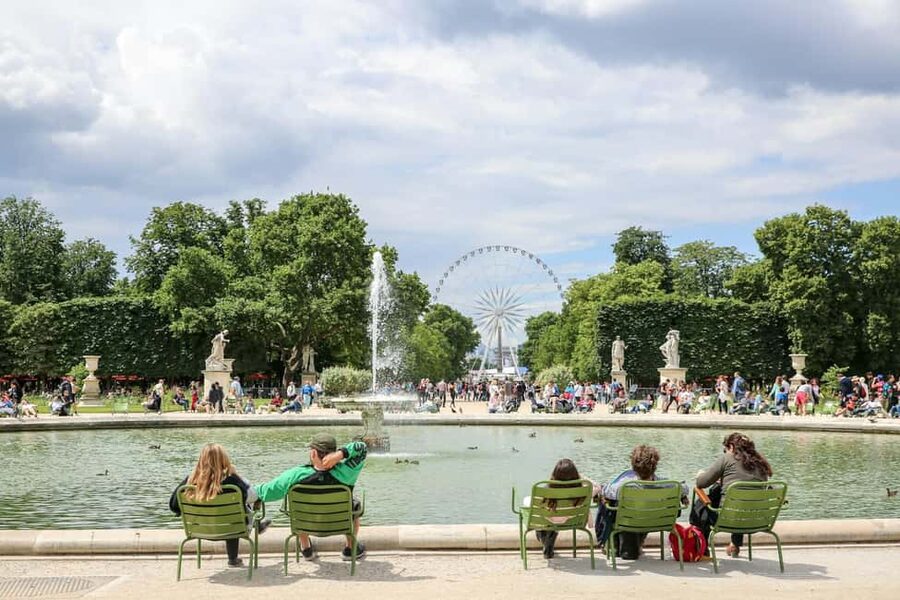
After Palais de Justice, you move to the Institut de France and then the École Nationale Supérieure des Beaux-Arts area, both guided stops.
What I like about including these institutions is that they broaden your idea of Paris. You are not only seeing religious and governmental landmarks. You are also seeing the infrastructure for learning, arts, and intellectual life.
Institut de France represents the idea of organized knowledge. It helps you understand why Paris became a magnet for thinkers and creators. Then the École des Beaux-Arts brings you back to art as training, where generations learned techniques and standards that influenced European art for centuries.
Even if you do not know every institution by name, standing near these places helps you understand the city’s rhythm. Paris made itself a classroom for culture. This tour gives you a direct line to that idea.
Expect that you will see atmosphere more than do a long museum-style interior experience. For the time you have, that is actually a strength. It keeps the pace moving while still leaving you with real substance.
Price and timing: why $4.71 can be a surprisingly smart deal
The stated price is $4.71 per person, and while that number is strikingly low, it also points to what this tour is meant to be: a guided walking overview with added value through stories and local guidance, not an all-in-one ticket package.
Here is the practical way to judge value. You get:
- An expert English-speaking local guide (with Spanish also available)
- Guided time at major landmarks
- Insider tips on where to eat, drink, and explore
- A tight route that covers multiple stops without you needing to plan every connection
What is not included is entrance to paid attractions, which is listed as optional after the tour. So you should treat this as a “set-up and orientation” experience. You use the tour to pick what you want to do next.
For budget travelers, that is a strong deal. For first-timers, it can prevent wasted time. And for anyone who already visited a few major sights, it can still work because the focus is on context as you move between locations.
The timing also matters. 150 minutes is long enough to feel like a real tour, but short enough to still have a full afternoon or evening afterward for your own pace.
Included guide tips: the part that keeps paying off after the walk
One of the most useful parts of this experience is that the guide brings insider tips for eating, drinking, and exploring. That may sound minor, but it can make or break the rest of your day in Paris.
When you are walking landmark to landmark, it is easy to plan by instinct and end up near tourist traps. A local guide can point you toward smarter options based on where you are in the city, what the time of day is like, and what kind of vibe you want.
I also like that the guide communicates the “why” behind what you see. When you understand why a place matters, you stop treating it like scenery and start treating it like a place with consequences. That helps you notice details on your own afterward.
If you are the kind of traveler who likes to follow a plan for the first half day and then wander freely, this tour sets you up perfectly. You get structure, then you get freedom.
How to prepare so the walk feels easy, not tiring
This is a walking tour, so your main preparation is simple: comfortable shoes. The route includes a continuous walk along the Seine and guided segments at stops. Even if you are not walking long distances, you will be on your feet.
If you are traveling in cold or rain, dress for the weather because you are outdoors for much of the time. Also, plan for photo breaks. This is Paris, and you will want them, especially around Notre Dame and the river.
Language-wise, the guide is listed as available in Spanish and English, which is great if you want clarity. If your group has mixed language comfort, the guide’s ability to handle both can keep the tone smooth.
Ratings and the one caution worth taking seriously
The tour shows a 4.2 rating across 18 reviews. Most of the positive feedback focuses on the guide being friendly, communicative, and explaining things with substance, which is exactly what you want from a walking tour.
But there is at least one serious low-rating report stating the guide did not appear at the meeting point, with accusations of fraud. I cannot verify what happened, but the takeaway for you is clear: be ready to check in, arrive early, and confirm the meeting details so you do not get stuck waiting.
That may sound obvious, but it is one of those things people skip when a tour is inexpensive. With any tour, a few minutes of extra caution can save you an hour of stress.
Should you book this Paris Magical Walking Tour with Sandemans Tours?
Book it if you want a focused Paris walking tour that links the Seine, Notre Dame, Louvre from the riverbank, and key civic and cultural institutions in one guided loop. It is especially good for first-timers and time-limited visitors who want context, not just photos.
Skip it or plan differently if you are mainly after museum interiors or long, slow ticketed experiences. This is a guided overview with paid attractions treated as optional, after the walk.
If you do book, my best advice is simple: arrive a little early at the Fountain on Place Saint-Michel, confirm your meeting details, and wear shoes you can stand in comfortably. With that done, you will get the kind of tour that makes Paris feel connected, not like a random pile of landmarks.
FAQ
Where does the tour start?
The tour starts by the fountain on Place Saint-Michel.
How long is the walking tour?
The duration is 150 minutes.
What landmarks are included?
You will see and have guided time at the Notre Dame Cathedral, the Louvre Museum, Palais de Justice, Institut de France, and École Nationale Supérieure des Beaux-Arts, plus a walk along the Seine River.
Is the tour offered in English and Spanish?
Yes. The live guide is listed in Spanish and English.
Are entrance fees for paid attractions included?
Entrance to paid attractions is not included. It is listed as optional after the tour.
What should I bring?
Bring comfortable shoes.
Is the tour wheelchair accessible, and can I get a refund if plans change?
Wheelchair accessibility is listed. Free cancellation is available up to 24 hours in advance for a full refund.
Newly listed around Paris
- The voice of Montmartre is a must-see in Paris★ 3.8 · 19 reviews
- Top Private Cruises in Paris with Champagne + more surprises★ 5.0 · 309 reviews
- The Official Emily in Paris Montmartre Walking Tour★ 4.7 · 40 reviews
- The Paris Pass® Plus: 90+ Attractions including The Louvre★ 3.4 · 386 reviews
- The Official Emily in Paris Locations Walking Tour★ 4.9 · 383 reviews
- The Official Emily in Paris Macaron-Making Workshop★ 4.9 · 68 reviews
- The Official Emily in Paris Wine & Cheese with Butter Making★ 4.9 · 20 reviews
- The Official Emily in Paris Croissant-Making Workshop★ 4.9 · 85 reviews
City Tours, compared.
Eiffel Tower Summit Option with Seine River Cruise and City Tour
Read our review →
Paris in a Day: Louvre or Orsay, Eiffel Tower, City Walk & Cruise
Read our review →
Lyon City Hop-on Hop-off Sightseeing Bus Tour
Read our review →
Eiffel Tower Hosted Tour, Seine Cruise and City Tour
Read our review →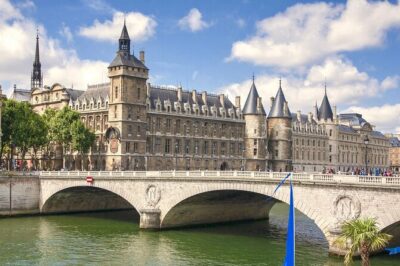
Paris City Center Free Walking Tour (Tip-Based)
Read our review →
Golf Cart in Paris – Private Guided City Tour – Pickup Included
Read our review →Browse the lists this tour appears in