
Reviewed · CITY TOURS
Bordeaux: City Highlights Guided Walking Tour
Bordeaux history hits fast when you walk it. This 2-hour highlights tour strings together big landmarks and everyday street scenes, so you get the lay of the land quickly. I especially like the English-only guidance and the way the route connects architecture with real city stories.
Two things make it stand out for me. First, you cover the headline sites without wasting time, from Cathedral Saint André to Place de la Bourse. Second, the guides bring Bordeaux to life, including details people often miss, like how the city’s political past shaped what you see today.
One possible drawback: it is a walking tour, and while it is marked wheelchair accessible, it is also noted as not suitable for people with mobility impairments. If you need extra accommodations, you should check before booking, especially for uneven sidewalks and steady walking.
In This Review
- Key things to know before you go
- A Fast First Look at Bordeaux, on Foot
- Starting at Jacques Chaban Delmas and Getting Oriented in Place Pey-Berland
- Cathedral Saint André and Tour Pey-Berland, Where Architecture Tells Time
- Grand Théâtre and the Theater District Feeling
- Porte Cailhau, Medieval Bordeaux, and the Defensive Mindset
- Place de la Bourse and Miroir d’eau, Power With a Waterline
- Place Camille Jullian and Saint-Pierre Church, Bordeaux Up Close in Plain Sight
- Rue Saint Catherine Strolls and the Grand-Theater-to-Streets Connection
- Monument aux Girondins and the Political Layer You Might Not Expect
- Finishing at Place de la Comédie, Plus What to Do Next
- Price, Pacing, and Who This Tour Fits Best
- Should You Book This Bordeaux Highlights Walking Tour?
- FAQ
- How long is the Bordeaux highlights walking tour?
- Is the tour offered in English?
- Where do I meet the guide?
- What should I bring for the walk?
- Can I reserve now and pay later?
- What is the cancellation policy?
Key things to know before you go
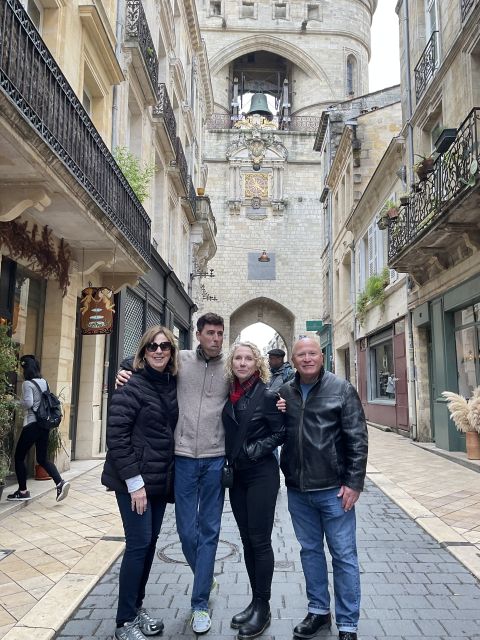
- English-only narration makes the whole route easier to follow.
- A tight 2-hour route covers both grand squares and medieval corners.
- Expect stops at Cathedral Saint André, Place de la Bourse, Porte Cailhau, and Saint Pierre.
- Guides often add local context and practical recommendations for your next days.
- The tour can be sun-aware when weather turns hot, based on prior guide behavior.
A Fast First Look at Bordeaux, on Foot
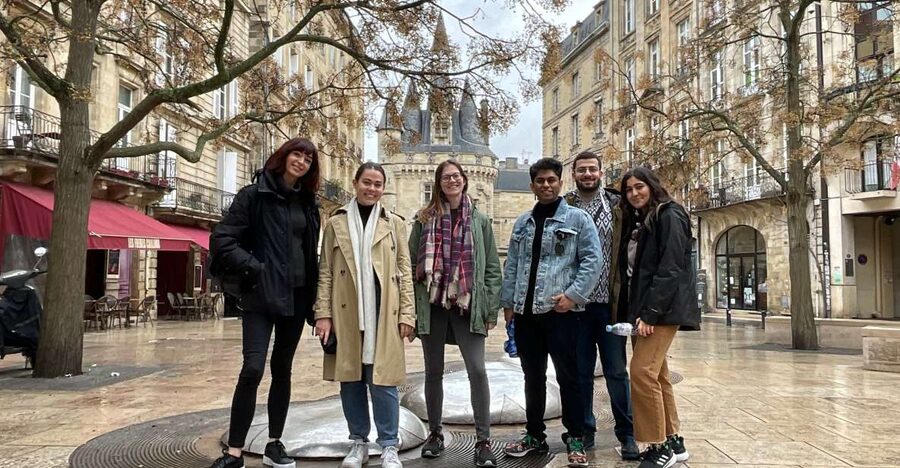
Bordeaux works best when you see it on foot. You feel the scale of the city in small bursts, then suddenly a church facade or a grand square makes sense because you just walked the streets that lead to it. This tour lasts 2 hours, so it is ideal when you only have a day or you want a smart first pass before choosing museums, wine neighborhoods, or day trips.
I like that the pacing is built around landmarks you can actually picture later. You do not just read plaques. You walk from one important spot to the next, with a guide explaining what to look for. That matters because Bordeaux has layers. You can see trade-era grandeur, political power, and medieval defense structures in the same stroll.
You also get a clear end point: the tour finishes at Place de la Comédie, one of the best places to start planning dinner, coffee, or a longer evening walk. If you’re the type who likes to orient fast and then roam on your own, this format fits.
More city walks in Bordeaux:
- Bordeaux: Guided Walking Tour
★ 4.4 · 1,038 reviews - Private – Best of Bordeaux Walking Tour + Glass of Bordeaux Wine
★ 5.0 · 240 reviews - Professional – Bordeaux Wine and Cheese Tasting with a walking tour
★ 5.0 · 218 reviews
Starting at Jacques Chaban Delmas and Getting Oriented in Place Pey-Berland
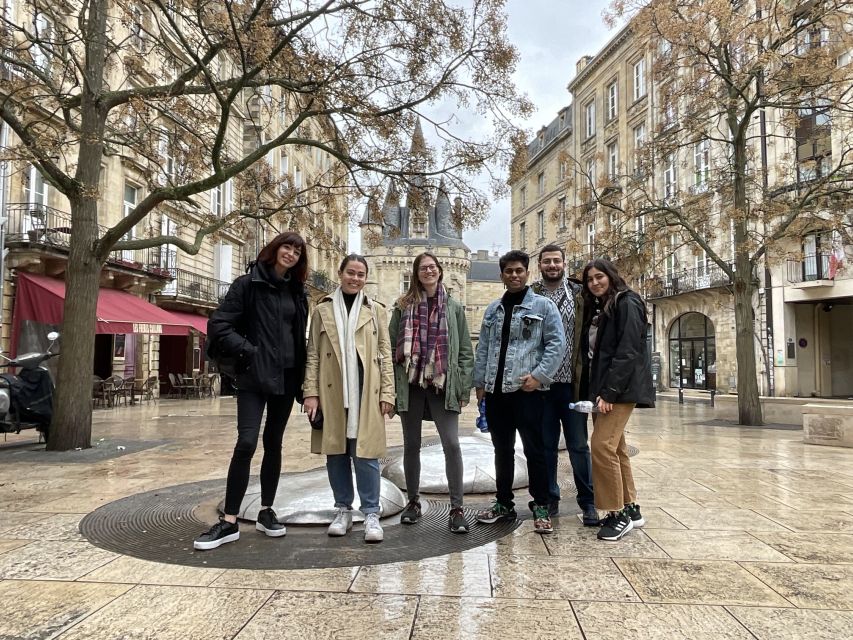
The meeting point is easy to spot once you know the cue. Meet by the Statue of Jacques Chaban Delmas in Place Pay Berland, and look for your guide holding a red umbrella. If you arrive a little early, you can take a look around the square and get your bearings before the group gathers.
From there, you work toward the civic heart. One of your early stops is Hôtel de Ville de Bordeaux, where you get a sense of the city’s public and political identity. Even if you do not go inside for a long sit-down, the guide’s framing helps you understand why Bordeaux looks the way it does in key plazas and civic buildings.
A good tour at this stage does two jobs at once. It sets the route, and it teaches you how to read the city. This one does both, and guides often use names and dates that make you feel like you have a map in your head by the time you leave.
Cathedral Saint André and Tour Pey-Berland, Where Architecture Tells Time
The heart of the walk is a cluster of major religious landmarks. You will visit Bordeaux Cathedral, officially associated with Saint André, and you also pass through the area around Tour Pey-Berland. This is where the guide’s explanations really earn their keep.
Cathedrals can feel like postcard scenery if you do not know what to look for. Here, you get the background that helps the details click. Think about how a city’s power and faith show up in stonework, and how older structures sit alongside more modern urban growth.
Tour Pey-Berland is especially useful for orientation because it acts like a vertical landmark. Even if you do not climb, you can use it visually to locate other spots. After this stop, places like nearby squares and streets start to connect in your mind.
One practical plus: the guide can help you prioritize what to photograph. For example, you might focus on the facade angles that show the scale from street level, rather than only trying to capture the building straight on.
Grand Théâtre and the Theater District Feeling
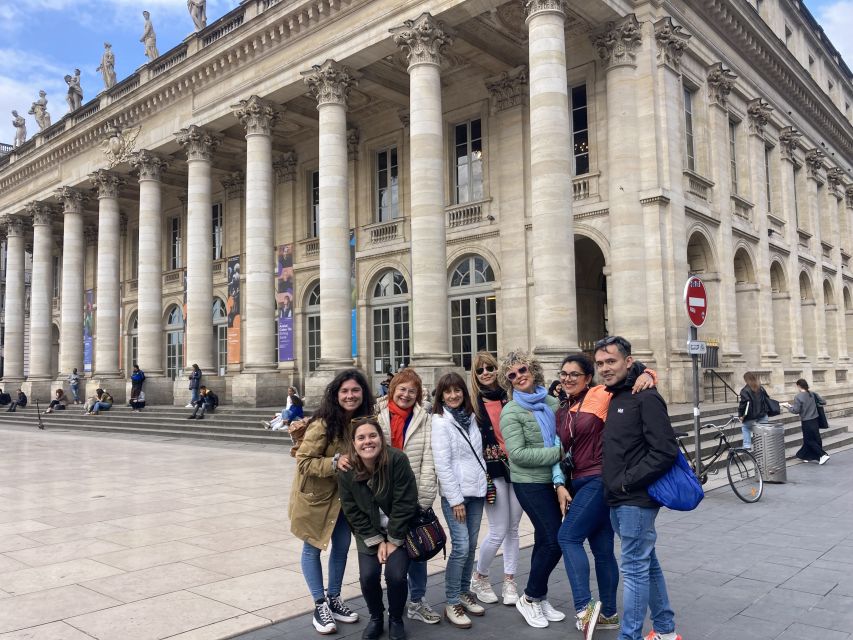
Bordeaux is known for refined architecture, and the Grand Théâtre de Bordeaux makes that point immediately. You visit the theater as part of the highlights route, and the guide typically gives just enough context to make the building feel more than decorative.
The value here is timing. A theater building is a great mid-tour stop because your brain shifts gears. After churches and squares, you start noticing symmetry, proportions, and the city’s design language. The guide can also tie this to how Bordeaux presented itself culturally, not only politically.
Expect the guide to bring in citywide connections as you go, and that can be helpful if you plan to visit other neighborhoods later. One strong theme across guides is that they connect past decisions with what the city looks like now, which makes your future sightseeing feel less random.
Other Bordeaux bookings to consider
- Bordeaux: Private Walking Tour with a Local
★ 4.3 · 117 reviews - Exclusive! Bordeaux: Nighttime Highlights Walking Tour
★ 4.9 · 85 reviews - Bordeaux: Walking Tour of the City’s Best Bakeries
★ 4.8 · 69 reviews - Bordeaux: Exclusive Private Guided Walking Tour
★ 4.6 · 50 reviews
Porte Cailhau, Medieval Bordeaux, and the Defensive Mindset
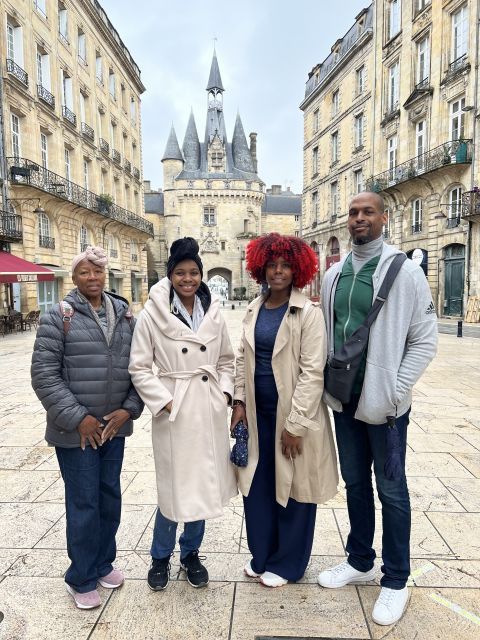
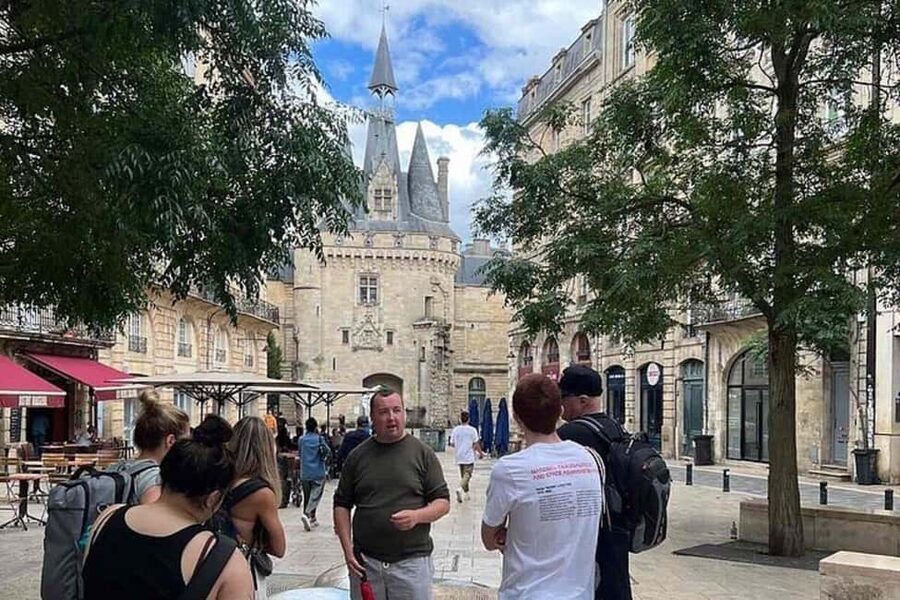
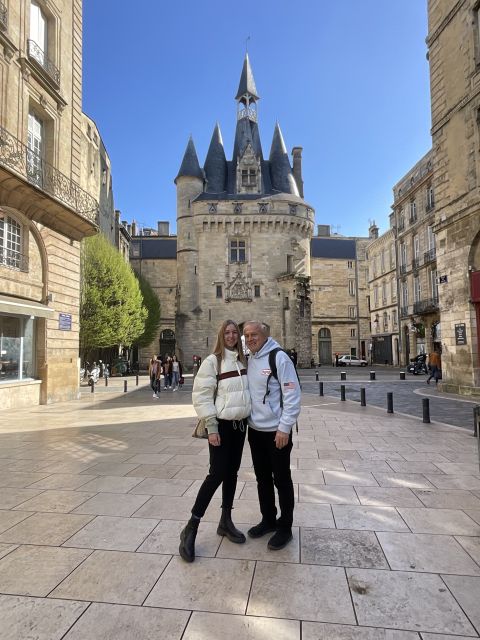
Then you shift into the medieval layer with Porte Cailhau. This is one of the best moments to understand Bordeaux as a city that once had defenses and controlled movement. The guide’s role is key here, because gates and walls can look like standalone ruins unless someone explains their purpose.
At Porte Cailhau, you start seeing how the city’s shape and infrastructure evolved. Medieval architecture often carries practical messages in its design. It is not just beauty for beauty’s sake. It reflects who needed protection, how traffic moved, and what power looked like at the edge of a city.
This stop also makes the rest of the tour more satisfying, because it gives you a timeline feeling. After a gate like this, visiting older churches becomes more meaningful rather than just checking a box on a list.
Place de la Bourse and Miroir d’eau, Power With a Waterline
If there is a single stretch of the route that turns photos into memories, it is Place de la Bourse and the area around Miroir d’eau. You visit Place de la Bourse as a formal highlight, and you also get the chance to see the Miroir d’eau, the reflecting water feature that sits right in the middle of this elegant square.
What makes this pair work on a walking tour is contrast. Place de la Bourse gives you grand architecture and civic confidence. Miroir d’eau adds modern flair through water and reflection, so you see how Bordeaux keeps reusing its waterfront-style ideas even as tastes change.
The guide usually helps you connect what you see to the city’s older commercial identity. That context helps you spot details like how the square is composed, why the building facades feel so formal, and what kind of city Bordeaux was trying to project.
This is also a great moment for a quick pause. If you need a short breather for your feet, this is where the group naturally slows down.
Place Camille Jullian and Saint-Pierre Church, Bordeaux Up Close in Plain Sight
Next comes Place Camille Jullian and then Saint-Pierre Church. Saint Pierre is described as dating back to the 12th century, which sets expectations. Once you know the timeframe, you start noticing how the building fits into Bordeaux’s longer story rather than feeling like a single stop.
Place Camille Jullian is useful because it transitions you from big-square grandeur into street-level texture. It is easier to picture daily life here, which helps you connect monuments with everyday routes.
Saint-Pierre Church adds a different flavor. Religious buildings often make people think they only matter for architecture buffs. But the guide’s explanations can make it matter for anyone interested in how cities operate over centuries. You hear about the ideas that shaped Bordeaux, and you see how sacred architecture acted as a social anchor.
If you want a clear takeaway, this is it: after this stop, Bordeaux feels less like a list of landmarks and more like a place with habits and history that kept repeating in new forms.
Rue Saint Catherine Strolls and the Grand-Theater-to-Streets Connection
Between the big stops, you also move through lively pedestrian streets. The tour includes a walk along Rue Saint Catherine, and you stop at Grand Théâtre earlier, so the street-to-building link matters. This is where Bordeaux becomes more than monuments.
Rue Saint Catherine is a long, shopping-focused street, and it gives you the city rhythm. It also gives your legs a change of pace compared with the more architectural clusters. Even if you do not shop, it helps you feel what neighborhoods actually look like when people are out and about.
Guides sometimes use these street segments to explain how urban life fed into the grand buildings, which makes the sightseeing feel joined up instead of chopped into disconnected stops.
Monument aux Girondins and the Political Layer You Might Not Expect
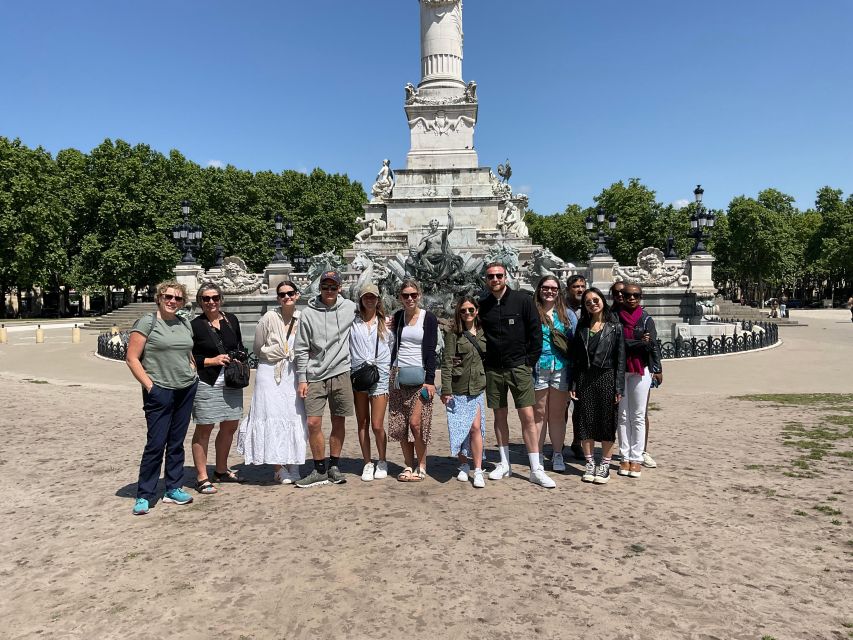
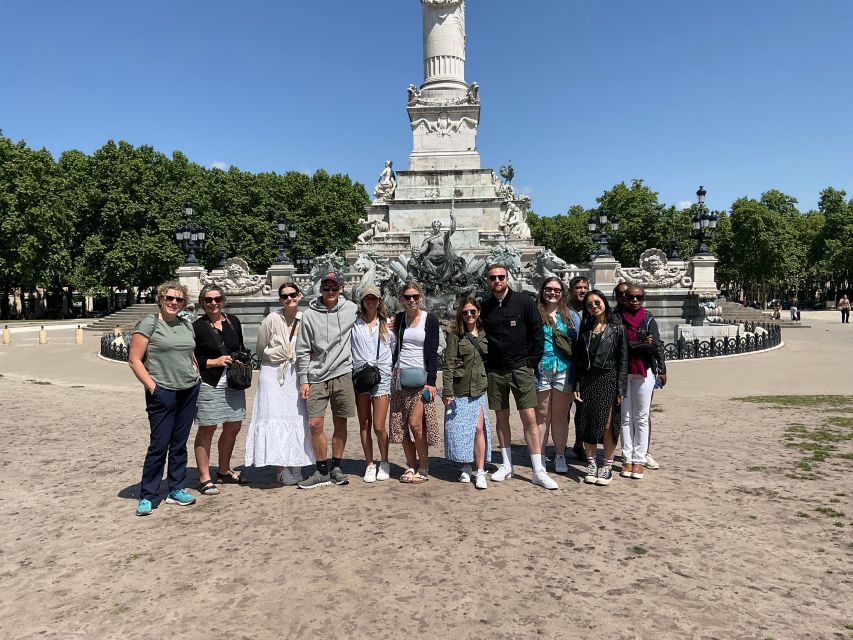
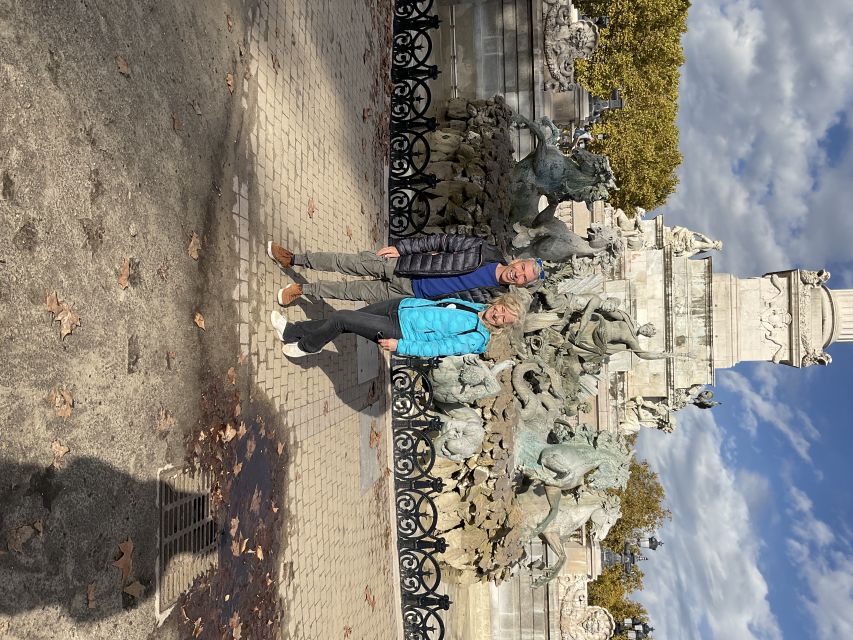
Bordeaux is often sold through wine and architecture, but the tour also includes a chance to understand political history at the Monument aux Girondins. This stop can surprise people because it shifts from buildings to power and events.
I like that it is not handled as a dry lecture. A good guide uses it to explain how politics and identity shape urban space. If you want deeper context on how Bordeaux became what it is today, this part is where you get it.
A bonus from past guides: some have been willing to address difficult topics related to the 20th century, including World War II and France’s political choices during that period. That kind of honest context helps the city story feel complete, not sanitized.
Finishing at Place de la Comédie, Plus What to Do Next
The tour ends at Place de la Comédie, which is a smart place to wrap up. It is central, and it is a natural launchpad for your evening plans. After a tour like this, I like to have a place where I can spread out and make decisions quickly, and that square works well for that.
Guides often provide practical follow-up recommendations. In past tours, people noted suggestions for places to eat and drink, plus specific coffee spots. One example mentioned Café Phia after a list of options, which is the kind of real, usable tip that saves time later.
You also come out with a mental map. After seeing Cathedral Saint André, Place de la Bourse, Porte Cailhau, and Saint-Pierre, you can make better choices about where to return. You can walk back to the spots you loved, or you can branch off confidently toward wine-related areas.
Price, Pacing, and Who This Tour Fits Best
Let’s talk value. This tour is priced at $4.12 per person for a 2-hour guided walking experience in English. That is extremely low for a format that includes a local guide and a structured highlight route across major Bordeaux landmarks. Even if you care only about a few stops, paying for a guide to connect the dots is often worth it.
The tradeoff is that it is still a walking tour. Bring comfortable shoes and comfortable clothes, and dress for the weather. If it is hot, you may find the guide keeps an eye on sun exposure, since at least one guide reportedly worked to keep the group in shade for much of the walk when temperatures climbed.
Who it is best for:
- First-time visitors who want a route you can repeat later
- People who love architecture with context, not just photo stops
- History and culture fans who like the city story connected to the street
One caution: it is described as wheelchair accessible, but also marked as not suitable for people with mobility impairments. Those notes conflict. If mobility is a concern, assume the route may have real obstacles and check with the operator for suitability.
Should You Book This Bordeaux Highlights Walking Tour?
Book it if you want a fast, structured introduction to Bordeaux that hits the major landmarks and explains how they connect. I especially think it’s a great choice for your first day because it gives you bearings fast and helps you understand what you are looking at when you go back on your own.
Skip it or rethink it if you want a lot of time sitting, museum-style visits, or minimal walking. This is a walking plan with multiple landmark stops, so your best fit is someone who enjoys moving through a city.
If you do book, go in with one goal: learn how Bordeaux layers different eras in the same streets. If you catch that idea, the tour becomes more than a highlight list, it becomes a way to read the city for the rest of your trip.
FAQ
How long is the Bordeaux highlights walking tour?
It runs for 2 hours and is a walking tour.
Is the tour offered in English?
Yes. The tour is English only with a live English-speaking guide.
Where do I meet the guide?
Meet next to the Statue of Jacques Chaban Delmas in Place Pay Berland. Your guide will be holding a red umbrella.
What should I bring for the walk?
Wear comfortable shoes and bring comfortable clothes and weather-appropriate clothing.
Can I reserve now and pay later?
Yes, it offers reserve now & pay later, so you can book without paying right away.
What is the cancellation policy?
You can cancel up to 24 hours in advance for a full refund.
Newly listed around Bordeaux
- Bordeaux: St-Emilion Vineyards e-Bike Tour with Wine & Lunch★ 4.9 · 181 reviews
- The essential in Bordeaux, private tour with a local★ 4.9 · 48 reviews
- The Best of Bordeaux Walking Tour + 1 Glass of Wine★ 4.7 · 29 reviews
- Bordeaux: St. Emilion Day Trip with Wine Tasting and Lunch★ 4.9 · 251 reviews
- From Bordeaux: Saint-Emilion Wine Tasting Tour★ 4.8 · 24 reviews
- Saint Emilion Wine and Bike Tour★ 4.9 · 22 reviews
- Saint-Emilion : half-day wine-tour into classified estates★ 4.7 · 22 reviews
- No Diet Club : Bordeaux Food Tour in Les Chartrons !★ 4.9 · 77 reviews
City Tours, compared.
Eiffel Tower Summit Option with Seine River Cruise and City Tour
Read our review →
Paris in a Day: Louvre or Orsay, Eiffel Tower, City Walk & Cruise
Read our review →
Lyon City Hop-on Hop-off Sightseeing Bus Tour
Read our review →
Eiffel Tower Hosted Tour, Seine Cruise and City Tour
Read our review →
Paris City Center Free Walking Tour (Tip-Based)
Read our review →
Golf Cart in Paris – Private Guided City Tour – Pickup Included
Read our review →Browse the lists this tour appears in