
Reviewed · MACARON BAKING CLASSES
Croissant Baking Class, Mastering the Art with a Pastry Chef
Croissant perfection starts with your own hands. In this Paris croissant baking class, you learn the key moves behind buttery lamination and flaky layers, with a small group of up to eight people for real guidance. It is a laidback, hands-on way to understand why French pastry dough behaves the way it does.
I especially like the instructor attention, plus the clear, step-by-step pace that keeps you from feeling lost when butter and dough get involved. One drawback to keep in mind: you do need the strength to knead the dough, and the class moves as a working kitchen, not a casual sightseeing stop.
In This Review
- Key highlights to know before you go
- Studio Pâtisserie on Rue de Rome: where the pastry energy is
- Your 3 hours: from dough basics to crescent shaping
- 1) Welcome and French pastry fundamentals
- 2) Hands-on dough work and butter preparation
- 3) Laminating and shaping
- 4) Baking moment and take-home payoff
- Lamination 101: the skill behind the flaky layers
- Pain au chocolat, too: learning beyond the croissant
- Instructor style matters: Chef Leo and Chef Maria
- Price and value for Paris: what you pay for, and what you get
- Who should book this croissant class
- Practical tips that will help your croissants at home
- Should you book this croissant baking class?
- FAQ
- Where does the croissant baking class start?
- How long is the class?
- What is the price per person?
- How many people are in the class?
- Is instruction available in English?
- What is the minimum age to participate?
- Is strength required for the activity?
- Are service animals allowed?
- Is the class near public transportation?
- Is free cancellation available?
Key highlights to know before you go
- Max eight people for more direct coaching and less waiting
- Hands-on lamination and shaping so you learn the real technique, not just watch
- English instruction so you can follow every step
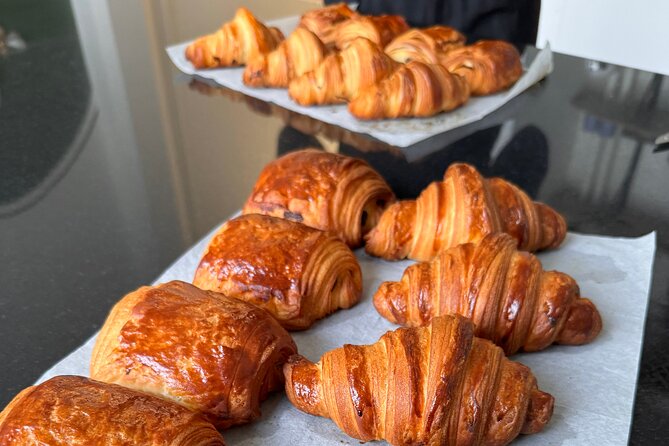
- Take-home results that go beyond the first try, often including croissants and pain au chocolat
- Chef-led, supportive vibe with lots of encouragement during the messy parts
Studio Pâtisserie on Rue de Rome: where the pastry energy is
The class meets at Studio Pâtisserie, 85 Rue de Rome, 75017 Paris and ends back there. That matters because you are not juggling multiple stops. You can arrive, check in, and settle into a kitchen rhythm without rushing from one location to another.
This part of Paris is also practical. The studio is near public transportation, which is a relief if you are pairing this with museums and meals. And the class is offered in English, so you are not translating pastry jargon in your head while your dough warms up.
The kitchen setup also suits people who learn better by doing. There is something calming about focusing on the same task for hours: mix, fold, roll, shape, wait, and then watch it bake. It turns the whole trip into a mini project, in the best way.
More Cooking Classes in Paris
- Paris Cooking Class and Lunch with Wine plus Market Visit Option
★ 5.0 · 1,024 reviews - Paris Croissant Small-Group Baking Class with a Chef
★ 5.0 · 910 reviews - Paris: French Croissant Baking Class with a Chef
★ 4.9 · 712 reviews
Your 3 hours: from dough basics to crescent shaping
Over about three hours, you go through the full croissant workflow: first understanding what makes the dough work, then practicing the moves that create layers, and finally shaping the pastries so they bake up golden.
Here is the flow that makes the class valuable.
1) Welcome and French pastry fundamentals
You start with an intro to French pastry making, focused on what actually affects results: ingredient quality, measurements, and the balance of rolling and folding. This is where you learn the logic behind the technique, instead of just memorizing steps.
A big advantage here is how the chef explains the why. Croissants are not just a recipe. They are physics. Butter melts at the wrong time, dough gets too warm, or folds get uneven, and you lose that classic rise. When you understand that early, every later instruction makes sense.
2) Hands-on dough work and butter preparation
Then you roll up your sleeves. You work your dough with guidance, including the kneading process. The class info specifically notes that strength is needed to knead, so if your hands are tired from travel, it is worth planning a less hectic day.
You will also learn how butter and dough come together for lamination. Many classes gloss over this. Here, you practice the process so you can feel when the dough is ready for the next step.
One detail I found especially useful: the session structure supports proper timing. In some setups, the dough you use may be from earlier production so proofing works out smoothly. That means you spend time learning technique, not waiting forever for dough to catch up.
More macaron classes in Paris:
- Paris: Montmartre Cheese, Wine & Pastry Guided Walking Tour
★ 4.8 · 2,255 reviews - Paris: Macaron Class at Galeries Lafayette
★ 4.2 · 1,196 reviews - Paris: French Macaron Culinary Class with a Chef
★ 4.9 · 591 reviews - Saint-Germain: Gourmet Chocolate & Pastry Walking Food Tour
★ 4.8 · 495 reviews
3) Laminating and shaping
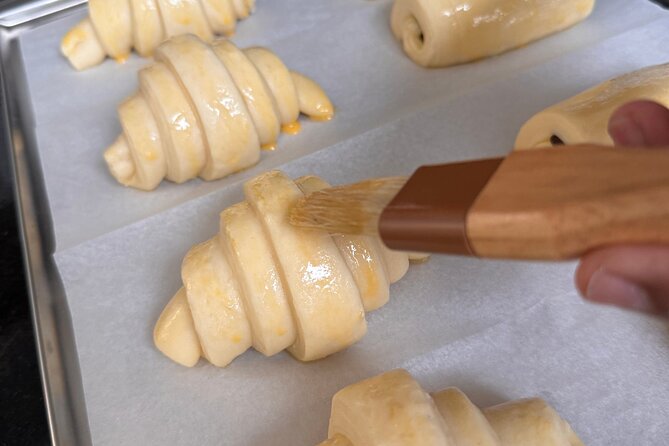
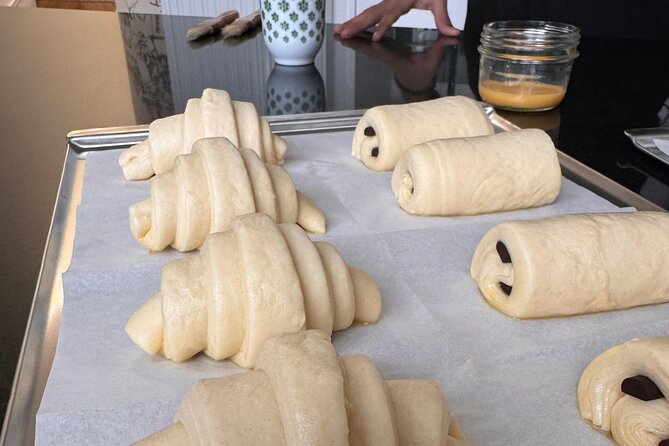
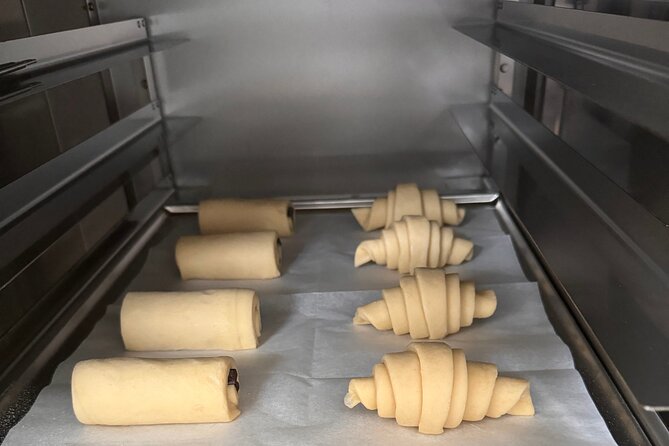
This is the core skill in any croissant class. You learn laminating, then shaping into iconic crescents (and you practice the cutting and forming process that turns rectangles into triangles and pastries).
This is also where the small group size really pays off. With up to eight people, the chef can watch what you are doing and correct what matters. That one-on-one attention is a huge difference versus larger classes where you do your best and hope it turns out.
4) Baking moment and take-home payoff
As your croissants bake, the class shifts from hands-on technique to tasting and relief. You get that sense of accomplishment, plus the chance to share tips and compare dough issues with your fellow bakers.
The take-home part is a real highlight. People have left with a batch of pastries including croissants and pain au chocolat. One class outcome described about eight pastries total, and another notes an even split of croissants and pain au chocolat each. Exact counts may vary by class flow, but the idea is consistent: you are not just learning, you are leaving with something you made.
Lamination 101: the skill behind the flaky layers
If croissants feel mysterious to you, lamination is the part that makes them click. The class teaches the delicate balance of rolling and folding, so butter forms layers inside dough rather than blending into it.
Here is what you will be paying attention to in your hands:
- Even thickness when rolling, so layers stack consistently
- Controlled folding, so you keep structure instead of tearing dough
- Temperature and timing cues, because butter that gets too soft ruins your chances
What I like is that instruction is practical. The chef does not just say fold, fold, fold. You learn how to keep the dough cooperative through each stage.
And from prior classes, one of the best home-baking tips is simple: write down the dimensions. You may roll out repeated rectangles and cut triangles for different steps of butter placement and final shaping. If you do not record those measurements, it is hard to recreate the method later when you are back in your own kitchen.
If you are visiting from the US, prepare for a second hidden challenge: metric and English units. Several participants recommend converting lengths, weights, and volumes as you go, because croissant dough does not forgive guesswork.
Pain au chocolat, too: learning beyond the croissant
The class experience typically includes shaping and baking not just plain croissants, but also pain au chocolat. That is a smart add-on because the dough behavior and handling skills transfer directly.
Practically, it also gives you more variety in the final box. A croissant class can feel one-note if you only learn one form. Including pain au chocolat makes the work feel more complete, and it gives you a second way to judge results at home.
Instructor style matters: Chef Leo and Chef Maria
This is a chef-led class, and the instructors bring a friendly teaching tone. Names that come up include Chef Leo and Chef Maria, and both are described as fun, patient, and interactive.
In a hands-on food class, that teaching style is not a nice extra. It changes what you learn:
- If you get stuck, patient correction keeps you from falling behind
- If the chef is funny or upbeat, the stress drops and you stay focused
- If the chef is organized, you keep moving even when the dough feels awkward
Also, the way the class is paced helps people at different experience levels. You do not need prior pastry training to follow along. You do need willingness to practice, and the instructor keeps that manageable.
Price and value for Paris: what you pay for, and what you get
At $143.92 per person for around three hours, this is not a cheap food souvenir. But in Paris, it is priced like an experience that gives you real skill time in a working studio.
What you are really paying for is:
- Small group size (max eight), which protects time with the chef
- Specialized instruction in lamination, shaping, and baking technique
- Quality-ingredient practice, so your results match the method
- A take-home batch that includes both croissants and pain au chocolat in many cases
In other words, you are buying fewer things, but more learning per hour. If your goal is to eat one good croissant, you can do that for far less. But if your goal is to understand how flaky layers are built, and to reproduce it later, the value makes sense.
Booking about 47 days in advance on average is another clue. This is the kind of class that fills up, so if your dates are fixed, do not treat it as an impulse plan.
Who should book this croissant class
I think this class is a strong fit if you want:
- A hands-on Paris activity that teaches technique, not just a tasting
- A small-group setup where the chef can troubleshoot your folds
- A friendly cooking project you can bring home, literally
It is also a good choice for couples and small groups because everyone works. One person is not stuck watching while others do the dough.
It may be less ideal if:
- You do not want physical kneading work. The class info says strength is needed
- You are hoping for a quick, low-effort workshop with minimal practice
- You want a large social tour experience. This is intimate by design
Practical tips that will help your croissants at home
These are the little things that can make or break your results after you leave:
1) Record your dimensions. If the class uses specific rectangle and triangle sizes, write them down during class. You will thank yourself later.
2) Use metric conversion if needed. If you are coming from the US, convert units rather than guessing.
3) Focus on folding quality, not speed. Croissant dough work is slow for a reason. If you rush, layers suffer.
4) Expect a learning curve. Even if your first shapes are not perfect, you are practicing the method. That is why the class is hands-on and structured.
5) Plan your next meal around the timing. You finish with freshly baked pastries, so your dinner plans may need to flex.
Should you book this croissant baking class?
Yes, I would book it if you want an actually useful Paris food memory. The combination of small group size, chef-led instruction, and hands-on lamination makes it more than a nice afternoon. And because you leave with pastries you shaped, you get immediate feedback on how your dough handling worked.
Skip it if you are mainly after strolling, photo stops, or a totally passive activity. This class is for people who like to roll dough, learn technique, and do the slightly chaotic butter-and-flour parts without panicking.
If you book, bring a mindset of practice, not perfection. Croissants reward calm attention, and this setup is built to help you get there.
FAQ
Where does the croissant baking class start?
It starts at Studio Pâtisserie, 85 Rue de Rome, 75017 Paris, France, and it ends back at the meeting point.
How long is the class?
The experience lasts about 3 hours.
What is the price per person?
The price is $143.92 per person.
How many people are in the class?
The class has a maximum of 8 travelers.
Is instruction available in English?
Yes, the class is offered in English.
What is the minimum age to participate?
Participants need to be 17 years of age and above.
Is strength required for the activity?
Yes, strength is needed to knead the dough.
Are service animals allowed?
Yes, service animals are allowed.
Is the class near public transportation?
Yes, it is near public transportation.
Is free cancellation available?
Yes, you can cancel for a full refund up to 24 hours in advance of the experience start time.
Newly listed around Paris
- Paris Orsay Museum and Rodin Museum Daily Combo Ticket★ 4.0 · 32 reviews
- Paris Pastry Tour – Croissants, Macarons & Iconic French Desserts★ 5.0 · 232 reviews
- Paris Orsay Museum with Optional Seine River Cruise Tickets★ 4.0 · 65 reviews
- Paris Occult and the History of the Dark Arts Private Tour★ 5.0 · 17 reviews
- Île de la Cité Guided Tour & assistance Notre Dame entrance★ 5.0 · 22 reviews
- Paris Orsay Museum Entry Ticket with Digital Audio Guide★ 3.5 · 93 reviews
- Notre Dame de Paris: Semi Private or Private Guided Tour Guide★ 5.0 · 30 reviews
- Paris Opera Garnier Private Tour★ 5.0 · 42 reviews
Macaron Baking Classes, compared.
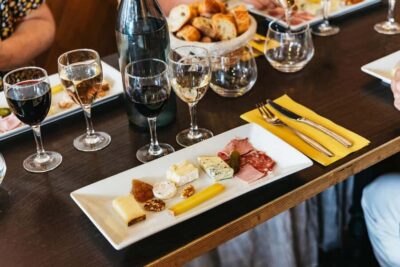
Montmartre Cheese, Wine & Pastry Guided Walking Tour
Read our review →
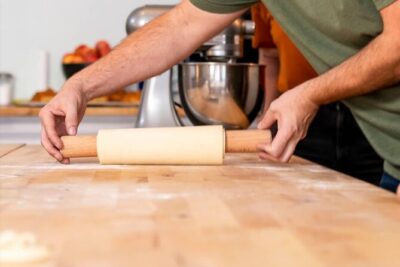
Paris Croissant Small-Group Baking Class with a Chef
Read our review →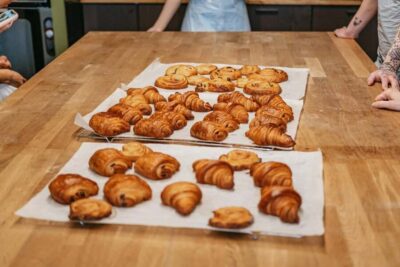
Saint-Germain: Gourmet Chocolate & Pastry Walking Food Tour
Read our review →
Paris Chocolate, Macaron & Pastry Food Tour: 10 Gourmet Tastings
Read our review →
Macaron Bakery Class at Galeries Lafayette Paris
Read our review →Browse the lists this tour appears in