
Reviewed · MONTMARTRE WALKING TOURS
Paris: Montmartre Macaron Baking Workshop
Perfect macarons start with one method. In this small Montmartre workshop with MACA’RONG, I like that you learn Italian meringue technique, a reliable way to get smooth, sturdy macaron shells, and you leave with 15 personalized macarons in a special box.
You’ll also get real creative control, including decorating each shell with a double-nozzle tool and making a flavor-packed filling like raspberry ganache. One drawback to plan around: it is not a casual hangout, you must have a reservation (so you cannot just observe), and there is no printed recipe handout mentioned in at least one review.
In This Review
- Quick takeaways before you bake
- The MACA’RONG shop setup, and why it matters in Montmartre
- Italian meringue and tant pour tant, your shell plan for home
- Macaronage: where your batter goes from wrong to right
- Piping bag technique, templates, and reducing waste
- Double-nozzle decorating: making each macaron look like yours
- Filling demo: raspberry ganache, plus mango-passion options
- What you take home, and how to handle your box of macarons
- Price and value: is $150 fair for 2 hours?
- Who this Montmartre macaron workshop fits best
- Should you book this Montmartre macaron workshop?
- FAQ
- How long is the Paris Montmartre macaron baking workshop?
- What is the meeting point?
- How many macarons will I make and take home?
- Is this a small group workshop?
- What language will the instructor use?
- Can I stay and observe if I do not have a reservation?
- Is it suitable for children?
- Is it suitable for lactose intolerance or food allergies?
- FAQ
- Can I reserve and pay later?
- What is the cancellation policy?
- What type of filling will I learn?
- Does the class include anything besides baking?
Quick takeaways before you bake
- Italian meringue for foolproof-ish shells: a method taught step-by-step, with tips that help you avoid cracks and hollow shells.
- 15 macarons to take home: each person makes enough to enjoy now and share later, boxed for travel.
- Macaronage and piping bag control: you learn the shine, texture, and flow that turn batter into piped shells.
- Double-nozzle decorating: you personalize designs on your own shells, not a one-template-for-all situation.
- Raspberry (and mango-passion) ganache filling demo: you learn the “why” behind rich, spreadable centers.
- Small group, fast pace: limited to 6 people, and the session moves quickly, so bring focus and follow the instructor closely.
The MACA’RONG shop setup, and why it matters in Montmartre
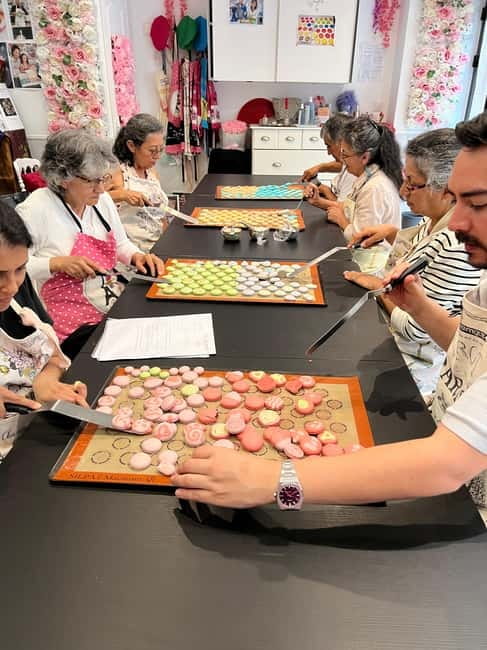
This workshop is based in the MACA’RONG shop near Montmartre, with the meeting point at 175 Rue Legendre. You join your class by going inside the shop at street level (ground floor) and checking in there. From the way the class is run, it feels built for people who want hands-on coaching, not a long lecture.
Montmartre is easy to romanticize, but it can also eat time. If you are staying in the Montmartre area, you’ll likely be walking between your lodging and the shop, and at least one review notes it can be around a 20-minute walk. Either way, it’s a good activity to schedule earlier in the day, so you are not rushing from a packed museum plan.
The big value here is group size. Limited to 6 participants, you get enough attention that you can correct mistakes while batter is still batter. That matters with macarons, where tiny changes in mixing, piping, or drying can show up in the finished shells.
More Montmartre climbs:
- Montmartre Hidden Gems and Scenic Highlights Walking Tour
★ 5.0 · 2,684 reviews - Montmartre Hill French Gourmet Food and Wine Tasting Walking Tour
★ 5.0 · 2,588 reviews - Paris: Montmartre Highlights Walking Tour with a Local Guide
★ 4.9 · 2,318 reviews
Italian meringue and tant pour tant, your shell plan for home
The heart of the class is learning how to make macaron shells with Italian meringue. That is slightly technical, but it also tends to be efficient: you learn a method that helps you control the structure of the batter.
Right at the start, you work with ingredients set up in a “tant pour tant” style (equal parts by measure, a core macaron base concept). The instructor explains what each part is supposed to do, then you move through the steps with direct guidance. You also get context that other techniques exist, which makes it easier to understand what you are doing instead of just copying motions.
In practical terms, here is what you’re really buying with Italian meringue: more consistency. When you know how the meringue contributes to the batter’s strength, you are less likely to end up with shells that spread too much, crack badly, or never develop that classic foot.
If you are a first-timer, this is still approachable because the class is built to prevent silent failure. Reviews highlight that the teaching is hands-on and practical, with instructors (often named Kanika and Vouthy) giving step-by-step cues so you can correct your process before it bakes.
Macaronage: where your batter goes from wrong to right
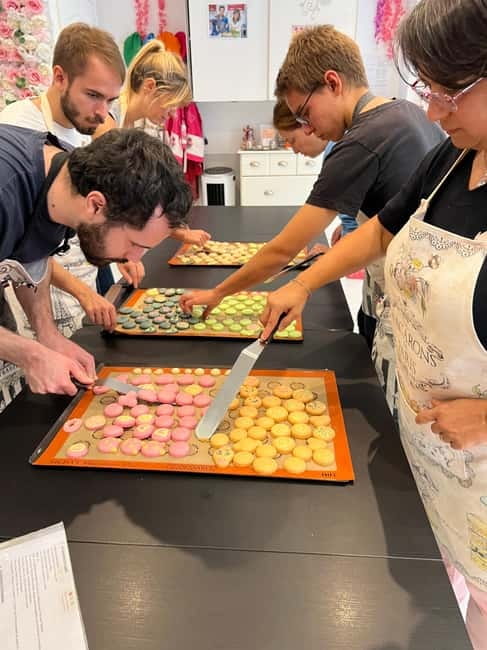
Macaronage is the mixing phase where your batter texture changes, and it is where most people either under-mix (lumpy batter) or over-mix (runny batter). The workshop focuses on this moment, teaching you the exact idea of what the batter should look and shine like after the macaronage is done.
This is also where the class earns its keep for $150 per person. You are not just making cookies. You are learning the skill that turns “I made macarons once” into “I can reproduce them.”
Here’s the key benefit: you learn what to watch for visually and how piping should behave once your texture is right. That matters because macarons are sensitive. Humidity, timing, and even how vigorously you mix can shift the outcome. The lesson gives you the reference points you need to adjust next time.
One small caution: the pace can feel fast. A review called it fun and fast-paced, and that lines up with a 2-hour format where you are mixing, piping, and decorating in sequence. If you want time to experiment freely, plan to work exactly with the instructor’s direction. Treat it like a baking sprint with coaching.
Piping bag technique, templates, and reducing waste
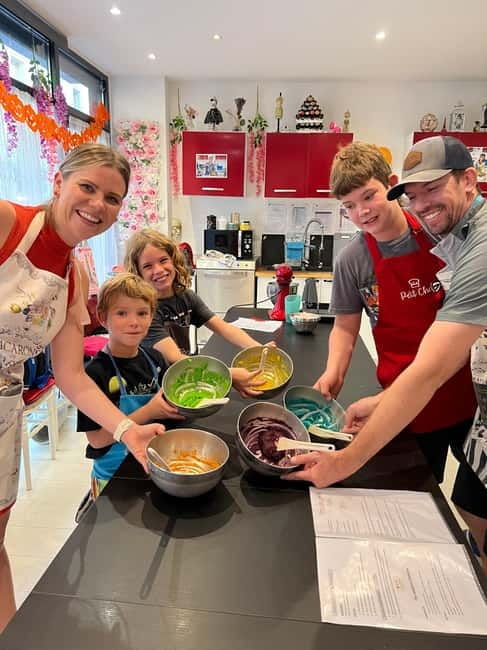
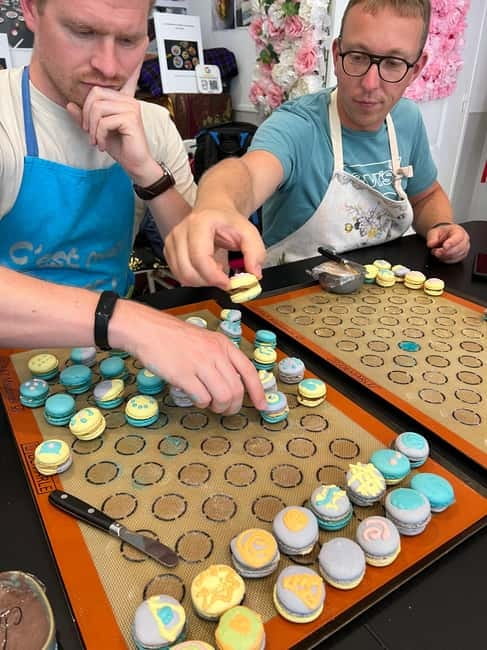
Once your batter is ready, you learn how to load and handle the piping bag so you do not waste mixture. Then you practice piping using round templates first. That template stage is smart. It helps you learn consistency of size before you start adding personal design details.
This matters because macaron shells bake evenly when they are similar in thickness and diameter. When shells are too different, you get uneven feet and uneven texture. By practicing on templates, the workshop helps you build muscle memory without turning the whole class into a guess-and-check experiment.
Another nice detail is that the instructors teach you the “basic step” of fitting and controlling the bag before you start artistic work. That prevents the most common beginner problem: your piping looks messy because the tool technique is wrong, not because your batter failed.
If you are worried about your confidence, you should know the class is described as not intimidating. Multiple reviews mention it is relaxed, hands-on, and supportive, even for kids and teens. Still, it’s real cooking class work, so come ready to stand, mix, and pipe.
More macaron classes in Paris:
- Paris: Montmartre Cheese, Wine & Pastry Guided Walking Tour
★ 4.8 · 2,255 reviews - Paris: Macaron Class at Galeries Lafayette
★ 4.2 · 1,196 reviews - Paris Croissant Small-Group Baking Class with a Chef
★ 5.0 · 910 reviews - Paris: French Croissant Baking Class with a Chef
★ 4.9 · 712 reviews
Double-nozzle decorating: making each macaron look like yours
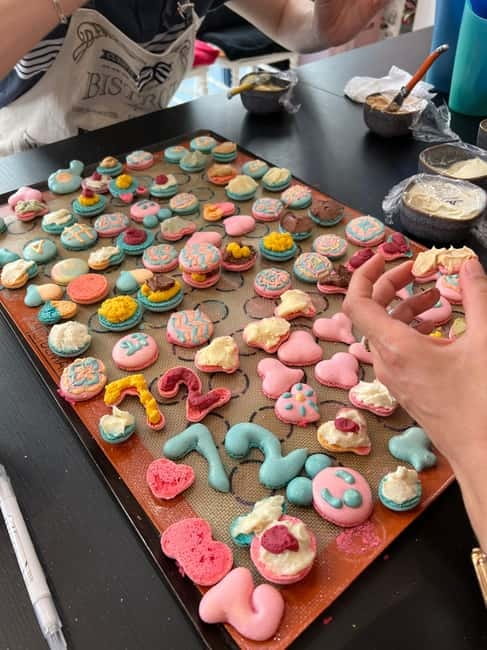
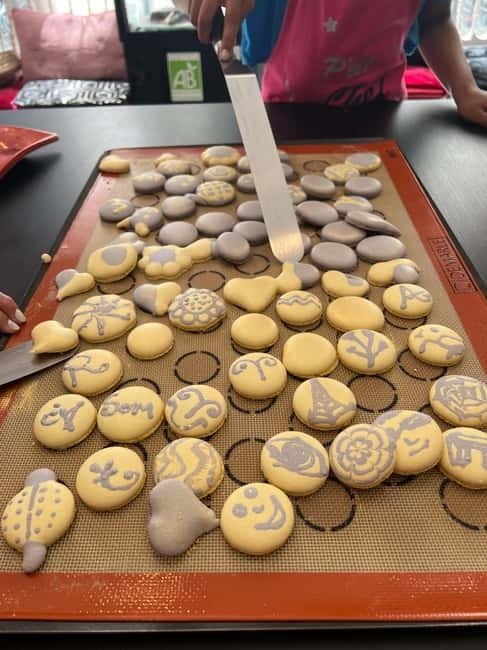
After your shell stage, you move into the fun part: decorating your macarons with unique designs. The workshop uses a smaller double nozzle, which lets you pipe two elements or colors in one controlled workflow. The point is not just pretty results. It is also about learning how to place design details without crushing the shell.
You practice first, then personalize. This is a highlight because it makes your 15 take-home macarons feel personal instead of generic. You decide how the design sits on each shell, and you learn what level of precision looks good with baked macaron surfaces.
This is also where the small group format helps. With only up to 6 participants, you are more likely to get quick correction, like pipe pressure or nozzle angle, instead of waiting for a group-wide pause.
One practical note from a review: a guest wished for a printed recipe to take notes. That doesn’t ruin the experience, but it is worth planning around. If you want something written down, take photos during the session and consider bringing a phone note app ready for quick step captures.
Filling demo: raspberry ganache, plus mango-passion options
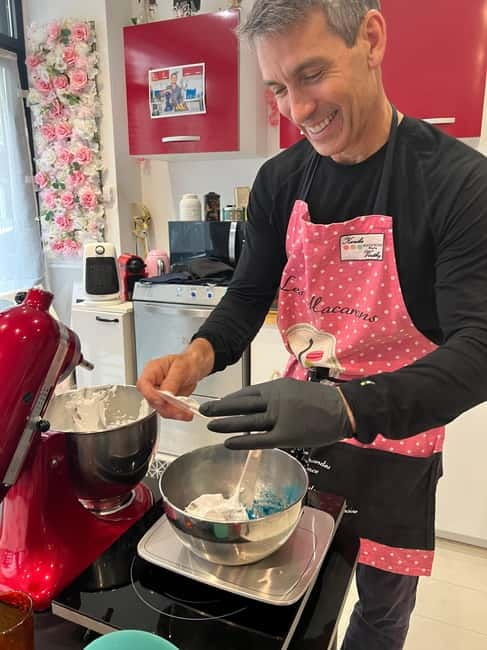
While your shells bake, you switch from shells to centers. You get a demonstration on making a rich ganache, with raspberry as one of the flavor directions. The format also includes options like mango-passion, depending on what your class uses that day.
Ganache matters because it is not just taste, it’s texture. Too thick and it won’t spread. Too loose and it leaks or makes shells soggy. The workshop teaches the technique behind a filling that works inside macarons, which is a step many home bakers miss.
The workshop also includes fillings count-wise (described as 10 fillings), which suggests you are not limited to one flavor choice for your set. Reviews back that up by describing variety and the ability to pick from multiple filling options.
If you love bold flavor, look for what stands out on the filling menu. One review explicitly calls out a yuzu filling as a pro pick, which is useful advice if yuzu is offered in your session.
What you take home, and how to handle your box of macarons
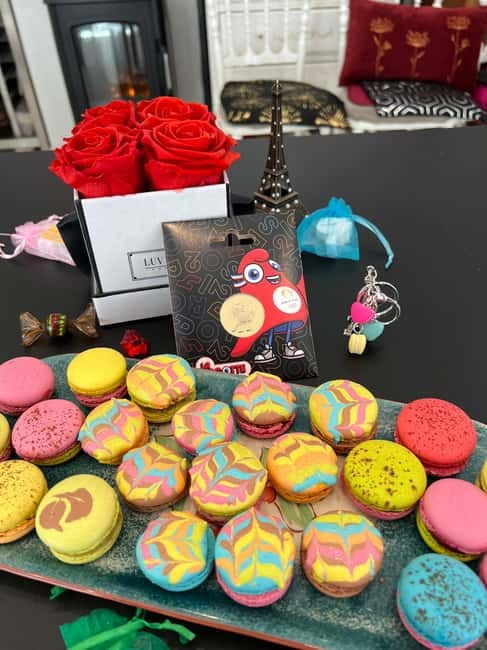
By the end, each participant makes and takes home 15 macarons, packed in a special box. That is one of the clearest value markers in this class. You are paying for instruction plus a tangible outcome you can share or enjoy later.
The box helps with transport, and the timing also helps you leave with fresh macarons rather than relying on leftovers you bake at home. This is a good reason to schedule the class near other nearby food stops, so you can enjoy the experience without losing your cookies to your hotel bag.
If you are traveling, think about how you will store them once you get back. The workshop does not list specific storage rules in the provided details, so I’d rely on your instructor’s final notes for best results. In general, macarons are delicate, so keep them flat, avoid heat, and don’t open the box every five minutes.
Also keep in mind: this is a must-participate workshop. Reviews and activity info indicate it is not possible to stay just to observe. So plan your schedule accordingly and treat it as a committed baking session.
Price and value: is $150 fair for 2 hours?
At $150 per person for a 2-hour workshop, you are not buying a cheap souvenir. You are paying for technique coaching plus ingredients plus your take-home batch.
Here’s where the value math gets interesting:
- Small group size (up to 6) means you get more instructor time per person than big classes.
- You learn multiple steps: Italian meringue, macaronage texture, piping technique, decorating design, and ganache filling.
- You take home 15 macarons in a prepared box, which is a lot of edible payoff for the time.
If you compare this to buying a box of macarons, the workshop is different. It’s the difference between tasting and learning. Even if your first attempt at home is not perfect, the skills you build here can cut down future trial and error.
One consideration: the pace is fast, so you get value by focusing. If you show up mentally scattered, you might feel rushed. But if you like hands-on, step-by-step instruction, this is one of the better deals in the “learn a real kitchen skill while on vacation” category.
Who this Montmartre macaron workshop fits best
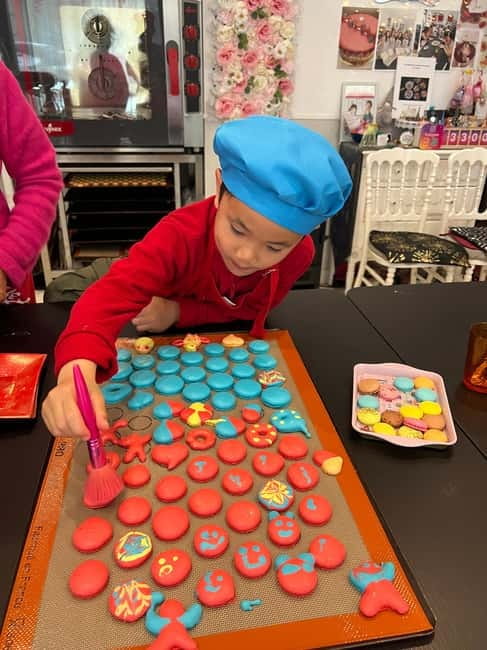
This workshop is a strong fit for:
- First-time bakers who want a structured method and direct corrections
- Couples and friends who want a shared, creative activity
- Teens and older kids who can follow steps carefully (with a minimum age of 6 noted)
It also seems family-friendly in spirit. Many reviews mention children having fun, and the instructors described as patient. That said, this is not suitable for kids under 6, and it is not suitable for babies under 1.
Food and health fit matters too:
- People with food allergies are not suitable
- People with lactose intolerance are not suitable
Accessibility is also limited in the provided details. Wheelchair users are not suitable, and oversize luggage is not allowed.
Language support is a plus. The instructor team works in English and French, which is helpful if you want to follow instructions closely without guessing.
Should you book this Montmartre macaron workshop?
If your goal is to leave with great macarons and actually learn how to make them, I think this is a smart booking. The combination of Italian meringue technique, hands-on piping and macaronage coaching, and the chance to decorate with a double-nozzle makes it more than a casual class.
Book it if you:
- Want a small group workshop with attention
- Like practical, step-by-step cooking lessons
- Are excited by both technique and creativity, not just eating
Skip it if you:
- Want to observe only (this is participation only)
- Need printed recipes to take notes, since at least one guest found that missing
- Are traveling with lactose intolerance or food allergy concerns, since it is not suitable
FAQ
How long is the Paris Montmartre macaron baking workshop?
It lasts 2 hours.
What is the meeting point?
Meet at MACA’RONG on the ground floor at 175 Rue Legendre, by going inside the shop.
How many macarons will I make and take home?
You will craft 15 personalized macarons, which are packed in a special box.
Is this a small group workshop?
Yes. The workshop is limited to a small group of 6 participants.
What language will the instructor use?
The instructor speaks English and French.
Can I stay and observe if I do not have a reservation?
No. All people must have a reservation, so it is not possible to stay just to observe.
Is it suitable for children?
It is not suitable for children under 6 years.
Is it suitable for lactose intolerance or food allergies?
No. It is not suitable for people with food allergies or for those with lactose intolerance.
FAQ
Can I reserve and pay later?
Yes. You can reserve now and pay later.
What is the cancellation policy?
You can cancel up to 24 hours in advance for a full refund.
What type of filling will I learn?
The workshop includes a ganache demo, with options such as raspberry and mango-passion, and you also have access to multiple filling options (listed as 10 fillings).
Does the class include anything besides baking?
Yes. Included items are the baking class, tea and coffee, macarons, and a chef sharing a secret recipe, plus bags for your macarons box.
Newly listed around Paris
- The voice of Montmartre is a must-see in Paris★ 3.8 · 19 reviews
- Top Private Cruises in Paris with Champagne + more surprises★ 5.0 · 309 reviews
- The Official Emily in Paris Montmartre Walking Tour★ 4.7 · 40 reviews
- The Paris Pass® Plus: 90+ Attractions including The Louvre★ 3.4 · 386 reviews
- The Official Emily in Paris Locations Walking Tour★ 4.9 · 383 reviews
- The Official Emily in Paris Macaron-Making Workshop★ 4.9 · 68 reviews
- The Official Emily in Paris Wine & Cheese with Butter Making★ 4.9 · 20 reviews
- The Official Emily in Paris Croissant-Making Workshop★ 4.9 · 85 reviews
Montmartre Walking Tours, compared.
Montmartre Hidden Gems and Scenic Highlights Walking Tour
Read our review →
Montmartre Hill French Gourmet Food and Wine Tasting Walking Tour
Read our review →
Montmartre Highlights Walking Tour with a Local Guide
Read our review →
Montmartre Cheese, Wine & Pastry Guided Walking Tour
Read our review →
Sacré-Coeur and Montmartre Tour with Expert Guide
Read our review →
Private Montmartre Food Tour with Wine, Cheese & Pastries
Read our review →
Paris Montmartre Food Tour – A Full French Meal by Do Eat Better
Read our review →Browse the lists this tour appears in