
Reviewed · CARCASSONNE DAY TOURS
Carcassonne During World War 2
WWII has a way of turning familiar streets cold. This private Carcassonne During World War 2 walk uses wartime black-and-white photos and a local WWII expert guide to connect everyday life between 1939 and 1945 to what you see on the ground today. I especially liked the way the tour focused on real local people, not just big names, and how it made the occupation feel concrete through detailed stories and period imagery.
You should plan for a bit of crowd reality. On at least one day the group was larger than ideal for Carcassonne’s narrow lanes, so if you are hard of hearing or want more space to listen, it is worth asking the operator about a smaller group size.
In This Review
- Key Takeaways Before You Go
- Carcassonne During World War 2: More Than a Casual Stroll
- Where You Start and How the Walk Ends
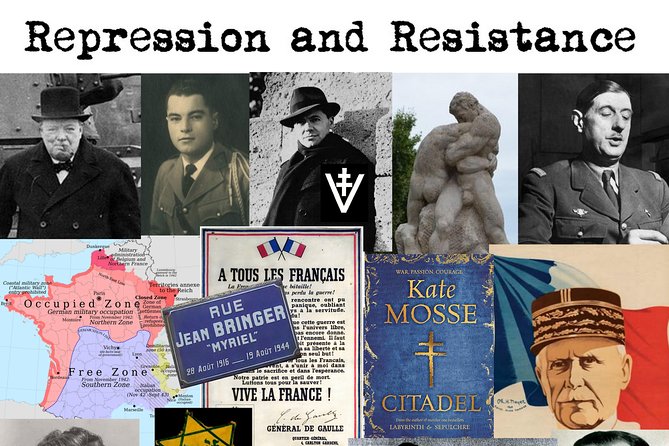
- Repression and Resistance: The Core Story You’ll Walk Through
- From the Fall of France to Occupation: Why the Timeline Matters
- The Spectrum of Resistance, Collaboration, and Those Who Were Left Behind
- The Guide’s Style: Photos, Timing, and a Human Pace
- La Bastide Perspective: Carcassonne Beyond the Usual Postcard Route
- Price and Value: About $24.19 for a Focused WWII Walk
- Who Should Book This Tour (and Who Might Want to Choose Another Option)
- Practical Tips for a Smoother 9:30 am Start
- Should You Book This Carcassonne WWII Tour?
- FAQ
- What language is the tour offered in?
- Is this a private tour?
- How long is the experience?
- Where does the tour start and end?
- What does the tour cover about World War 2?
- Is there an admission ticket cost?
- Do I get a mobile ticket?
- What if the weather is bad?
- When will I receive confirmation?
- Can I cancel and get a full refund?
Key Takeaways Before You Go
- A private walking tour with an English guide, so you can ask questions and set your own pace within the plan
- Wartime black-and-white photos that are shown at key points, turning landmarks into evidence
- More than the famous citadel focus, with attention to areas many people miss as they rush for the postcard view
- A full WWII timeline on foot, from the Fall of France through liberation and the post-war purges
- Headsets are not mentioned, so pick a good listening spot and expect narrow streets
Carcassonne During World War 2: More Than a Casual Stroll
Carcassonne can look timeless, all stone and storybook angles. This tour does the opposite job. It takes the streets you thought you knew and overlays them with what happened here during the German occupation and the push and pull of resistance and repression.
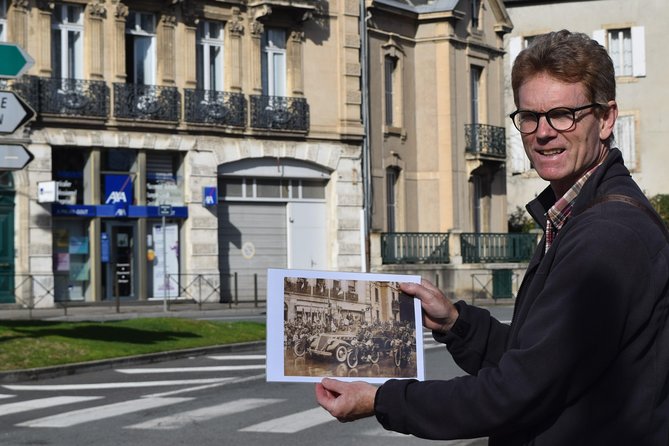
What makes it work is the guide. The WWII specialist (Paul, if you get him) does not just recite dates. He ties events to specific places in town, then supports the narrative with period black-and-white photos so you can picture the same streets with different uniforms, different fear, and different risks. That combination keeps the walk from turning into a lecture.
Two things I came away with that I think you will also appreciate. First, the tour gives you a grounded sense of how ordinary people handled extraordinary pressure, including rationing and the dangerous gray zone between survival and collaboration. Second, it puts local stories into the wider French wartime story, so you understand why what happened here mattered beyond Carcassonne’s walls.
There is also a tone shift you should expect. The tour can be inspiring, but it is not fluffy. It includes sombre quotes and serious themes around repression and the choices people made when the outcome was never guaranteed.
More Carcassonne visits:
- Carcassonne: Castle and Ramparts Entry Ticket
★ 4.6 · 2,884 reviews - Toulouse: Carcassonne Day Trip by Coach with Audioguide
★ 4.4 · 580 reviews - Wine Discovery Tasting In Carcassonne
★ 5.0 · 85 reviews
Where You Start and How the Walk Ends
The tour begins at Brasserie a 4 Temps2, 2 Bd Barbès, 11000 Carcassonne. It starts at 9:30 am. Expect a walking schedule of about 2 hours 15 minutes (some days feel closer to a 2-hour range, depending on pace and questions).
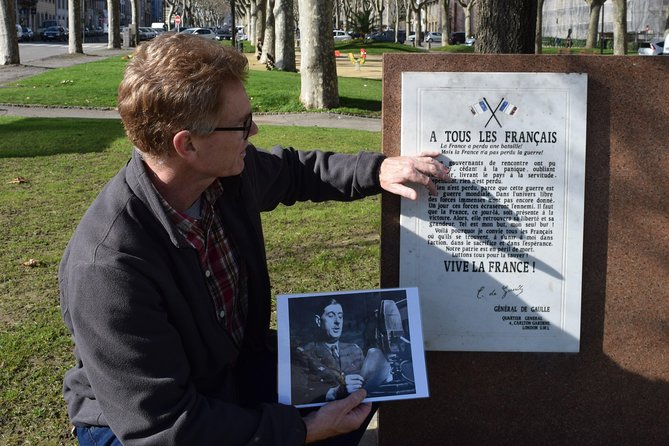
It ends at the memorial to the Resistance at Square Gambetta, near 16 Av. Arthur Mullot, 11000 Carcassonne. Ending at a memorial site is not just symbolic. It gives you a clean landing point after the timeline moves from occupation to liberation and then into what came after, including post-war purges.
The route is in the center of town, so plan for walking on uneven stone streets and tight sidewalks. The guidance around safe listening space matters here, especially if your group ends up large. If that is a concern for you, speak up early and choose a spot near the front of the group so you can hear.
Repression and Resistance: The Core Story You’ll Walk Through
The theme is clear from the start: Repression and Resistance. But what you get is more than slogans. You walk between places tied to World War 2 and then you get the human context that makes those links feel real.
The main topics include:
- the Fall of France
- the occupied and non-occupied zone
- the invasion of the Free Zone
- rationing
- the Milice
- S.T.O.
- the spectrum of resistance and collaboration
- the liberation
- post-war purges
This is one of the best parts for first-time visitors to WWII history in France. Instead of jumping straight to resistance as a single movement, the tour shows the pressure system that made resistance costly and collaboration complicated. You see how the war reshaped daily life, then you see how people reacted in different ways.
That middle stretch, about the Milice, S.T.O., and the pressure of rationing, is especially useful if you have only a vague idea of WWII in France. It helps you understand the daily stakes, not just the battlefield outcomes.
From the Fall of France to Occupation: Why the Timeline Matters
A lot of WWII tours focus on the climax. This one builds the foundation first.
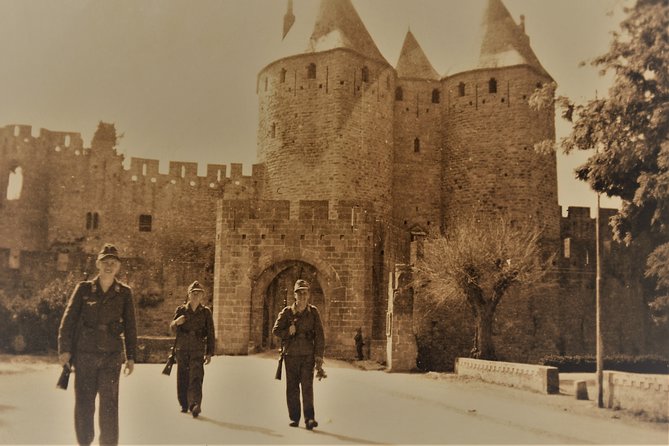
You start with the Fall of France, then the guide sets up the divided geography, the occupied and non-occupied zone, and then the turning point when the Free Zone is invaded. That matters because it explains why the same country could experience very different levels of control, and why people’s choices were shaped by what kind of pressure they were living under.
Then the tour shifts into what you would feel on the street: rationing. Even if you know the word, the tour frames rationing as a lived constraint that changed behavior, created incentives, and added stress to relationships.
From there the story widens. The Milice and the S.T.O. are not treated like distant acronyms. They come across as systems that reached into daily life, affecting families and shaping who could take risks and who could not.
If you like history that connects policy and propaganda to real people, you will enjoy this section. It is not just a list of terms. You get the logic behind them and why they created room for both resistance and collaboration.
Within easy reach:
- Languedoc: Tour and Tasting at Domaine de Baronarques
★ 4.8 · 64 reviews - Carcassonne: Private Guided Tour of the Medieval Fortress
★ 4.5 · 64 reviews - Carcassonne: Medieval Builder-Themed City Tour with a Guide
★ 4.9 · 57 reviews - Carcassonne: 1h30 Walking Tour of the Medieval City
★ 4.7 · 44 reviews
The Spectrum of Resistance, Collaboration, and Those Who Were Left Behind

One of the most praised strengths is how the tour handles the spectrum of behavior during the war. This is not black and white storytelling.
You hear about the resistance, yes, but also about collaboration. The guide’s approach helps you see that wartime choices were often constrained by fear, necessity, and local pressure. That is a big reason the walk feels thoughtful rather than simply dramatic.
Another detail that stands out is the focus on both national heroes and local figures, including forgotten heroes. You also get a sense of how memory works after conflict, because the tour reaches beyond liberation to the consequences that came next.
That leads into one of the heavier parts: post-war purges. Even if you already know the broad idea, it is the kind of topic that benefits from a guided explanation, because the effects are personal and uneven. It also closes the loop on why “after the war” did not mean everything instantly became normal.
The Guide’s Style: Photos, Timing, and a Human Pace
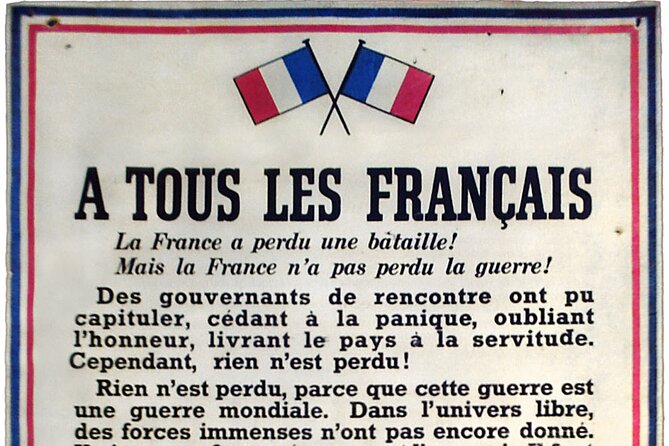
The tour’s delivery style is a major reason people rate it so highly. The guide uses black-and-white photographs from the time and places them alongside real landmarks. It is the visual link that makes the past stop feeling abstract.
You also get what feels like a two-layer approach. There is a narrative that flows through the WWII period, and there are pauses where the guide brings the group’s attention to what you are seeing. Several people mentioned that the walk includes interaction, including moments where you look for things tied to what is being discussed.
Pacing is another big deal here. A couple of reviews noted the tour’s length as about two hours plus and said it passed quickly without feeling rushed. That is the sweet spot for a walking history tour in a compact old town.
One practical note: on days with larger groups, hearing can be tougher in narrow streets, and safe standing space can become an issue. If you are arriving as a pair or family, you may want to choose a spot that keeps you out of bottlenecks and lets you hear clearly.
La Bastide Perspective: Carcassonne Beyond the Usual Postcard Route
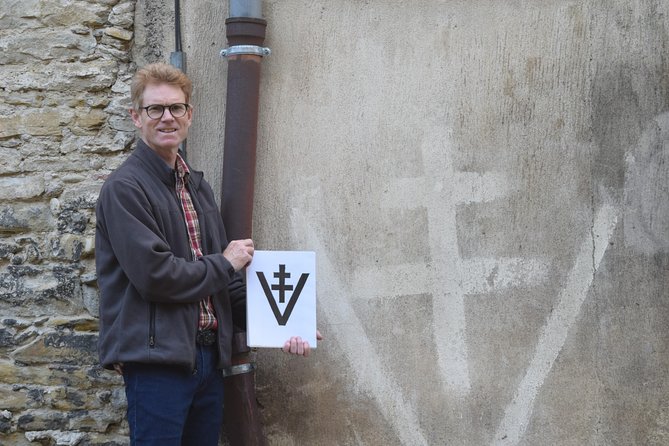
Carcassonne’s citadel gets the big attention, and it is worth it. But this tour gives you a different angle, one that covers the streets and neighborhoods many people pass through without noticing.
You will get more sense of Carcassonne as a lived-in town, not a museum. That is part of the value: the war stories are placed in the fabric of the city’s everyday spaces. It helps you picture where people walked, gathered, traded, feared, and organized.
This broader focus also fits the theme well. Occupation and resistance are not only things that happened at heroic monuments. They happened in ordinary streets, and the tour reflects that.
Price and Value: About $24.19 for a Focused WWII Walk
At $24.19 per person, this is a budget-friendly way to do something that usually costs more: a specialist-led WWII walking experience with period photos and a localized focus.
What makes it good value is not just the price. It is the combination of:
- a tight, two-hour-plus format
- a guide with deep focus on the local wartime experience
- no mention of paid museum entries, since it is described as including an admission ticket free element
If you are comparing this to a generic history walk, the WWII specialization and the local emphasis matter. You are paying for interpretation, context, and a story that connects places to events.
If you expect a huge number of stops like a hop-on bus tour, adjust your expectations. This walk is focused and narrative-driven. The tradeoff is fewer places, more meaning per place.
Who Should Book This Tour (and Who Might Want to Choose Another Option)
This tour fits best if you:
- want WWII history with local specificity, not just national-level summaries
- enjoy guided storytelling that uses photos and concrete details
- like walking tours but prefer a manageable length around a morning start
It is also a great choice if you have already seen the citadel and want the other side of Carcassonne: the wartime street-level perspective.
You might want to think twice if you are looking for a very detailed, deep technical breakdown of every intelligence service or every occupation unit. One person specifically noted that additional focus on SS and Gestapo activity in the city might improve the experience. If that is the kind of detail you crave most, keep that in mind and consider whether this walk’s emphasis matches your interests.
Practical Tips for a Smoother 9:30 am Start
Here are a few things that will help you enjoy it more.
- Wear comfortable shoes. The old town streets are not built for sloppy footing.
- Arrive a bit early at the meeting point in case you need a quick orientation.
- Plan to stand still for short periods. The tour works best when you can listen and look at the guide’s references.
- If you care about audio, pick a listening position near the front or where the group naturally spreads out.
- If you are traveling in hot or rainy weather, take that seriously. This experience requires good weather, and if it is canceled due to poor conditions you should expect rescheduling or a refund option.
And one more small tip: bring your curiosity. The guide’s approach includes questions and prompts, and you will get more out of the walk if you are ready to engage.
Should You Book This Carcassonne WWII Tour?
I think you should book it if you want a walking tour that treats WWII as real lived experience in a real town. The wartime photo approach, the local focus on repression and resistance, and the way the guide connects 1939 to 1945 into a clear story make this a strong use of a morning.
It is also a solid value at about $24.19 per person, especially for a specialist-led private experience. Just be aware of the main practical drawback: narrow streets can make large groups harder to hear and stand safely in, so ask about group size if that matters to you.
If your ideal history trip is action-packed with battles, this may feel more reflective than explosive. But if you want meaning, context, and human stakes tied to Carcassonne’s streets, it is a tour you are likely to remember.
FAQ
What language is the tour offered in?
The tour is offered in English.
Is this a private tour?
Yes. It is described as a private tour/activity, with only your group participating.
How long is the experience?
It runs for approximately 2 hours 15 minutes.
Where does the tour start and end?
It starts at Brasserie a 4 Temps2, 2 Bd Barbès, 11000 Carcassonne, France. It ends at the memorial to the Resistance, Square Gambetta, near 16 Av. Arthur Mullot, 11000 Carcassonne.
What does the tour cover about World War 2?
The focus is repression and resistance, with topics including the Fall of France, the occupied and non-occupied zones, the invasion of the Free Zone, rationing, the Milice, S.T.O., resistance and collaboration, liberation, and post-war purges.
Is there an admission ticket cost?
The experience notes admission ticket free.
Do I get a mobile ticket?
Yes. It is listed as having a mobile ticket.
What if the weather is bad?
This experience requires good weather. If it is canceled due to poor weather, you should be offered a different date or a full refund.
When will I receive confirmation?
You should receive confirmation within 48 hours of booking, subject to availability.
Can I cancel and get a full refund?
Free cancellation is available. You can cancel up to 24 hours in advance for a full refund. If you cancel less than 24 hours before the start time, the amount paid will not be refunded.
Newly listed around Carcassonne
- Languedoc: Tour and Tasting at Domaine de Baronarques★ 4.8 · 64 reviews
- Carcassonne: Medieval Builder-Themed City Tour with a Guide★ 4.9 · 57 reviews
- Carcassonne: Fortress Walking Tour★ 5.0 · 24 reviews
- Carcassonne: Solex tour with guide and wine tasting★ 5.0 · 30 reviews
- Carcassonne: Private Guided Tour of the Medieval Fortress★ 4.5 · 64 reviews
- Carcassonne: 1h30 Walking Tour of the Medieval City★ 4.7 · 44 reviews
- Wine Discovery Tasting In Carcassonne★ 5.0 · 85 reviews
- Toulouse: Carcassonne Day Trip by Coach with Audioguide★ 4.4 · 580 reviews
Carcassonne Day Tours, compared.
Carcassonne: Castle and Ramparts Entry Ticket
Read our review →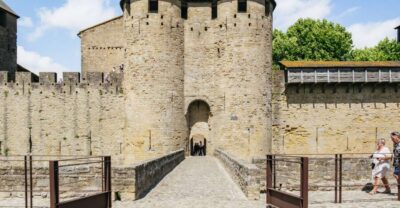
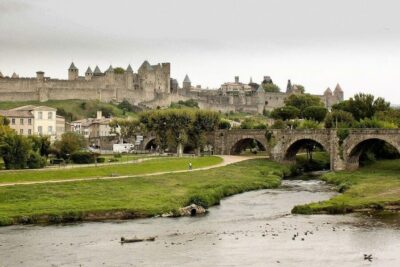
Carcassonne: Private Guided Tour of the Medieval Fortress
Read our review →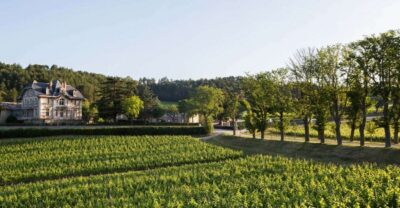
Languedoc: Tour and Tasting at Domaine de Baronarques
Read our review →
Carcassonne: Medieval Builder-Themed City Tour with a Guide
Read our review →
Carcassonne: 1h30 Walking Tour of the Medieval City
Read our review →
Carcassonne: Solex tour with guide and wine tasting
Read our review →Browse the lists this tour appears in