
Reviewed · CARCASSONNE DAY TOURS
Carcassonne: Medieval Builder-Themed City Tour with a Guide
A builder leads you through Carcassonne.
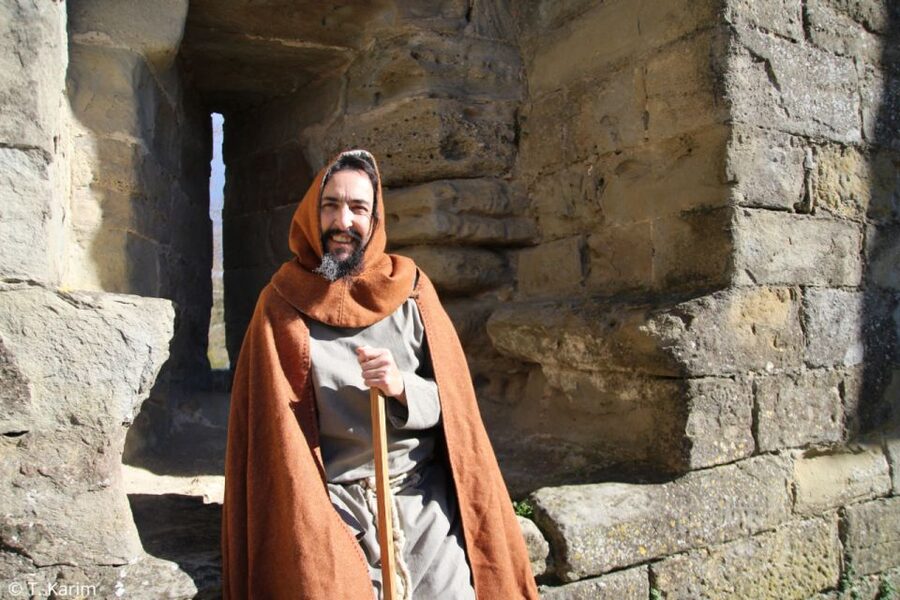
This 90 minute, storytelling tour turns the medieval city into a living worksite, with the guide in historical outfits and a character who narrates from the 13th century. I especially like how the whole thing feels like you are being shown around by someone who belongs there, not just someone reciting dates.
I also love the hands on, interactive touch. You get historical objects and learn what a builder’s daily life looked like, including the tools and practical details that explain why Carcassonne looks the way it does. Plus, it’s easy to see why it works for both adults and kids, since the pace stays playful without turning the facts into fluff.
One possible consideration: the tour is in French, so if you are not comfortable following French, you might miss some of the finer story details and anecdotes.
In This Review
- Key highlights you will actually remember
- Meeting at Porte Narbonnaise, then stepping into roleplay
- What the 90 minutes really cover, and why it works
- Narbonne Gate and the builder’s mindset: seeing defenses as engineering
- Lices and outer walls: where construction becomes a daily reality
- The Comtal Castle moat: protection you can almost feel
- Catharism from Guilhem’s perspective: history without a cold lecture
- Basilica exterior: a final architectural check before you wander on your own
- Price and value: what $23 buys you in real-world terms
- Who should book this tour, and who might prefer something else
- FAQ
- FAQ
- Where does the tour start?
- How long is the tour?
- Is there a guide, and what language do they speak?
- Is the tour offered rain or shine?
- What is included in the price?
- Is it suitable for small children?
- Is the tour wheelchair accessible?
- Should you book if you want to learn about Catharism?
- Should you book the Carcassonne medieval builder tour?
Key highlights you will actually remember
- Maistre Guilhem comes to life, a 13th century master builder character with a personal family story tied to the era
- 13th-century daily life through a builder’s eyes, including tools and the practical realities behind construction
- Narbonne Gate and the city walls, so you start noticing defenses the way a medieval worker would
- The lices and moat of the Comtal Castle, for a clear view of how protection and layout worked
- Catharism history in-story, explained from Guilhem’s perspective rather than as a textbook list
- Historical objects and interactive moments, built for adults and kids
Meeting at Porte Narbonnaise, then stepping into roleplay
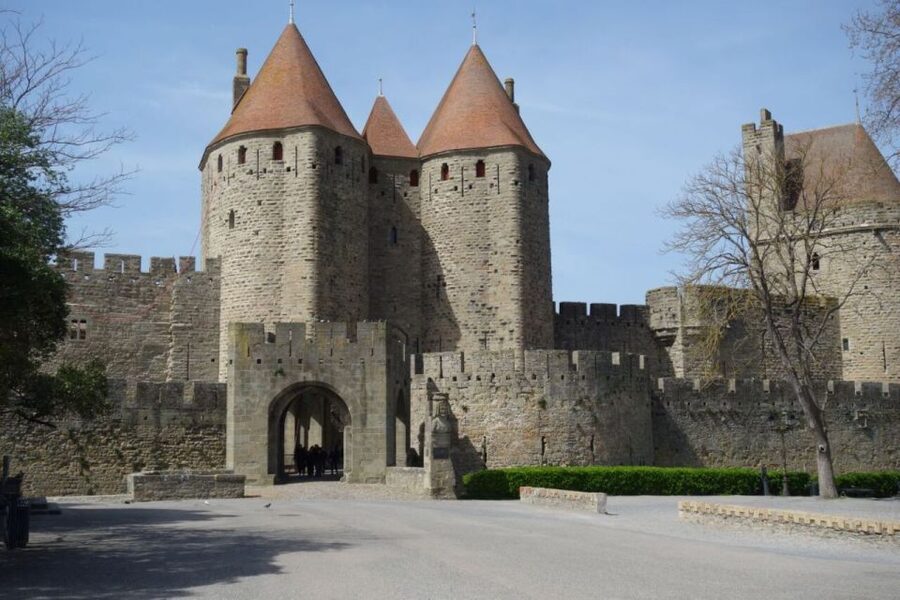
The tour starts right at the action, at the Dame Carcass statue by the Porte Narbonnaise gate. That matters more than it sounds. Carcassonne’s old city is all about walls, gateways, and vantage points, so beginning at a major entry makes the first minutes feel instantly relevant.
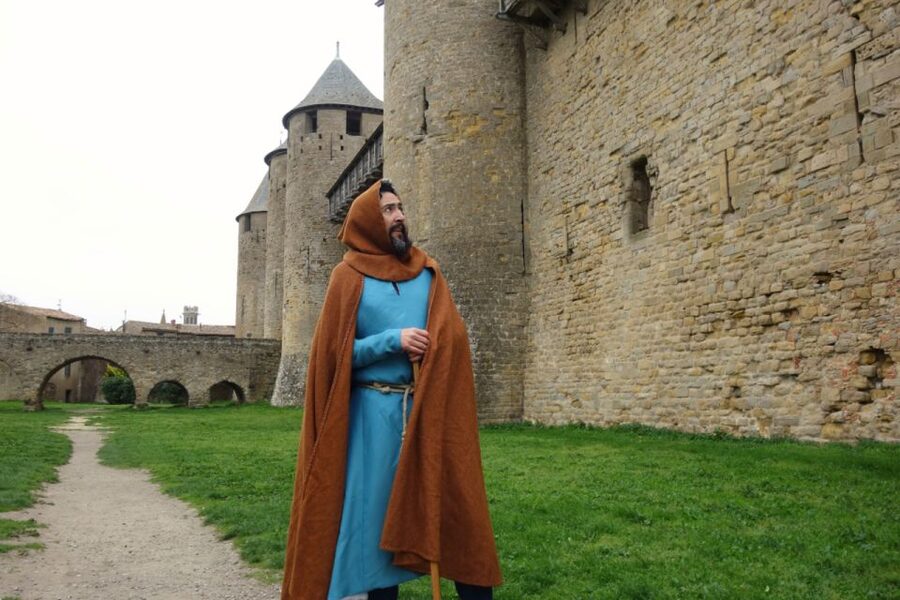
You meet a guide who performs as Guilhem, a master builder from the 13th century. In his telling, he is the son of Pierre the builder, an engineer connected to King Louis IX, with an Occitan mother. Even if you do not obsess over genealogies, the point is clear: this is not only a tour of stones. It’s a tour of people who worked, planned, and built, and how they viewed faith and conflict in their world.
A small practical note I appreciate: you go rain or shine. That means you should dress for real weather, not just for a sunny postcard. A light rain layer or umbrella, plus shoes you trust on uneven old-stone streets, will make the experience smoother.
More Carcassonne visits:
- Carcassonne: Castle and Ramparts Entry Ticket
★ 4.6 · 2,884 reviews - Toulouse: Carcassonne Day Trip by Coach with Audioguide
★ 4.4 · 580 reviews - Carcassonne During World War 2
★ 5.0 · 127 reviews
What the 90 minutes really cover, and why it works
Ninety minutes is a smart length for Carcassonne. The city can overwhelm you when you are trying to read every wall and notice every viewpoint at once. Here, the time constraint forces focus, so you get a guided storyline with stops that support the theme: building, daily life, and the historical tensions of the era.
You should expect a mix of:
- Storytelling in character, so concepts stick
- On-the-street explanations tied to specific locations
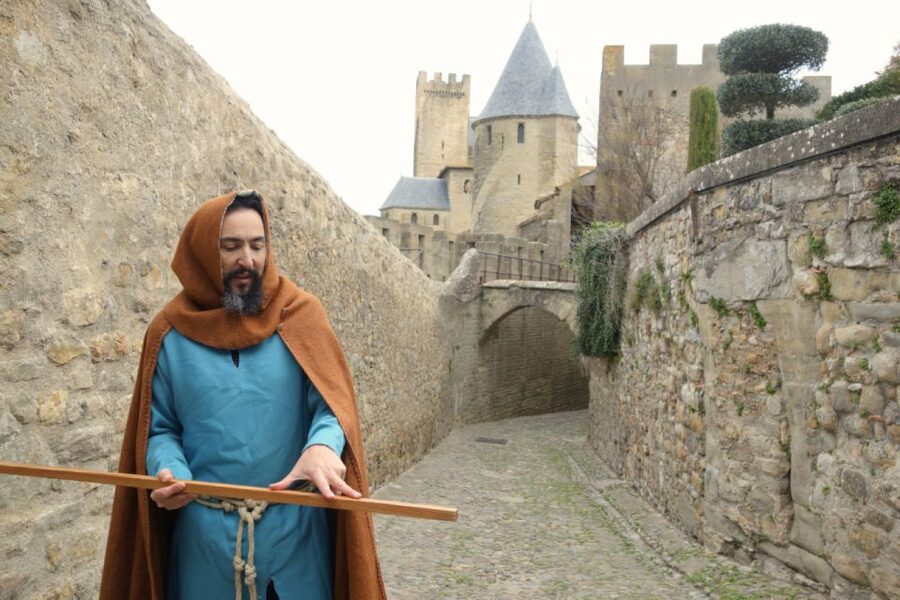
- Interactive moments using historical objects, so the tour does not feel like a lecture
The result is a tour that is easy to follow even with a family group. In the reviews, the consistent theme is that kids stay engaged because the guide meets them at their level without turning adults into spectators. If you like history that feels like a conversation, this pacing is a big part of the value.
Narbonne Gate and the builder’s mindset: seeing defenses as engineering
Your route begins at the Narbonne Gate, and that sets up the rest of the tour beautifully. Gates are not decorative. They are designed decisions, built to control movement, manage risk, and protect the city.
As Guilhem speaks, the explanations tend to come from a builder’s perspective. You start noticing things you might otherwise skip, like the relationship between entrances, how the city turns inward, and how outer defenses connect to the street layout. Even if you have visited other European medieval towns, you’ll likely notice how Carcassonne’s scale changes your reading of the landscape.
This stop also works well as a mental reset. Once you understand why the gate exists and how it functioned in the 13th century mindset, the walls and moats you see later feel less random. They feel like parts of a system.
Lices and outer walls: where construction becomes a daily reality
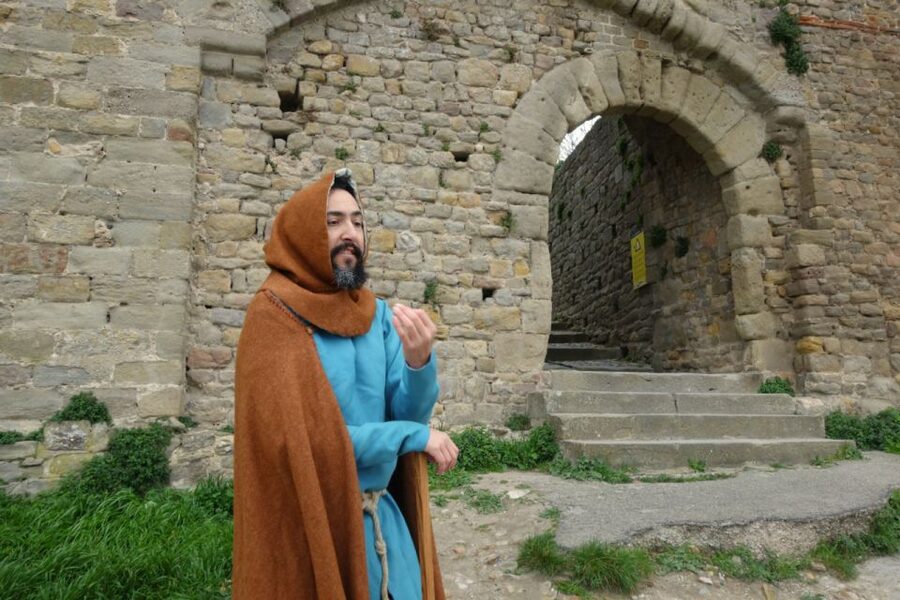
Next, you move toward the lices, the outer walls. For many visitors, city walls are just something to photograph. For you, on this tour, they become a clue to construction effort and everyday labor.
The 13th century context is the key. The tour frames the city as marked by extensive construction work in that period, and Guilhem keeps bringing you back to the practical side of what it means to build and maintain fortifications. You learn what a builder might use, how work progresses, and why certain layouts matter when threats are near.
I like that this approach helps you move beyond the idea of medieval life as only castles and crowns. You start to picture real work schedules and real materials. And because the guide includes historical objects, those explanations land in your hands and eyes, not just in your ears.
If you are traveling with kids, this portion tends to be a win. Walls are visual, and the tour gives you a way to interpret what you are seeing in plain terms.
Other Carcassonne bookings to consider
- Carcassonne: Private Guided Tour of the Medieval Fortress
★ 4.5 · 64 reviews - Carcassonne: Solex tour with guide and wine tasting
★ 5.0 · 30 reviews - Paris: Louvre Guided Tour with Reserved Access & Boat Cruise
★ 4.3 · 16,353 reviews - Louvre Museum Masterpieces Guided Tour with Access
★ 4.5 · 12,023 reviews
The Comtal Castle moat: protection you can almost feel
One of the most memorable stops is the moat of the Comtal Castle. Standing near water and considering defenses sounds straightforward, but the tour’s storytelling makes it more than a scenic pause.
This is where the builder theme helps the most. Instead of treating the moat as a static feature, you get a sense of why it exists, how it affects access, and how it shapes what people could and could not do. It’s not just dramatic. It’s practical.
As you listen, you may find yourself mentally rebuilding the space step by step: where someone could approach, where they would be forced to slow down, and how the city’s structure does the work for defenders. Even if you are not a defense-nerd, this stop changes how you see Carcassonne’s edges.
If you tend to walk quickly and mostly glance at architecture, slow down here. Look at the relationships between the moat area and the nearby walls. The tour will give you the interpretive keys, but you still need to let your eyes catch up.
Catharism from Guilhem’s perspective: history without a cold lecture
The tour includes Catharism history, explained through Guilhem’s perspective. This is a meaningful choice. When history is delivered in narrative form, you often remember it better, and you understand it as something that affected ordinary work and ordinary fear, not just as a list of names.
In this case, the guide uses his role as a master builder to connect belief and conflict to the built environment and the social tensions of the time. You get anecdotes alongside historical framing, so the subject is handled as lived reality rather than abstract controversy.
A practical tip for you: listen for the connections more than the details. If you are not fluent in French, you can still catch the storyline through emphasis, gesture, and the way the guide points you toward specific locations that anchor the narrative.
Basilica exterior: a final architectural check before you wander on your own
The tour ends with the exterior of the Basilica. This is a good move because it gives you a clean finish. You’ve learned how the city’s defenses, walls, and work life fit together, and now you get a different kind of landmark to notice.
I’d treat the exterior stop as a setup for your independent exploring. After the tour, you’ll be better at scanning Carcassonne rather than only looking at the biggest postcard views. You’ll likely notice how the city’s religious and civic elements coexist in the same walled space.
Even if you do not go inside the Basilica afterward, you can still use the tour to sharpen your eye. Look at the façade from a few angles if you have time, and notice how the surrounding old streets shape the experience of approaching it.
Price and value: what $23 buys you in real-world terms
At $23 per person for about 90 minutes, you are paying for more than a walk. You are paying for:
- a guide who wears historical outfits
- a story-driven format that turns geography into meaning
- historical objects and interactive elements
- a structured route through major, high-interest points like Porte Narbonnaise, the lices, and the Comtal moat
Is it a bargain? For what you get, it is fairly strong value. Many walking tours cost similar amounts, but fewer include character performance and teaching tools that keep kids engaged while still informing adults.
Also, this tour is a great use of limited time. If you only have one morning or afternoon to grasp Carcassonne’s medieval logic, this kind of guided structure helps you get bearings fast.
Who should book this tour, and who might prefer something else
This is a strong fit if you want:
- a family-friendly history experience (it is not suitable for kids under 6)
- a guide who uses performance and humor to keep the pace moving
- an approach that explains the city as a product of 13th century work, not only as scenery
It can be less ideal if:
- you want history strictly delivered in quiet lecture mode
- you rely on understanding every word, because the guide speaks French
One more small matchmaking point: the tour is wheelchair accessible, so it is a considerate option for visitors who need accessibility support. Carcassonne’s old streets can be uneven, but accessibility is explicitly included for this experience.
FAQ
FAQ
Where does the tour start?
It meets in front of the Dame Carcass statue, at the Porte Narbonnaise gate in Carcassonne.
How long is the tour?
The tour runs about 90 minutes.
Is there a guide, and what language do they speak?
Yes. It is a live guided tour with the guide speaking French.
Is the tour offered rain or shine?
Yes, it runs rain or shine.
What is included in the price?
The price includes a 1.5-hour guided tour in Carcassonne led by a professional guide wearing historical outfits.
Is it suitable for small children?
It is not suitable for children under 6 years old.
Is the tour wheelchair accessible?
Yes, the tour is wheelchair accessible.
Should you book if you want to learn about Catharism?
Yes. Catharism history is included as part of the storytelling, explained through Guilhem’s perspective.
Should you book the Carcassonne medieval builder tour?
I think you should book it if you like history with a storyline and you want to understand Carcassonne’s walls as the result of real work in the 13th century. The costumed guide, the specific stops (Narbonne Gate, the lices, the Comtal moat, and the Basilica exterior), and the use of historical objects make it a practical, memorable way to see the city.
Skip it only if you know you will struggle with a French-led format or if you prefer a quiet, no-frills museum style tour. If you are aiming for an active, fun introduction to medieval Carcassonne, this one is easy to recommend.
Newly listed around Carcassonne
- Languedoc: Tour and Tasting at Domaine de Baronarques★ 4.8 · 64 reviews
- Carcassonne: Fortress Walking Tour★ 5.0 · 24 reviews
- Carcassonne: Solex tour with guide and wine tasting★ 5.0 · 30 reviews
- Carcassonne: Private Guided Tour of the Medieval Fortress★ 4.5 · 64 reviews
- Carcassonne: 1h30 Walking Tour of the Medieval City★ 4.7 · 44 reviews
- Carcassonne During World War 2★ 5.0 · 127 reviews
- Wine Discovery Tasting In Carcassonne★ 5.0 · 85 reviews
- Toulouse: Carcassonne Day Trip by Coach with Audioguide★ 4.4 · 580 reviews
Carcassonne Day Tours, compared.
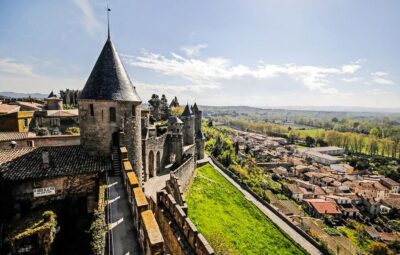
Carcassonne: Castle and Ramparts Entry Ticket
Read our review →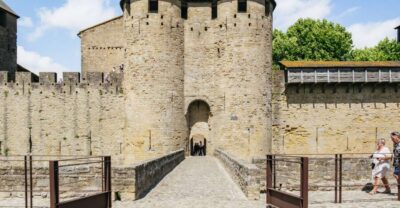
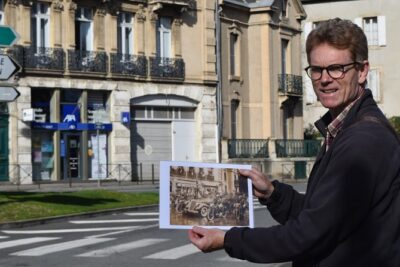
Carcassonne: Private Guided Tour of the Medieval Fortress
Read our review →
Languedoc: Tour and Tasting at Domaine de Baronarques
Read our review →
Carcassonne: 1h30 Walking Tour of the Medieval City
Read our review →
Carcassonne: Solex tour with guide and wine tasting
Read our review →Browse the lists this tour appears in